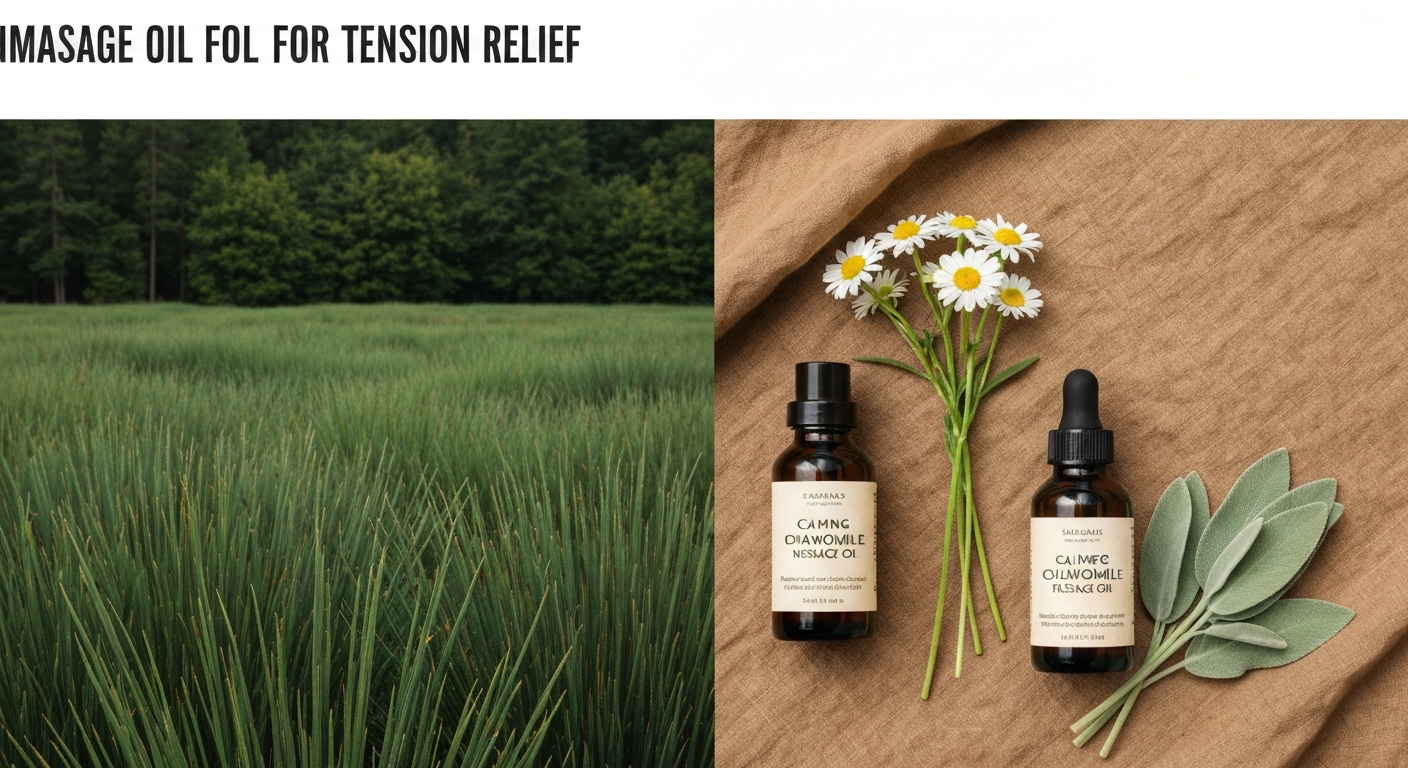
Calming Vetiver and Chamomile Massage Oil for Tension Relief
In our fast-paced world, finding moments of grounded calm becomes essential for well-being. This gentle DIY vetiver massage oil recipe combines the earthy, centering qualities of vetiver with the traditionally soothing properties of chamomile, creating a mindful blend that may help promote a sense of relaxation during your self-care rituals.
Vetiver essential oil, derived from the roots of the vetiver grass, has been traditionally used in aromatherapy practices for its potentially grounding and calming qualities. When paired with chamomile's gentle, time-honored reputation for promoting tranquility, this vetiver chamomile massage blend offers a sensory experience that invites you to slow down and reconnect with the present moment.
Recipe Overview
- Difficulty Level: Beginner
- Prep Time: 10 minutes
- Total Yield: 4 ounces (120ml)
- Shelf Life: 6-12 months when stored properly
Complete Ingredients List
Base Oils
- 3 tablespoons (45ml) Sweet Almond Oil
- 2 tablespoons (30ml) Jojoba Oil
- 1 tablespoon (15ml) Fractionated Coconut Oil
- 1 tablespoon (15ml) Grapeseed Oil
Essential Oils
- 8 drops Vetiver Essential Oil (Vetiveria zizanioides)
- 12 drops Roman Chamomile Essential Oil (Anthemis nobilis)
- 6 drops Lavender Essential Oil (Lavandula angustifolia) - optional
Optional Additions
- 1/2 teaspoon Vitamin E Oil (natural preservative)
- 2-3 drops Rosemary Antioxidant Extract (extends shelf life)
This DIY calming massage oil maintains a safe dilution ratio of approximately 1.5%, making it suitable for most adults when used as directed.

Step-by-Step Instructions
Step 1: Prepare Your Workspace
Begin by creating a clean, mindful workspace. Wash your hands thoroughly and sanitize all equipment, including measuring spoons, funnel, and storage bottle. Choose a quiet moment when you can focus on the process with intention.
Step 2: Combine Base Oils
In a clean glass measuring cup, gently combine all carrier oils—sweet almond, jojoba, fractionated coconut, and grapeseed oil. These carefully selected carrier oils each contribute unique properties: sweet almond for nourishment, jojoba for stability, coconut oil for easy absorption, and grapeseed oil for its light texture.
Step 3: Add Essential Oils
Using a glass dropper or pipette, add the essential oils one by one. Start with the vetiver—its deep, earthy aroma will form the grounding base of your blend. Follow with the chamomile, allowing its gentle sweetness to blend harmoniously. If using lavender, add it last to round out the calming profile.
Step 4: Incorporate Optional Preservatives
If desired, add vitamin E oil and rosemary extract to help maintain freshness. These natural antioxidants may help extend the life of your vetiver tension relief oil.
Step 5: Blend and Store
Stir the mixture gently with a clean glass rod or non-reactive spoon. Using a small funnel, pour the completed blend into a dark glass bottle. Amber or cobalt blue glass helps protect the oils from light degradation.
Step 6: Label and Date
Create a thoughtful label including the blend name, ingredients, date of creation, and dilution ratio. This mindful documentation helps you track the oil's freshness and effectiveness over time.
Safety Warnings and Precautions
Dilution Guidelines
This recipe maintains a 1.5% dilution ratio, which is considered safe for most healthy adults. Never exceed a 2% dilution for topical use without consulting a qualified aromatherapist or healthcare provider.
Patch Testing Protocol
Before using your vetiver massage oil recipe on larger areas, perform a patch test:
- Apply a small amount to the inside of your wrist or elbow
- Cover with a bandage and wait 24-48 hours
- Check for any signs of irritation, redness, or sensitivity
- Discontinue use if any adverse reactions occur
Important Contraindications
- Pregnancy and Nursing: Consult with a healthcare provider before use
- Children: Not recommended for children under 6 years old
- Sensitive Skin: Consider reducing essential oil concentration to 1%
- Allergies: Avoid if you have known sensitivities to any ingredients
- Medical Conditions: Consult your healthcare provider if you have existing health concerns
Important: This massage oil is for external use only. Avoid contact with eyes, mucous membranes, and broken skin. Do not ingest. If irritation occurs, discontinue use immediately.
Storage Instructions and Shelf Life
Store your DIY calming massage oil in a cool, dry place away from direct sunlight and heat sources. (See: NIH — Vetiver Research.) A dark glass bottle with a tight-fitting lid provides optimal protection. When stored properly, this blend typically maintains its quality for 6-12 months.
Signs that your massage oil may need replacing include:
- Changes in color or consistency
- Rancid or off odors
- Separation that doesn't resolve with gentle mixing
- Any visible mold or contamination
Application and Usage Tips
To use your vetiver chamomile massage blend, warm 1-2 teaspoons between your palms before application. The gentle warmth helps activate the aromatic compounds and creates a more pleasant sensory experience. Focus on areas where tension commonly accumulates—shoulders, neck, temples, and the soles of feet.
Many people report that incorporating this oil into evening routines may help promote a sense of relaxation before bedtime. The traditionally calming properties of vetiver combined with chamomile create an aromatherapy experience that invites mindfulness and presence.
Variations and Substitutions
For Deeper Relaxation
Replace 3 drops of chamomile with bergamot (bergapten-free) or ylang-ylang for a more floral, uplifting variation while maintaining the grounding vetiver base.
For Sensitive Skin
Reduce essential oils by half and add an extra tablespoon of sweet almond oil. Consider substituting Roman chamomile with the gentler German chamomile if available.
Seasonal Variations
Add 2-3 drops of sandalwood for a warmer winter blend, or incorporate 2 drops of peppermint (well-diluted) for a cooling summer variation. Always maintain proper dilution ratios when making substitutions.
Carrier Oil Alternatives
If you have nut allergies, substitute sweet almond oil with sunflower or apricot kernel oil. For those seeking different absorption rates, consider incorporating various carrier oil options like avocado oil for dry skin or hemp seed oil for additional skin-supporting properties.
The Mindful Practice of Self-Care
Creating and using your own vetiver tension relief oil becomes more than just a DIY project—it transforms into a mindful ritual of self-care. The process of measuring, blending, and applying this oil offers opportunities to slow down, breathe deeply, and connect with the present moment.
Some individuals find that incorporating this massage oil into regular self-care practices, combined with gentle stretching or meditation, may help create a sense of balance in their daily routines. The traditional uses of vetiver in various cultures remind us of the timeless human desire to find natural ways to promote comfort and well-being.
Remember that essential oils are powerful plant extracts that deserve respect and proper handling. While this calming massage blend offers a gentle introduction to aromatherapy, always listen to your body and consult with qualified healthcare providers for any health concerns.
As you incorporate this vetiver massage oil recipe into your wellness routine, approach the experience with curiosity and mindfulness, allowing the earthy wisdom of vetiver and the gentle embrace of chamomile to support your journey toward greater balance and tranquility.