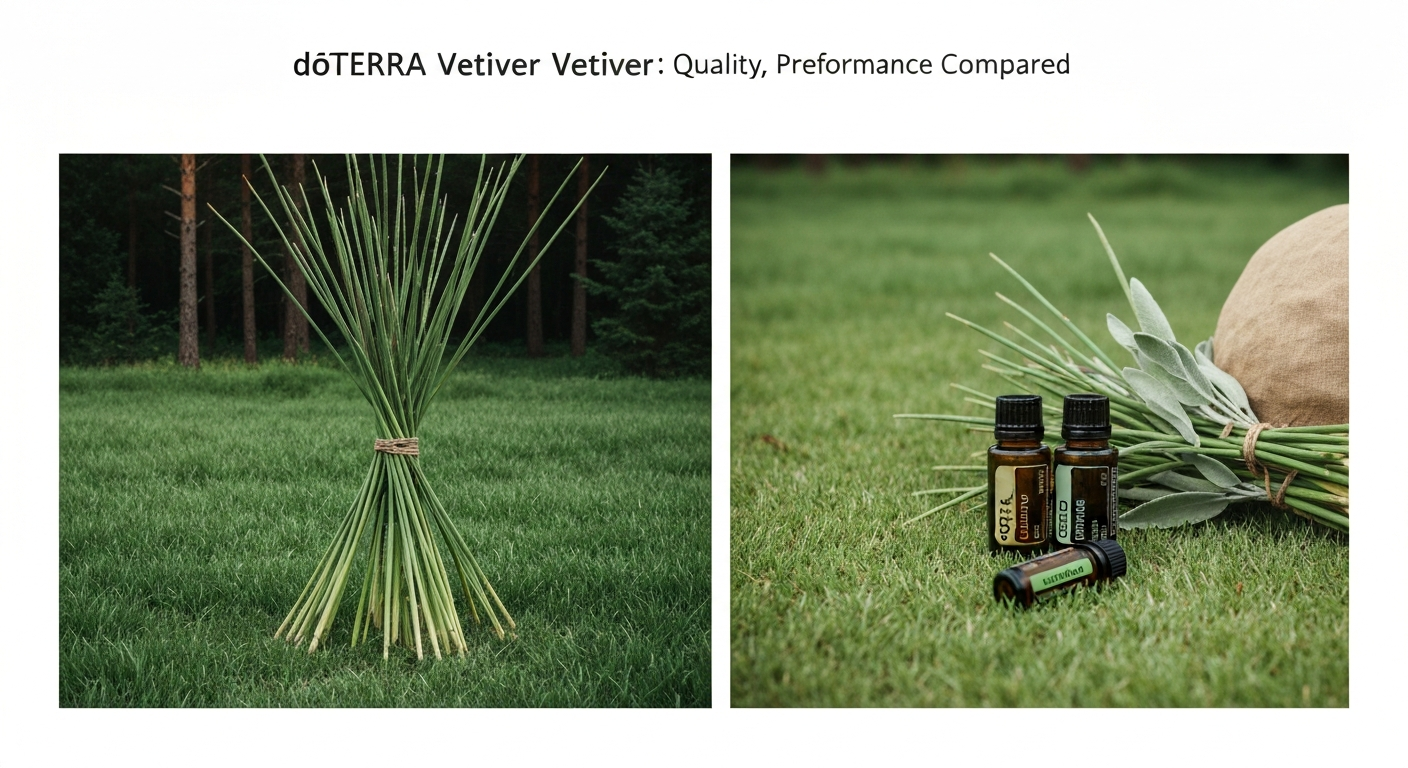
doTERRA Vetiver vs. Plant Therapy Vetiver: Quality, Price, and Performance Compared
When seeking the grounding essence of vetiver essential oil, two brands consistently emerge in conversations among aromatherapy enthusiasts: doTERRA and Plant Therapy. Both companies have cultivated devoted followings, yet their approaches to sourcing, testing, and pricing vetiver oil differ significantly.
This comprehensive comparison examines these two popular vetiver oils through the lens of quality indicators, value propositions, and real-world performance. Whether you're new to vetiver or considering switching brands, understanding these distinctions may help guide your mindful selection process.
Brand Philosophy and Approach
doTERRA positions itself as a premium essential oil company emphasizing purity through their proprietary CPTG (Certified Pure Tested Grade) standard. Their vetiver sourcing traditionally focuses on Haiti, where they've established direct relationships with farming cooperatives. This approach reflects their commitment to both quality control and social impact initiatives.
Plant Therapy takes a different path, emphasizing accessibility without compromising quality. Their vetiver typically sources from various regions including Haiti and India, with transparent third-party testing results available for each batch. Their philosophy centers on making high-quality essential oils available to a broader audience through competitive pricing.
Sourcing and Production Methods
doTERRA Vetiver Sourcing
doTERRA's Haitian vetiver comes from their established co-impact sourcing program. The company works directly with local farmers, providing training and equipment to ensure consistent harvesting practices. Their vetiver undergoes steam distillation using traditional methods, with the company maintaining strict oversight throughout the process.
The roots are typically harvested after 12-18 months of growth, hand-cleaned, and processed within days of harvesting to preserve the oil's complex aromatic profile. This controlled supply chain approach allows doTERRA to maintain consistency across batches, though it may limit their flexibility in sourcing from multiple regions.
Plant Therapy Vetiver Sourcing
Plant Therapy sources vetiver from multiple regions, primarily Haiti and India, allowing them to select the finest oils available from each harvest. This diversified approach enables them to maintain competitive pricing while ensuring consistent availability.
Their vetiver undergoes steam distillation with careful attention to time and temperature parameters that preserve the oil's delicate compounds. Plant Therapy's multi-source strategy provides flexibility in quality selection and helps buffer against regional harvest variations that might affect single-source suppliers.
Quality Testing and Transparency
Both brands implement rigorous testing protocols, though their transparency approaches differ meaningfully. Understanding these testing standards becomes crucial when evaluating vetiver oil grades and overall quality indicators.
doTERRA Testing Standards
doTERRA's CPTG standard includes multiple analytical methods: gas chromatography, mass spectrometry, FTIR spectroscopy, and additional proprietary tests. While comprehensive, these test results are not typically shared publicly, requiring trust in their internal quality systems.
The company maintains that their testing exceeds industry standards, including checks for pesticides, heavy metals, and microbials. However, the lack of publicly available batch-specific test results means consumers cannot independently verify the specific composition of their purchase.
Plant Therapy Testing Transparency
Plant Therapy provides GC/MS (Gas Chromatography/Mass Spectrometry) reports for each batch, accessible through their website using the batch number found on each bottle. This transparency allows users to review the exact chemical composition of their specific purchase.
Their testing covers the same essential parameters as doTERRA—purity, potency, and safety—but the public availability of results represents a different approach to consumer trust. This openness particularly appeals to aromatherapists and educators who value detailed compositional data.
Comprehensive Comparison Table
| Attribute | doTERRA Vetiver | Plant Therapy Vetiver |
|---|---|---|
| Primary Source | Haiti (single-source) | Haiti & India (multi-source) |
| Price Range (15ml) | $45-55 | $18-25 |
| Testing Transparency | Internal standards, results not public | Batch-specific GC/MS reports available |
| Bottle Size Options | 15ml standard | 10ml, 30ml, larger sizes available |
| Organic Certification | Not typically certified organic | Organic options available |
| Purchasing Options | Through distributors or wholesale | Direct retail, widely available |
| Social Impact Programs | Co-impact sourcing initiatives | Various sustainability partnerships |
| Scent Profile | Deep, earthy, consistent | Rich, complex, slight variation by source |
Scent Profile and Performance Analysis
Aromatic Characteristics
doTERRA's Haitian vetiver presents a consistently deep, earthy aroma with sweet undertones and a lingering base note that anchors beautifully in blends. Users often describe it as having a 'heavier' presence that commands attention in aromatherapy applications.
Plant Therapy's vetiver varies slightly depending on the source batch, with Haitian lots showing similarity to doTERRA's profile, while Indian-sourced vetiver may present slightly smokier, more complex aromatic notes. This variation, while subtle, offers interesting blending possibilities for experienced users.
Longevity and Diffusion
Both oils demonstrate excellent longevity, typical of vetiver's naturally persistent base note characteristics. In diffusion applications, doTERRA's vetiver may project slightly more intensely initially, while Plant Therapy's oil often provides a more gradual, sustained release.
For topical applications (when properly diluted), both oils show comparable performance in terms of scent retention and blending compatibility with carrier oils and other essential oils.
Value Analysis and Cost Considerations
Price Point Comparison
The most significant difference between these brands lies in pricing strategy. doTERRA's vetiver typically costs 2-3 times more than Plant Therapy's equivalent offering. This price differential reflects different business models rather than necessarily indicating quality differences.
doTERRA's higher pricing supports their direct sales model, distributor commissions, and extensive social impact programs. Plant Therapy's direct-to-consumer approach eliminates distributor margins, passing savings to end users while maintaining quality standards.
Cost Per Use Analysis
Given vetiver's potency—typically requiring only 1-3 drops per application—both options provide substantial value on a per-use basis. However, Plant Therapy's lower cost makes it more accessible for regular use, experimental blending, or educational purposes.
For occasional users, the price difference may be less significant. For regular aromatherapy practitioners, educators, or those incorporating vetiver into daily mindfulness practices, Plant Therapy's pricing advantage becomes more meaningful over time.
Pros and Cons Analysis
doTERRA Vetiver
Pros:
- Consistently high quality from established sourcing relationships
- Strong social impact initiatives supporting Haitian farmers
- Extensive internal testing protocols
- Reliable availability through distributor network
- Educational support and resources through distributors
Cons:
- Significantly higher cost may limit accessibility
- Limited purchasing options (distributor-dependent)
- Testing results not publicly available
- Single-source approach may limit aromatic diversity
- Smaller bottle size options
Plant Therapy Vetiver
Pros:
- Excellent value proposition with competitive pricing
- Full testing transparency with accessible GC/MS reports
- Multiple bottle sizes accommodate different usage levels
- Direct retail availability without distributor requirements
- Multi-source flexibility provides aromatic variety
Cons:
- Less extensive social impact programming
- Aromatic consistency may vary slightly between batches
- Fewer educational resources compared to doTERRA's distributor network
- Brand recognition may be lower in some markets
Best Use Case Recommendations
Choose doTERRA Vetiver If:
You value consistent, premium-grade vetiver with predictable aromatic characteristics and don't mind investing in higher-cost oils. This option suits those who prefer single-source integrity, appreciate social impact initiatives, and have access to knowledgeable distributors who can provide ongoing education and support.
Professional aromatherapists working with clients who specifically request premium brands may find doTERRA's reputation and consistency valuable. The brand's established presence in wellness communities provides additional credibility in professional settings.
Choose Plant Therapy Vetiver If:
You prioritize value, transparency, and flexibility in your essential oil purchases. This option works well for regular users, students, educators, or anyone wanting to incorporate vetiver into daily practices without significant cost barriers.
Those who appreciate detailed compositional data, prefer direct retail purchasing, or enjoy exploring subtle aromatic variations between batches will find Plant Therapy's approach appealing. The brand's transparency makes it particularly suitable for educational applications.
Final Verdict and Recommendations
Both doTERRA and Plant Therapy produce quality vetiver essential oils that may support your aromatherapy and mindfulness practices. The choice between them often comes down to personal priorities: premium positioning versus value accessibility.
For those seeking maximum value without compromising on quality, Plant Therapy emerges as the practical choice. Their transparent testing, competitive pricing, and multi-source flexibility create an appealing package for most users. The ability to access detailed batch reports provides additional confidence in your purchase.
doTERRA remains an excellent choice for those who prioritize social impact, prefer single-source consistency, and don't mind paying premium prices for established brand reputation. Their Haitian sourcing program creates meaningful community impact that extends beyond the oil itself.
Consider starting with Plant Therapy if you're new to vetiver or want to explore regular use. The lower cost makes experimentation more accessible, and the quality remains consistently high. For our detailed analysis of each brand individually, explore our comprehensive doTERRA vetiver review and Plant Therapy vetiver review.
Ultimately, both oils can serve as gateways to vetiver's grounding properties. Choose based on your values, budget, and intended use patterns, knowing that either option may support your journey toward greater mindfulness and aromatic appreciation.