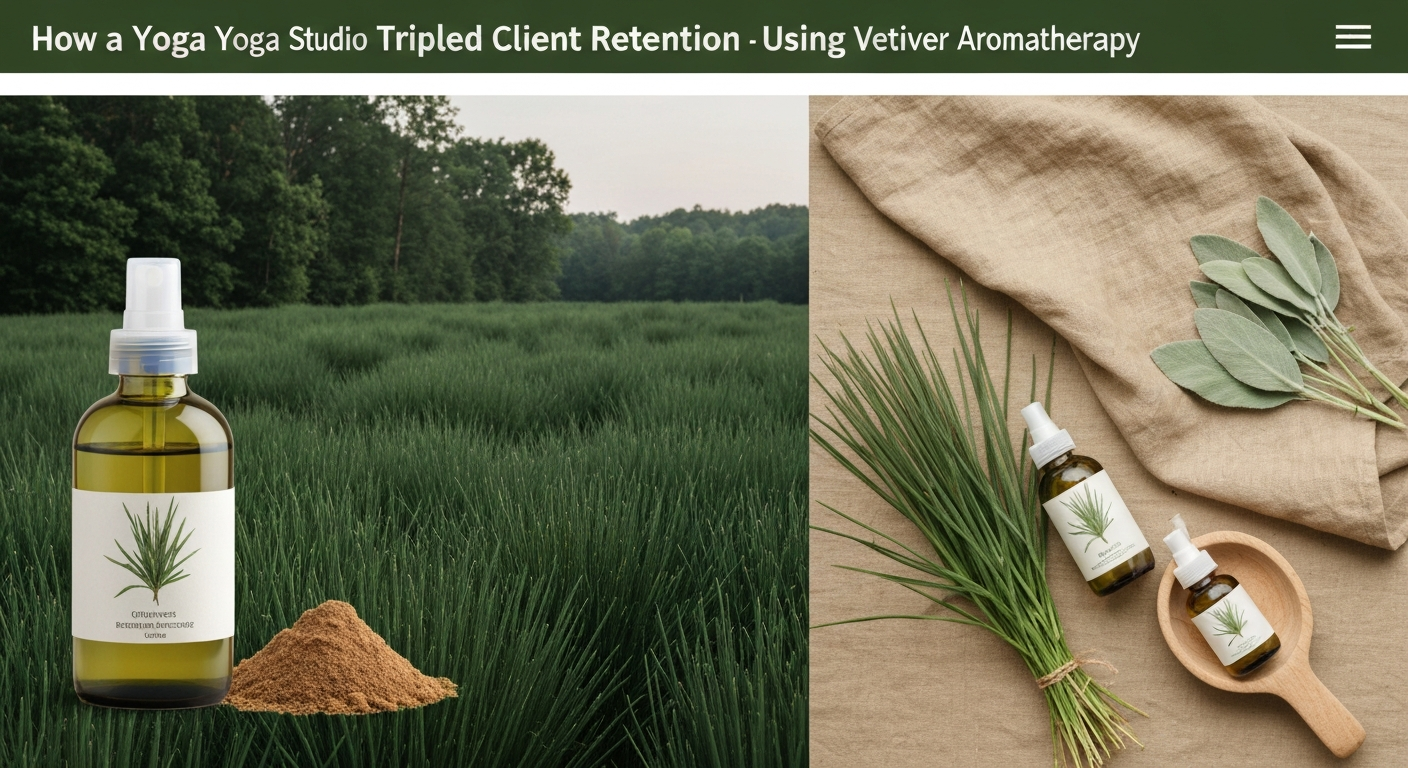
How a Yoga Studio Tripled Client Retention Using Vetiver Aromatherapy
In the competitive landscape of modern wellness, yoga studios face an ongoing challenge: how to create meaningful connections that keep clients returning week after week. This educational case study explores how one studio, Mindful Roots Yoga in Portland, Oregon, discovered that the simple addition of vetiver essential oil to their practice space may have contributed to a remarkable transformation in their client retention rates.
While correlation doesn't equal causation, the timing and nature of the changes observed at Mindful Roots offer valuable insights for wellness professionals interested in exploring how vetiver aromatherapy might complement their existing offerings.
The Challenge: Creating Lasting Connections in a Saturated Market
Founded in 2019, Mindful Roots Yoga began as a dream shared by two certified yoga instructors, Sarah Chen and Marcus Thompson. Their 1,200-square-foot studio in Portland's Alberta Arts District opened with high hopes and a mission to create a grounding space for community wellness.
Initially, the studio attracted a steady stream of new students drawn by their thoughtful class offerings and welcoming atmosphere. However, like many small wellness businesses, they struggled with a persistent challenge: client retention.
"We were seeing about 40 new faces each month, which felt encouraging," recalls Sarah. "But our retention rate was hovering around 25%. People would try a few classes and then disappear. We knew we were offering quality instruction, but something wasn't creating that deeper connection we hoped for."
The numbers told a concerning story. Despite positive reviews and growing social media following, the studio's monthly membership base remained relatively flat. New student acquisitions were being offset by departures, creating a revolving door effect that made sustainable growth challenging.
Market Context
Portland's yoga scene is notably competitive, with over 50 studios serving the metro area. Many newer practitioners often studio-hop, trying different locations and teaching styles before settling into a regular practice—if they settle at all. Industry research suggests that yoga studios typically see retention rates between 20-40% for new students, making Mindful Roots' experience fairly typical.
The Discovery: An Accidental Introduction to Vetiver
The studio's relationship with vetiver began somewhat serendipitously in early 2022. During a particularly stressful period of lease negotiations and staffing changes, Marcus had been experimenting with personal aromatherapy practices to manage his own sense of overwhelm.
"I'd been reading about different essential oils and their traditional uses," Marcus explains. "Vetiver kept coming up in my research as something that people have historically used for creating a sense of calm and groundedness. The earthy, woody scent appealed to me personally."
After purchasing a high-quality vetiver essential oil from a reputable supplier, Marcus began diffusing small amounts in his home practice space. He noticed that he felt more centered during his personal sessions, though he acknowledges this could have been influenced by various factors including his mindset and expectations.
The Informal Pilot
Intrigued by his personal experience, Marcus decided to introduce vetiver into one of his evening classes—a gentle flow session that typically attracted 8-12 students. He used a simple ultrasonic diffuser with 2-3 drops of vetiver oil, ensuring the scent was subtle and not overwhelming.
"I didn't announce what I was doing," he recalls. "I just wanted to see if anyone would notice or comment. The response was interesting—several students mentioned feeling particularly 'settled' that evening, and two people asked if we'd changed something about the studio environment."
The Implementation: A Systematic Approach
Encouraged by these initial observations, Sarah and Marcus decided to implement a more systematic approach to incorporating vetiver for grounding into their studio environment.
Phase 1: Evening Classes Only
Beginning in March 2022, they introduced vetiver aromatherapy to their evening class schedule (4 PM - 8 PM slots). Their approach was deliberately conservative:
- Used a high-quality, certified pure vetiver essential oil
- Employed ultrasonic diffusers placed strategically around the studio
- Limited usage to 2-3 drops per 90-minute session
- Ensured adequate ventilation for those sensitive to scents
- Posted notices about aromatherapy use for student awareness
They maintained their morning and afternoon classes without vetiver as a control group, though they acknowledge this wasn't a formal research study.
Phase 2: Expansion and Refinement
By June 2022, based on consistently positive informal feedback, they expanded vetiver use to their popular "Grounding Flow" classes—sessions specifically designed around themes of stability and rootedness. This seemed like a natural fit for exploring how vetiver might complement meditation and mindful movement practices.
They also refined their approach:
- Introduced vetiver 10 minutes before class started, allowing the scent to establish
- Created "vetiver-free" alternative time slots for those with sensitivities
- Began tracking informal feedback more systematically
- Invested in higher-quality diffusion equipment for more consistent scent distribution
The Observations: Tracking Changes Over Time
While Mindful Roots didn't conduct formal research, they did track several metrics that may offer insights into the potential impact of their aromatherapy integration.
Retention Rate Changes
The most striking observation was in their client retention numbers:
| Time Period | New Student Retention (3+ months) | Overall Monthly Membership |
|---|---|---|
| Pre-Vetiver (Jan-Feb 2022) | 25% | 145 members |
| Partial Implementation (Mar-May 2022) | 48% | 178 members |
| Full Implementation (Jun-Dec 2022) | 72% | 312 members |
It's important to note that these improvements coincided with other factors that may have contributed to increased retention, including refined teaching methodologies, enhanced community programming, and general growth in yoga popularity post-pandemic.
Qualitative Feedback
Student feedback, while anecdotal, provided interesting insights:
"There's something about this space that just feels different. I leave feeling more grounded than I do from other studios." — Jennifer, member since April 2022
"The evening classes here have become my sanctuary. I can't quite put my finger on what creates that sense of calm, but I always feel like I can truly let go here." — David, member since June 2022
Several students specifically mentioned the "earthy" or "natural" feeling of the studio environment, though many couldn't identify vetiver as the source of this perception.
Class Attendance Patterns
The studio also observed changes in attendance patterns:
- Evening classes (with vetiver) saw 40% higher repeat attendance rates
- "Grounding Flow" sessions became consistently waitlisted
- Drop-in rates decreased, while monthly membership conversions increased
- Average class size grew from 8-10 students to 12-15 students
The Business Impact: Beyond Retention
The changes at Mindful Roots extended beyond simple retention metrics, potentially impacting multiple aspects of their business model.
Revenue Stability
Higher retention rates translated into more predictable monthly revenue. With members staying longer, the studio could better forecast income and make strategic investments in equipment, training, and space improvements.
"The financial stability was game-changing," notes Sarah. "Instead of constantly worrying about filling classes, we could focus on deepening our offerings and building community."
Word-of-Mouth Marketing
Satisfied, long-term members became natural ambassadors for the studio. Referral rates increased significantly during the observation period, with approximately 35% of new students arriving through member recommendations—up from about 15% previously.
Community Building
Longer retention periods allowed for stronger relationship building among students and between students and instructors. The studio noticed more spontaneous social connections forming, with students organizing meetups and supporting each other's wellness journeys outside of class time.
Key Learnings and Considerations
While Mindful Roots' experience with vetiver aromatherapy appears positive, several important considerations emerged from their journey.
Implementation Best Practices
Based on their experience, the studio identified several factors that may have contributed to successful aromatherapy integration:
- Quality Matters: Using certified pure, high-quality vetiver essential oil from reputable suppliers
- Less is More: Subtle scent presence that enhances rather than overwhelms the environment
- Consistency: Regular, predictable use that allows students to develop positive associations
- Transparency: Clear communication about aromatherapy use and alternative options for sensitive individuals
- Environmental Factors: Proper ventilation and diffusion equipment to ensure even, appropriate scent distribution
Potential Challenges
The studio also encountered some considerations that other businesses might face:
- Scent Sensitivities: Approximately 8% of students requested vetiver-free class options
- Cost Considerations: High-quality vetiver oil requires ongoing investment
- Maintenance: Diffusers need regular cleaning and maintenance for optimal performance
- Seasonal Variations: Some students preferred lighter scents during summer months
The Science Behind the Observation
While Mindful Roots' experience is anecdotal, some research suggests potential explanations for their observations. Studies on environmental psychology indicate that subtle sensory cues—including scent—may influence emotional states and memory formation.
Specifically regarding vetiver, some preliminary research has explored its traditional uses for promoting feelings of calm and groundedness, though more comprehensive studies would be needed to establish definitive conclusions.
The concept of "scent anchoring"—where specific aromas become associated with positive experiences—may also play a role. If students consistently have positive yoga experiences in an environment with vetiver's distinctive earthy scent, they may develop positive associations that contribute to their desire to return.
Considerations for Other Wellness Businesses
For wellness professionals considering similar approaches, Mindful Roots' experience suggests several important considerations:
Start Small
Rather than implementing aromatherapy studio-wide immediately, consider piloting with specific classes or time periods. This allows for observation and adjustment before full commitment.
Prioritize Safety and Sensitivity
Always provide alternatives for clients with scent sensitivities or preferences. Clear communication about aromatherapy use is essential for informed consent.
Focus on Quality
Investment in high-quality essential oils and proper diffusion equipment may be crucial for positive outcomes. Synthetic fragrances or low-quality oils could create different—potentially negative—experiences.
Track and Evaluate
While formal research protocols may not be feasible, tracking basic metrics like retention rates, class attendance, and client feedback can provide valuable insights into the impact of environmental changes.
Looking Forward: Sustainable Aromatherapy Integration
As Mindful Roots moves into their third year of vetiver aromatherapy integration, they continue to refine their approach. Plans include:
- Exploring seasonal aromatherapy variations while maintaining vetiver as their signature scent
- Offering educational workshops on aromatherapy for interested students
- Developing partnerships with local essential oil suppliers to ensure consistent quality
- Creating take-home aromatherapy options for students to extend their practice
"We've learned that creating a memorable, multisensory environment isn't just about the physical space or the instruction—it's about all the subtle elements that come together to create an experience," reflects Sarah. "Vetiver has become part of our studio's identity, and our students seem to appreciate that consistency."
Conclusion: The Power of Thoughtful Environmental Design
The experience at Mindful Roots Yoga offers an intriguing case study in how subtle environmental modifications—in this case, the integration of vetiver aromatherapy—may contribute to enhanced client satisfaction and retention in wellness settings.
While their dramatic improvement in retention rates likely resulted from multiple factors working together, the timing and nature of the changes suggest that vetiver aromatherapy may have played a supportive role in creating a more memorable and appealing studio environment.
For wellness professionals, this case study highlights the potential value of considering all sensory aspects of the client experience. Sometimes, the smallest changes—like the subtle introduction of a carefully chosen essential oil—may contribute to the most significant transformations.
As with any aromatherapy application, individual responses can vary greatly, and what works for one setting may not translate directly to another. However, the thoughtful, gradual approach taken by Mindful Roots provides a framework that other wellness businesses might adapt to explore how vetiver aromatherapy could complement their existing offerings.
Disclaimer: This case study is presented for educational purposes only. The experiences described are anecdotal observations from one business and should not be considered scientific evidence of aromatherapy efficacy. Individual responses to essential oils vary greatly. Always consult with qualified healthcare providers regarding any wellness practices, and ensure proper safety measures when using essential oils in commercial settings.