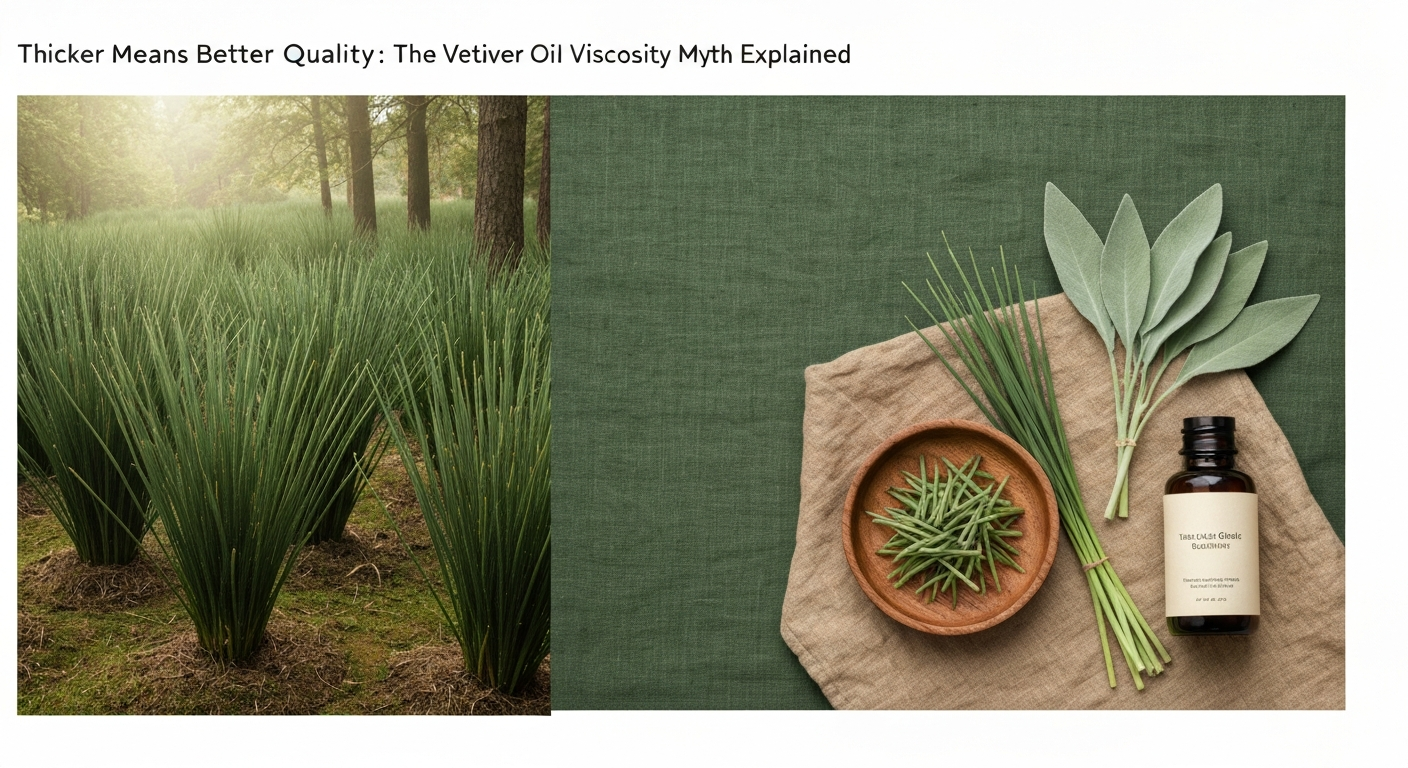
Thicker Means Better Quality: The Vetiver Oil Viscosity Myth Explained
When exploring vetiver essential oil, many aromatherapy enthusiasts encounter a persistent belief: the thicker the oil, the higher its quality. This vetiver oil viscosity myth has influenced countless purchasing decisions, leading people to equate dense, syrupy consistency with superior value. Yet this assumption oversimplifies the complex nature of authentic vetiver oil and may actually mislead consumers seeking genuine, high-quality products.
Understanding the truth behind thick vetiver oil quality requires a deeper exploration of what creates vetiver's naturally varied consistency, how processing methods affect texture, and what factors truly determine oil excellence. Let's ground ourselves in the facts and dispel the misconceptions surrounding this precious earth-rooted essence.
Myth #1: Thicker Vetiver Oil Is Always Higher Quality
The Myth
Many believe that authentic, premium vetiver oil should pour like honey or molasses, with a dense, viscous consistency that clings to the bottle walls. This belief suggests that thin or moderately flowing vetiver oil indicates dilution, inferior processing, or poor quality sourcing.
The Truth
Research suggests that vetiver oil consistency meaning extends far beyond quality indicators. Evidence indicates that natural vetiver oil viscosity varies significantly based on multiple factors including botanical variety, growing conditions, harvest timing, and distillation methods—none of which necessarily correlate with quality.
Studies examining vetiver oil composition have found that authentic, high-grade oils can range from moderately viscous to quite thick, depending on their sesquiterpene alcohol content, particularly vetiverols and vetiverones. Some of the most prized vetiver oils from Haiti and India display moderate viscosity while maintaining exceptional aromatic complexity and purity.
Why This Myth Exists
This misconception likely arose because some lower-quality vetiver oils are indeed thin due to excessive dilution or poor extraction methods. However, the reverse assumption—that thickness guarantees quality—creates a false correlation that some producers exploit by artificially thickening oils or selecting for viscosity over aromatic excellence.
Myth #2: All Authentic Vetiver Oil Should Have the Same Consistency
The Myth
Another common belief suggests that genuine vetiver oil maintains consistent viscosity across all sources and batches, implying that variation indicates adulteration or quality issues.
The Truth
Evidence indicates that vetiver oil texture quality naturally varies based on terroir—the environmental factors that influence plant chemistry. Just as wine grapes express different characteristics based on soil, climate, and cultivation practices, vetiver roots develop varying chemical profiles that directly impact oil consistency.
Research examining vetiver from different regions shows significant viscosity variations:
- Haitian vetiver often displays moderate to high viscosity with complex aromatic depth
- Indian vetiver may present lighter consistency while maintaining rich, earthy character
- Java vetiver typically exhibits moderate flow with distinctive smoky undertones
- Reunion vetiver can range from thick to moderately viscous depending on specific growing conditions
These natural variations reflect authentic regional characteristics rather than quality deficiencies. Understanding vetiver oil grades helps consumers appreciate these natural differences as expressions of botanical diversity rather than inconsistencies.
Why This Myth Persists
The desire for consistency in commercial products creates expectations that natural materials should behave uniformly. However, this standardization mindset overlooks the inherent variability that characterizes authentic botanical extracts.
Myth #3: Thin Vetiver Oil Is Always Diluted or Fake
The Myth
Some consumers automatically dismiss vetiver oils with lighter consistency, assuming they've been diluted with carrier oils or synthetic compounds.
The Truth
Research suggests that naturally lighter vetiver oils can emerge from specific processing conditions and botanical factors. Some evidence indicates that careful, low-temperature distillation may preserve certain volatile compounds while producing oils with moderate viscosity that still maintain full aromatic complexity.
Additionally, younger vetiver roots or specific cultivars may naturally yield oils with lighter consistency while retaining authentic chemical profiles. Proper vetiver purity testing through gas chromatography-mass spectrometry (GC-MS) analysis provides definitive quality assessment regardless of viscosity appearance.
The Reality Check
While excessive thinness can indicate dilution, moderate consistency doesn't automatically signal adulteration. Authentic assessment requires comprehensive evaluation including aromatic profile, chemical composition analysis, and source verification rather than viscosity alone.
What Actually Determines Vetiver Oil Quality
Moving beyond the vetiver oil viscosity myth, genuine quality assessment encompasses multiple factors:
Chemical Composition
High-quality vetiver oil contains complex sesquiterpene profiles with appropriate ratios of vetiverols, vetivones, and other characteristic compounds. These chemical fingerprints indicate authentic sourcing and proper processing regardless of consistency.
Aromatic Complexity
Premium vetiver displays multifaceted scent profiles with deep, earthy base notes, subtle sweet undertones, and distinctive regional characteristics. Aromatic richness often correlates more strongly with quality than viscosity.
Source Transparency
Reputable suppliers provide detailed information about botanical variety, growing region, harvest methods, and distillation processes. This transparency enables informed quality assessment beyond physical appearance.
Processing Methods
Careful extraction techniques that preserve delicate aromatic compounds while maintaining chemical integrity indicate quality craftsmanship. Understanding vetiver oil quality standards helps consumers recognize these processing indicators.
Practical Guidelines for Quality Assessment
Rather than relying on viscosity assumptions, consider these evidence-based evaluation approaches:
Scent Evaluation
Quality vetiver oil should present rich, complex aromatic profiles without harsh or synthetic notes. The fragrance should evolve over time, revealing different facet layers as it develops on your skin or diffuses in air.
Source Documentation
Seek suppliers who provide batch-specific information including origin details, extraction methods, and ideally, analytical reports confirming purity and composition.
Reputation Research
Investigate supplier credentials, customer feedback, and industry recognition. Established companies with aromatherapy expertise typically maintain consistent quality standards regardless of viscosity variations.
Price Consideration
While cost shouldn't be the sole determining factor, suspiciously low prices may indicate quality compromises, while extremely high prices don't guarantee superior products.
Embracing Natural Variation
Understanding the vetiver oil viscosity myth invites us to appreciate the natural diversity inherent in botanical extracts. Rather than seeking uniform consistency, we can celebrate the unique characteristics that different vetiver oils offer—each reflecting their specific terroir, processing heritage, and aromatic personality.
This appreciation aligns with mindful consumption practices that value authenticity over artificial standardization. By moving beyond viscosity assumptions, we open ourselves to discovering exceptional vetiver oils that might otherwise be overlooked due to preconceived consistency expectations.
Conclusion: Quality Beyond Appearance
The journey to understanding authentic vetiver oil quality leads us beyond surface-level assessments toward deeper appreciation of botanical complexity. While viscosity can provide some information about oil characteristics, it serves as just one small piece of a much larger quality puzzle.
By grounding our evaluation in scientific understanding, aromatic appreciation, and source transparency, we develop more sophisticated discernment that serves us well in selecting vetiver oils that truly resonate with our needs and preferences. This informed approach honors both the natural diversity of vetiver and our own journey toward mindful, quality-conscious choices.
Remember that the most valuable vetiver oil is one that speaks to your senses, comes from trusted sources, and enhances your personal aromatherapy practice—regardless of whether it pours like water or honey.