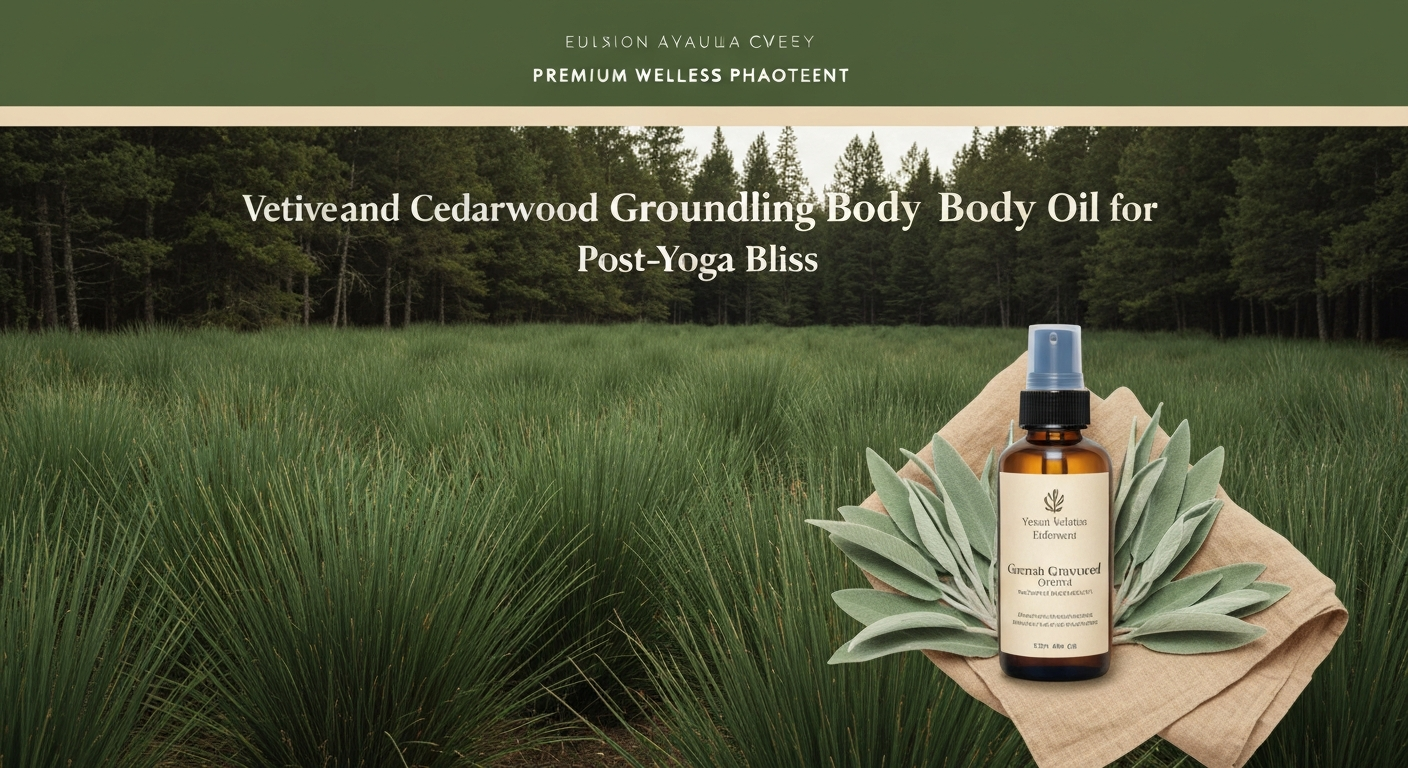
Vetiver and Cedarwood Grounding Body Oil for Post-Yoga Bliss
There's something deeply centering about the ritual of anointing the body with earth-scented oils after a mindful yoga practice. This vetiver and cedarwood body oil recipe creates a grounding blend that may help extend that sense of peaceful connection you've cultivated on your mat.
The woody, smoky notes of vetiver pair beautifully with cedarwood's warm, forest-like aroma, creating a sensory experience that many practitioners find supportive for their post-practice mindfulness routine. This DIY grounding body oil is designed to nourish skin while providing an aromatic anchor to your yoga journey.

Why Vetiver and Cedarwood for Post-Yoga Care
Vetiver essential oil, with its deep, earthy fragrance, has been traditionally used in aromatherapy practices focused on centering and grounding. Many yoga practitioners report that vetiver's distinctive scent helps them maintain that sense of rootedness they've cultivated during their practice.
Cedarwood essential oil complements vetiver beautifully, offering its own woody notes that some research suggests may support relaxation responses. Together, these oils create what many describe as a "forest floor" aroma that feels both ancient and deeply calming.
When blended into a nourishing carrier oil base, this combination becomes more than just a moisturizer—it becomes part of your mindful transition from practice back into daily life. Learn more about how vetiver supports grounding practices in your wellness routine.
Complete Ingredient List
Difficulty Level: Beginner
Prep Time: 10 minutes
Yield: 2 oz (60ml)
Base Oils
- 1.5 oz (45ml) Sweet Almond Oil (primary carrier)
- 0.5 oz (15ml) Jojoba Oil (for stability and skin nourishment)
Essential Oils
- 8 drops Vetiver Essential Oil
- 6 drops Cedarwood Essential Oil (Atlas or Virginia)
- 2 drops Lavender Essential Oil (optional, for additional calming notes)
Optional Enrichments
- 1/4 teaspoon Vitamin E Oil (natural preservative)
- 2-3 drops Rose Hip Seed Oil (for added nourishment)

Step-by-Step Instructions
- Prepare Your Workspace: Clean and sanitize all equipment including bottles, funnels, and measuring tools. Work in a well-ventilated area away from heat sources.
- Measure Base Oils: Using a small measuring cup or syringe, carefully measure the sweet almond oil and jojoba oil. Pour into your clean 2-oz dark glass bottle.
- Add Essential Oils: Using a clean dropper or pipette, add the essential oils one at a time:
- Add 8 drops vetiver essential oil
- Add 6 drops cedarwood essential oil
- Add 2 drops lavender (if using)
- Include Enrichments: If using vitamin E oil or rose hip seed oil, add these now.
- Blend Thoroughly: Cap the bottle tightly and gently roll between your palms for 1-2 minutes to distribute oils evenly. Avoid vigorous shaking, which can create air bubbles.
- Test and Adjust: Allow the blend to sit for 24 hours before first use to let the oils marry. You can adjust the scent by adding 1-2 additional drops of your preferred essential oil if needed.
Critical Safety Guidelines
Dilution Ratio: This recipe maintains a 1.3% dilution ratio, which is considered safe for most adults when used as a body oil. This equates to approximately 16 drops of essential oil per 2 oz of carrier oil.
Essential Safety Warnings
- Always Patch Test: Apply a small amount to the inside of your wrist 24 hours before full use. Discontinue if any irritation occurs.
- Pregnancy and Nursing: Consult your healthcare provider before using essential oils during pregnancy or while breastfeeding.
- Children: This blend is not recommended for children under 12. For teens, reduce essential oil amounts by half.
- Photosensitivity: While this blend doesn't contain citrus oils, always use caution with sun exposure after applying any essential oil blend.
- Medical Conditions: If you have sensitive skin, allergies, or any medical conditions, consult with a qualified healthcare provider before use.
Application and Usage Tips
For optimal post-yoga application, warm a small amount (about 1/2 teaspoon) between your palms before gently massaging into slightly damp skin. Many practitioners find this vetiver body oil recipe most effective when applied to pulse points—wrists, temples, and the back of the neck—where the warmth helps release the aromatic compounds.
The earthy vetiver cedarwood body oil can be particularly grounding when applied mindfully, taking time to breathe deeply and maintain that meditative state you've cultivated during practice.
Storage and Shelf Life
Store your DIY grounding body oil in a cool, dark place away from direct sunlight and heat. A dark glass bottle with a tight-fitting lid will help preserve the oils' integrity. When stored properly, this blend should maintain its quality for 6-12 months.
The addition of vitamin E oil can help extend shelf life naturally. Always check for any changes in scent, color, or texture before use, and discontinue if the oil appears rancid or develops an off smell.
Variations and Substitutions
Seasonal Adaptations
Summer Variation: Replace 1 oz of sweet almond oil with fractionated coconut oil for a lighter feel. (See: NIH — Vetiver Research.) Consider reducing vetiver to 6 drops and adding 2 drops of bergamot for a slightly more uplifting blend.
Winter Variation: Add 2 drops of frankincense essential oil to enhance the meditative qualities, perfect for longer, more introspective winter practices.
Carrier Oil Substitutions
- Sensitive Skin: Replace sweet almond oil with sunflower oil or grapeseed oil
- Luxury Version: Use argan oil or rosehip seed oil as 25% of your carrier oil base
- Quick-Absorbing: Use fractionated coconut oil for faster absorption
Essential Oil Variations
While maintaining the grounding theme, you might explore these substitutions in our complete guide to vetiver and cedarwood combinations:
- Replace cedarwood with sandalwood for a more exotic, creamy base
- Add 2 drops of patchouli for an even earthier profile
- Include 1 drop of ylang-ylang for subtle floral grounding notes
Mindful Application Ritual
Transform your post-yoga oil application into a mindful transition ritual. As you warm the oil between your palms, take three deep breaths, allowing the vetiver and cedarwood aromas to anchor your awareness. Apply the oil with the same intentional movements you brought to your yoga practice.
This simple vetiver yoga oil ritual can help you carry that sense of groundedness with you throughout your day, creating a bridge between your practice and daily life.
Troubleshooting Common Issues
Scent Too Strong: If the aroma feels overwhelming, add an additional 0.5 oz of carrier oil to dilute the essential oils further.
Oil Too Heavy: Blend in additional jojoba oil, which absorbs more readily than sweet almond oil.
Separation: This is normal with natural oils. Simply roll the bottle gently between your palms before each use.
Creating your own vetiver body oil recipe offers a beautiful way to extend the benefits of your yoga practice beyond the mat. This grounding blend serves as both a skin-nourishing treatment and an aromatic reminder of your commitment to mindful self-care.
For more inspiration, explore our collection of DIY vetiver recipes to discover additional ways to incorporate this remarkable essential oil into your wellness routine.
Remember: This information is for educational purposes only and is not intended to replace professional medical advice. Always consult with a qualified healthcare provider before using essential oils, especially if you have existing health conditions or concerns.