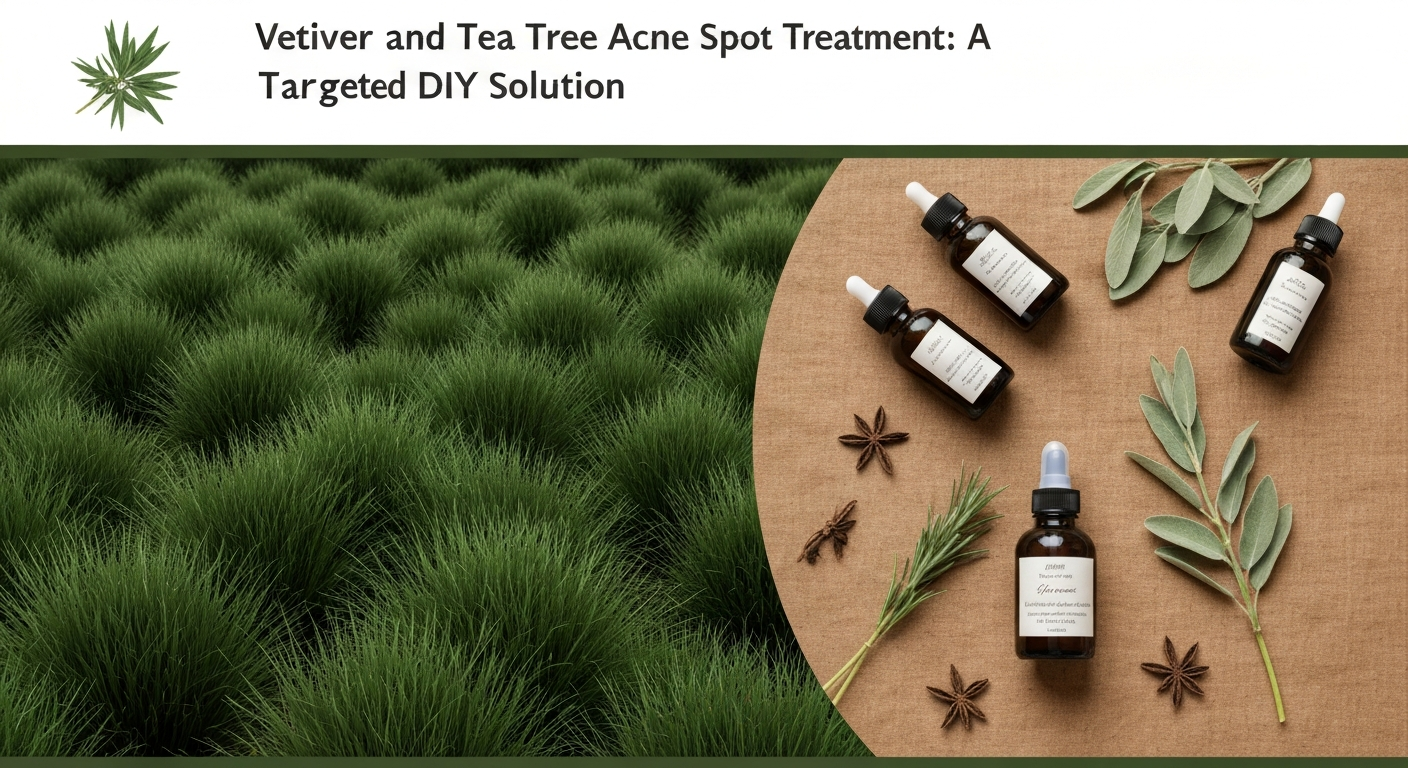
Vetiver and Tea Tree Acne Spot Treatment: A Targeted DIY Solution
In the mindful pursuit of natural skincare, creating your own vetiver acne spot treatment offers a grounding ritual that connects you with nature's gentle offerings. This carefully crafted recipe combines the earthy, centering properties of vetiver essential oil with tea tree's traditionally recognized cleansing qualities to create a targeted solution that may support your skin's natural balance.
Before embarking on this DIY journey, remember that essential oils are potent plant extracts that require respectful handling and proper dilution. This DIY vetiver tea tree acne treatment is designed for educational purposes and should complement, never replace, professional skincare advice.

Understanding the Ingredients
This vetiver blemish recipe harnesses the synergy between two plant allies. Vetiver, with its deep, earthy aroma, has been traditionally used in skincare practices for centuries. Some research suggests that vetiver may help promote a sense of balance in skin's natural processes. Tea tree oil, native to Australia, has long been valued for its cleansing properties in traditional applications.
When combined thoughtfully, these oils create a homemade vetiver acne treatment that honors both efficacy and gentleness. The key lies in proper dilution and mindful application.
Recipe Overview
Difficulty Level: Beginner
Prep Time: 10 minutes
Yield: 0.5 oz (15ml)
Shelf Life: 6-8 months when stored properly
Complete Ingredients List
Essential Oils
- 3 drops vetiver essential oil (Vetiveria zizanioides)
- 2 drops tea tree essential oil (Melaleuca alternifolia)
Carrier Oil Base
- 1 tablespoon (15ml) jojoba oil or fractionated coconut oil
Optional Additions
- 1 drop lavender essential oil (for sensitive skin)
- 1 drop frankincense essential oil (for mature skin)
Equipment Needed
- 0.5 oz dark glass dropper bottle
- Small glass measuring cup
- Glass stirring rod or clean toothpick
- Funnel (optional but helpful)

Step-by-Step Instructions
Step 1: Prepare Your Workspace
Create a clean, calm environment for your DIY ritual. Wash your hands thoroughly and sanitize all equipment with rubbing alcohol. This mindful preparation sets the foundation for a quality product.
Step 2: Measure the Carrier Oil
Pour 1 tablespoon of your chosen carrier oil into the small glass measuring cup. Jojoba oil closely mimics skin's natural sebum and may help maintain balance, while fractionated coconut oil offers lightweight hydration.
Step 3: Add Essential Oils
Working slowly and mindfully, add the essential oils drop by drop:
- Add 3 drops of vetiver essential oil
- Add 2 drops of tea tree essential oil
- Add any optional oils if desired
Step 4: Blend Gently
Using your glass stirring rod, gently swirl the mixture in a clockwise motion. This creates a harmonious blend while maintaining the integrity of the oils.
Step 5: Transfer to Storage Bottle
Carefully pour or use a funnel to transfer your blend into the dark glass dropper bottle. (See: NIH — Vetiver Research.) The dark glass protects the oils from light degradation, preserving their quality.
Step 6: Label and Date
Create a clear label with the contents and date of creation. This practice supports safe, organized skincare routines.
Critical Safety Warnings
Essential Safety Notice: This recipe uses a 3.3% dilution ratio, which is within safe parameters for targeted spot treatment. However, essential oils can cause skin sensitivity in some individuals.
Before First Use
- Patch Test Required: Apply a small amount to your inner forearm and wait 24 hours to check for reactions
- Avoid Eye Area: Keep away from eyes and mucous membranes
- Pregnancy/Nursing: Consult healthcare provider before use
- Children: Not recommended for children under 12
Contraindications
- Do not use if allergic to any ingredients
- Discontinue if irritation occurs
- May increase photosensitivity - use sunscreen
- Not for use on broken or severely inflamed skin
Application and Usage
To use your vetiver acne spot treatment, apply 1-2 drops directly to clean, individual blemishes using the dropper or a cotton swab. Gently pat, don't rub, allowing the oils to absorb naturally. Use once daily, preferably in the evening as part of your mindful skincare ritual.
Remember, this treatment may support your skin's natural processes, but results vary among individuals. Some people report improvements in skin texture and appearance with consistent use over several weeks.
Storage Instructions
Store your blend in a cool, dry place away from direct sunlight. A bathroom cabinet or bedroom drawer works well. The dark glass bottle will help preserve the oils' integrity. When stored properly, your homemade vetiver acne treatment should maintain its quality for 6-8 months.
Variations and Substitutions
For Sensitive Skin
- Reduce vetiver to 2 drops and tea tree to 1 drop
- Add 1 drop of chamomile essential oil
- Increase carrier oil to 1.5 tablespoons for further dilution
For Oily Skin
- Substitute grapeseed oil as the carrier
- Add 1 drop of cypress essential oil
For Dry or Mature Skin
- Use rosehip seed oil as the carrier
- Add 1 drop of frankincense essential oil
Mindful Integration
Creating your own DIY vetiver tea tree acne treatment becomes more than skincare—it's a practice in mindful self-care. Each application offers a moment to connect with your skin's needs and nature's offerings. Learn more about vetiver oil for acne applications or explore broader vetiver oil for skin benefits to deepen your understanding.
For those inspired to expand their natural skincare journey, discover more DIY vetiver skincare recipes that honor both your skin and the earth's wisdom.
Final Considerations
While this vetiver blemish recipe offers a natural approach to skincare concerns, remember that persistent or severe skin issues may require professional attention. Essential oils are complementary tools that may support your skin's natural balance, but they should never replace proper medical care when needed.
Embrace this DIY journey with patience and mindfulness. Your skin, like nature itself, responds best to gentle, consistent care rather than harsh, quick fixes. Trust the process, honor your skin's unique needs, and find grounding in this simple yet meaningful ritual of self-care.