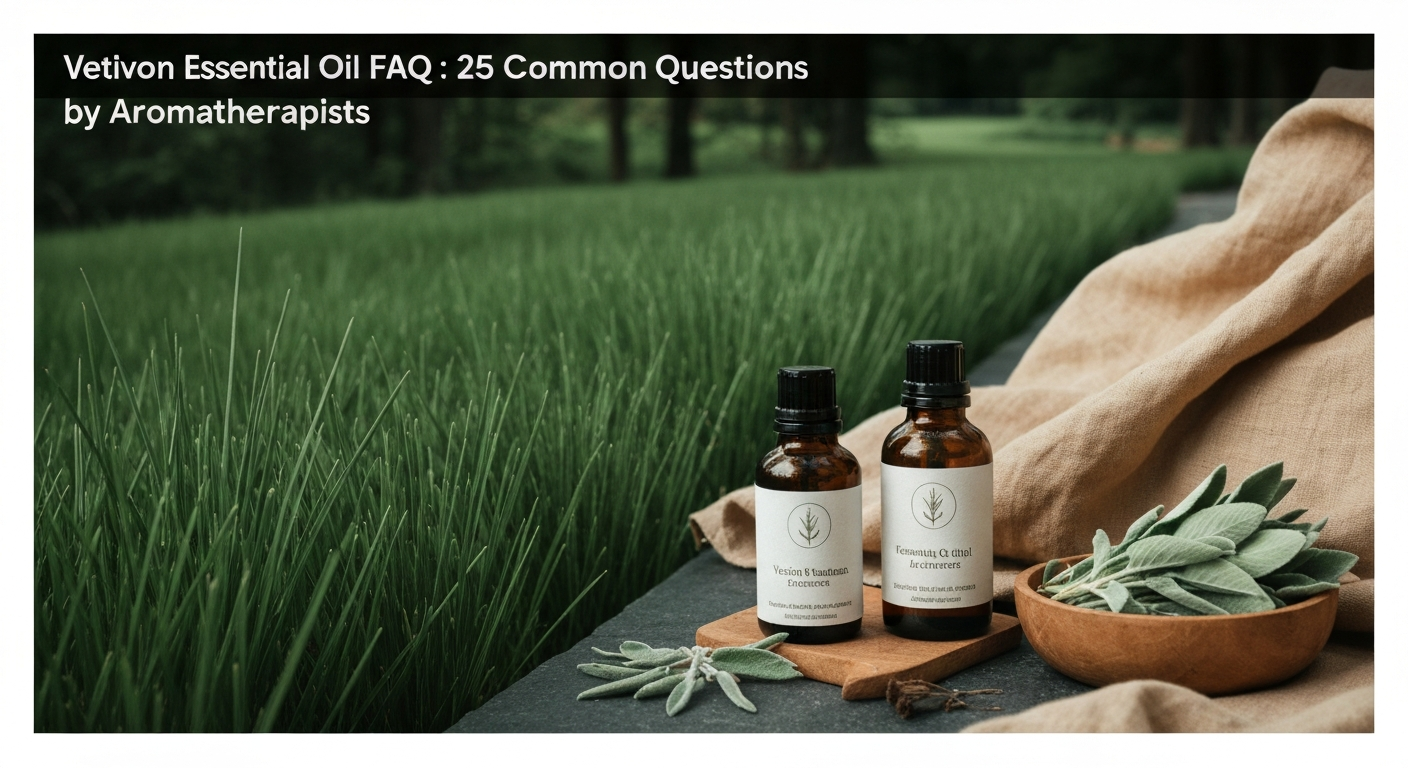
Vetiver Essential Oil FAQ: 25 Common Questions Answered by Aromatherapists
Vetiver essential oil, with its deep, earthy aroma and grounding qualities, often sparks curiosity among aromatherapy enthusiasts. Whether you're new to this remarkable oil or seeking to deepen your understanding, these expertly answered questions will guide your journey with vetiver's mindful presence.
Vetiver Oil Basics
1. What exactly is vetiver essential oil?
Vetiver essential oil is steam-distilled from the roots of Chrysopogon zizanioides, a perennial grass native to India. The oil captures the plant's distinctive earthy, woody, and slightly smoky aroma that has been treasured in perfumery and traditional practices for centuries. This golden-brown oil embodies the grounding essence of its deep root system.
2. How does vetiver oil smell?
Vetiver oil presents a complex aromatic profile that's deeply earthy and woody, with subtle smoky and balsamic notes. Many describe it as having a rich, soil-like quality that evokes images of ancient forests and rain-dampened earth. The scent tends to improve with age, developing greater depth and complexity over time.
3. Where does the best vetiver oil come from?
High-quality vetiver oil traditionally comes from Haiti, Java, and Réunion, each offering distinct aromatic characteristics. Haitian vetiver is often considered among the finest, known for its clean, refined scent profile. When exploring options, consider our comprehensive vetiver buying guide to understand quality markers and sourcing considerations.
4. Why is vetiver oil so expensive?
Vetiver oil commands higher prices due to the labor-intensive harvesting process and low oil yield from the roots. The grass must mature for 12-18 months before harvest, and the extensive root system requires careful hand-digging. Additionally, it takes approximately 500 pounds of roots to produce just one pound of essential oil.
Uses and Applications
5. What are the main uses for vetiver essential oil?
Vetiver oil is primarily used in aromatherapy for its grounding and centering qualities, making it popular for meditation and mindfulness practices. It's also valued in natural perfumery as a base note, in DIY skincare formulations for mature skin, and in home fragrance applications. Many people report finding its earthy scent particularly supportive during times of transition or stress.
6. Can vetiver oil help with sleep?
Many aromatherapy practitioners and users report that vetiver oil's grounding properties may help create a calm bedtime atmosphere conducive to rest. Some research suggests that certain compounds in vetiver may have mild sedative effects, though more studies are needed. Consider diffusing 2-3 drops in your bedroom or adding a drop to your pillow (properly diluted) as part of your evening routine.
7. How do I use vetiver oil for grounding and meditation?
For grounding practices, try diffusing 2-4 drops of vetiver oil during meditation or mindfulness sessions. You can also create a simple roll-on blend by mixing 1-2 drops of vetiver with a carrier oil like jojoba, then applying to pulse points before meditation. The oil's deep, earthy aroma may help anchor your awareness to the present moment.
8. Is vetiver good for skincare?
Vetiver oil is traditionally used in skincare applications, particularly for mature or dry skin types. When properly diluted (typically 0.5-1% concentration), it may help support skin's natural moisture barrier. Always perform a patch test before use and consider consulting with a qualified aromatherapist for personalized dilution ratios and application methods.
9. Can I use vetiver oil in homemade perfume?
Vetiver oil serves as an excellent base note in natural perfume blends, providing depth and longevity to fragrance compositions. Start with just 1-2 drops per 10ml of carrier oil or perfume blend, as vetiver's potent aroma can easily dominate lighter notes. It pairs beautifully with citrus, floral, and other woody essential oils.
Safety and Precautions
10. Is vetiver essential oil safe for everyone?
While vetiver oil is generally considered safe for most adults when used properly, certain individuals should exercise caution. Pregnant and breastfeeding women should consult healthcare providers before use, and children require significantly lower dilution ratios. Always dilute vetiver oil before topical application and perform patch tests to check for sensitivity.
11. What are the proper dilution rates for vetiver oil?
For adults, use 1-2% dilution for regular skincare applications (6-12 drops per ounce of carrier oil) and 0.5-1% for facial applications (3-6 drops per ounce). For children over 2 years, use 0.25-0.5% dilution rates and always consult a qualified aromatherapist. For more detailed safety information, refer to our comprehensive vetiver safety guide.
12. Can vetiver oil cause skin reactions?
While vetiver oil is generally well-tolerated, some individuals may experience skin sensitivity, especially when used undiluted or in high concentrations. Common reactions might include mild irritation, redness, or allergic contact dermatitis in sensitive individuals. Always dilute properly, perform patch tests, and discontinue use if any adverse reactions occur.
13. Is it safe to ingest vetiver oil?
Vetiver essential oil should never be ingested without guidance from a qualified healthcare practitioner trained in clinical aromatherapy. Internal use of essential oils carries significant risks and is not recommended for general aromatherapy applications. Stick to topical and aromatic uses for safe, enjoyable experiences with vetiver oil.
Quality and Storage
14. How can I tell if my vetiver oil is pure and high-quality?
Quality vetiver oil should have a rich, complex aroma without sharp or chemical notes, come in dark glass bottles with proper labeling including botanical name and country of origin. (See: NIH — Vetiver Research.) Look for suppliers who provide GC/MS testing results and avoid unusually cheap options, as they may indicate adulteration. The oil should have a thick, viscous consistency and golden to dark brown color.
15. How long does vetiver essential oil last?
Properly stored vetiver oil can maintain its quality for 4-8 years, often improving with age like fine wine. Store in dark glass bottles, away from heat and light, with tightly sealed caps to prevent oxidation. Keep your vetiver oil in a cool, consistent temperature environment to preserve its complex aromatic compounds.
16. Does vetiver oil get better with age?
Yes, vetiver oil is known to improve with proper aging, developing greater depth, smoothness, and complexity over time. The harsh top notes mellow, while the base notes become more refined and nuanced. Many perfumers and aromatherapists prefer aged vetiver for its superior aromatic qualities and smoother character.
17. Can I refrigerate vetiver oil?
While refrigeration isn't necessary for vetiver oil's preservation, it can help extend shelf life in very warm climates. If you choose to refrigerate, allow the oil to return to room temperature before use, as cold temperatures may cause the thick oil to become even more viscous. Ensure the bottle is tightly sealed to prevent condensation issues.
Blending and Combinations

18. What oils blend well with vetiver?
Vetiver harmonizes beautifully with citrus oils like bergamot and grapefruit, which brighten its earthy depth. It also pairs well with floral notes such as rose, ylang-ylang, and jasmine, creating sophisticated, grounding blends. Other complementary oils include sandalwood, cedarwood, frankincense, and lavender for calming, meditative aromatherapy applications.
19. How much vetiver should I use in blends?
Vetiver oil is potent and should be used sparingly in blends—typically 5-15% of your total essential oil mixture. Start with just 1-2 drops in a 10ml blend and adjust gradually, as vetiver's strong aroma can easily overpower other oils. Remember that a little goes a long way with this concentrated, earthy oil.
20. Can I mix vetiver with carrier oils?
Vetiver blends exceptionally well with carrier oils, particularly jojoba, fractionated coconut oil, and sweet almond oil. For massage applications, try 6-12 drops of vetiver per ounce of carrier oil. Jojoba oil is particularly complementary as its waxy nature pairs well with vetiver's thick consistency, creating smooth, long-lasting aromatic applications.
Sourcing and Sustainability
21. Is vetiver oil sustainable?
Vetiver cultivation is generally considered environmentally beneficial, as the plant's extensive root system helps prevent soil erosion and requires no pesticides when grown organically. However, sustainability depends on farming practices and fair trade considerations. Look for suppliers who support ethical sourcing and sustainable cultivation methods in vetiver-growing communities.
22. What should I look for when buying vetiver oil?
When purchasing vetiver oil, seek suppliers who provide botanical name (Chrysopogon zizanioides), country of origin, extraction method, and ideally GC/MS analysis results. Choose dark glass bottles with proper sealing, avoid plastic containers, and be wary of prices significantly below market average. Reputable suppliers will offer detailed product information and sourcing transparency.
23. Are there different grades of vetiver oil?
Yes, vetiver oil quality varies based on factors like root age at harvest, distillation methods, and geographic origin. "Wild-crafted" or "first distillation" oils often command premium prices for their superior aromatic qualities. Some suppliers offer different grades—from commercial-grade for soap making to therapeutic-grade for aromatherapy applications.
Practical Applications
24. How do I clean up spilled vetiver oil?
Vetiver oil's thick consistency and strong aroma make spills particularly challenging to clean. Blot (don't wipe) with absorbent materials, then clean the area with dish soap diluted in warm water. The aroma may linger for several days; improve ventilation and consider using baking soda to absorb residual scent. Act quickly to prevent staining on porous surfaces.
25. Can I make my own vetiver oil at home?
Creating true vetiver essential oil requires specialized steam distillation equipment and large quantities of vetiver roots, making home production impractical. However, you can create vetiver-infused oils by gently heating dried vetiver roots in carrier oils for several hours. While this won't produce essential oil, it creates aromatic infusions suitable for massage and skincare applications.
Finding Your Path with Vetiver
Vetiver essential oil offers a profound connection to earth's grounding energy, inviting us to slow down, breathe deeply, and find our center. Whether you're drawn to its role in meditation practices, natural perfumery, or mindful skincare routines, this ancient oil continues to offer its steady, calming presence to modern aromatherapy enthusiasts.
As you explore vetiver's possibilities, remember that quality matters greatly with this precious oil. Take time to source mindfully, use safely, and discover how this remarkable essence might support your journey toward greater groundedness and inner peace. For deeper exploration of vetiver's traditional uses and modern applications, consider reviewing the extensive vetiver oil benefits that have made this oil treasured across cultures and centuries.
Remember to always consult with qualified healthcare providers before using essential oils for any health-related purposes, and consider working with certified aromatherapists to develop personalized approaches that honor both safety and your individual wellness journey.