
Vetiver Essential Oil in Perfumery: A Master Perfumer's Guide to the Oil of Tranquility
Key Takeaways
- Vetiver serves as one of perfumery's most valued base notes, traditionally prized for its grounding, earthy character
- Different vetiver origins (Haiti, Java, India) offer distinct scent profiles for diverse fragrance applications
- Proper blending ratios and complementary ingredients can enhance vetiver's natural complexity
- Traditional perfumery practices have used vetiver for centuries in both masculine and feminine compositions
- Understanding vetiver's molecular structure helps perfumers work with its unique characteristics
Table of Contents
- Understanding Vetiver: The Foundation of Fragrance
- Decoding Vetiver's Complex Scent Profile
- Origins and Terroir: How Geography Shapes Fragrance
- Vetiver as a Base Note: Mastery in Perfumery
- Advanced Blending Techniques with Vetiver
- Traditional and Modern Applications
- Quality Assessment and Sourcing
- Practical Applications for Perfumers
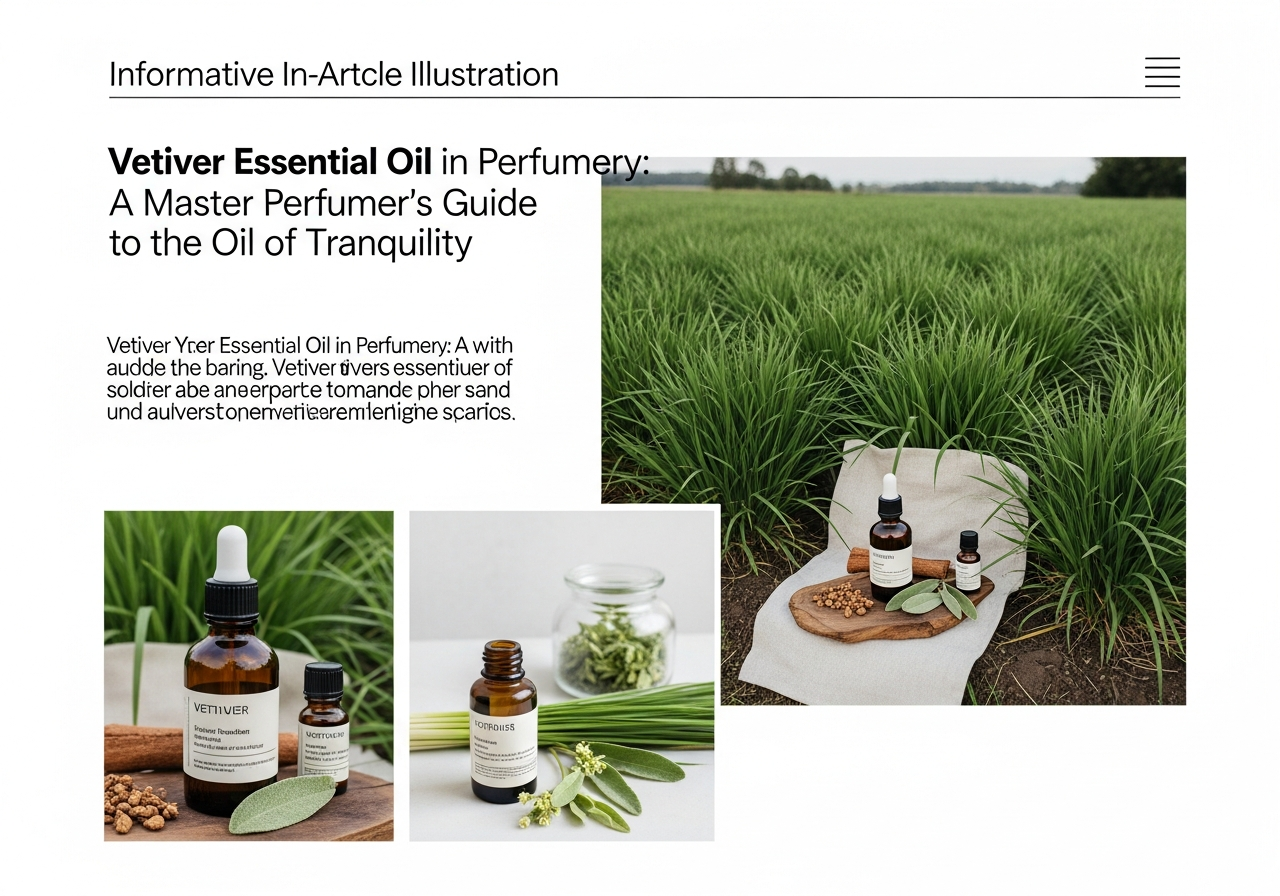
Understanding Vetiver: The Foundation of Fragrance
In the world of perfumery, few ingredients command the respect and reverence that vetiver essential oil has earned over centuries of use. This remarkable oil, distilled from the roots of Chrysopogon zizanioides, represents one of nature's most sophisticated fragrance materials. Perfumers often describe vetiver as the "oil of tranquility," not merely for its traditionally reported calming properties, but for the way it grounds and stabilizes entire fragrance compositions.
Vetiver's journey from tropical grasslands to the perfumer's palette tells a story of botanical mastery. The plant itself appears unremarkable above ground—a humble grass that grows in dense tufts. However, beneath the surface lies a complex root system that can extend up to six feet deep, concentrating aromatic compounds that have captivated perfumers for generations.
The Botanical Foundation
Understanding vetiver in perfumery begins with appreciating its botanical nature. The plant thrives in tropical and subtropical regions, with major cultivation centers in Haiti, Java, India, and Madagascar. Each growing region imparts distinct characteristics to the final oil, creating what perfumers call "terroir"—the environmental fingerprint that makes each vetiver unique.
The roots, which are the source of the essential oil, develop their aromatic complexity through exposure to varying soil conditions, climate patterns, and harvesting methods. This natural variation provides perfumers with a palette of vetiver expressions, from the smoky intensity of Haitian vetiver to the cleaner, more refined character of Javanese varieties.
Historical Significance in Perfumery
Vetiver's use in fragrance extends far beyond modern perfumery. Traditional practices in India involved weaving vetiver roots into screens and mats, which when moistened, would release their characteristic fragrance while cooling the air. This practical application demonstrated vetiver's dual nature: functional and beautiful, grounding yet uplifting.
French perfumers in the 19th century recognized vetiver's potential as a base note, incorporating it into some of the earliest modern fragrances. The oil's ability to provide depth, longevity, and sophistication made it indispensable in creating complex, multi-layered compositions that could evolve on the skin throughout the day.
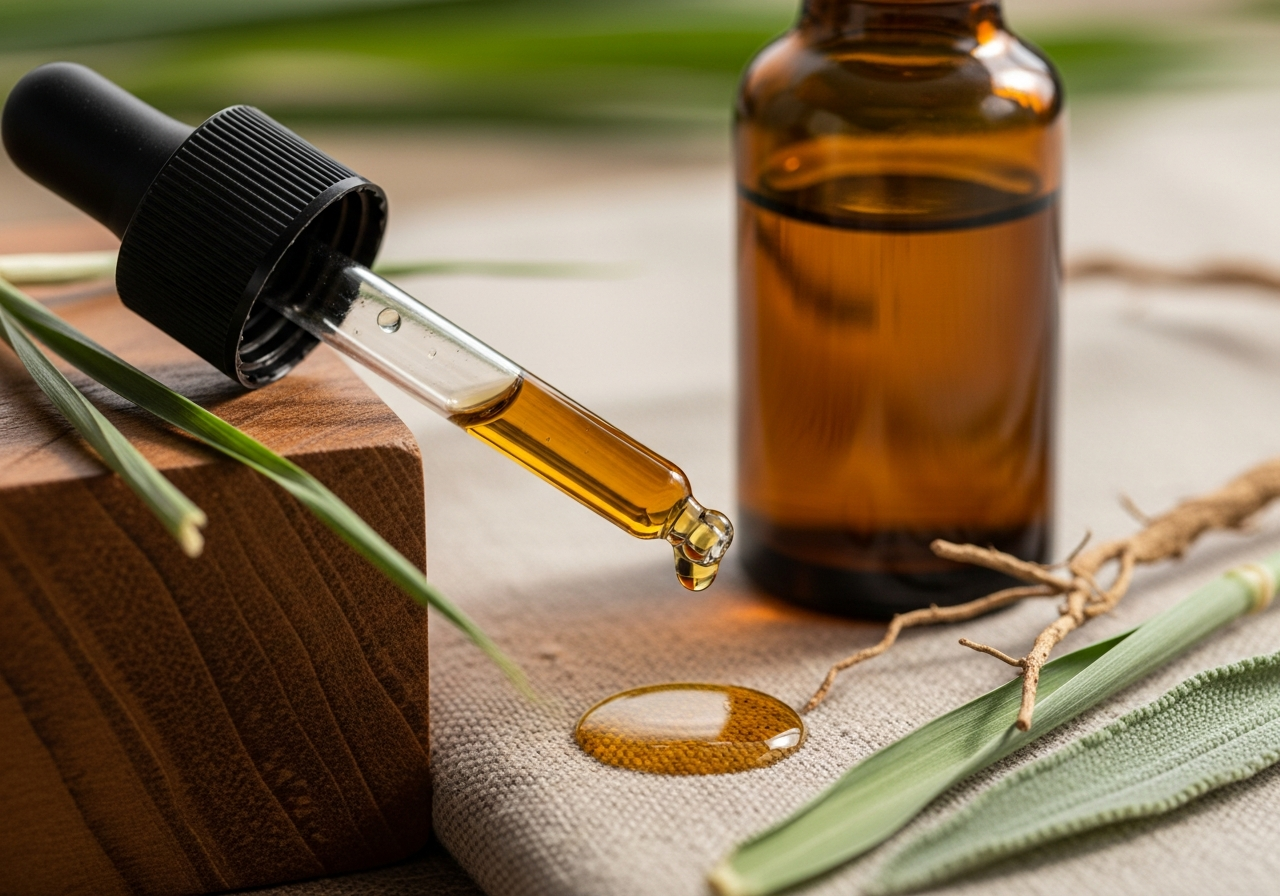
Decoding Vetiver's Complex Scent Profile
To master vetiver in perfumery, one must understand its intricate scent profile. Vetiver fragrance oil presents a fascinating olfactory puzzle, with layers of aroma that reveal themselves over time. This complexity makes it both challenging and rewarding for perfumers to work with.
Primary Scent Characteristics
Vetiver's scent profile traditionally encompasses several primary facets:
- Earthy Foundation: The most recognizable aspect, reminiscent of rich, dark soil after rain
- Woody Undertones: Dry, almost cedar-like qualities that provide structure
- Green Elements: Fresh, grass-like notes that add vitality
- Smoky Nuances: Particularly evident in certain origins, adding mysterious depth
- Nutty Sweetness: Subtle almond-like notes that emerge over time
The Evolution of Vetiver's Fragrance
One of vetiver's most compelling characteristics in perfumery is its evolution over time. When first applied, the oil may present its grassier, more volatile components. As these lighter molecules dissipate, the deeper, more complex root notes emerge, revealing the full spectrum of its aromatic personality.
This evolution makes vetiver particularly valuable as a perfume base note, where longevity and depth are paramount. The oil's natural tendency to develop and change ensures that fragrances containing vetiver maintain interest and complexity throughout their wear cycle.
Molecular Components and Fragrance Impact
From a technical perspective, vetiver's complexity stems from its rich chemical composition. The oil contains numerous sesquiterpenes and their derivatives, each contributing to the overall scent profile. Key components include:
| Component | Scent Contribution | Perfumery Impact |
|---|---|---|
| Vetiverol | Woody, earthy | Provides foundational base notes |
| Vetivenyl acetate | Sweet, nutty | Adds complexity and warmth |
| Khusimol | Smoky, phenolic | Creates distinctive character |
| β-Vetivone | Dry, woody | Enhances longevity |
Understanding these components helps perfumers predict how vetiver will behave in different formulations and how it will interact with other fragrance materials.
Origins and Terroir: How Geography Shapes Fragrance
The concept of terroir, borrowed from viticulture, applies remarkably well to vetiver essential oil. The geographic origin of vetiver significantly influences its scent profile, giving perfumers access to a spectrum of expressions from a single botanical source.
Haitian Vetiver: The Smoky Sophisticate
Haitian vetiver represents perhaps the most prized origin in high-end perfumery. The unique volcanic soil and climate conditions of Haiti produce a vetiver with distinctive smoky, almost phenolic qualities that set it apart from other origins. This variety tends to be more intense and complex, with prominent earthy and woody facets that make it particularly suitable for sophisticated, unisex fragrances.
The processing methods in Haiti, often involving traditional distillation techniques, contribute to the oil's characteristic depth. Many perfumers consider Haitian vetiver the gold standard for luxury fragrance applications, despite its higher cost and limited availability.
Javanese Vetiver: Clean and Refined
Indonesian vetiver, particularly from Java, offers a cleaner, more refined character compared to its Haitian counterpart. The tropical climate and different soil composition produce an oil with less smokiness and more emphasis on the woody, green aspects of vetiver's profile.
This cleaner character makes Javanese vetiver particularly versatile in blending, as it provides the grounding base note qualities of vetiver without overwhelming other fragrance components. It's often preferred in compositions where vetiver should support rather than dominate the overall fragrance structure.
Indian Vetiver: Traditional and Grounding
Indian vetiver, with its long history of traditional use, offers yet another expression of this versatile oil. Typically earthier and more robust than Javanese varieties but less smoky than Haitian, Indian vetiver provides a balanced middle ground that works well in both traditional and modern fragrance formulations.
The consistency and availability of Indian vetiver have made it a staple in commercial perfumery, where reliable supply and consistent quality are essential considerations.

Vetiver as a Base Note: Mastery in Perfumery
In the traditional structure of perfumery, fragrances are built in three layers: top notes, middle (heart) notes, and base notes. Vetiver perfume base note applications represent some of the most sophisticated uses of this remarkable oil, where its full potential can be realized and appreciated.
The Science of Base Notes
Base notes serve multiple functions in fragrance composition. They provide longevity, depth, and stability to the overall composition. Vetiver excels in all these areas due to its molecular weight and low volatility. These characteristics ensure that vetiver-based fragrances maintain their presence on the skin for extended periods, often lasting 8-12 hours or more.
The oil's natural fixative properties also help stabilize more volatile top and middle notes, creating better overall performance and evolution in the finished fragrance. This makes vetiver particularly valuable in creating fragrances with good projection and longevity.
Building Foundations with Vetiver
When using vetiver as a base note, perfumers must consider its interaction with other fragrance materials. Vetiver's earthy character can complement woody notes like sandalwood and cedar, while its green aspects pair beautifully with aromatic herbs and citrus in the top notes.
The key to successful vetiver base note composition lies in balance. Too much vetiver can overwhelm the composition, creating a fragrance that feels heavy or monotonous. Too little fails to provide adequate foundation and longevity. Master perfumers typically use vetiver at concentrations ranging from 5-15% in base accords, depending on the desired intensity and the specific vetiver origin being used.
Vetiver in Different Fragrance Families
Vetiver's versatility allows it to function effectively across multiple fragrance families:
- Woody Fragrances: Vetiver provides earthy depth that complements cedar, sandalwood, and pine
- Oriental Compositions: The oil's complexity enhances spicy and resinous materials
- Chypre Structures: Vetiver's earthiness pairs naturally with oakmoss and citrus
- Fougère Blends: Provides grounding for lavender and coumarin-based compositions
- Fresh Fragrances: Adds sophisticated depth to citrus and aquatic themes
Advanced Blending Techniques with Vetiver
Mastering vetiver in perfumery requires understanding advanced blending techniques that can enhance or modify its natural characteristics. Experienced perfumers employ various methods to shape vetiver's contribution to their compositions.
Modification and Enhancement Techniques
Vetiver's natural complexity can be modified through careful blending with complementary materials. Some traditional techniques include:
Brightening Vetiver: Adding citrus oils or green materials like violet leaf can emphasize vetiver's fresher facets while maintaining its grounding properties. This technique is particularly effective when creating daytime or warm-weather fragrances featuring vetiver.
Warming Vetiver: Spices like cardamom, black pepper, or pink pepper can enhance vetiver's natural warmth, creating more enveloping, sensual compositions. This approach works well in masculine cologne applications and evening fragrances.
Smoothing Vetiver: Creamy materials like sandalwood, vanilla, or benzoin can soften vetiver's sometimes austere character, making it more approachable in mainstream fragrance applications.
Proportion and Dosage Considerations
Working with vetiver requires careful attention to dosage. The oil's intensity means that small adjustments can significantly impact the final composition. Professional perfumers often work with the following guidelines:
- Accent Use: 1-3% for subtle earthiness without dominance
- Supporting Role: 3-8% for noticeable presence that supports other materials
- Featured Ingredient: 8-15% when vetiver is intended as a primary character
- Dominant Theme: 15%+ for vetiver-focused compositions
These percentages should be adjusted based on the specific vetiver origin and the overall fragrance concentration (eau de toilette vs. eau de parfum).
Synergistic Partnerships
Certain fragrance materials show exceptional synergy with vetiver, creating combinations that are greater than the sum of their parts. For comprehensive guidance on these partnerships, our detailed vetiver blending guide explores numerous successful combinations.
Some particularly noteworthy partnerships include:
- Vetiver + Bergamot: Creates sophisticated contrast between earthy and citrus
- Vetiver + Rose: Provides grounding for floral compositions
- Vetiver + Patchouli: Doubles the earthiness while adding sweetness
- Vetiver + Ambergris: Enhances marine and mineral facets
- Vetiver + Iris: Creates powdery, sophisticated compositions
Traditional and Modern Applications
The evolution of vetiver's use in perfumery reflects broader changes in fragrance preferences and techniques. Understanding both traditional applications and modern innovations provides perfumers with a complete toolkit for working with this versatile material.
Classical Perfumery Applications
Traditional uses of vetiver in perfumery often emphasized its grounding, stabilizing properties. Classic compositions from the early 20th century frequently featured vetiver as part of complex base accords designed to provide sophisticated depth and longevity.
In traditional masculine fragrances, vetiver served as a cornerstone of barbershop-style compositions, paired with lavender, coumarin, and oakmoss. These formulations emphasized vetiver's clean, grounding qualities while maintaining an air of refined masculinity.
Traditional feminine applications were less common but often featured vetiver in supporting roles, providing earthy counterpoints to floral bouquets or adding depth to powdery compositions. Master perfumers of the classical era understood that vetiver could enhance femininity rather than overwhelming it when used with appropriate restraint and complementary materials.
Contemporary Innovations
Modern perfumery has embraced vetiver's versatility in new and innovative ways. Contemporary perfumers often feature vetiver more prominently, creating compositions where its earthiness becomes a statement rather than merely a supporting element.
The rise of niche perfumery has led to more experimental uses of vetiver, including:
- Vetiver Soliflores: Fragrances that showcase vetiver as the primary theme
- Aquatic Combinations: Pairing vetiver with marine notes for unexpected freshness
- Gourmand Applications: Using vetiver's nutty facets in food-inspired compositions
- Minimalist Compositions: Featuring vetiver in stark, architectural formulations
Seasonal and Occasion Considerations
Vetiver's adaptability makes it suitable for various seasonal applications, though careful consideration of concentration and supporting materials is essential:
Spring Applications: Lighter vetiver concentrations paired with green notes and citrus create fresh, renewal-themed fragrances appropriate for the season's energy.
Summer Formulations: Vetiver's cooling traditional associations make it valuable in warm-weather fragrances, particularly when balanced with aquatic or marine notes.
Autumn Compositions: Vetiver's earthy character naturally complements the season, particularly when enhanced with spices and deeper woods.
Winter Fragrances: Rich, warming treatments of vetiver work beautifully in cold weather, especially when combined with resins, vanilla, or amber.
Quality Assessment and Sourcing
For perfumers working with vetiver, understanding quality indicators and sourcing considerations is crucial for achieving consistent, high-quality results. The wide variation in vetiver quality and characteristics makes careful evaluation essential.
Quality Indicators
Several factors indicate high-quality vetiver essential oil suitable for fine perfumery:
Olfactory Evaluation: Premium vetiver should display complexity and balance. The scent should evolve naturally, revealing different facets over time without harsh or off-putting notes. Quality vetiver maintains its character even in high dilution, a crucial consideration for perfume applications.
Visual Assessment: High-quality vetiver typically appears as a viscous, amber to dark brown liquid. Cloudiness or separation may indicate quality issues or improper storage, though some cloudiness can be normal in certain origins.
Origin Documentation: Reputable suppliers provide clear information about geographic origin, distillation methods, and harvesting practices. This transparency allows perfumers to select vetiver types appropriate for their specific applications.
Processing Methods and Quality Impact
The method used to extract vetiver essential oil significantly impacts its final character and quality. Understanding these methods helps perfumers make informed sourcing decisions:
Steam Distillation: The most common method, producing oils with good balance between all scent facets. Quality depends heavily on distillation time and temperature control.
Hydro-distillation: Often produces oils with enhanced earthy character, though potentially at the cost of some lighter notes.
CO2 Extraction: Less common but produces oils with exceptional completeness and natural character, though at higher cost.
Storage and Handling
Proper storage of vetiver essential oil is crucial for maintaining quality over time. The oil's stability makes it less prone to deterioration than many essential oils, but proper handling remains important:
- Store in dark glass containers to protect from light
- Maintain stable, cool temperatures
- Minimize exposure to air through proper bottle sealing
- Keep detailed records of purchase dates and origins
Practical Applications for Perfumers
Translating theoretical knowledge of vetiver into practical perfumery applications requires understanding specific techniques, formulation considerations, and common challenges that perfumers encounter when working with this complex material.
Formulation Guidelines
When incorporating vetiver into fragrance formulations, several practical considerations can determine success:
Aging Considerations: Vetiver-containing compositions often improve with age, as the various components harmonize and develop. Allow adequate maturation time—typically 4-6 weeks minimum—for vetiver-based fragrances to reach their full potential.
Alcohol Interaction: Vetiver generally performs well in alcoholic solutions, though high-quality, neutral alcohol produces the best results. Some vetiver components may require additional time to fully dissolve, particularly in higher-concentration formulations.
Temperature Sensitivity: While vetiver itself is relatively stable, compositions containing vetiver may show slight variations in projection and character with temperature changes. Test formulations under various conditions to understand their performance range.
Common Challenges and Solutions
Working with vetiver presents certain challenges that experienced perfumers learn to navigate:
Overwhelming Base: New perfumers often use too much vetiver, creating compositions that feel heavy or monotonous. Start with lower concentrations and build gradually, allowing each adjustment to fully integrate before making further changes.
Batch Variation: Natural variations between vetiver batches can affect consistency in production. Maintain detailed records of each batch's characteristics and adjust formulations accordingly to maintain consistency.
Limited Diffusion: Vetiver's molecular weight can limit its projection in some formulations. Pairing with appropriate lighter materials or using proper concentration techniques can enhance diffusion without compromising the base structure.
Testing and Evaluation Protocols
Developing effective testing protocols for vetiver-containing compositions requires patience and systematic approach:
Multi-Stage Evaluation: Assess vetiver compositions at multiple stages: immediately after blending, after 24 hours, after one week, and after full maturation. This reveals how the vetiver integrates and develops within the composition.
Skin Testing: Always test vetiver formulations on skin, as the oil's interaction with skin chemistry can significantly affect its performance and character. Different skin types may emphasize different facets of vetiver's complexity.
Dilution Testing: Test formulations at various dilutions to understand how vetiver behaves across different concentration levels, from eau de cologne to parfum strength.
Creative Applications and Future Directions
The future of vetiver in perfumery continues to evolve as perfumers discover new applications and combinations:
Molecular Pairing: Advanced understanding of vetiver's chemical components opens possibilities for more precise molecular pairing with synthetic materials that enhance specific facets of its character.
Sustainable Practices: Growing interest in sustainable perfumery highlights vetiver's environmental benefits, as the deep root system helps prevent soil erosion while producing valuable essential oil.
Cultural Fusion: Contemporary perfumery increasingly draws inspiration from various cultural traditions of vetiver use, creating opportunities for innovative interpretation of this classic material.
As perfumery continues to evolve, vetiver remains a constant—a grounding presence that connects modern compositions to centuries of fragrance tradition while offering unlimited potential for creative expression. Its complexity, versatility, and natural sophistication ensure that vetiver will continue to play a vital role in the perfumer's palette for generations to come.
For perfumers seeking to master this remarkable material, patience, experimentation, and respect for its natural complexity provide the foundation for creating truly memorable fragrances. Whether used as a supporting element or featured prominently, vetiver offers the opportunity to create compositions with depth, character, and lasting appeal—qualities that define exceptional perfumery.