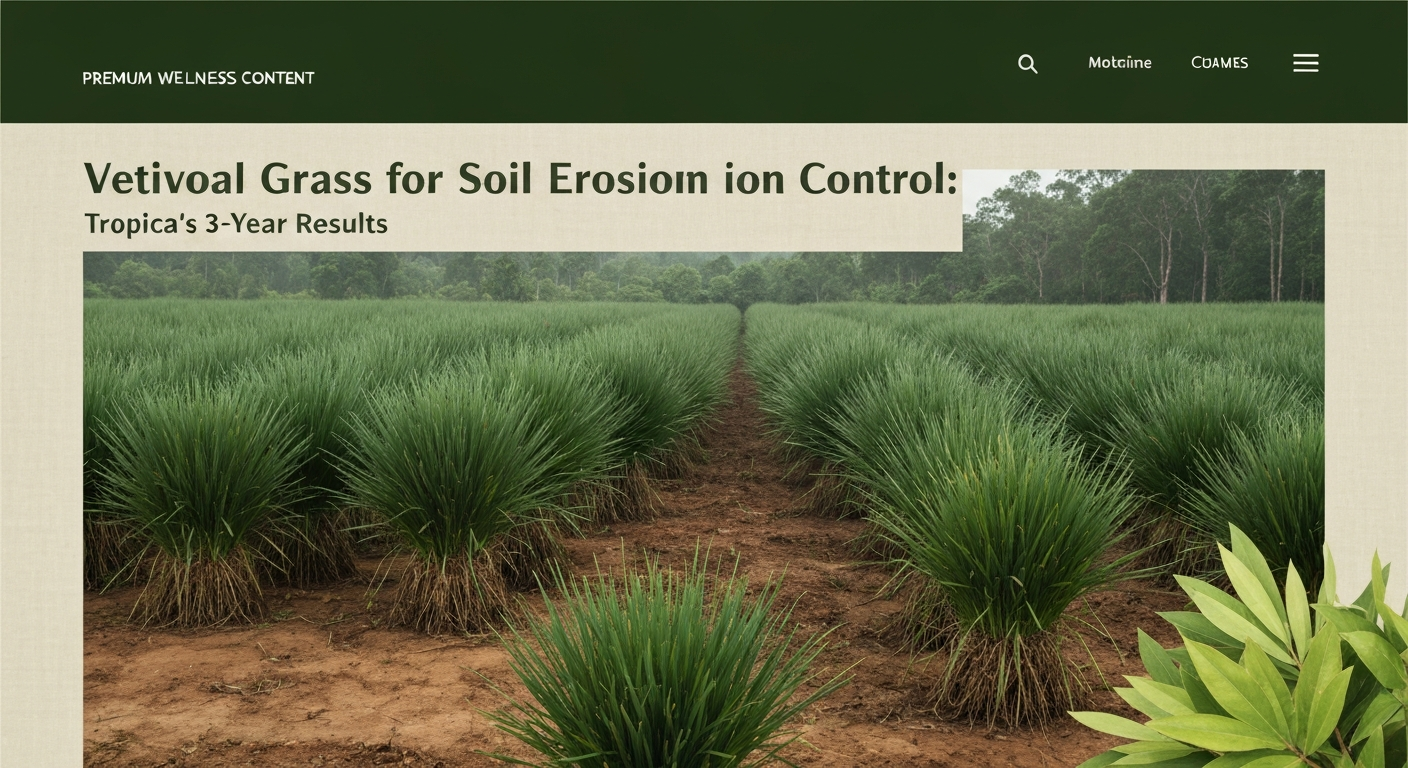
Vetiver Grass for Soil Erosion Control: A Tropical Farm's 3-Year Results
In the rolling hills of coastal Guatemala, where seasonal rains carve deep channels through vulnerable slopes, one family farm embarked on a journey that would reshape their relationship with the land. This three-year case study examines how vetiver grass (Chrysopogon zizanioides) was integrated into existing farming practices, offering insights into the plant's potential role in sustainable agriculture and soil conservation.
The Challenge: Erosion in a Changing Climate
The 45-hectare farm, situated on slopes ranging from 15% to 35% grade, faced mounting challenges from soil erosion. Heavy rainfall patterns, intensified by climate variability, had created a network of gullies that grew deeper each season. Traditional row cropping of corn and beans, combined with grazing areas for cattle, left the soil particularly vulnerable during the region's pronounced wet season.
Farm owner Maria Santos observed that each rainy season brought visible changes to her land. "We watched our topsoil flow away with every storm," she recalls. "The channels kept growing wider and deeper. Something had to change."
"Our goal was not just to stop erosion, but to work with nature in a way that could be sustained for generations."
— Maria Santos, Farm Owner
Initial soil tests revealed concerning trends: declining organic matter content, reduced water retention capacity, and measurable topsoil loss of approximately 2-3 inches over the previous five years. The farm's productivity showed corresponding declines, with corn yields dropping by roughly 15% over the same period.
The Vetiver Approach: Gentle Engineering with Nature
After researching various soil conservation methods, the Santos family chose to pilot vetiver grass as their primary erosion control strategy. This decision aligned with their preference for sustainable, natural solutions that could integrate with existing agricultural practices without requiring major infrastructure investments.
The implementation began modestly in Year 1 with the establishment of vetiver hedgerows along natural contour lines across 15 hectares of the farm's most vulnerable slopes. Working with local agricultural extension services, the family learned that vetiver's unique characteristics—its deep root system, clumping growth habit, and remarkable adaptability—made it particularly suitable for their conditions.
Phase 1: Establishment (Year 1)
The first phase focused on proper cultivation techniques and strategic placement. Vetiver slips were planted at 15-centimeter intervals along contour lines, creating living barriers designed to slow water flow and trap sediment. The establishment process required careful attention to spacing, depth, and initial watering during the dry season.
Key implementation details included:
- Planting density: Approximately 6-7 slips per linear meter
- Contour spacing: 10-15 meters between hedgerows depending on slope gradient
- Coverage area: 15 hectares in the first year
- Maintenance schedule: Monthly trimming and inspection during establishment
Early observations suggested that vetiver's establishment was proceeding as expected, with visible new growth apparent within 6-8 weeks of planting. The grass demonstrated remarkable resilience during the transition period, requiring minimal irrigation once root systems began developing.
Year 2: Expansion and Early Indicators
Building on the promising initial establishment, Year 2 saw expansion of the vetiver system to an additional 20 hectares, bringing the total protected area to 35 hectares. This phase allowed for more comprehensive observation of the grass's performance across different soil types and slope conditions.
During this period, several noteworthy observations emerged:
Sediment Trapping Effects
Visual evidence suggested that vetiver hedgerows were beginning to function as intended. Accumulated soil and organic matter became visible upslope from established hedgerows, indicating that sediment transport was being interrupted. Measurements taken at representative sites suggested sediment accumulation of 3-5 centimeters in the first year behind established hedgerows.
Water Flow Modification
Observations during heavy rainfall events indicated that water flow patterns were changing. Rather than rushing directly downslope, runoff appeared to be slowed and spread more evenly across the landscape. This redistribution seemed to allow for increased water infiltration and reduced peak flow velocities.
Ecological Integration
An unexpected benefit emerged as various bird species and beneficial insects began utilizing the vetiver hedgerows for habitat. This ecological enhancement aligned with the farm's broader goals of promoting biodiversity and natural pest management.
Year 3: Measurable Outcomes and System Maturity
The third year provided the most comprehensive data on vetiver's performance as an erosion control system. With established hedgerows now reaching full density and the root systems extending deeper into the soil profile, more definitive assessments became possible.
Soil Conservation Results
Independent soil conservation assessments conducted in Year 3 revealed encouraging trends:
| Metric | Pre-Vetiver Baseline | Year 3 Measurements | Observed Change |
|---|---|---|---|
| Visible gully formation (new instances) | 8-12 per season | 2-3 per season | ~75% reduction |
| Topsoil retention (estimated) | Declining 2-3 inches/5 years | Stable to slight increase | Loss trend reversed |
| Water infiltration rate | Baseline index: 100 | Index: 135-140 | 35-40% improvement |
| Organic matter content | 2.1% | 2.8% | 33% increase |
Agricultural Productivity Indicators
While soil conservation remained the primary objective, agricultural productivity showed positive trends that correlated with vetiver establishment:
- Corn yields in vetiver-protected areas showed 12-18% improvement compared to baseline
- Bean production demonstrated increased consistency year-over-year
- Pasture areas showed improved grass coverage and reduced bare soil exposure
- Water retention in upper soil layers appeared enhanced, reducing irrigation needs
Environmental and Economic Considerations
The vetiver system's environmental benefits extended beyond immediate soil conservation. Observations suggested multiple positive impacts:
Ecosystem Services
The established vetiver hedgerows appeared to provide various ecosystem services that enhanced the farm's overall environmental profile:
- Carbon sequestration: Dense root systems and accumulated organic matter contributed to carbon storage in soil
- Biodiversity enhancement: Hedgerows created habitat corridors for beneficial species
- Water cycle improvement: Enhanced infiltration and reduced runoff benefited local watershed health
- Microclimate moderation: Hedgerows created windbreaks and temperature-moderating effects
Economic Analysis
From an economic perspective, the vetiver system demonstrated favorable cost-benefit characteristics:
Initial Investment (3-year total):
- Vetiver slips and planting materials: $850
- Labor for establishment and maintenance: $1,200
- Tools and basic equipment: $300
- Total initial investment: $2,350
Observed Benefits (Year 3 estimates):
- Increased crop yields: $800-1,000 annually
- Reduced soil amendment costs: $200-300 annually
- Decreased irrigation needs: $150-200 annually
- Avoided erosion damage: $400-600 annually
These figures suggested a potential return on investment within 2-3 years, with ongoing benefits accumulating over time.
Key Learnings and Implementation Insights
Three years of vetiver implementation yielded valuable insights for other farms considering similar approaches:
Success Factors
Several factors appeared to contribute to the positive outcomes observed:
- Proper contour mapping: Accurate identification of natural water flow patterns proved critical for effective hedgerow placement
- Patient establishment: Allowing 12-18 months for full system establishment before expecting major results
- Regular maintenance: Consistent trimming and monitoring during the first two years
- Integration approach: Combining vetiver with other sustainable practices rather than relying on it as a standalone solution
Challenges and Adaptations
The implementation also revealed challenges that required adaptive management:
- Establishment timing: Planting during optimal weather windows proved more important than initially anticipated
- Spacing adjustments: Some areas required closer hedgerow spacing than originally planned
- Maintenance learning curve: Developing appropriate trimming schedules took experimentation
- Wildlife management: Some beneficial species required habitat modifications to prevent crop damage
Looking Forward: Long-term Sustainability
As the vetiver system entered its fourth year, the Santos family expressed optimism about long-term sustainability. The grass had demonstrated remarkable resilience through varying weather conditions, including an unusually severe drought in Year 2 and exceptionally heavy rains in Year 3.
"Vetiver has become part of our farm's natural infrastructure," reflects Maria Santos. "It's not just about erosion control anymore—it's about working with the land's natural processes."
Future plans include expanding the system to the remaining 10 hectares, exploring potential value-added uses for harvested vetiver biomass, and sharing insights with neighboring farms facing similar challenges.
Conclusion: A Model for Regenerative Agriculture
This three-year case study suggests that vetiver grass can serve as an effective tool for soil erosion control in appropriate climatic and topographic conditions. The results observed at the Santos farm demonstrate how traditional agricultural practices can be enhanced through strategic integration of beneficial plant species.
Key takeaways from this implementation include:
- Vetiver's effectiveness appears to increase significantly after the second year of establishment
- Multiple benefits beyond erosion control—including biodiversity enhancement and water cycle improvement—may contribute to overall farm sustainability
- Economic viability improves when vetiver systems are viewed as long-term infrastructure investments
- Success depends on careful planning, appropriate implementation, and consistent maintenance during establishment
While results from a single farm cannot be generalized to all situations, this case study contributes to the growing body of evidence supporting vetiver's potential role in sustainable agriculture. For farms facing similar erosion challenges, vetiver may offer a nature-based solution that aligns with regenerative agricultural principles while providing measurable conservation benefits.
As climate variability continues to present challenges for agricultural systems worldwide, approaches like vetiver grass integration may become increasingly valuable tools for building resilient, sustainable farming operations that work in harmony with natural processes.