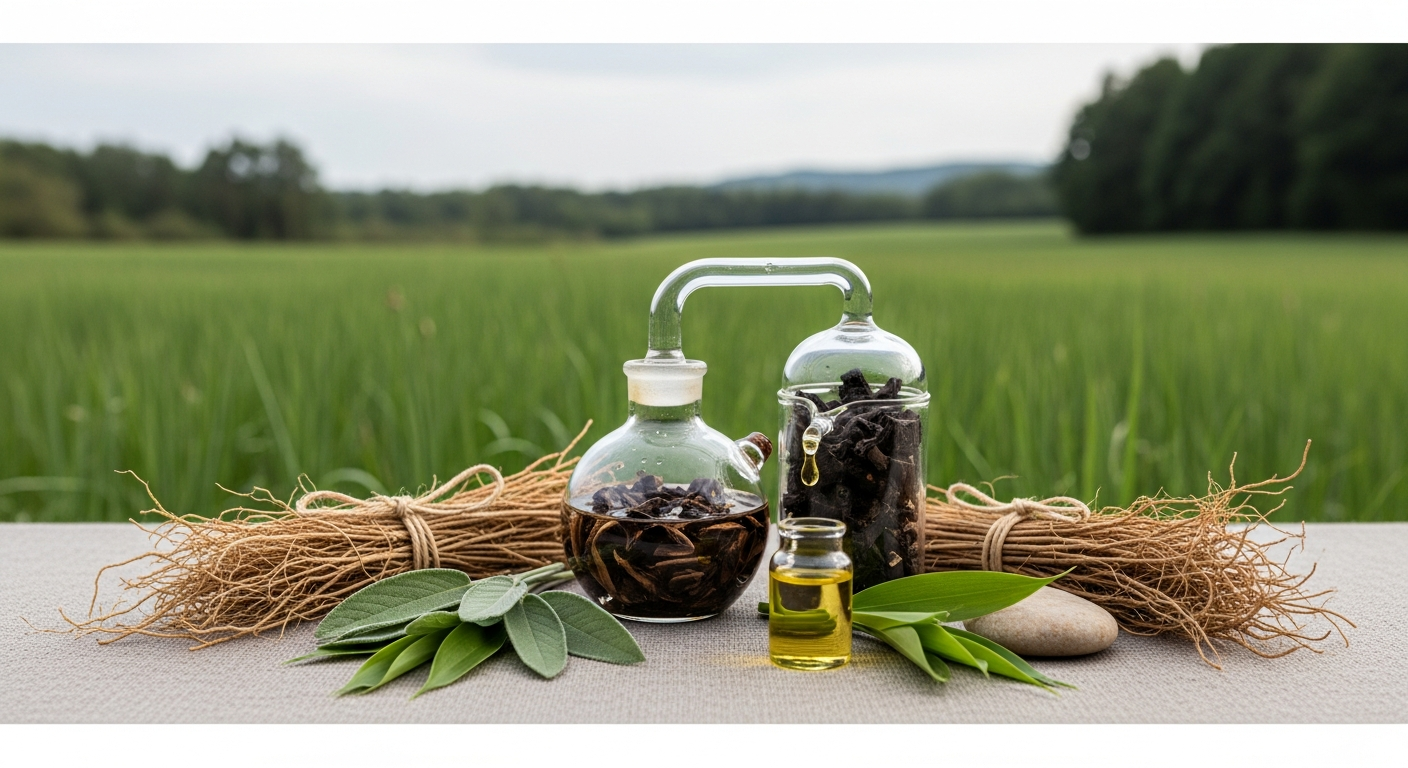
Vetiver Root Oil Extraction: From Tropical Grass to Precious Essential Oil
In the quiet moments before dawn breaks over tropical grasslands, there begins an ancient ritual that transforms humble earth-bound roots into one of perfumery's most treasured essences. Vetiver root oil extraction represents a profound connection between traditional wisdom and aromatic artistry—a process that has remained largely unchanged for centuries, grounded in patience, reverence for nature, and deep understanding of botanical alchemy.
This sacred grass, Chrysopogon zizanioides, offers us more than fragrance. Its journey from soil to bottle tells a story of sustainability, craftsmanship, and the delicate balance between human needs and environmental stewardship. Understanding this process deepens our appreciation for each precious drop of vetiver essential oil.
Key Takeaways
- Vetiver root oil extraction requires 18-24 months of grass maturation before harvesting
- Steam distillation remains the primary method, taking 12-24 hours for complete extraction
- Root preparation and aging significantly impact final oil quality and aroma complexity
- Traditional harvesting methods support both quality and environmental sustainability
- Geographic origin profoundly influences extraction characteristics and oil composition
- Proper post-distillation aging enhances the oil's distinctive earthy-woody profile
Table of Contents
- Understanding Vetiver: The Sacred Grass
- Root Development and Maturation Process
- Traditional Harvesting Methods
- Root Preparation and Processing
- The Steam Distillation Process
- Factors Affecting Extraction Quality
- Post-Distillation Aging and Maturation
- Sustainability and Environmental Considerations
Understanding Vetiver: The Sacred Grass
Vetiver stands as nature's quiet sentinel, its unassuming green blades reaching skyward while an intricate network of roots delves deep into the earth below. This perennial grass, native to India but now cultivated across tropical and subtropical regions, embodies the principle of hidden treasures—its true value lies not in what we see above ground, but in the complex root system that may extend up to four meters into the soil.
Botanical Characteristics
The vetiver plant presents itself with distinctive narrow leaves that can grow up to 1.5 meters tall, forming dense clumps that sway gracefully in tropical breezes. However, the plant's aromatic essence resides exclusively in its extensive root network. These roots, ranging from thick primary anchors to delicate fibrous networks, contain the complex compounds that will eventually become the precious essential oil.
Unlike many aromatic plants where essential oils concentrate in leaves, flowers, or stems, vetiver's aromatic compounds develop slowly within specialized root cells. This unique characteristic shapes every aspect of the extraction process, from cultivation timing to harvesting techniques.
Geographic Variations
The terroir concept, familiar to wine enthusiasts, applies equally to vetiver cultivation. Different regions produce roots with distinct aromatic profiles, influenced by soil composition, climate patterns, and local cultivation practices. Haitian versus Javanese vetiver exemplifies how geographic origin profoundly impacts the final essential oil characteristics.
Haitian vetiver, grown in the mineral-rich soils of the Caribbean, typically yields oils with cleaner, more refined profiles. Javanese vetiver, cultivated in Indonesia's volcanic soils, often produces oils with deeper, more complex earthy notes. These variations begin at the root level, where different soil minerals and microorganisms create unique growing conditions.
Root Development and Maturation Process
Patience defines vetiver cultivation. Unlike herbs that may be harvested within months, vetiver requires a minimum of 18-24 months to develop roots suitable for oil extraction. This extended maturation period allows the plant to establish its complex root architecture and accumulate the aromatic compounds that will define the final essential oil.
The First Year: Foundation Building
During its initial growing season, vetiver focuses energy on establishing a robust root system. Young plants send down primary roots that serve as anchors, while simultaneously developing the extensive network of secondary and tertiary roots. At this stage, aromatic compound production remains minimal, concentrated primarily in the plant's efforts to establish its foundation.
Traditional growers recognize this phase through visual cues—the development of thick, established clumps above ground and the plant's increased resistance to environmental stresses. However, extraction at this stage would yield minimal oil with underdeveloped aromatic complexity.
The Second Year: Aromatic Development
The second growing season marks a transformation. Established root systems begin producing and concentrating the complex molecules that give vetiver oil its distinctive character. Compounds like vetiverol, vetivone, and various sesquiterpenes accumulate in specialized root cells, creating the chemical complexity that makes vetiver essential oil so prized in perfumery.
Climate plays a crucial role during this maturation phase. Alternating wet and dry seasons stress the plant in beneficial ways, encouraging deeper root penetration and higher aromatic compound concentration. This natural stress response explains why vetiver from regions with pronounced seasonal variations often produces superior oils.
Optimal Harvesting Windows
Determining the perfect harvest timing requires balancing root maturity with practical considerations. Roots continue developing aromatic complexity beyond the 24-month minimum, but practical factors including land use, weather patterns, and market demands influence timing decisions.
Many experienced growers prefer harvesting during dry seasons when root moisture content is lower, concentrating aromatic compounds. This timing also facilitates easier excavation and processing, as wet season harvesting can damage delicate root structures and complicate the cleaning process.
Traditional Harvesting Methods
Vetiver root harvesting remains a largely manual process, preserving traditional techniques passed down through generations. This human-centered approach reflects not only practical necessity—machines cannot navigate the delicate work of root extraction without damage—but also a deep respect for the plant's contribution to community livelihoods.
Hand-Digging Techniques
The harvesting process begins with careful excavation around each vetiver clump. Experienced harvesters use specialized tools—typically curved blades or sharp spades—to gradually expose the root system without causing damage. The work requires patience and skill, as rushing can break valuable roots or leave significant portions in the ground.
Teams often work in coordinated patterns, with some workers loosening soil while others carefully lift and shake roots free from earth. This methodical approach ensures maximum root recovery while maintaining the integrity of each harvested clump.
Root System Preservation
Preserving root integrity during harvest directly impacts oil quality and yield. Broken or damaged roots lose aromatic compounds and may develop off-notes during processing. Traditional harvesters develop an intuitive understanding of how roots grow and where to apply pressure for clean separation.
The complete root system—from thick primary roots to fine fibrous networks—contributes to the final oil profile. Careful harvesting ensures all root components are recovered, as different root sizes and types contribute varying aromatic notes to the distillation process.
Immediate Post-Harvest Handling
Once excavated, roots require immediate attention to prevent aromatic compound loss. Fresh roots are typically shaken or gently beaten to remove excess soil, then transported to processing areas within hours of harvest. Extended exposure to air and sunlight can begin degrading delicate aromatic molecules before distillation begins.
Traditional knowledge emphasizes gentle handling throughout this critical period. Roots may be temporarily covered with damp cloths or stored in shaded areas to maintain optimal conditions until processing begins.
Root Preparation and Processing
The transformation from muddy, earth-covered roots to distillation-ready material requires careful preparation that balances thorough cleaning with preservation of aromatic integrity. This preparatory phase significantly influences both oil yield and quality, making attention to detail essential.
Cleaning and Washing
Root cleaning begins with removing adhering soil and organic matter while preserving the delicate root structure. Traditional methods employ gentle washing with clean water, using brushes or cloth to remove stubborn soil particles without abrading root surfaces.
The washing process typically involves multiple stages, starting with rough cleaning to remove bulk soil and progressing to fine cleaning that prepares roots for chopping. Each washing stage removes soil particles that could otherwise contribute muddy or earthy off-notes to the distilled oil.
Water quality during washing affects final oil purity. Many traditional producers prefer running water sources or regularly changed wash basins to prevent soil particles from settling back onto cleaned roots. This attention to water cleanliness reflects generations of experience understanding how every processing step influences the final product.
Drying and Conditioning
After cleaning, roots undergo a controlled drying period that reduces moisture content while beginning the complex chemical changes that enhance oil quality. This drying phase is not simply about water removal—it's a conditioning process that may improve aromatic compound availability during distillation.
Traditional drying methods vary by region and producer preference. Some prefer sun-drying, spreading cleaned roots on woven mats or clean surfaces for several days. Others opt for shade-drying, believing it better preserves delicate aromatic compounds. The chosen method depends on local climate, available space, and traditional practices passed down through families.
Chopping and Size Reduction
Proper root preparation includes chopping or cutting roots into optimal sizes for steam penetration during distillation. This seemingly simple step requires considerable skill, as piece size directly affects extraction efficiency and oil quality.
Experienced processors understand that different root types require different approaches. Thick primary roots are typically chopped into 2-3 inch segments to ensure steam penetration, while fibrous secondary roots may be left longer to prevent excessive breaking that could create debris in the distillation vessel.
Sharp, clean cutting tools are essential for this process. Dull blades can crush root fibers rather than cutting cleanly, potentially damaging aromatic compound structures and creating processing difficulties during distillation.
The Steam Distillation Process
The heart of vetiver root oil extraction lies in the ancient art of steam distillation—a process that bridges the earthbound nature of roots with the ethereal quality of essential oils. This transformation requires patience, skill, and deep understanding of how heat, steam, and time work together to release aromatic treasures locked within root fibers.
Distillation Equipment and Setup
Traditional vetiver distillation employs copper or stainless steel vessels, chosen for their heat conductivity and chemical neutrality. The basic setup includes a boiler for steam generation, a distillation vessel for root material, and a condenser system for oil and water separation.
Copper vessels, preferred by many traditional distillers, provide excellent heat distribution and may contribute subtle improvements to oil quality through beneficial metal interactions. However, modern operations often choose stainless steel for its durability and ease of cleaning between batches.
Vessel size varies considerably, from small artisanal units processing 50-100 kilograms of roots to commercial operations handling several tons per batch. Size affects extraction characteristics—smaller batches often allow more precise control, while larger operations achieve efficiency through economies of scale.
The Distillation Sequence
Steam distillation of vetiver roots follows a carefully orchestrated sequence that typically spans 12-24 hours. The process begins with loading prepared roots into the distillation vessel, ensuring even distribution for optimal steam flow.
Steam introduction marks the beginning of extraction. Initial steam flow must be controlled to prevent channeling—the phenomenon where steam finds easy paths through the root mass rather than penetrating evenly. Experienced distillers monitor steam patterns and adjust flow rates throughout the process.
The first drops of distillate typically appear within 30-60 minutes, carrying lighter aromatic compounds. However, vetiver's complex molecular structure means the most valuable components often don't emerge until several hours into the distillation. This extended timeline distinguishes vetiver from many other essential oils that complete distillation in just a few hours.
Extraction Phases
Vetiver distillation progresses through distinct phases, each contributing different aromatic components to the final oil. Understanding these phases helps distillers optimize their process and recognize when extraction is complete.
Initial Phase (0-4 hours): Light, fresh compounds emerge first, including some volatile molecules that provide bright top notes. Oil yield during this phase is typically low, but these early fractions contribute important aromatic complexity.
Primary Phase (4-12 hours): The main extraction occurs during this period, yielding the majority of oil volume. Key compounds like vetiverol and vetivone emerge, contributing the characteristic deep, woody notes that define quality vetiver oil.
Final Phase (12-24 hours): Extended distillation draws out the heaviest molecules, including complex sesquiterpenes that add depth and longevity to the oil profile. Some distillers separate this fraction for specialized applications.
Temperature and Pressure Management
Precise temperature control throughout distillation affects both oil yield and quality. Excessive heat can break down delicate aromatic molecules, while insufficient heat may leave valuable compounds unexpracted. Skilled distillers maintain steady temperatures that maximize extraction without degradation.
Pressure management works hand-in-hand with temperature control. Higher pressures can accelerate extraction but may also increase temperatures beyond optimal ranges. Traditional atmospheric distillation often produces superior oils compared to pressure-assisted methods, though it requires longer processing times.
Factors Affecting Extraction Quality
The journey from root to oil involves numerous variables that influence final product quality, yield, and aromatic character. Master distillers develop intuitive understanding of these factors through years of experience, learning to read subtle signs and adjust their processes accordingly.
Raw Material Quality
The foundation of exceptional vetiver oil begins with superior root material. Root age, health, and growing conditions establish the potential quality ceiling—no distillation technique can overcome fundamental raw material limitations.
Mature roots from healthy plants typically contain higher concentrations of desirable aromatic compounds. Roots showing signs of disease, pest damage, or premature harvest may produce oils with off-notes or reduced complexity. Experienced producers develop relationships with trusted growers who understand the connection between cultivation practices and oil quality.
Geographic origin plays a crucial role in determining raw material characteristics. Different growing regions produce roots with distinct aromatic profiles, influenced by soil composition, climate patterns, and local cultivation traditions. This variation explains why vetiver oil grades and quality often reference geographic origins.
Processing Timing and Conditions
The interval between harvest and processing significantly affects extraction outcomes. Fresh roots typically yield oils with brighter, more volatile top notes, while roots that have undergone controlled aging may produce deeper, more complex profiles.
Some traditional producers deliberately age cleaned roots for several weeks before distillation, believing this conditioning period enhances aromatic development. Others prefer immediate processing to capture fresh aromatic qualities. Both approaches can produce excellent oils, reflecting different philosophical approaches to vetiver processing.
Environmental conditions during processing also influence results. Humidity, temperature, and atmospheric pressure can affect steam behavior and oil separation. Experienced distillers learn to adjust their techniques based on seasonal and daily variations in processing conditions.
Equipment Variables
Distillation equipment characteristics leave subtle but important signatures on final oil quality. Copper vessels may contribute different aromatic nuances compared to stainless steel, while vessel size affects heat distribution and steam flow patterns.
Condenser design and cooling efficiency impact oil recovery rates and may influence the balance between different aromatic fractions. Some producers prefer traditional cooling methods using natural water sources, while others rely on mechanical refrigeration for precise temperature control.
Steam generation methods also vary, from direct firing to steam injection systems. Each approach offers advantages and potential drawbacks, requiring distillers to understand their equipment's characteristics and adjust techniques accordingly.
Water Quality Considerations
Water quality affects every aspect of steam distillation, from steam generation to final oil separation. Hard water can leave mineral deposits on equipment and may contribute unwanted notes to distilled oils. Many producers invest in water treatment systems or select processing locations with naturally pure water sources.
The pH and mineral content of distillation water can influence extraction efficiency and oil stability. Slightly acidic water may enhance certain extractions, while high mineral content could interfere with oil separation during processing.
Post-Distillation Aging and Maturation
The completion of steam distillation marks not the end but a new beginning in vetiver oil development. Fresh distillate possesses the fundamental aromatic structure but requires time to develop the smooth, complex character that distinguishes fine vetiver oils. This aging process parallels wine maturation, with chemical changes occurring over months and years that enhance quality and deepen aromatic complexity.
Initial Oil Characteristics
Freshly distilled vetiver oil often presents sharp, sometimes harsh characteristics that mellow with time. The initial profile may include prominent green or metallic notes that gradually integrate and soften during aging. Understanding these initial characteristics helps producers and users appreciate the transformation that occurs with proper maturation.
Immediate post-distillation handling affects aging potential. Oils should be filtered to remove any water droplets or particulate matter that could cause degradation during storage. Clean, dry oils age more predictably and develop superior aromatic profiles compared to contaminated distillates.
Chemical Changes During Aging
The aging process involves complex chemical transformations as aromatic molecules interact and evolve. Oxidation reactions occur slowly, creating new compounds that add depth and complexity to the oil profile. These changes are generally beneficial when controlled through proper storage conditions.
Some harsh or sharp molecular components gradually break down or transform into smoother equivalents. Meanwhile, complex molecular associations form between different aromatic compounds, creating the integrated, harmonious profile characteristic of well-aged vetiver oils.
Color changes during aging provide visual indicators of chemical transformation. Fresh vetiver oil typically appears pale amber or golden, gradually deepening to rich brown or reddish-amber over months and years. This color evolution reflects chemical changes that enhance aromatic complexity.
Optimal Aging Conditions
Proper aging requires controlled conditions that promote beneficial chemical changes while preventing degradation. Temperature stability is crucial—excessive heat accelerates aging but may cause undesirable molecular breakdown, while very cool conditions may slow aging unnecessarily.
Light protection prevents photo-degradation that could damage aromatic compounds. Most producers store aging oils in dark containers or light-protected environments. Amber or cobalt glass containers are preferred for their light-filtering properties and chemical inertness.
Container material influences aging characteristics. Glass remains the gold standard for oil aging, providing chemical neutrality and allowing beneficial changes to occur without contamination. Some producers use stainless steel for bulk aging, though glass is preferred for final maturation stages.
Aging Duration and Quality Development
While vetiver oil can be used immediately after distillation, extended aging typically enhances quality significantly. Most commercial oils benefit from at least 6-12 months of aging, with premium oils often aged for 2-3 years or longer.
The rate of quality improvement generally follows a curve—rapid initial improvements during the first few months, followed by more gradual enhancement over subsequent years. Some extremely well-aged vetiver oils, stored properly for decades, develop extraordinary complexity and smoothness.
Different aging durations suit different applications. Younger oils may provide brighter, more energetic characteristics suitable for certain blending applications, while aged oils offer the smooth complexity preferred for fine perfumery or personal use.
Sustainability and Environmental Considerations
The future of vetiver root oil extraction depends on sustainable practices that honor both human communities and natural ecosystems. As global demand for authentic, high-quality essential oils continues growing, the industry faces increasing responsibility to develop production methods that can continue indefinitely without depleting natural resources or harming producing communities.
Traditional Cultivation and Soil Health
Vetiver cultivation, when practiced traditionally, offers significant environmental benefits that extend far beyond essential oil production. The plant's extensive root system helps prevent soil erosion, while its growth habits can rehabilitate degraded land and improve soil structure over time.
These environmental benefits align beautifully with essential oil production, creating a system where commercial cultivation actually improves local ecosystems. However, intensive production methods that prioritize short-term yields over long-term sustainability can undermine these natural benefits.
Sustainable vetiver farming emphasizes working with natural growth cycles and avoiding practices that deplete soil health. This approach may require longer rotation periods and more careful land management, but it ensures continued productivity across generations while maintaining the environmental benefits that make vetiver cultivation ecologically positive.
Community and Social Sustainability
Vetiver production typically occurs in rural communities where alternative income sources may be limited. Sustainable extraction practices must consider the social and economic impacts on these communities, ensuring that production methods support long-term community wellbeing rather than short-term profit extraction.
Fair trade practices and long-term community partnerships help ensure that local growers and workers receive appropriate compensation for their skilled labor. The manual nature of vetiver cultivation and harvesting means that sustainable production inherently supports employment in rural areas where opportunities may be scarce.
Knowledge preservation represents another crucial aspect of sustainability. Traditional cultivation and processing techniques have been refined over generations, and their preservation benefits both oil quality and cultural continuity. Vetiver sustainability depends on maintaining these traditional knowledge systems while adapting to modern market demands.
Resource Management and Efficiency
Water usage during processing requires careful management, particularly in regions where water resources are limited. Efficient distillation techniques that minimize water consumption while maintaining oil quality represent important sustainability improvements.
Many traditional producers have developed water recycling systems that allow distillation water to be reused multiple times before disposal. Steam condensation can be captured and reused, reducing overall water requirements and minimizing environmental impact.
Energy efficiency in distillation operations offers another area for sustainability improvements. Solar heating systems, biomass fuel from agricultural waste, and improved insulation can reduce energy consumption while maintaining traditional processing methods.
Future Considerations
Climate change presents both challenges and opportunities for sustainable vetiver production. Changing rainfall patterns may affect traditional growing regions, while new areas may become suitable for cultivation. Adaptation strategies must balance production needs with environmental stewardship.
Market education plays a crucial role in sustainability by helping consumers understand the value of sustainably produced oils. When consumers appreciate the environmental and social benefits of responsible production, they create market incentives that support sustainable practices throughout the supply chain.
Research into improved cultivation techniques, processing efficiency, and quality enhancement continues advancing the field while maintaining respect for traditional knowledge. This balance between innovation and tradition offers the best path toward a sustainable future for vetiver essential oil production.
Conclusion: Honoring the Sacred Process
The journey from tropical grass roots to precious essential oil represents more than a manufacturing process—it embodies humanity's ancient relationship with plant wisdom and our ongoing responsibility to honor that relationship through mindful practices. Each drop of vetiver oil carries within it the patience of seasons, the skill of generations, and the quiet strength of roots that reach deep into the earth.
Understanding vetiver root oil extraction deepens our appreciation for this remarkable essence while highlighting the interconnected web of relationships that make its production possible. From the growers who tend the grasslands to the distillers who transform roots into aromatic treasures, every person in this chain contributes to preserving both traditional knowledge and natural resources for future generations.
As we incorporate vetiver essential oil into our daily practices—whether for its grounding aromatic qualities or its role in creative blending—we participate in this ancient story. Our choices as consumers and practitioners can support sustainable production methods, fair community partnerships, and the continuation of traditional knowledge that makes authentic vetiver oil possible.
The sacred process of extraction reminds us that the most valuable gifts from nature require time, patience, and respect. In our fast-paced world, vetiver oil extraction stands as a gentle reminder to slow down, honor traditional wisdom, and appreciate the profound alchemy that transforms earth-bound roots into ethereal essences that connect us to the deeper rhythms of the natural world.