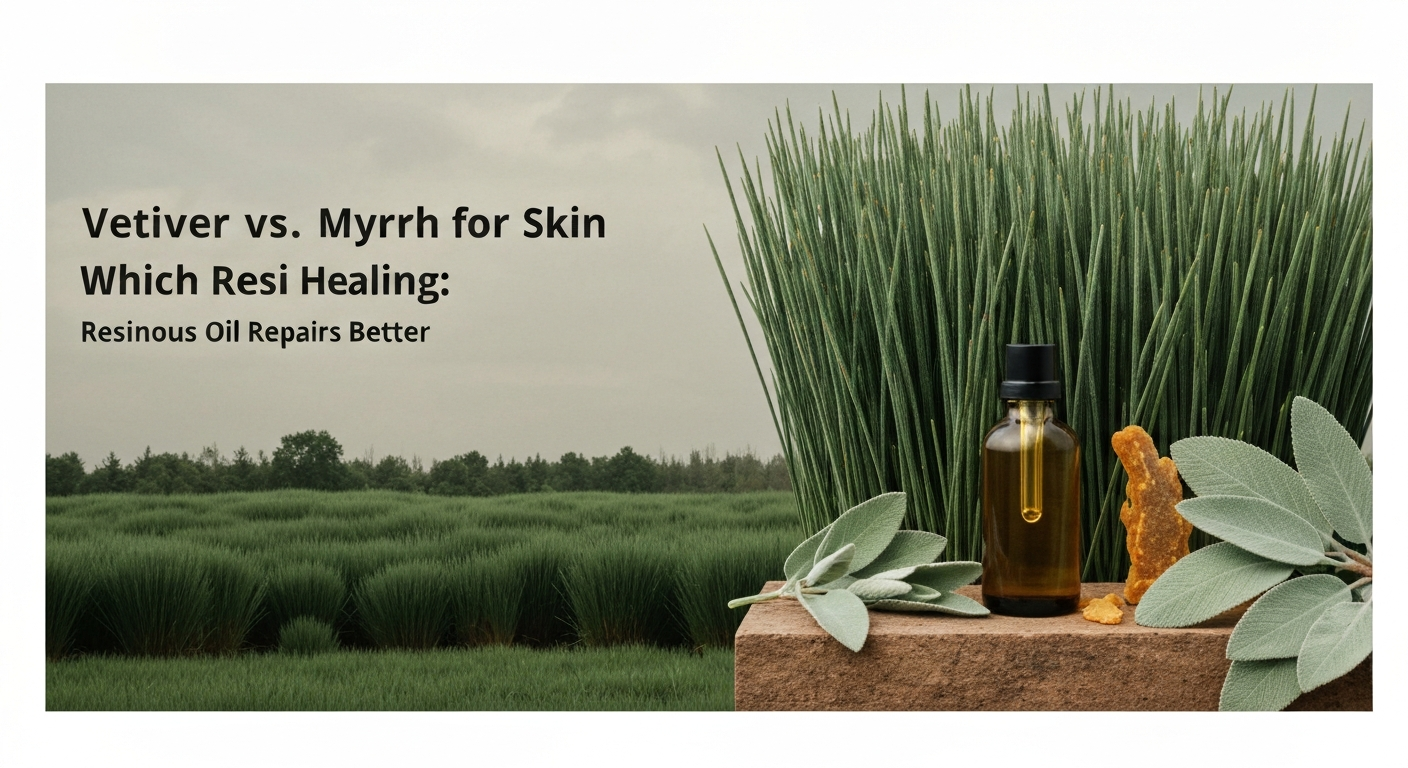
Vetiver vs. Myrrh for Skin Healing: Which Resinous Oil Repairs Better?
When exploring the world of resinous essential oils for skincare, two ancient treasures consistently emerge: vetiver and myrrh. Both oils have been treasured for millennia, each offering unique properties that may support skin wellness in their own distinctive ways. Understanding the nuanced differences between these earthy, grounding oils can help you make a more informed choice for your natural skincare journey.
This gentle comparison explores how vetiver and myrrh may complement different skin concerns, examining their traditional uses, aromatic profiles, and potential applications. While both oils share certain characteristics as resinous botanicals, their individual strengths may align better with specific skincare goals.
Understanding These Ancient Skin Allies
Vetiver essential oil emerges from the deep, intricate root system of Chrysopogon zizanioides, a perennial grass native to India. This remarkable oil carries an earthy, woody fragrance that speaks to its grounding nature. Traditionally, vetiver has been valued in Ayurvedic practices for its potential cooling and balancing properties.
Myrrh, derived from the resinous sap of Commiphora trees native to Africa and the Middle East, presents a warm, balsamic aroma with bitter-sweet undertones. This precious oil has been revered since ancient times, with historical records suggesting its use in Egyptian embalming practices and religious ceremonies, pointing to its traditional association with preservation and protection.
Detailed Comparison: Vetiver vs. Myrrh
| Attribute | Vetiver | Myrrh |
|---|---|---|
| Botanical Source | Chrysopogon zizanioides roots | Commiphora tree resin |
| Extraction Method | Steam distillation | Steam distillation |
| Scent Profile | Deep, earthy, woody, smoky | Warm, balsamic, bitter-sweet |
| Consistency | Medium viscosity | Thick, viscous |
| Color | Amber to dark brown | Yellow to reddish-brown |
| Primary Constituents | Vetivone, vetiverol, khusimol | Furanoeudesma compounds, sesquiterpenes |
| Dilution Rate | 1-3% for skincare | 1-2% for skincare |
| Shelf Life | 4-6 years | 4-8 years |
| Price Range | Moderate to high | Moderate to premium |
Vetiver for Skin Support: Earthy Restoration
Potential Benefits
Vetiver's complex chemical profile may offer several ways to support skin wellness. Some research suggests that vetiver oil contains compounds that may help promote a sense of balance in skin appearance. Traditional Ayurvedic practices have long valued vetiver for its potential cooling properties, which may complement warm or irritated skin sensations.
The oil's naturally occurring sesquiterpenes may support the skin's natural regeneration processes. Anecdotal evidence suggests that vetiver may help promote the appearance of smoother-looking skin over time, particularly when used consistently as part of a gentle skincare routine.
Pros of Vetiver
- May support skin's natural moisture balance
- Traditionally used for its potential calming properties
- Generally well-tolerated when properly diluted
- Long shelf life for extended use
- Earthy scent may promote relaxation during application
- May complement oily or combination skin types
Cons of Vetiver
- Strong, distinctive scent may not appeal to all users
- Can be expensive compared to other essential oils
- Thick consistency requires thorough blending
- May stain light-colored fabrics
- Requires proper dilution to avoid skin sensitivity
Myrrh for Skin Support: Ancient Wisdom
Potential Benefits
Myrrh has earned its reputation through thousands of years of traditional use. Some research observations suggest that myrrh oil may contain compounds that support the skin's natural protective barriers. The oil's traditional association with preservation may translate to supporting the skin's natural renewal processes.
Historical texts indicate that myrrh was valued for its potential to support skin that appeared weathered or aged. Modern users often report that myrrh-infused skincare formulations may help promote a sense of improved skin texture and appearance when used regularly.
Pros of Myrrh
- Extensive historical use suggests traditional efficacy
- May support mature or weathered-looking skin
- Warm, comforting scent many find appealing
- Exceptionally long shelf life
- May blend well with other skincare oils
- Traditionally valued for supporting skin resilience
Cons of Myrrh
- Very thick consistency can be challenging to work with
- May be more expensive than vetiver
- Can cause sensitivity in some individuals
- Strong scent may be overwhelming for some users
- Requires careful dilution and patch testing
- Limited availability from sustainable sources
Best Use Cases: When to Choose Each Oil
Choose Vetiver When:
- Seeking support for oily or combination skin
- Wanting a cooling sensation during application
- Preferring earthy, grounding aromatics
- Looking for an oil that may support occasional skin irritation
- Interested in traditional wound support practices
- Needing an oil that complements evening skincare routines
Choose Myrrh When:
- Supporting mature or weathered-looking skin
- Seeking historically-proven traditional ingredients
- Preferring warm, balsamic scent profiles
- Working with very dry or rough skin areas
- Looking for an oil with exceptional longevity
- Creating luxurious, spa-like skincare experiences
Safety Considerations and Application Methods
Both vetiver and myrrh require proper dilution before skin application. For skincare use, dilute vetiver to 1-3% in a carrier oil such as jojoba, sweet almond, or rosehip seed oil. Myrrh should be diluted to 1-2% due to its potent nature.
Always perform a patch test before first use by applying a small amount of the diluted oil to the inside of your wrist or elbow. Wait 24-48 hours to ensure no adverse reaction occurs. Discontinue use if irritation, redness, or sensitivity develops.
Important: Essential oils are not intended to diagnose, treat, cure, or prevent any disease. Pregnant or nursing women, children, and individuals with medical conditions should consult qualified healthcare providers before using essential oils. Never apply undiluted essential oils directly to skin.
Blending Possibilities
Rather than choosing between vetiver and myrrh, consider that these oils may complement each other beautifully in skincare blends. A thoughtful combination might harness vetiver's potential balancing properties alongside myrrh's traditional skin-supporting reputation.
For a gentle facial oil blend, consider:
- 30ml carrier oil (rosehip or jojoba)
- 3 drops vetiver essential oil
- 2 drops myrrh essential oil
- 2 drops lavender for additional skin comfort
The Verdict: Choosing Your Resinous Ally
When comparing vetiver vs myrrh for skin support, the choice ultimately depends on your individual skin needs, scent preferences, and wellness goals. Vetiver may appeal to those seeking a cooling, balancing oil that complements oily or combination skin types, while myrrh might better serve those interested in traditional skin support with warming, comforting properties.
For comprehensive skin support, vetiver's earthy grounding energy may complement active lifestyles and contemporary skincare routines. Its potential balancing properties make it particularly suitable for those exploring natural approaches to skin wellness.
Myrrh, with its ancient heritage and warming nature, may better serve those drawn to time-honored skincare wisdom. Its traditional association with skin preservation and protection makes it appealing for mature skin support and luxury skincare experiences.
Consider starting with whichever oil's scent profile and traditional uses most resonate with your skincare journey. Both oils offer unique pathways to supporting your skin's natural wellness, and with proper dilution and mindful application, either may become a valued ally in your natural skincare routine.
Remember that consistency and patience are key when incorporating any new essential oil into your skincare practice. Allow time for your skin to adapt and respond, always listening to your body's wisdom as you explore these ancient botanical treasures.