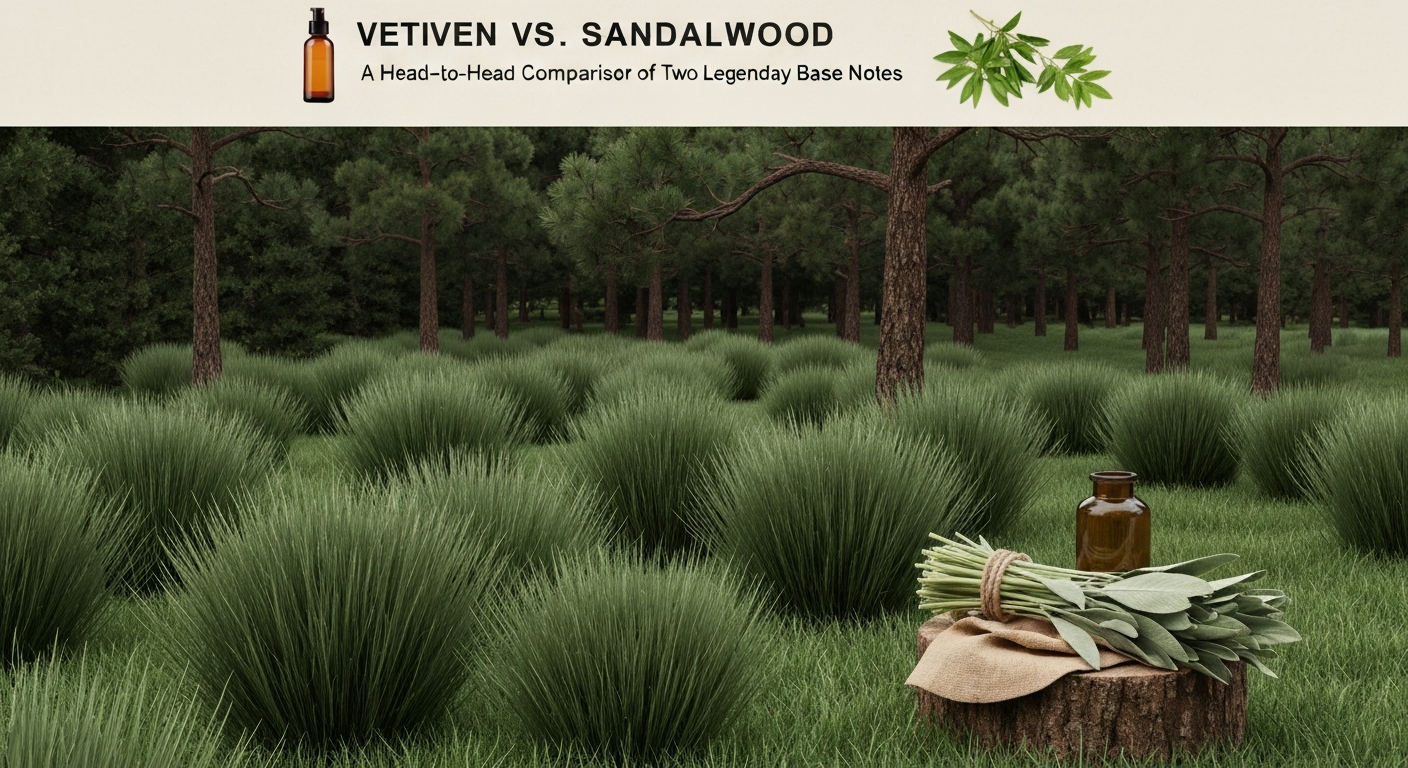
Vetiver vs. Sandalwood: A Head-to-Head Comparison of Two Legendary Base Notes
In the world of natural perfumery and aromatherapy, few debates spark as much passion as vetiver vs sandalwood. These two legendary base notes have captivated scent enthusiasts for centuries, each offering its own unique interpretation of earthiness and depth. While both oils ground us in nature's wisdom, their personalities couldn't be more different—vetiver with its wild, untamed roots and sandalwood with its smooth, meditative warmth.
Whether you're crafting a signature blend, seeking a mindful aromatherapy companion, or simply curious about these aromatic treasures, understanding the nuances between vetiver and sandalwood will help you choose the perfect earthy ally for your journey toward balance and presence.
Understanding Base Notes: The Foundation of Fragrance
Before diving into our vetiver sandalwood comparison, it's essential to understand why these oils reign supreme as base notes. Base notes form the foundation of any fragrance composition, providing depth, longevity, and that all-important grounding quality that keeps a scent tethered to earth even as lighter notes dance and fade.
Both vetiver and sandalwood excel in this role, but they approach it from different philosophical perspectives. Vetiver embodies the wild, raw energy of roots that dig deep into the earth, while sandalwood represents the refined wisdom of aged wood, smooth and contemplative.
Vetiver Essential Oil: The Wild Child of Base Notes
Derived from the robust root system of Vetiveria zizanioides, vetiver essential oil carries the untamed essence of tropical grasslands. This hardy perennial grass, native to India but now cultivated worldwide, produces one of nature's most complex and intriguing aromatic profiles.
Vetiver's Aromatic Profile
Vetiver's scent journey begins with an initial smokiness—earthy and almost medicinal—that gradually reveals layers of complexity. The oil may support a sense of grounding with its deep, woody undertones punctuated by subtle hints of vanilla and dried herbs. Some describe detecting notes of damp soil after rain, while others find whispers of leather and tobacco in its depths.
What makes vetiver particularly fascinating is its ability to evolve on the skin. The initial intensity often mellows into something surprisingly sweet and comforting, though it maintains its wild, untamed character throughout its lengthy dry-down.
Production and Varieties
The production of vetiver oil requires patience and respect for the plant's natural rhythm. The roots must mature for 12-18 months before harvesting, developing the complex chemical compounds that create vetiver's distinctive character. Steam distillation then coaxes the precious oil from these weathered roots, yielding approximately 0.5-1.5% oil by weight.
Different growing regions produce distinct vetiver personalities. Haitian vetiver tends to be cleaner and more refined, while Javanese vetiver often carries smokier, more intense characteristics. Indian vetiver, particularly from the southern regions, may offer the most complex and traditional profile.
Sandalwood Essential Oil: The Meditative Master

Santalum species have provided humanity with their aromatic gifts for over 4,000 years, creating a legacy of reverence that spans cultures and continents. True sandalwood oil, particularly from Santalum album (Indian sandalwood), represents the pinnacle of woody sophistication in the aromatic world.
Sandalwood's Aromatic Profile
Where vetiver challenges and surprises, sandalwood soothes and centers. Its profile opens with a creamy, almost milky sweetness that immediately suggests comfort and tranquility. The scent may help promote a sense of calm with its smooth, woody warmth that seems to wrap around the senses like a cashmere blanket.
High-quality sandalwood oil reveals incredible depth beneath its accessible exterior. Subtle rose-like florals emerge alongside hints of vanilla and soft spices, creating a complexity that invites contemplation rather than demanding attention.
The Sustainability Story
Sandalwood's beauty comes with responsibility. (See: NIH — Vetiver Research.) Indian sandalwood (Santalum album) faces significant conservation challenges due to over-harvesting and slow growth rates. The tree requires 15-20 years to mature enough for oil production, and the heartwood—where the precious aromatic compounds concentrate—develops only as the tree ages.
This has led to the rise of Australian sandalwood (Santalum spicatum) as a sustainable alternative. While different in character—typically more intense and camphoraceous than its Indian cousin—Australian sandalwood offers an ethical path to enjoying this beloved base note.
Head-to-Head Comparison Table
| Attribute | Vetiver | Sandalwood |
|---|---|---|
| Scent Character | Earthy, smoky, complex, wild | Creamy, smooth, warm, meditative |
| Initial Impact | Intense, sometimes challenging | Immediately pleasing, accessible |
| Longevity | Excellent (12-24+ hours) | Excellent (8-16+ hours) |
| Blending Ease | Requires skill, can dominate | Highly versatile, naturally harmonious |
| Price Range | Moderate to high | High to very high |
| Availability | Good from multiple origins | Limited (sustainability concerns) |
| Seasonal Affinity | Autumn/winter, humid weather | Year-round, particularly spring/summer |
| Meditation Use | Grounding, centering energy | Calming, spiritual contemplation |
When to Choose Vetiver: The Wild One's Domain
Pros of Vetiver
- Unmatched complexity: Vetiver offers one of the most intricate aromatic journeys in the essential oil world
- Excellent longevity: A little vetiver goes a very long way, making it cost-effective despite its intensity
- Seasonal versatility: Particularly beautiful in cooler months and humid climates
- Sustainability: Generally sustainable when sourced responsibly, with faster regeneration than sandalwood
- Unique character: Nothing else smells quite like vetiver—it's instantly recognizable yet endlessly fascinating
Cons of Vetiver
- Challenging for beginners: The initial intensity can be overwhelming for those new to natural perfumery
- Quality variations: Significant differences between origins and distillers require careful sourcing
- Blending complexity: Can easily dominate blends if not used with restraint and skill
- Love-it-or-hate-it factor: The distinctive earthiness isn't universally appreciated
Best Vetiver Use Cases
- Evening meditation and mindfulness practices
- Autumn and winter perfume compositions
- Masculine or unisex fragrance foundations
- When you want to make a bold, memorable aromatic statement
- Blending with bright citrus oils for contrast (explore our comprehensive vetiver blending guide)
When to Choose Sandalwood: The Smooth Operator's Realm
Pros of Sandalwood
- Universal appeal: Sandalwood's smooth character is widely loved and rarely offensive
- Blending versatility: Works beautifully with almost every other essential oil family
- Meditative qualities: Traditionally used to support contemplative practices and mindful presence
- Skin-friendly: Generally well-tolerated in proper dilution
- Timeless elegance: Never goes out of style, suitable for any age or gender
Cons of Sandalwood
- High cost: Quality sandalwood oil commands premium prices
- Sustainability concerns: Ethical sourcing requires careful attention
- Adulteration risks: Popularity leads to frequent dilution or synthetic substitution
- Limited availability: True Indian sandalwood is increasingly scarce
Best Sandalwood Use Cases
- Daily mindfulness and spiritual practices
- Romantic or intimate fragrance compositions
- Spring and summer perfumes
- When learning natural perfumery (forgiving and harmonious)
- Luxurious, sophisticated blends for special occasions
The Art of Blending: Vetiver vs Sandalwood in Composition

In the realm of vetiver in perfumery, both oils serve distinct compositional roles. Vetiver acts as a bold foundation that demands respect from other ingredients—it shapes the entire composition around its earthy intensity. Sandalwood, conversely, provides elegant support, lifting other ingredients while adding its own subtle sophistication.
When considering vetiver or sandalwood for your next blend, think about the emotional journey you want to create. Vetiver tells a story of wild places and deep roots, of finding strength in earth's raw power. Sandalwood whispers of ancient wisdom and gentle contemplation, of finding peace in refined simplicity.
The Middle Ground: Combining Forces
Why choose sides in this vetiver vs sandalwood debate when you can explore the magic of vetiver sandalwood blends? These two base notes, despite their differences, can create stunning harmony when balanced skillfully. The combination may offer the best of both worlds—vetiver's complexity grounded by sandalwood's smooth warmth.
Quality Considerations: What to Look For
Whether you choose vetiver or sandalwood, quality makes all the difference in your aromatic experience. For vetiver, seek oils with complex, evolving profiles that avoid harsh medicinal top notes. Quality vetiver should reveal sweetness and nuance as it develops on the skin.
With sandalwood, the challenge lies in authentication. True sandalwood oil should be creamy and sweet without synthetic harshness. Be wary of prices that seem too good to be true—quality sandalwood commands high prices for good reason.
The Verdict: Choosing Your Base Note Champion
In our comprehensive vetiver sandalwood comparison, we find not winners and losers, but two distinct paths to aromatic enlightenment. Your choice between vetiver vs sandalwood ultimately depends on your personal aromatic philosophy and intended use.
Choose vetiver if: You're drawn to complexity and intensity, enjoy challenging scents that reveal themselves slowly, prefer cooler weather fragrances, or want to make a bold aromatic statement that connects you to earth's wild energy.
Choose sandalwood if: You prefer immediate accessibility and universal appeal, value versatility in blending, enjoy meditative and calming aromatics, or seek a luxurious base note that enhances rather than dominates your compositions.
Perhaps the wisest approach is not to choose at all, but to welcome both these aromatic treasures into your collection. Each offers unique gifts—vetiver's grounding wildness and sandalwood's smooth wisdom—that can serve different moods, seasons, and intentions in your journey toward mindful living.
Remember to always dilute essential oils properly for topical use, perform patch tests, and consult with qualified aromatherapy practitioners when using oils for wellness purposes. Both vetiver and sandalwood are potent allies that deserve respect and mindful application in your aromatic practice.