Vetiver vs Sandalwood: Choosing Between Two Luxury Base Notes
There is a particular kind of stillness that only the deepest, earthiest fragrances can summon. If you have ever stood in a forest after rain, or held warm soil in your palms, you already understand something essential about base note oils. Vetiver and sandalwood occupy that same quiet, grounded territory — and yet, for all their similarities, they are beautifully, meaningfully different.
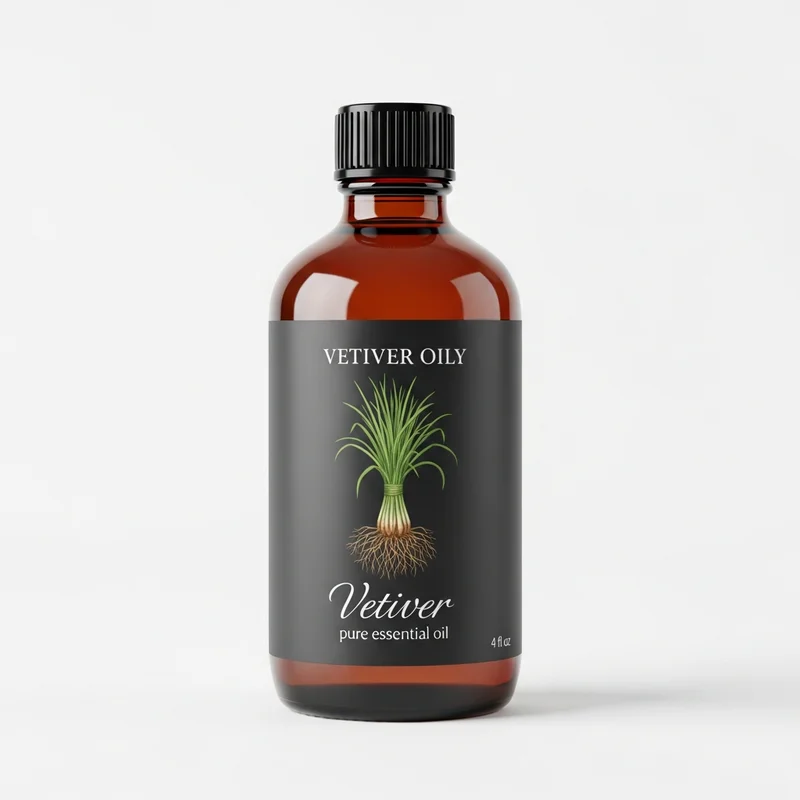
Vetiver Essential Oil
Our own Vetiver Essential Oil, in sizes from 0.5 oz to bulk.
From $18.99
Shop Now →Whether you are building a personal aromatic practice, blending your first bottle, or simply trying to decide which oil deserves a place on your shelf, this base note essential oil comparison will walk you through everything you need to know — the scent profiles, the sourcing stories, the traditional uses, and the practical applications — so you can choose with clarity and intention.
First, Why Base Notes Matter
In the language of perfumery, base notes are the soul of a fragrance. They are the slowest to evaporate, the last to leave your skin, and the element that gives any blend its staying power and depth. Without a grounding base note, even the most beautiful top notes — your bright citruses, your florals — can feel fleeting and unmoored.
Base notes are also the oils most closely associated with the concept of grounding: that felt sense of being present, settled, and connected to the earth beneath you. This is precisely why vetiver and sandalwood have been revered across cultures for thousands of years. Both arrive slowly, linger long, and ask nothing of you except to be still for a moment.
Vetiver: The Oil of Tranquility
Where It Comes From
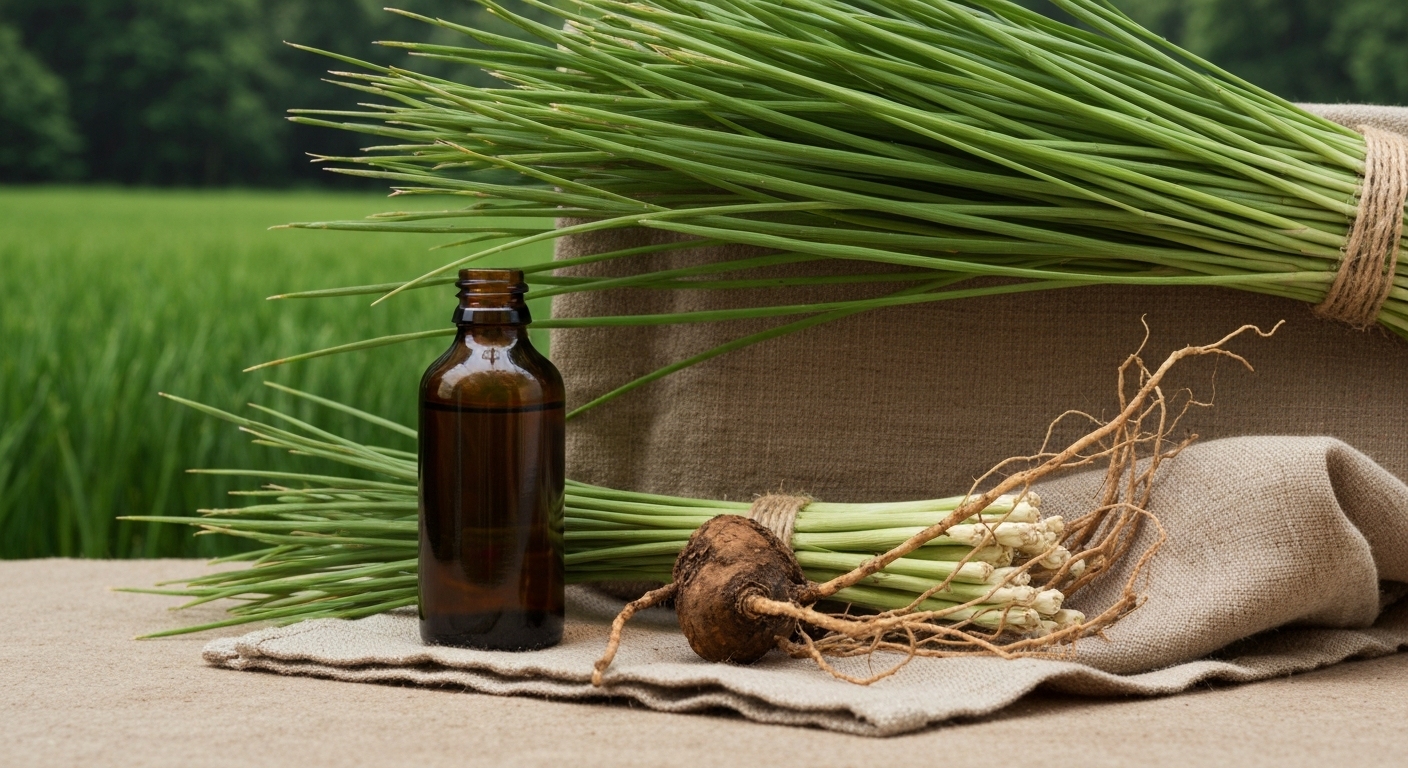
Vetiver (Chrysopogon zizanioides) is a tall, perennial grass native to India, where it has been woven into daily life for millennia. Unlike most plants whose essential oil lives in the leaves or flowers, vetiver's treasure is entirely underground. The oil is steam-distilled from the plant's complex, fibrous root system — roots that can grow up to three metres deep into the earth.
This rooting quality is not merely poetic. Vetiver is widely planted for soil conservation and erosion prevention precisely because its roots grip the earth so tenaciously. Haiti, Indonesia, and India are among the primary producing regions today, and differences in soil, climate, and distillation technique create meaningful variations in the final oil's character. Learn more about vetiver's sourcing and origins to understand how geography shapes the scent.
The Scent of Vetiver
Vetiver is not a gentle fragrance. It is complex, assertive, and deeply earthy — often described as smoky, woody, leathery, and faintly sweet all at once. Haitian vetiver tends toward a lighter, more luminous smokiness. Indian vetiver carries a deeper, more resinous weight. Indonesian expressions often land somewhere in between.
On the skin, vetiver opens with that characteristic raw-earth quality before gradually softening into something warmer, almost woody. It is an oil that rewards patience — give it twenty minutes, and you will discover facets that were not apparent in the bottle.
"Vetiver smells like the ground after the first rain. It smells like something remembered."
Traditional and Contemporary Uses
In Ayurvedic tradition, vetiver has long been used in cooling preparations and is sometimes called khus or the "oil of tranquility." Traditionally, it has been used in practices intended to support a sense of calm and presence. In contemporary aromatherapy contexts, people commonly use vetiver in diffuser blends, personal inhalers, and diluted topical applications as part of grounding or centering rituals.
Some research suggests that vetiver's complex chemical constituents — including khusimol, isovalencenol, and cyclocopacamphan-12-ol — may be of interest to scientists studying aroma and the nervous system, though it is important to note these findings are preliminary and vetiver oil is not intended to diagnose, treat, cure, or prevent any disease or medical condition.
Sandalwood: The Sacred Heartwood
Where It Comes From
True sandalwood essential oil is distilled from the heartwood and roots of Santalum trees — most notably Santalum album (Indian sandalwood) and Santalum spicatum (Australian sandalwood). The Indian variety, historically sourced from Mysore, Karnataka, has been among the most prized aromatic materials in the world for at least 4,000 years.
Sandalwood trees are slow-growing parasitic root feeders, requiring 15–30 years of maturation before their heartwood develops sufficient oil content. This long developmental timeline, combined with decades of overharvesting, has made genuine Santalum album both rare and expensive. Australian sandalwood (S. spicatum) and Hawaiian sandalwood (S. paniculatum) have emerged as more sustainably available alternatives, each with a slightly different scent signature.
It is worth noting that many products labelled "sandalwood" on the market contain synthetic santalol compounds or oils from unrelated species entirely. Quality sourcing is paramount when comparing sandalwood or vetiver in any serious blending context.
The Scent of Sandalwood
Where vetiver reaches downward into raw earth, sandalwood reaches inward — warm, creamy, milky-sweet, and softly woody. It is one of the most universally appealing fragrances in the world, with a smoothness that makes it extraordinarily wearable. True Indian sandalwood has an almost skin-like quality, as though it were not something applied but something revealed.
Australian sandalwood is drier, slightly more resinous, and less sweet than its Indian counterpart — a distinction worth noting if you are using it in blends. Both, however, share that characteristic santalol-driven creaminess that makes sandalwood one of the great fixatives in perfumery.
Traditional and Contemporary Uses
Sandalwood holds an almost unparalleled place in sacred traditions across Hinduism, Buddhism, and Ayurveda. It has been burned as incense, carved into temple objects, and applied to the body in ritual contexts for thousands of years. Traditionally, it has been associated with meditation, inner stillness, and spiritual clarity.
In modern aromatic and skincare applications, sandalwood is commonly found in facial serums, body oils, meditation blends, and luxury perfumery. People often report that its scent supports a sense of warmth and quiet focus during meditation or mindful movement practices. As always, these are experiential and traditional observations — not medical claims.
Vetiver vs Sandalwood: A Side-by-Side Comparison
Understanding the distinction between these two oils becomes clearest when we look at them directly alongside each other. The following table summarizes the key differences across the dimensions that matter most to blenders, practitioners, and mindful enthusiasts alike.
| Category | Vetiver | Sandalwood |
|---|---|---|
| Botanical Source | Chrysopogon zizanioides (grass roots) | Santalum album / S. spicatum (tree heartwood) |
| Scent Character | Earthy, smoky, leathery, woody, complex | Creamy, warm, milky-sweet, smooth, soft |
| Intensity | Bold, assertive, acquired taste | Gentle, approachable, universally appealing |
| Evaporation Rate | Very slow (deep base) | Slow (base note, slightly faster than vetiver) |
| Primary Origin | Haiti, India, Indonesia | India (Mysore), Australia, Hawaii |
| Sustainability | Relatively sustainable; fast-growing grass | Vulnerable; slow-growing; requires careful sourcing |
| Typical Price Point | Moderate to premium | Premium to very expensive (especially Indian) |
| Blending Personality | Anchoring, dominant in small amounts | Smoothing, bridges and softens other notes |
| Common Traditional Associations | Grounding, cooling, earthy presence | Sacred, meditative, spiritual clarity |
How They Blend: Complementary or Competing?
Here is a nuance that surprises many first-time blenders: vetiver and sandalwood are not actually competitors in a blend. They are collaborators. Used together, they create a base of remarkable depth and warmth — vetiver providing the raw earth and smokiness, sandalwood smoothing those edges into something wearable and warm.
A simple starting ratio to explore: one drop of vetiver for every two drops of sandalwood in a blend. The vetiver anchors; the sandalwood softens. The result tends to feel like standing in a sunlit forest — grounded, warm, and quietly alive.
Both oils also pair beautifully with:
- Frankincense — adds resinous depth and a meditative quality
- Rose absolute or otto — introduces floral warmth that bridges earth and sweetness
- Cedarwood — reinforces the woody character without overpowering
- Bergamot or yuzu — lifts the blend with fresh top notes that contrast beautifully with the deep base
- Ylang ylang — adds an exotic, heady sweetness in very small amounts
To explore how vetiver anchors more complex aromatic compositions, read our in-depth guide to blending with vetiver.
Practical Applications: Which Oil for Which Moment?
Choose Vetiver When…
- You want a deeply earthy, smoky aroma that feels primordially grounding
- You are creating a diffuser blend specifically intended to anchor a meditation or breathwork practice
- You prefer a fragrance that is unconventional, complex, and slightly challenging
- You want maximum longevity — vetiver's scent on skin or fabric can last remarkably long
- Sustainability is a primary concern — vetiver grass is a fast-growing, low-impact crop
Choose Sandalwood When…
- You want warmth and creaminess that feels immediately skin-compatible and wearable
- You are formulating a facial or body oil where smoothness and skin affinity matter
- You are blending for someone new to essential oils — sandalwood is approachable and rarely polarizing
- You want an oil that bridges and smooths other notes in a complex blend
- You are drawn to sacred or ceremonial aromatic traditions
Safety, Dilution, and Important Notes
Both vetiver and sandalwood are generally considered well-tolerated base note oils, but responsible use always begins with proper dilution and attention to individual sensitivity.
- Dilution: For topical use, both oils should be diluted in a carrier oil. A standard dilution of 1–2% is recommended for most adults (approximately 6–12 drops per 30ml of carrier oil). Reduce to 0.5–1% for facial applications or sensitive skin.
- Patch testing: Always perform a patch test on a small area of inner forearm skin before broader topical application. Wait 24 hours and observe for any reaction.
- Pregnancy and nursing: Consult a qualified healthcare provider before using any essential oil during pregnancy or while nursing.
- Children: Essential oil use with children requires specific guidance. Consult a qualified aromatherapist or healthcare professional.
- Sandalwood adulteration: Given the high cost of genuine sandalwood, adulteration is common in the market. Purchase only from reputable suppliers who provide GC/MS testing documentation.
- Medical conditions: Essential oils are not a substitute for professional medical advice, diagnosis, or treatment. Always consult a qualified healthcare provider regarding any health concerns.
For a deeper understanding of how to use vetiver safely in everyday applications, explore our complete guide to using vetiver oil.
The Choice Is a Feeling, Not a Formula
At the end of this vetiver vs sandalwood exploration, the most honest answer is this: neither oil is categorically better. They are different expressions of the same quiet impulse — the desire to feel rooted, present, and connected to something larger and older than the noise of daily life.
Vetiver is for the days when you want to feel the earth beneath your feet, when you need something unapologetically raw and grounding. Sandalwood is for the days when you want warmth and softness, when you need a gentle reminder that stillness can feel like coming home.
Many who work deeply with aromatic oils find they do not choose between them at all — they learn to move between them, letting each serve its moment. That, perhaps, is the most grounded approach of all.
Explore our full range of vetiver essential oil guides to continue your journey into one of nature's most extraordinary aromatic roots.