
Vetiverol and Vetiverone: The Anti-Inflammatory Powerhouses in Vetiver Oil
Deep within the amber depths of vetiver essential oil lies a complex orchestra of molecular compounds, each contributing to the oil's distinctive earthy profile and traditional applications. Among these constituents, two sesquiterpene alcohols stand out as particularly noteworthy: vetiverol and vetiverone. These compounds represent the chemical heart of vetiver's traditional use in wellness practices and may help explain why this grounding oil has been treasured across cultures for centuries.
Understanding the molecular architecture of vetiver oil chemistry offers us a window into nature's intricate design. As we explore these compounds through a lens of scientific curiosity rather than medical claims, we begin to appreciate the sophisticated biochemistry that makes vetiver such a unique botanical ally in our pursuit of balance and well-being.
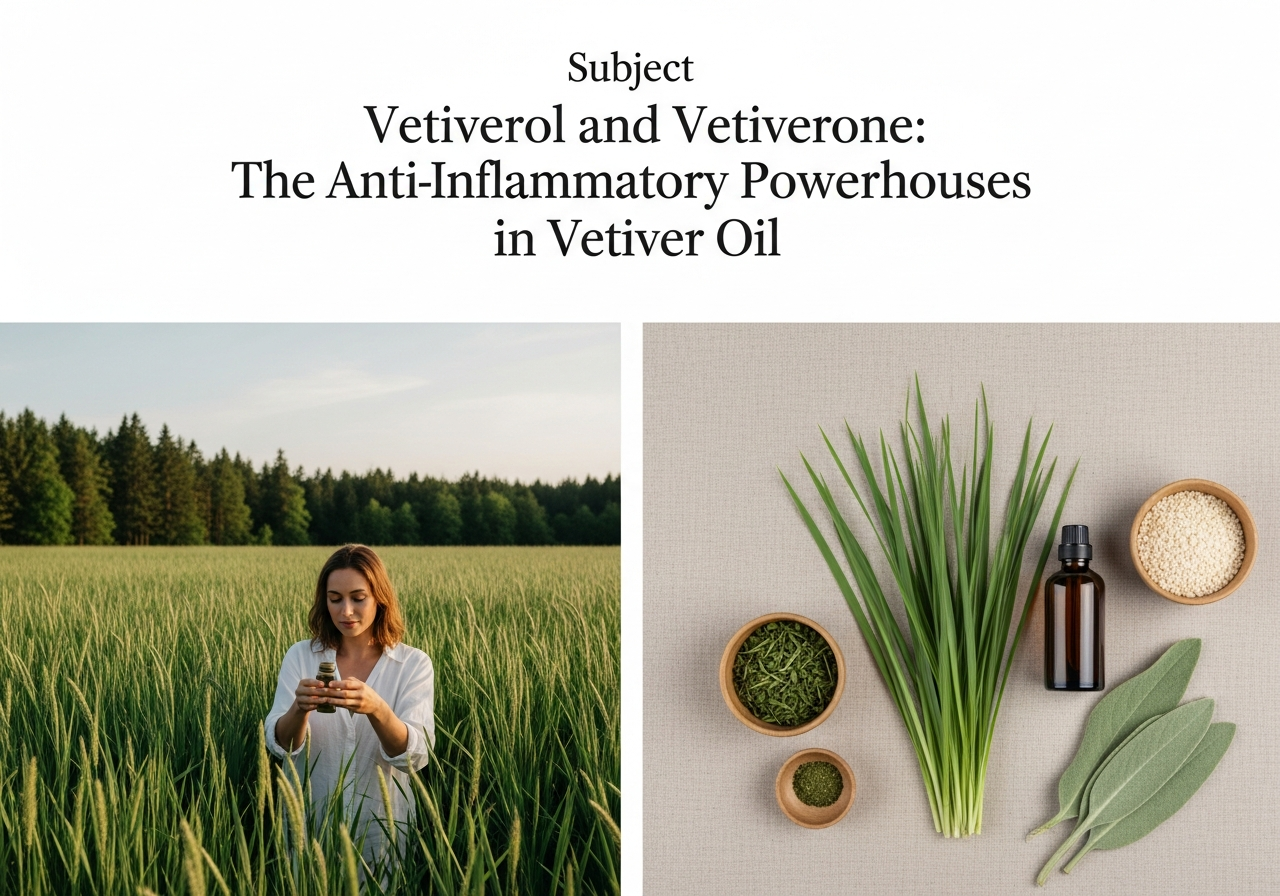
The Chemical Foundation: Understanding Vetiver's Molecular Profile
Vetiver essential oil (Chrysopogon zizanioides) contains over 100 identified compounds, creating one of the most chemically complex essential oil profiles in the botanical world. Research suggests that vetiverol and vetiverone typically comprise 15-25% of the total oil composition, though this can vary significantly based on geographic origin, soil conditions, and distillation methods.
These compounds belong to the sesquiterpene family—15-carbon molecules that form the backbone of many aromatic plants' therapeutic potential. What makes vetiverol and vetiverone particularly interesting to researchers is their unique molecular structure, which some studies suggest may contribute to various biological activities observed in laboratory settings.
Vetiverol: The Primary Alcohol
Vetiverol represents the most abundant single compound in many vetiver oil samples. This sesquiterpene alcohol carries the molecular formula C₁₅H₂₆O and exhibits what chemists describe as a tricyclic structure. Laboratory observations suggest that vetiverol may demonstrate certain properties that researchers find intriguing, though it's important to note that these are preliminary findings requiring further investigation.
Some research indicates that vetiverol may exhibit what scientists call "anti-inflammatory activity" in controlled laboratory conditions. However, these observations come from in vitro studies (test tube experiments) and animal models, not human clinical trials. The leap from laboratory observations to real-world applications requires careful consideration and shouldn't be assumed.
Vetiverone: The Ketone Component
Vetiverone, while present in smaller quantities than vetiverol, contributes significantly to vetiver's overall chemical profile. This sesquiterpene ketone (C₁₅H₂₄O) has been the subject of various research investigations, with some studies suggesting it may possess certain biological activities of interest to researchers studying natural compounds.
Preliminary research has explored vetiverone's potential interactions with cellular pathways, though these studies remain largely exploratory. The scientific community continues to investigate how these compounds might function at the molecular level, always with the understanding that laboratory findings don't directly translate to therapeutic applications for humans.
Research Observations: What Science Suggests About Anti-Inflammatory Activity
The scientific exploration of vetiver anti-inflammatory compounds has yielded interesting observations, though researchers are careful to frame their findings as preliminary insights rather than definitive conclusions. Multiple laboratory studies have examined how vetiverol and vetiverone interact with inflammatory pathways, offering glimpses into their potential mechanisms of action.
Laboratory Studies and In Vitro Observations
Several peer-reviewed studies have investigated vetiver's compounds in controlled laboratory environments. A 2019 study published in the Journal of Ethnopharmacology observed that vetiver oil extracts demonstrated what researchers termed "significant anti-inflammatory activity" in cellular models. The researchers noted that vetiverol and vetiverone appeared to modulate certain inflammatory markers, though they emphasized that these were preliminary observations requiring further investigation.
Another research paper from 2020 examined how vetiver compounds might interact with inflammatory pathways at the cellular level. The researchers observed that these compounds appeared to influence the production of certain inflammatory mediators, though they cautioned that the mechanisms remained unclear and required additional study.
It's crucial to understand that these laboratory observations, while scientifically interesting, don't automatically translate to effects in living humans. The controlled conditions of a laboratory differ dramatically from the complex biological environment of the human body.
Animal Model Studies
Some researchers have extended their investigations to animal models, seeking to understand how vetiver compounds might function in more complex biological systems. These studies, while providing additional data points, still represent early-stage research that requires careful interpretation.
A 2021 study using animal models suggested that vetiver oil containing vetiverol and vetiverone might influence inflammatory responses in specific conditions. However, the researchers noted significant limitations in their findings and emphasized that animal studies don't predict human responses with certainty.
The scientific community generally agrees that while animal studies provide valuable insights into potential mechanisms, they represent just one step in a long research process. Many compounds that show promise in animal studies don't demonstrate the same effects in human applications.
Gaps in Current Research
Despite the intriguing laboratory and animal research, significant gaps remain in our understanding of how vetiverol and vetiverone might function in human applications. No large-scale human clinical trials have specifically examined these compounds for anti-inflammatory applications, leaving many questions unanswered.
Researchers acknowledge that factors such as bioavailability, dosage, individual genetic variations, and interaction with other compounds all influence how these molecules might function in real-world scenarios. The complexity of human biology means that promising laboratory findings require extensive additional research before drawing definitive conclusions.
Biosynthesis and Natural Variation
Understanding how vetiver plants produce vetiverol and vetiverone offers insights into the factors that influence their concentration and quality. These compounds are synthesized through the plant's natural metabolic processes, primarily in the root system where vetiver oil originates.
Environmental Influences on Compound Production
Research suggests that environmental factors significantly impact the biosynthesis of vetiver's active compounds. Soil composition, climate conditions, rainfall patterns, and even the age of the plant at harvest can influence the concentration of vetiverol and vetiverone in the final essential oil.
Studies have observed that vetiver grown in different geographic regions can exhibit varying chemical profiles. For example, vetiver from Haiti might contain different ratios of these compounds compared to vetiver from Java or India. This natural variation explains why experienced aromatherapists often have preferences for vetiver from specific regions.
The plant's stress response also appears to influence compound production. Some research suggests that environmental stresses might actually increase the production of certain sesquiterpenes, including vetiverol and vetiverone, as the plant's natural defense mechanism.
Seasonal and Harvest Timing Considerations
The timing of vetiver root harvest can significantly impact the concentration of active compounds. Research indicates that roots harvested during certain seasons or at specific plant maturity stages may contain higher levels of vetiverol and vetiverone.
Traditional cultivation knowledge often aligns with these scientific observations. Experienced growers frequently report that vetiver harvested during particular seasons yields oil with more pronounced aromatic characteristics, which may correlate with higher concentrations of these key compounds.
Quality Assessment and Sourcing Considerations
For those interested in vetiver oil with optimal concentrations of vetiverol and vetiverone, understanding quality indicators becomes essential. The complex nature of vetiver's chemical profile means that quality assessment requires sophisticated analytical methods.
Gas Chromatography-Mass Spectrometry (GC-MS) Analysis
Professional quality assessment of vetiver oil relies heavily on GC-MS analysis, which can identify and quantify individual compounds including vetiverol and vetiverone. Reputable suppliers often provide GC-MS reports that detail the exact chemical composition of their vetiver oil batches.
When reviewing GC-MS reports, look for vetiverol concentrations typically ranging from 8-15% and vetiverone levels usually between 3-8%. Oils showing significantly different ratios might indicate different botanical sources, processing methods, or potential adulteration.
However, it's important to note that "higher" concentrations of these compounds don't necessarily indicate "better" oil. The synergistic interaction between all compounds in vetiver oil contributes to its overall character and traditional applications.
Sourcing Red Flags and Quality Indicators
Several factors can indicate quality issues that might affect vetiverol and vetiverone concentrations:
- Unusually low prices: High-quality vetiver oil requires significant plant material and careful processing, making extremely low prices suspicious.
- Lack of botanical name: Quality suppliers specify Chrysopogon zizanioides rather than using generic "vetiver oil" labels.
- Missing origin information: Reputable suppliers provide detailed information about geographic origin and harvest practices.
- Absence of testing data: Quality oils should come with analytical data supporting their chemical composition.
- Overly consistent batches: Natural variation between batches is normal; identical analyses across multiple lots might suggest synthetic additions.
Interaction with Other Vetiver Compounds
Vetiverol and vetiverone don't exist in isolation within vetiver oil. (See: NIH — Vetiver Research.) They interact with dozens of other compounds in what researchers call the "entourage effect"—the idea that compounds work synergistically rather than independently.
Synergistic Relationships
Research suggests that the biological activities observed in vetiver oil studies might result from complex interactions between multiple compounds rather than the action of individual molecules. Vetiverol and vetiverone appear to work alongside other sesquiterpenes, esters, and aromatic compounds to create vetiver's distinctive profile.
Some studies have compared isolated vetiverol and vetiverone against whole vetiver oil in laboratory settings, with results suggesting that the complete oil demonstrates different properties than individual compounds alone. This observation supports traditional aromatherapy approaches that emphasize whole plant extracts over isolated constituents.
Balancing Compound Ratios
The ratio between different compounds appears to influence vetiver oil's characteristics. Research indicates that oils with optimal balances of vetiverol, vetiverone, and other major constituents might demonstrate different properties than oils dominated by any single compound.
This understanding has implications for both cultivation and processing methods. Some producers experiment with different distillation parameters to optimize compound ratios, though these approaches require careful balance to maintain the oil's natural integrity.
Safety Profile and Considerations
While vetiver oil has a generally favorable safety profile, understanding the specific considerations related to vetiverol and vetiverone helps ensure appropriate use. As with all essential oil compounds, proper handling and awareness of potential sensitivities remains important.
Dermal Safety and Sensitization Potential
Research on vetiver oil's dermal safety suggests that vetiverol and vetiverone are generally well-tolerated when used appropriately. However, as with all essential oil components, individual sensitivities can occur.
The International Fragrance Association (IFRA) provides guidelines for vetiver oil use in cosmetic applications, indirectly addressing safe exposure levels to these compounds. These guidelines recommend maximum concentration limits for different product types, based on available safety data.
Patch testing remains recommended before using vetiver oil topically, particularly for individuals with sensitive skin or known fragrance allergies. The complex chemical profile of vetiver oil means that sensitivities could potentially develop to any of its numerous compounds.
Contraindications and Special Populations
Certain populations should exercise additional caution with vetiver oil and its constituent compounds:
- Pregnant and nursing individuals: While vetiver oil doesn't appear on most restricted lists for pregnancy, limited safety data for vetiverol and vetiverone during pregnancy suggests conservative use.
- Children: The concentration and application methods should be adjusted for younger individuals, as their skin and metabolic processes differ from adults.
- Individuals with liver conditions: Since essential oil compounds are processed by the liver, those with hepatic conditions should consult healthcare providers before extensive use.
- Those taking medications: While specific interactions with vetiverol and vetiverone haven't been extensively studied, the general principle of consulting healthcare providers about essential oil use applies.
Proper Dilution and Application Methods
Safe use of vetiver oil containing these compounds requires appropriate dilution ratios. For topical applications, aromatherapy guidelines typically recommend:
- Adults: 1-3% dilution (6-18 drops per ounce of carrier oil)
- Children (2-12 years): 0.5-1% dilution (3-6 drops per ounce of carrier oil)
- Facial applications: 0.5-1% dilution maximum
- Bath applications: Pre-dilute in carrier oil before adding to bathwater
These guidelines help ensure that exposure to vetiverol, vetiverone, and other compounds remains within generally recognized safe ranges while still allowing for meaningful aromatic experience.
Future Research Directions
The scientific exploration of vetiverol and vetiverone represents an active area of research with several promising directions for future investigation.
Human Clinical Studies
The most significant gap in current research remains the lack of human clinical trials specifically examining these compounds. Future studies might explore how vetiver oil applications in humans correlate with the anti-inflammatory activities observed in laboratory settings.
Such studies would need to address complex questions about bioavailability, optimal dosing, individual variation in response, and long-term safety profiles. The design of meaningful human studies for essential oil compounds presents unique challenges that researchers continue to address.
Mechanism of Action Studies
While laboratory studies suggest that vetiverol and vetiverone might influence inflammatory pathways, the specific mechanisms remain unclear. Future research might explore exactly how these compounds interact with cellular processes, potentially revealing new applications or refining our understanding of their traditional uses.
Advanced techniques in molecular biology and biochemistry offer new tools for investigating these mechanisms with greater precision than previously possible.
Sustainable Production Research
As interest in vetiver's compounds grows, research into sustainable cultivation and processing methods becomes increasingly important. Studies exploring how to optimize vetiverol and vetiverone production while maintaining ecological balance could benefit both the industry and farming communities.
This research might include investigations into soil management, harvest timing, processing innovations, and quality standardization methods that support both compound concentration and environmental sustainability.
Practical Applications and Traditional Context
While we must carefully avoid medical claims about vetiverol and vetiverone, understanding their role in traditional vetiver applications provides valuable context for modern usage.
Traditional systems of medicine, particularly in vetiver's native regions, have long recognized the plant's potential for supporting comfort and well-being. These traditional applications, while not constituting medical evidence, offer insights into how people have historically experienced vetiver's effects.
Modern aromatherapy practices often focus on vetiver's grounding and centering qualities, which some practitioners suggest might relate to these key compounds. The traditional use of vetiver for comfort continues to interest researchers exploring the connection between chemical composition and experienced effects.
When incorporating vetiver oil into personal wellness routines, many people report finding value in its earthy, stabilizing aroma. Whether these experiences relate specifically to vetiverol and vetiverone or to the oil's complete chemical symphony remains an open question that future research might help answer.
Conclusion: The Ongoing Journey of Discovery
Vetiverol and vetiverone represent fascinating compounds that offer a window into vetiver oil's complex chemistry and traditional applications. While laboratory research suggests these molecules might possess interesting biological activities, we must remember that scientific exploration is an ongoing process requiring patience and careful interpretation.
The journey from laboratory observation to practical understanding involves many steps, each requiring rigorous investigation and thoughtful analysis. As we continue to explore these compounds, we maintain respect for both scientific methodology and the traditional wisdom that first drew attention to vetiver's potential.
For those who choose to incorporate vetiver oil into their wellness practices, understanding its key compounds adds depth to the experience. Whether seeking the grounding qualities that aromatherapists describe or simply appreciating vetiver's complex aromatic profile, knowledge of vetiverol and vetiverone enriches our connection to this remarkable botanical ally.
As research continues and our understanding deepens, these compounds may reveal new insights into nature's sophisticated biochemistry. Until then, we approach vetiver with curiosity, respect, and appropriate caution—honoring both its traditional legacy and the scientific exploration that continues to unfold around these intriguing molecules.
Remember to always consult with qualified healthcare providers before using essential oils for wellness purposes, especially if you have underlying health conditions or take medications. The information presented here is educational in nature and should not be considered medical advice.