
Vetivone and Khusimol: The Key Chemical Compounds That Make Vetiver Oil Powerful
In the quiet depths of vetiver's earthy essence lies a complex molecular symphony. Two compounds stand as the cornerstone of this oil's distinctive character: vetivone and khusimol. These sesquiterpene molecules, formed in the patient darkness of the earth as vetiver roots grow deep, represent nature's own masterclass in chemical artistry.
Understanding these compounds opens a window into why vetiver has been treasured across cultures for centuries. While we cannot claim these molecules provide medical benefits, research observations suggest they contribute significantly to vetiver's unique aromatic profile and the grounding sensations many people report experiencing.
The Chemical Foundation of Vetiver's Character
Vetiver essential oil's complexity stems from its rich chemical composition, containing over 100 identified compounds. Among these, vetivone and khusimol emerge as the primary constituents that researchers believe define much of vetiver's distinctive properties. These vetiver chemical compounds belong to the sesquiterpene family—fifteen-carbon molecules that form the backbone of many aromatic plant essences.
The concentration of these compounds varies significantly based on several factors:
- Geographic origin and soil composition
- Root age at harvest (typically 12-18 months for optimal chemical development)
- Distillation methods and duration
- Storage conditions and oil age
- Seasonal variations in root chemistry
Research observations indicate that high-quality vetiver oils typically contain 15-25% vetivone and 10-15% khusimol, though these percentages can fluctuate considerably. This natural variation is part of what makes working with authentic vetiver oils both challenging and rewarding for aromatherapy practitioners and perfumers alike.
Vetivone: The Grounding Molecule
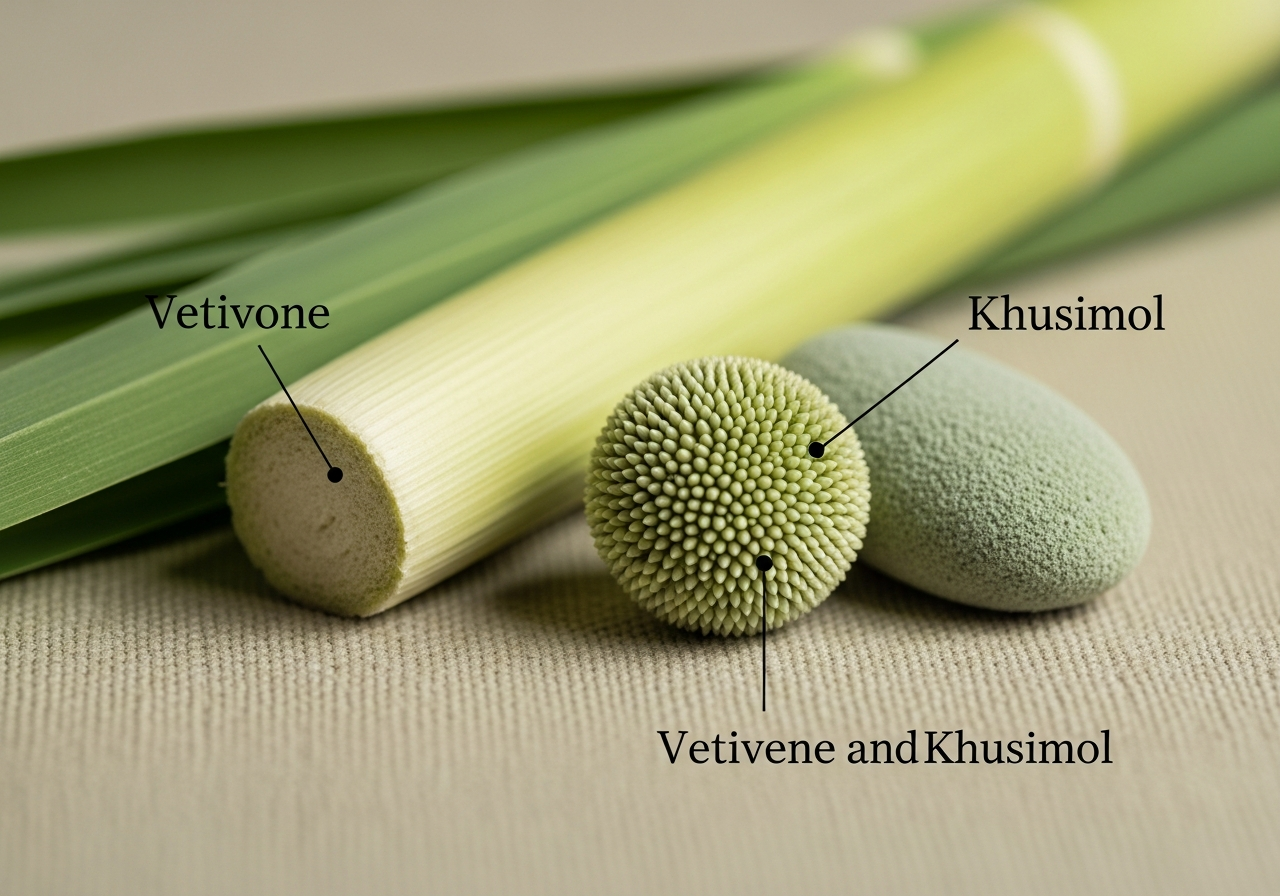
Vetivone, chemically known as 4,5-dihydro-2-(6-methylhept-5-en-2-yl)furan-3(2H)-one, represents the primary active constituent in most vetiver oils. This sesquiterpene ketone carries the molecular signature C₁₅H₂₄O and forms through complex enzymatic processes as the vetiver plant matures.
Chemical Properties and Formation
Studies suggest that vetivone develops as vetiver roots age, with concentrations typically increasing over the plant's first year of growth. The compound exhibits remarkable stability when properly stored, contributing to vetiver oil's impressive shelf life compared to many other essential oils. Research observations indicate that vetivone may retain its chemical integrity for several years under appropriate storage conditions.
The molecular structure of vetivone includes a furanone ring system, which researchers believe contributes to its distinctive earthy, woody aroma profile. This structural feature distinguishes it from many other sesquiterpene compounds found in essential oils, potentially explaining why vetiver's scent is so unique and recognizable.
Research Observations on Vetivone
Laboratory studies have examined vetivone's behavior in various contexts, though it's important to note that these research findings represent observations rather than established medical facts. Some studies suggest that:
- Vetivone demonstrates stability under varying temperature and pH conditions
- The compound may interact with certain neurotransmitter systems in preliminary laboratory models
- Aromatherapy practitioners report that oils high in vetivone are often associated with feelings of groundedness
- Some research suggests vetivone may influence the perception of stress in controlled environments
It's crucial to understand that these observations come from preliminary research and anecdotal reports. No definitive conclusions about therapeutic effects can be drawn from this data, and more research would be needed to establish any specific properties.
Khusimol: The Complementary Component
Khusimol, with its chemical designation as (1S,4S,5R,9S)-4,11,11-trimethyl-8-methylidenebicyclo[7.2.0]undecan-5-ol, serves as vetiver's secondary major compound. This sesquiterpene alcohol, with molecular formula C₁₅H₂₆O, works in complex harmony with vetivone to create vetiver's full aromatic profile.
Structural Characteristics
Khusimol's bicyclic structure differs significantly from vetivone's furanone arrangement, yet research suggests these compounds work synergistically to produce vetiver's characteristic effects. The hydroxyl group in khusimol's structure may contribute to the oil's overall stability and its ability to blend harmoniously with other aromatic compounds.
Chemical analysis indicates that khusimol typically appears in lower concentrations than vetivone but plays a crucial role in modulating the oil's overall character. Some researchers theorize that the ratio between these two compounds influences the quality and aromatic profile of different vetiver oils.
Research Findings on Khusimol
Scientific literature contains various observations about khusimol, though as with all essential oil research, these findings should be interpreted as preliminary observations rather than established facts:
- Laboratory studies suggest khusimol may influence certain enzyme systems
- Some research indicates potential antioxidant activity in controlled laboratory environments
- Aromatherapy literature suggests khusimol-rich oils may promote feelings of relaxation
- Chemical stability studies indicate khusimol maintains its structure well over time
These observations contribute to our understanding of vetiver's traditional uses, though they don't constitute proof of any medical or therapeutic effects.
Synergistic Effects and the Entourage Phenomenon
Perhaps the most fascinating aspect of vetiver oil chemistry lies not in individual compounds but in their complex interactions. Research suggests that vetivone and khusimol, along with vetiver's many minor constituents, create what scientists call an "entourage effect"—where the whole becomes greater than the sum of its parts.
Chemical Interactions
Studies examining whole vetiver oil versus isolated compounds suggest that the complete chemical matrix produces different effects than individual components alone. This observation supports traditional aromatherapy practices that emphasize using whole plant extracts rather than synthetic isolates.
Minor compounds in vetiver oil that may contribute to this synergy include:
- Vetiselinenol (2-5%)
- α-Vetivone (1-3%)
- β-Vetivone (1-2%)
- Khusinol (1-2%)
- Various other sesquiterpene alcohols and ketones
Research observations suggest these compounds may modulate how the primary constituents behave, potentially influencing factors like volatility, absorption, and aromatic development over time.
Quality Indicators and Chemical Analysis
Understanding vetiver oil chemistry enables more informed purchasing decisions and quality assessment. Chemical analysis through gas chromatography-mass spectrometry (GC-MS) provides insights into oil authenticity and quality.
Authentic Vetiver Chemical Profiles
High-quality vetiver oils typically exhibit specific chemical ranges, though natural variation means exact percentages may fluctuate. (See: NIH — Vetiver Research.) Research-based quality indicators include:
| Compound | Typical Range (%) | Quality Indicator |
|---|---|---|
| Vetivone | 15-25% | Higher percentages often indicate mature roots |
| Khusimol | 10-15% | Balanced ratios suggest proper distillation |
| Vetiselinenol | 2-5% | Presence indicates authentic vetiver |
| α-Vetivone | 1-3% | Contributes to aromatic complexity |
Oils falling significantly outside these ranges may indicate adulteration, poor distillation practices, or inferior source material. However, some natural variation should be expected based on terroir and processing methods.
Geographic Variations in Chemistry
Research indicates that vetiver's chemical composition varies significantly based on origin. These variations help explain why vetiver oils from different regions exhibit distinct aromatic profiles:
- Haitian Vetiver: Often higher in vetivone, creating a more grounding aromatic profile
- Indian Vetiver: May contain higher khusimol percentages, contributing to smoother scent development
- Indonesian Vetiver: Sometimes exhibits unique minor compound profiles
- Réunion Vetiver: Often prized for balanced vetivone/khusimol ratios
These chemical differences reflect soil conditions, climate variations, and local cultivation practices, demonstrating how terroir influences essential oil chemistry much like it does wine production.
Safety Profile and Chemical Considerations
Understanding vetiver's chemical composition helps inform safe usage practices. While vetiver oil generally has a favorable safety profile, its chemical complexity requires respectful handling and appropriate dilution.
Chemical Safety Data
Research observations on vetiver's major compounds suggest relatively low toxicity profiles, though some considerations apply:
- Both vetivone and khusimol appear stable under normal usage conditions
- No significant photosensitizing compounds have been identified in vetiver oil
- Chemical analysis suggests low allergenicity potential for most individuals
- The oil's viscous nature and large molecular size may reduce absorption rates
Contraindications and Precautions
Despite its generally favorable safety profile, certain precautions should be observed when working with vetiver oil:
- Pregnancy and Nursing: Consult qualified healthcare providers before use, as comprehensive safety data for vetiver's specific compounds during pregnancy is limited
- Children: Use heavily diluted (0.5% or less) and avoid with children under 6 years
- Medication Interactions: While no specific interactions are established, consult healthcare providers if taking medications
- Skin Sensitivity: Always perform patch testing, especially for individuals with sensitive skin
- Internal Use: Never use internally unless under qualified professional guidance
Proper Dilution Guidelines
Vetiver's chemical intensity requires appropriate dilution for safe topical use:
- Face and sensitive areas: 0.5-1% dilution (3-6 drops per ounce of carrier)
- Body application: 1-2% dilution (6-12 drops per ounce of carrier)
- Aromatherapy diffusion: 3-5 drops in standard diffuser
- Bath use: 2-3 drops mixed with dispersant before adding to bathwater
Storage and Chemical Stability
Vetiver's chemical composition contributes to its impressive stability, but proper storage remains crucial for maintaining compound integrity over time.
Optimal Storage Conditions
Research suggests that vetivone and khusimol remain stable under appropriate storage conditions:
- Temperature: Store between 60-70°F (15-21°C) for optimal stability
- Light exposure: Keep in dark glass bottles to prevent photodegradation
- Air exposure: Minimize oxidation by keeping bottles tightly sealed
- Humidity: Store in dry conditions to prevent chemical changes
Signs of Chemical Degradation
Understanding how vetiver's chemistry changes over time helps identify when oil quality has declined:
- Scent becomes harsh or overly sharp
- Color shifts dramatically (though some darkening is normal)
- Consistency becomes unusually thick or thin
- Development of off-odors or rancid notes
Future Research Directions
The scientific understanding of vetiver's chemical complexity continues evolving. Current research trends suggest several promising areas for future investigation:
Emerging Areas of Study
- Advanced analytical techniques revealing previously unknown minor compounds
- Studies examining how processing methods affect chemical composition
- Research into optimal cultivation practices for maximizing beneficial compounds
- Investigation of chemical variations between vetiver species and cultivars
- Long-term stability studies of individual compounds
These research directions may deepen our appreciation for vetiver's chemical sophistication and inform better cultivation, processing, and usage practices.
Practical Applications of Chemical Knowledge
Understanding vetiver's chemical composition enables more informed and intentional usage in various applications:
Aromatherapy Applications
Knowledge of vetiver's chemical compounds can guide aromatherapy practice:
- Oils high in vetivone may be preferred for grounding practices
- Balanced vetivone/khusimol ratios often create more complex aromatic experiences
- Understanding chemical volatility helps predict how scent develops over time
- Chemical knowledge informs appropriate blending with other oils
Perfumery Considerations
Professional perfumers consider vetiver's chemical composition when creating fragrances:
- Vetivone provides base note stability in complex compositions
- Khusimol contributes to smooth scent transitions
- Understanding molecular size helps predict longevity and projection
- Chemical knowledge guides appropriate dilution for different applications
Conclusion: Honoring Nature's Molecular Artistry
The intricate dance between vetivone, khusimol, and vetiver's many minor compounds represents nature's own masterpiece in chemical engineering. These molecules, formed in quiet earth depths through countless enzymatic processes, create an aromatic experience that has captivated humanity across cultures and centuries.
While we must resist the temptation to make unsupported health claims about these compounds, their chemical complexity deserves our respect and careful study. Understanding vetiver's molecular foundation helps us appreciate why this oil has earned its place as one of aromatherapy's most treasured essences.
As research continues to unveil new aspects of vetiver's chemical sophistication, we're reminded that nature's complexity often exceeds our ability to fully comprehend it. Perhaps this is as it should be—maintaining space for mystery while honoring what science can teach us about this remarkable plant's molecular gifts.
Whether you're an aromatherapy enthusiast, professional practitioner, or simply someone drawn to vetiver's grounding presence, understanding its chemical foundation enriches the experience. In vetivone and khusimol, we find not just molecules, but teachers—reminding us that true complexity often lies beneath the simplest appearances, waiting patiently for our attention and respect.
Always consult with qualified healthcare providers before using essential oils for any health-related purposes. The information presented here is for educational purposes only and does not constitute medical advice.