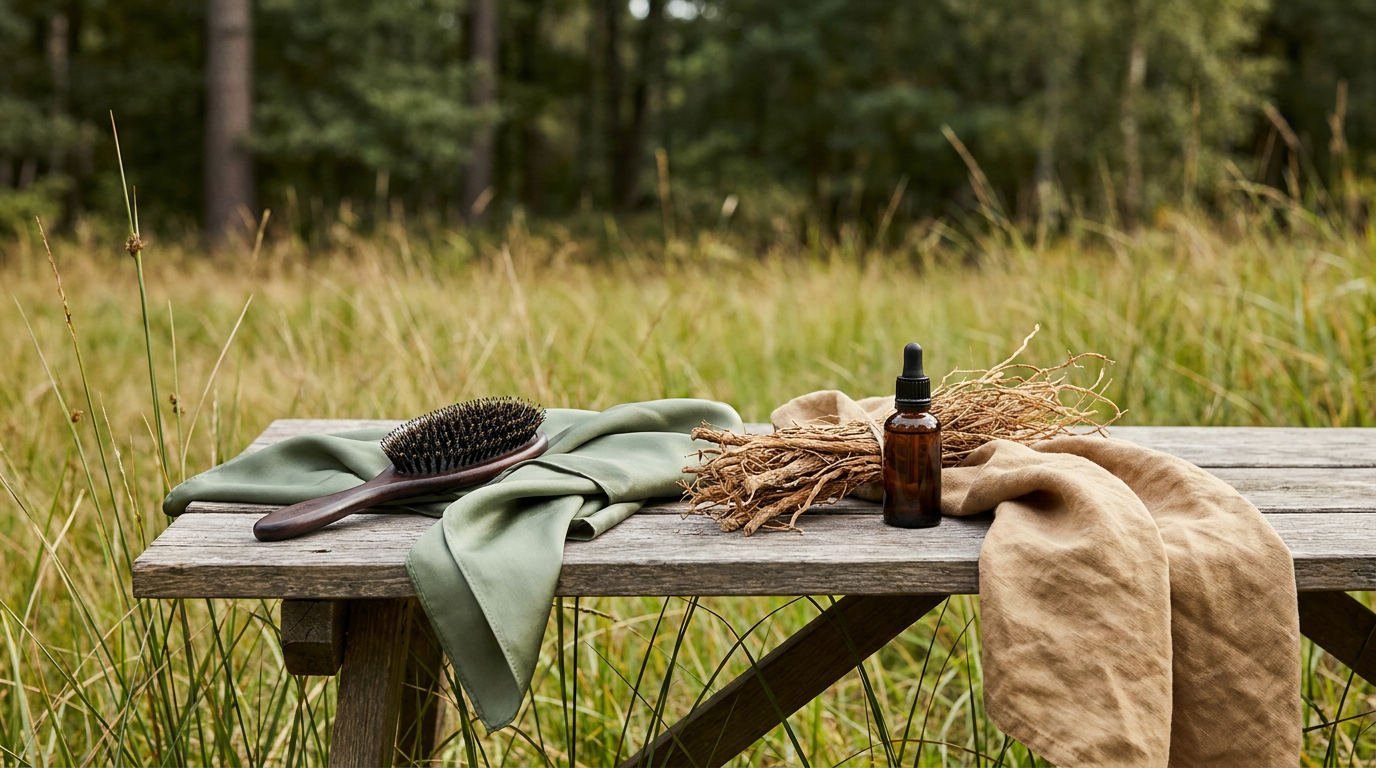
DIY Vetiver Beard Oil: Woodsy Scent for Softer, Healthier Facial Hair
There is something deeply satisfying about a grooming ritual that smells like the earth itself. Vetiver beard oil brings that quality to your morning routine: a slow, smoky, rooted fragrance that lingers quietly on the skin long after you have stepped away from the mirror. If you have been searching for a beard oil that feels intentional rather than mass-produced, a DIY vetiver beard oil may be exactly what your shelf has been missing.
This guide walks you through everything you need to craft your own blend at home. We will cover carrier oil selection, essential oil ratios, a step-by-step vetiver beard recipe, and the safety considerations you should not skip.
Why Vetiver Works Well in Beard Oil
Vetiver essential oil is steam-distilled from the roots of Chrysopogon zizanioides, a tall grass native to South Asia. The roots grow downward rather than outward, which gives them their famous stabilizing effect on soil. That same quality shows up in the fragrance: grounding, deep, and unhurried.
In perfumery, vetiver is a base note. It anchors a blend, extends longevity on the skin, and adds a complex smokiness that is difficult to replicate with synthetic alternatives. In a beard oil context, that staying power is genuinely useful. You apply the oil in the morning, and the scent evolves quietly throughout the day rather than disappearing within an hour.
Beyond fragrance, vetiver blends harmoniously with the carrier oils that are already well-suited to beard care. Jojoba, argan, and sweet almond oils all have a neutral-to-warm scent profile that allows vetiver's character to come forward without competing.
Some people find that a vetiver-based grooming ritual helps them feel more grounded at the start of a busy day. The scent is not sharp or stimulating. It settles rather than awakens, which can make morning grooming feel like a quiet moment rather than just another task.
Understanding the Basics: Carrier Oils vs. Essential Oils
Before building your vetiver beard recipe, it helps to be clear about why both components are necessary.
Essential oils are highly concentrated plant extracts. Vetiver essential oil, in particular, is thick and viscous compared to most. It does not flow easily on its own and should never be applied directly to the skin without dilution. The concentration alone can cause irritation, and for some individuals, sensitization over time.
Carrier oils are plant-based oils (from seeds, nuts, or fruits) that dilute essential oils to a safe concentration and deliver them to the skin. They also do the actual conditioning work on your beard and the skin underneath. A well-chosen carrier oil softens coarse hair, may help support skin moisture, and creates a smooth base for the essential oil to disperse evenly.
For beard oil, a standard safe dilution is 2 to 3 percent essential oil in carrier oil. For most people, 2 percent is a practical starting point. That works out to roughly 12 drops of essential oil per one ounce (30 ml) of carrier oil.
Because vetiver is viscous and potent, starting at the lower end (around 1 to 2 percent) is wise, especially if you have not used it on your skin before.
Choosing Your Carrier Oils
The carrier oil blend you choose will shape both the texture of your beard oil and how it performs on different hair types. Here are four options that work particularly well with vetiver.
Jojoba Oil
Technically a liquid wax rather than an oil, jojoba closely resembles the skin's natural sebum. It absorbs without feeling heavy and has a very long shelf life. It is the most versatile base for beard oil and works for most hair types.
Argan Oil
Lightweight, golden, and rich in vitamin E and fatty acids, argan oil is often associated with softening coarse or wiry hair. It adds a subtle sheen without greasiness. It is a good choice if your beard tends to feel rough or bristly.
Sweet Almond Oil
Slightly heavier than jojoba, sweet almond oil has a mild, faintly nutty scent that does not clash with vetiver. It spreads easily and is particularly well-suited to longer beards that need a bit more slip to distribute product evenly. Note that this oil is not appropriate for anyone with a nut allergy.
Hemp Seed Oil
Hemp seed oil has a greenish tint and a slightly earthy baseline scent that can complement vetiver beautifully. It has a shorter shelf life than jojoba, so if you include it, make your batches smaller and use them within a few months.
For this recipe, we use a blend of jojoba and argan oil as the base. They balance each other well and create a beard oil that feels lightweight but not thin.
The Vetiver Beard Recipe
This recipe makes one ounce (30 ml) of beard oil, which typically provides about 30 daily uses for a short-to-medium beard. Double or triple the batch as needed.
Equipment
- One 1-ounce amber or cobalt glass dropper bottle (glass protects essential oils from degradation)
- A small funnel or pipette for easy transfer
- Measuring spoons or a small kitchen scale
- A clean, dry work surface
Ingredients
| Ingredient | Amount | Purpose |
|---|---|---|
| Jojoba oil | 20 ml (about 0.67 oz) | Primary carrier, absorbs easily |
| Argan oil | 9 ml (about 0.3 oz) | Softens and adds sheen |
| Vetiver essential oil | 5 drops | Base note fragrance, grounding |
| Cedarwood essential oil (Virginia or Atlas) | 4 drops | Woody mid-note, complements vetiver |
| Sandalwood essential oil (optional) | 2 drops | Creamy depth, extends base notes |
| Frankincense essential oil (optional) | 1 drop | Resinous top-to-mid bridge note |
This blend sits at approximately 2 percent total essential oil concentration, well within the standard safe range for facial skin application.
Step-by-Step Instructions
- Prepare your workspace. Wipe down your surface with a clean cloth. Essential oils can leave residue, so work on something easy to clean. Lay out all your ingredients and tools before you begin.
- Add the carrier oils first. Using your funnel or pipette, pour the jojoba oil into your glass dropper bottle, followed by the argan oil. Adding carriers first makes it easier to swirl and blend everything at the end.
- Add the essential oils. Drop in the vetiver essential oil first. Because vetiver is thick, the drop may be slow. Count carefully. Follow with cedarwood, then sandalwood and frankincense if using.
- Cap and swirl. Secure the dropper cap and gently roll the bottle between your palms for about 30 seconds. Do not shake vigorously. A gentle swirling motion is enough to blend everything together.
- Label your bottle. Write the date, contents, and dilution percentage on a small label. This helps you track freshness and recreate the blend later.
- Allow to rest. Let the bottle sit for 24 to 48 hours before first use if possible. The scent will mellow and integrate during this time.
How to Use Your DIY Vetiver Beard Oil
Apply your vetiver beard oil after washing and patting your beard dry. Slightly damp hair absorbs oil more evenly than bone-dry hair.
- Dispense 3 to 6 drops into your palm depending on beard length. A short beard needs less. A full, longer beard may need a touch more.
- Rub your palms together to warm and spread the oil.
- Work the oil into your beard from root to tip, making sure to reach the skin underneath. The skin beneath a beard can sometimes feel neglected, and the carrier oils in this blend may help support its comfort.
- Use a beard comb or boar bristle brush to distribute the oil evenly and style as usual.
Morning application is most common, but some people prefer an evening ritual as part of a wind-down routine. The earthy, quiet scent of vetiver can contribute to a calming atmosphere at the end of the day.
Scent Variations to Explore
The base vetiver beard recipe above is deliberately simple. Once you are comfortable with it, consider these variations.
Vetiver and Citrus
Add 2 drops of bergamot or yuzu essential oil to introduce a bright top note. The citrus lifts the blend without overpowering the earthy base. Note that bergamot can increase photosensitivity if it is not the furocoumarin-free (FCF) variety. If you use bergamot, choose bergamot FCF for facial application.
Vetiver and Spice
One or two drops of black pepper or cardamom essential oil adds a warm, spiced character that pairs naturally with vetiver's smokiness. This variation tends to feel more complex and layered.
Vetiver and Resin
Replace the frankincense with myrrh or benzoin for a deeper, more resinous quality. This combination feels almost incense-like on the skin, which suits cooler months particularly well.
Fragrance blending is a slow practice. Trust your nose, adjust in small increments, and keep notes on what works. A good blend often takes several iterations.
Safety Considerations: Please Read Before You Begin
Essential oil safety is not optional. These are concentrated botanical extracts and should be respected accordingly.
- Patch test before full application. Apply a small amount of your finished blend to the inside of your wrist or elbow. Wait 24 hours and check for any reaction before using it on your face.
- Stay within safe dilution ratios. For facial skin, do not exceed 3 percent total essential oil concentration. The recipe above sits at 2 percent. If you adjust the formula, recalculate accordingly.
- Vetiver and pregnancy. If you are pregnant or nursing, consult your healthcare provider before using essential oil blends, including this one.
- Nut allergy note. If you substitute sweet almond oil or any nut-derived carrier, this may not be appropriate for individuals with nut sensitivities. Jojoba is a seed-derived wax and is generally well-tolerated, but individual responses vary.
- Keep out of eyes. Essential oils are not safe for contact with eyes or mucous membranes. If contact occurs, rinse with a carrier oil (not water) and seek guidance if irritation persists.
- Children. This blend is formulated for adult use. Many essential oils require different dilution ratios for use around children.
- Consult a qualified healthcare provider if you have any skin sensitivities or concerns before introducing a new product into your routine.
Storing Your Beard Oil for Maximum Freshness
Proper storage extends the life of your blend and protects the integrity of the essential oils inside.
- Store in a cool, dark location away from direct sunlight and heat. A bathroom cabinet or a dresser drawer works well.
- Glass bottles are strongly preferred over plastic, as essential oils can degrade certain plastics over time and alter the composition of the blend.
- Most carrier oils in this recipe have a shelf life of one to two years. If your blend starts to smell rancid or noticeably different, discard it and make a fresh batch.
- Adding a few drops of vitamin E oil (tocopherol) to your blend may help extend the carrier oil's freshness. Use about 0.5 to 1 percent of total volume.
Sourcing Quality Vetiver Essential Oil
The quality of your finished beard oil depends significantly on the quality of the vetiver you start with. Vetiver is produced in several countries, with Haiti, India, and Indonesia being major sources. Each origin produces a slightly different scent profile.
Haitian vetiver tends to be lighter, slightly woodsier, and more accessible to people new to the scent. Indian vetiver (often called khus) can be more intense and earthy. Indonesian vetiver sits somewhere between the two.
Look for vetiver oil that is clearly labeled with its botanical name (Chrysopogon zizanioides), country of origin, extraction method (steam distillation), and batch testing information such as a GC/MS (gas chromatography/mass spectrometry) report. Reputable suppliers make this information available, either on the label or on their website.
Avoid any product labeled simply as "vetiver fragrance oil." Fragrance oils are synthetic or blended compositions that do not carry the same character as a genuine essential oil, and they are not appropriate for skin application in the same way.
Making It a Ritual
A grooming routine can be as automatic as brushing your teeth, or it can be a small, intentional pause in the morning. The choice belongs to you. But there is something worth noting about a scent as grounding as vetiver: it has a way of slowing you down, even briefly.
Warm the oil between your palms. Notice the fragrance as it opens up with body heat. Take a breath. Then go.
That is the quiet case for making your own vetiver beard oil rather than buying whatever is on the shelf. It is yours from the first drop to the last. The scent, the texture, the ritual itself.