One origin. Roots, not drums.

Our Sourcing

Wild-harvested in the hills of southern Haiti, from one origin only. Roots left in the ground for two years, hand-dug, and distilled for a full day.

1 Origin, Never Blended
18-24 Months Root Age
24hr Minimum Distillation
6mo Rested Before Sale

Why We Do What We Do

Vetiver is among the most adulterated materials in the trade, and among the easiest to cut without anyone noticing.

Most vetiver reaching buyers has passed through a handful of large producers and a chain of resellers. Somewhere along that chain the root age goes vague, the distillation run gets shortened, and the oil is extended with vetiveryl acetate, with cedarwood or amyris fractions, or with a synthetic base. What arrives smells like vetiver. It just isn't only vetiver.

We went the other way. One origin, one crop, and a process we run ourselves from the root to the sealed bottle.

We buy roots, not drums. Most brands selling vetiver are relabeling oil from someone else's still, which means trusting a stranger's word about root age, run length, and everything in between. We would rather answer for it ourselves.

One origin, the same communities for more than a decade, and nothing hidden in the middle of the process.

One Origin, Chosen Deliberately

Vetiver's character is tied to place more tightly than almost any other oil, so blending origins means giving up the very thing that makes it worth buying. We source from one: the Sud department of southern Haiti, in the hills around Les Cayes and Camp-Perrin.

Where our vetiver comes from HAITI Sud Department Camp-Perrin Les Cayes Port-au-Prince

Sud, Haiti

The heart of the world's vetiver production, and the sweetest, roundest expression of the root.

Smallholder Harvesters

Several hundred families wild-harvesting roots from hillside stands on ground too steep for most other crops.

Over a Decade

The same communities season after season, so we know how a harvest went before the roots arrive.

These are not estates or contract blocks. They are families who have worked this land for generations and who sell their roots at harvest.

We pay a premium for root age, and it is the single biggest reason our oil smells the way it does. Most Haitian vetiver comes out of the ground at twelve to fifteen months because growers need the cash sooner, and younger roots give a thinner, greener oil with less of the depth vetiver is prized for. Paying growers to leave roots in the ground longer costs us more per kilo. It is also the difference you can smell.

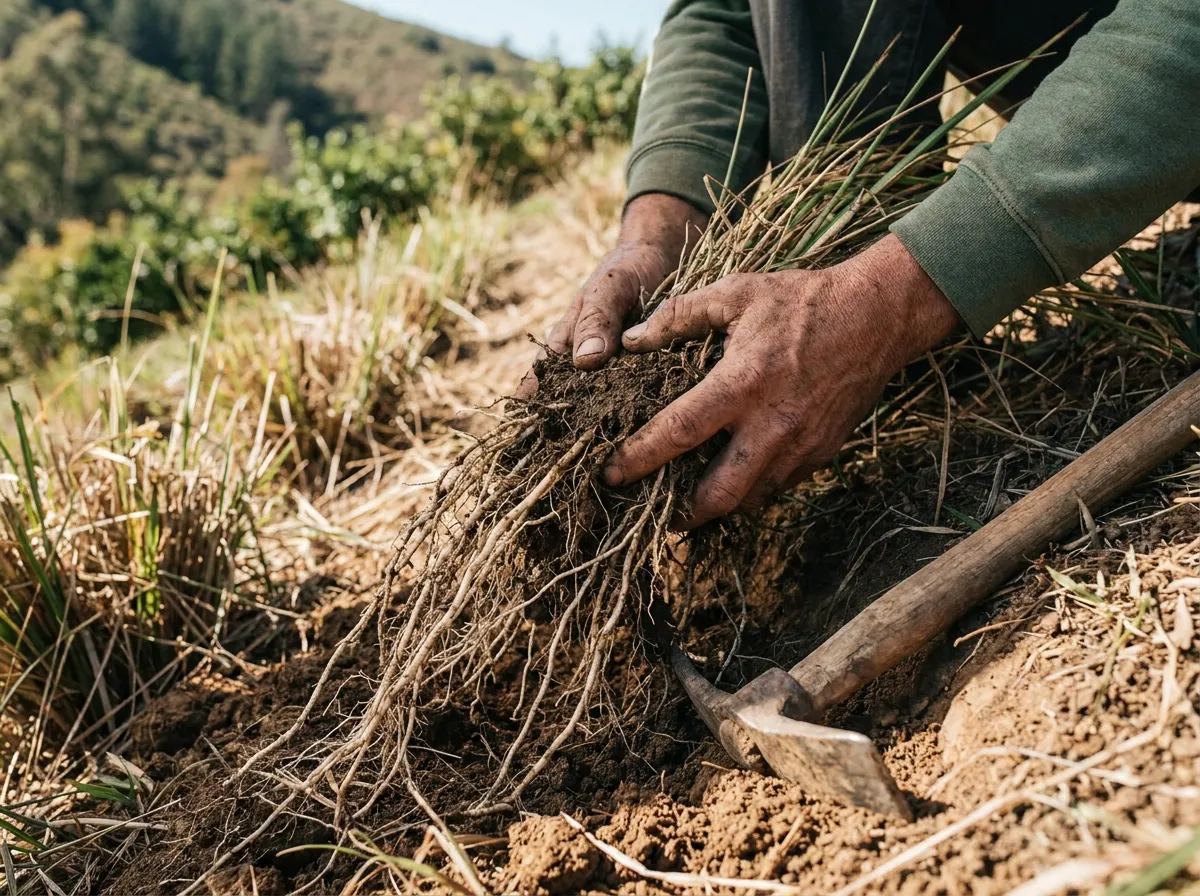
Hands lifting an intact clump of vetiver roots from hillside soil with a hand pick

Eighteen to Twenty-Four Months, Hand-Dug

Vetiver keeps its value underground. The oil lives in the root, and the root needs time.

We harvest at eighteen to twenty-four months. Anything earlier is a compromise made for cash flow rather than for quality.

It is all hand-dug. The slopes are too steep for machinery and the root ball has to come up intact, lifted with a pick, one clump at a time. It is genuinely hard work, and we think anyone buying the oil should know that is what produced it.

The stand goes back in the same day. Vetiver sets no viable seed, so it persists only by division: at harvest the clump is split and the slips return straight to the ground. No nursery, no seed, no outside inputs.
Rested Before the Still

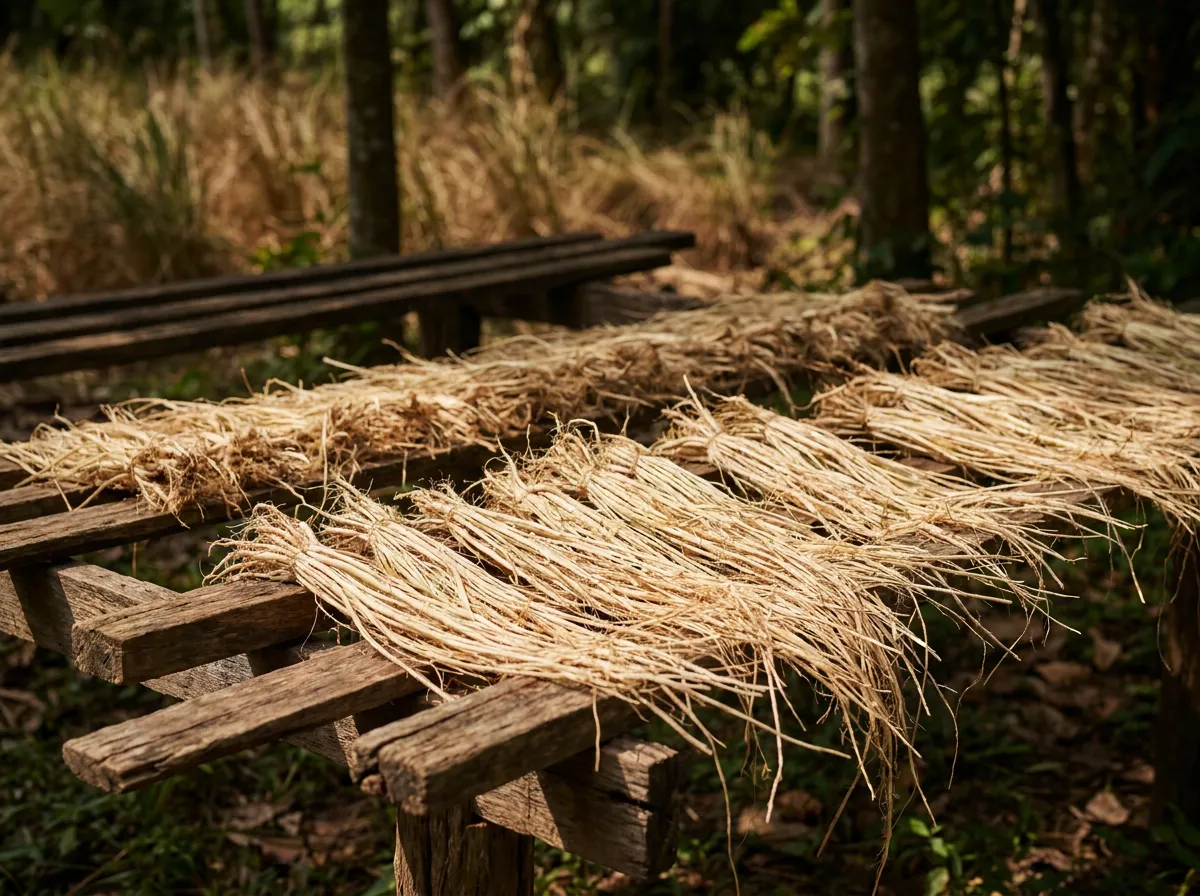
Roots are washed to remove the soil, then dried in open air for one to two weeks before they are chopped.

Vetiver is one of the few botanicals that doesn't want to go straight to the still. A controlled rest concentrates the root and gives a rounder oil, so that drying window counts as part of the process rather than a delay in it.

Washed vetiver roots spread to dry in open air on wooden racks in dappled shade
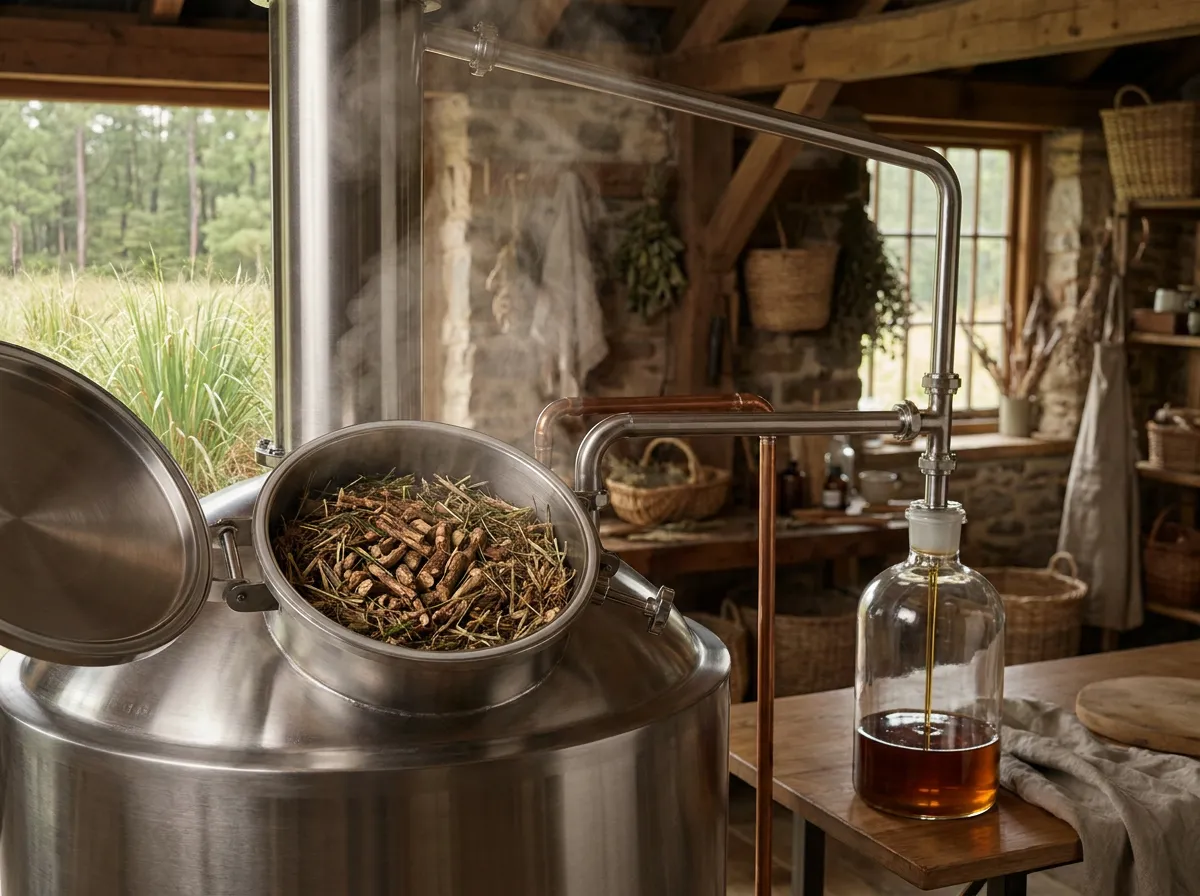
Stainless steel steam still in a rural workshop with chopped vetiver roots and a glass receiver of amber oil

Twenty-Four Hours in the Still

Vetiver's heaviest and most valuable molecules come over late in the run. A short distillation leaves you an oil that smells green and unfinished, which is why cutting the run is the most common shortcut in this category. It is also the easiest one to smell.

Every run is a minimum of twenty-four hours, steam distilled in stainless steel. We avoid direct-fire methods, which can leave a burnt edge on the oil.

Then it rests. Vetiver is one of the very few essential oils that genuinely improves with time. Fresh oil is sharp and green, and six months of rest rounds it into something deeper and smoother. Nothing is sold before then, and every bottle carries its distillation date so you can see for yourself.

Verified By Independent Third Parties

Every lot is profiled by an outside laboratory, one with no commercial tie to us, to our distiller, or to the families whose roots we buy.

GC/MS on every lot

The full constituent profile, including khusimol content, tied to the lot number on your bottle.

Physical assays

Specific gravity, refractive index, optical rotation, and acid value. We conform to ISO 4716.

Adulteration screening

Vetiver is among the most adulterated materials in the trade, commonly cut with vetiveryl acetate, with cedarwood or amyris fractions, or with synthetic bases. Our reports show none of it.

Each profile stays on file against its lot. Quote the number stamped on your bottle to [email protected], or reach us through the contact page, and we'll send the report for that exact run.

Dated Twice

Distillation date, bottling date, and lot number. With an oil that improves as it rests, the distillation date is the one that tells you something.

Amber Glass

Amber glass from the sample vial to the largest size, because light is what ages an oil badly.

Nothing But Root

No diluents, no fixatives, no stabilizers. Root, and then nothing.

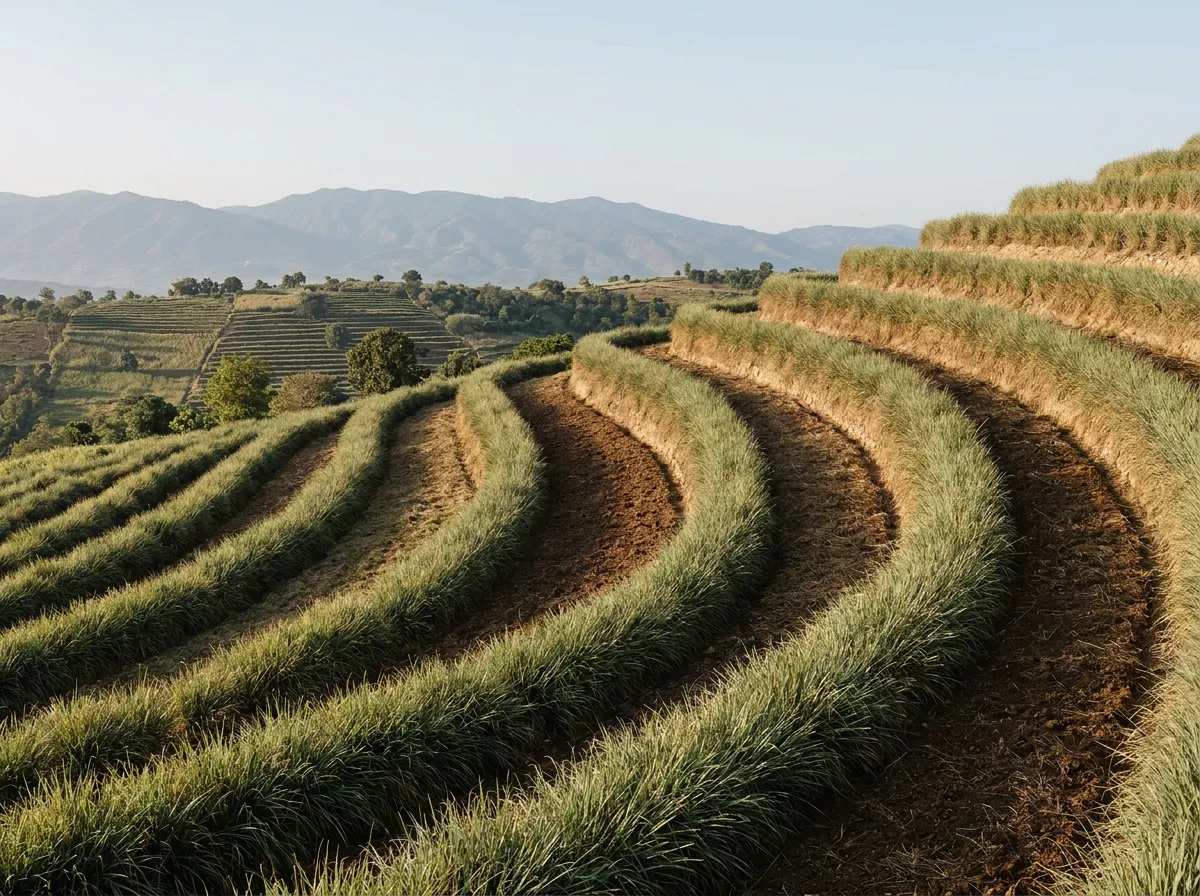
Contour hedgerows of vetiver grass running across a steep Haitian hillside as erosion barriers

Grown on the Slopes That Need It

We would rather explain the whole picture than the flattering half of it.

Vetiver roots run several meters deep, and the plant is used around the world for erosion control. Harvesting means digging that root out, which disturbs the exact soil it was holding.

So our harvesters work in strips rather than clearing a slope, leave permanent hedgerows along the contour as erosion barriers, and put slips back the same day a clump is lifted.

The still runs on spent root bagasse from the previous distillation. Wood-fired boilers are common in Haiti and a real cost in a country with very little forest left. Our process burns its own waste, and no trees are cut to make our oil.

Our Standing Rules

Six rules we don't bend, lot after lot.

One Origin

Sud, Haiti, and nowhere else. We don't blend origins, because vetiver's character is tied to where it grew.

Roots, Not Drums

We buy roots and distill them ourselves, answering for every step between the hillside and the sealed bottle.

Two Years Underground

Wild-harvested at eighteen to twenty-four months, with a premium paid for the wait.

Twenty-Four Hour Runs

Minimum, steam distilled in stainless steel, because the best of vetiver comes over late.

Outside Verification

GC/MS and physical assays on every lot, run by people who gain nothing either way.

Root, Undiluted

Never cut, never extended, never fixed. Amber glass, stamped with its distillation date and lot.

Who It's For

Perfumers and formulators, mostly.

Vetiver earns its place as a base note and a fixative, where its tenacity and depth do work that nothing synthetic quite replicates.

It is equally suited to aromatherapy use, and we sell sample sizes so you can assess a lot before committing to it.

The Parts We Won't Oversell

A few things we would rather say ourselves than let you discover.

We make no health claims for vetiver. Its safety record is unusually clean, so the guidance is short: dilute it before it touches skin, patch test first, and keep it away from your eyes.

Two practical notes. The oil is thick and slow to pour, especially when cool, and it darkens as it ages. Both are normal and neither is a fault. It will also stain light fabric.

When a season disappoints, we go quiet rather than go shopping. Harvests are seasonal and supply genuinely tightens some years, so you will sometimes find us sold out. That is the honest version of the alternative.

Assess a Lot Before You Commit

One origin, roots at eighteen to twenty-four months, twenty-four hour runs, six months of rest, and a GC/MS profile tied to the number on your bottle.

Start with a sample.

Shop Vetiver Oil
These statements have not been evaluated by the FDA. Products are not intended to diagnose, treat, cure, or prevent any disease.