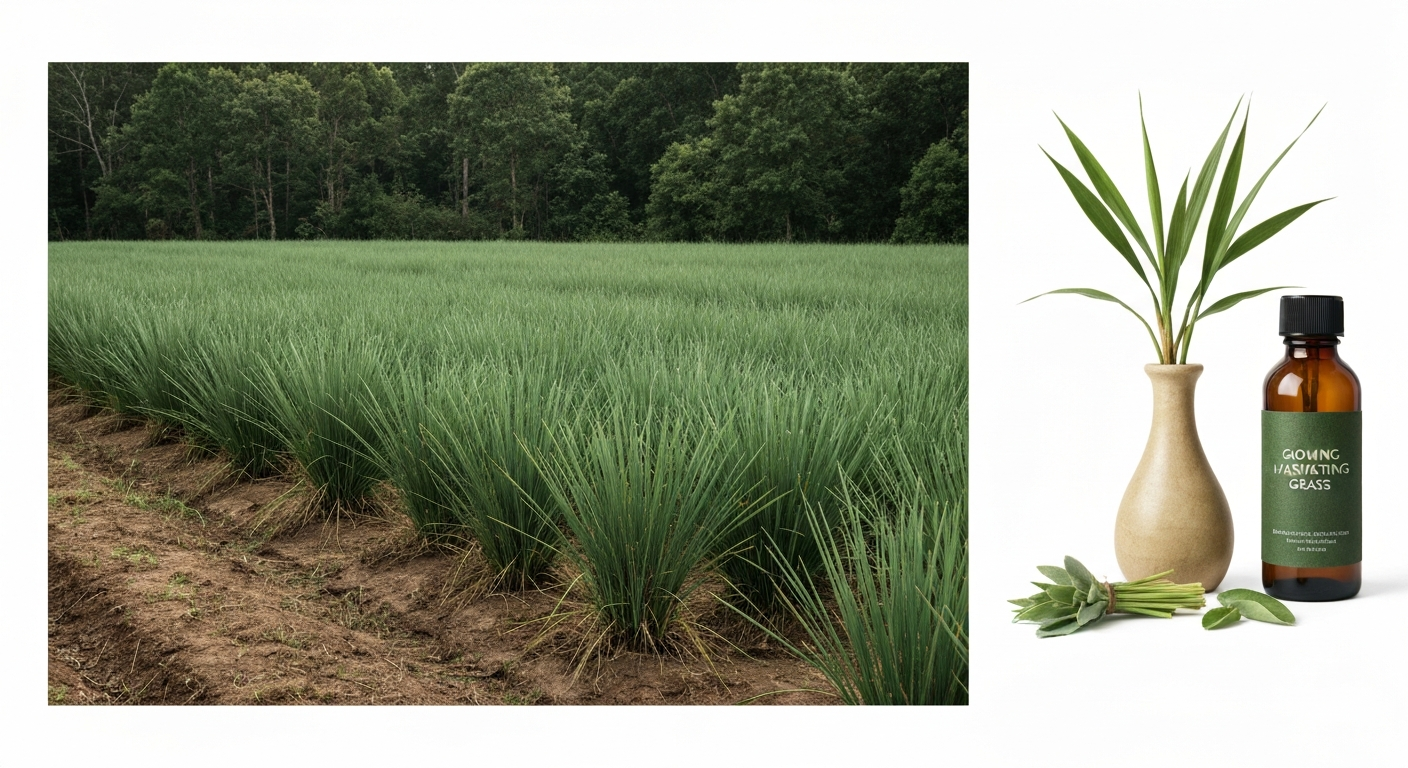
Growing and Harvesting Vetiver Grass: From Cultivation to Essential Oil Production
Key Takeaways
- Vetiver grass thrives in tropical and subtropical climates with well-drained, slightly acidic soil
- Proper planting techniques using tillers or root divisions ensure healthy establishment
- Harvesting typically occurs 12-18 months after planting when roots reach optimal maturity
- Post-harvest processing requires careful washing, drying, and storage of roots
- Essential oil extraction involves steam distillation of properly prepared root material
- Sustainable farming practices support both environmental health and long-term productivity
Table of Contents
- Understanding Vetiver Grass: The Foundation of Cultivation
- Soil and Climate Requirements for Optimal Growth
- Planting Techniques and Field Preparation
- Cultivation and Maintenance Practices
- Harvesting: Timing and Techniques
- Post-Harvest Processing and Root Preparation
- From Roots to Essential Oil: The Distillation Process
- Sustainable Farming Practices and Future Considerations
Understanding Vetiver Grass: The Foundation of Cultivation
Vetiver grass (Chrysopogon zizanioides) represents one of nature's most remarkable botanical achievements, combining environmental stewardship with aromatic excellence. This perennial bunchgrass, native to India, has evolved into a globally cultivated crop prized for its extensive root system and the complex essential oil it produces.
Vetiver Essential Oil
Our own Vetiver Essential Oil, in sizes from 0.5 oz to bulk.
From $18.99
Shop Now →Botanical Characteristics
Growing vetiver grass begins with understanding its unique structure. The plant develops in distinct clumps, with narrow leaves reaching heights of 3-5 feet above ground. However, the true marvel lies beneath the surface, where an intricate root network can extend 10-12 feet deep, creating a living architecture that serves both practical and aromatic purposes.
The root system consists of two distinct types: fine feeder roots that absorb nutrients and water, and thick, aromatic roots that store the concentrated compounds responsible for vetiver's distinctive scent profile. These deeper roots develop their most complex aromatic compounds over 12-18 months of growth, making patience a crucial element in vetiver cultivation.
Varieties and Cultivars
Several vetiver varieties offer different characteristics for cultivation:
- Indian Vetiver (North Indian Type): Produces sterile seeds, propagated through root division, known for superior oil quality
- South Indian Vetiver: Fertile variety with different aromatic compounds, often used for erosion control
- Haitian Vetiver: Developed through selective cultivation, prized for exceptional oil quality and yield
For essential oil production, sterile varieties are preferred as they direct energy toward root development rather than seed production. These cultivars, particularly those developed through traditional Haitian vetiver farming methods, have become industry standards for commercial cultivation.
Soil and Climate Requirements for Optimal Growth
Successful vetiver farming depends heavily on creating optimal growing conditions that mirror the plant's natural habitat. Understanding these requirements forms the foundation of productive cultivation.
Climate Considerations
Vetiver cultivation thrives in tropical and subtropical climates with specific parameters:
- Temperature Range: Optimal growth occurs between 77-95°F (25-35°C)
- Rainfall: Annual precipitation of 40-80 inches, with distinct wet and dry seasons
- Humidity: Moderate to high humidity levels support healthy foliage development
- Altitude: Sea level to 6,000 feet elevation, with lower altitudes generally preferred
The plant demonstrates remarkable drought tolerance once established, making it suitable for regions with seasonal water limitations. However, consistent moisture during the initial establishment phase proves crucial for healthy root development.
Soil Requirements and Preparation
Growing vetiver grass successfully requires careful attention to soil conditions:
| Soil Parameter | Optimal Range | Notes |
|---|---|---|
| pH Level | 5.5 - 6.5 | Slightly acidic conditions enhance oil quality |
| Drainage | Well-drained | Prevents root rot and fungal issues |
| Organic Matter | 2-4% | Supports microbial activity and nutrient retention |
| Texture | Sandy loam to clay loam | Allows root penetration while retaining nutrients |
Field preparation involves deep plowing to 18-24 inches, breaking up compacted layers that might restrict root development. Incorporating organic matter through compost or well-aged manure improves soil structure and provides slow-release nutrients essential for sustained growth.
Land Selection and Layout
Choosing appropriate land for vetiver cultivation requires considering long-term sustainability factors. Gentle slopes (2-8% grade) provide natural drainage while preventing erosion. Fields should receive full sun exposure for at least 6-8 hours daily, as shaded conditions can reduce root oil concentration.
Water access remains crucial, particularly during establishment and dry periods. Planning irrigation infrastructure before planting ensures consistent moisture availability when needed.
Planting Techniques and Field Preparation
Establishing a successful vetiver grass plantation requires careful attention to planting methods and timing. Since most commercial varieties are sterile, propagation relies on vegetative techniques using existing plant material.
Propagation Methods
Vetiver cultivation primarily uses two propagation approaches:
Tiller Division
This method involves separating mature clumps into smaller sections, each containing roots and shoots:
- Select healthy, disease-free mother plants aged 8-12 months
- Carefully excavate entire clumps, preserving root systems
- Divide clumps into sections with 3-5 tillers each
- Trim leaves to 6-8 inches to reduce transpiration stress
- Allow cut surfaces to dry for 2-4 hours before planting
Root Slip Preparation
Experienced growers often prefer this method for its efficiency:
- Remove young shoots from the base of established plants
- Ensure each slip has both root and shoot portions
- May help address with natural rooting compounds if desired
- Plant immediately to prevent desiccation
Planting Spacing and Layout
Proper spacing ensures adequate resource distribution while maximizing field productivity:
- Row Spacing: 4-5 feet between rows allows equipment access
- Plant Spacing: 2-3 feet between plants within rows
- Planting Depth: 3-4 inches deep with crown slightly above soil level
- Field Density: Approximately 3,000-4,000 plants per acre
This spacing provides room for mature clump development while ensuring efficient land use. Closer spacing may increase initial establishment costs but can produce higher yields per acre at harvest.
Optimal Planting Timing
Timing vetiver planting with natural rainfall patterns significantly improves establishment success:
- Tropical Regions: Plant at the beginning of the rainy season
- Subtropical Areas: Early spring planting allows full growing season utilization
- Irrigation Available: Year-round planting possible with proper water management
Avoid planting during extreme weather conditions or when soil moisture levels are inadequate for proper root establishment.
Planting Procedure
Following systematic planting procedures ensures uniform establishment:
- Prepare planting holes slightly larger than root systems
- Place plants at proper depth with roots spread naturally
- Backfill with soil mixture amended with organic matter
- Water thoroughly but avoid waterlogging
- Apply light mulch around plants to conserve moisture
- Monitor closely for first 4-6 weeks during establishment
Cultivation and Maintenance Practices
Successful vetiver farming extends far beyond initial planting, requiring consistent attention to cultural practices that support healthy growth and optimal root oil development.
Irrigation Management
Water management plays a critical role in vetiver cultivation, particularly during different growth phases:
Establishment Phase (0-3 months)
- Maintain consistent soil moisture without waterlogging
- Apply 1-2 inches of water weekly if rainfall is insufficient
- Use drip irrigation or careful surface watering to prevent soil erosion
Growth Phase (3-12 months)
- Reduce watering frequency as root systems develop
- Allow brief dry periods to encourage deeper root growth
- Monitor soil moisture at 6-12 inch depths
Pre-harvest Phase (12+ months)
- Gradually reduce irrigation 2-3 months before harvest
- Controlled water stress may concentrate aromatic compounds
- Maintain minimal irrigation to prevent plant death
Nutritional Requirements
Growing vetiver grass requires balanced nutrition throughout the growing cycle:
| Nutrient | Application Rate | Timing | Purpose |
|---|---|---|---|
| Nitrogen (N) | 60-80 lbs/acre annually | Split applications, growing season | Supports foliage and root development |
| Phosphorus (P) | 40-50 lbs/acre | At planting and annually | Root system establishment |
| Potassium (K) | 50-70 lbs/acre | Mid-season application | Oil quality and plant health |
Organic fertilizers such as well-composed manure or fish emulsion provide slow-release nutrients while improving soil biology. Many growers report that organic nutrition programs may support more complex aromatic profiles in harvested roots.
Weed Management
Effective weed control ensures vetiver plants receive full access to soil nutrients and water:
Mechanical Control
- Shallow cultivation between rows during first 6 months
- Hand weeding around individual plants to prevent root damage
- Mulching with organic materials to suppress weed germination
Cultural Control
- Proper plant spacing allows natural competition against weeds
- Cover cropping between seasons maintains soil cover
- Regular field monitoring for early weed detection
Pest and Disease Management
Vetiver grass demonstrates natural resistance to many pests and diseases, though some challenges may arise:
Common Issues
- Root rot: Prevented through proper drainage and avoiding overwatering
- Grasshopper damage: Managed through beneficial insect habitat and natural predators
- Fungal leaf spots: Addressed through adequate air circulation and reduced humidity
Integrated pest management approaches, emphasizing prevention and biological controls, align with sustainable vetiver farming practices while maintaining the purity essential for high-quality essential oil production.
Harvesting: Timing and Techniques
The vetiver harvest represents the culmination of months of careful cultivation, requiring precise timing and proper techniques to maximize both yield and oil quality. Understanding when and how to harvest determines the success of the entire growing cycle.
Determining Harvest Readiness
Optimal harvest timing balances several factors that affect both quantity and quality of aromatic compounds:
Age-Based Indicators
- 12-15 months: Minimum harvest age for basic oil production
- 18-24 months: Optimal maturity for premium oil quality
- 24+ months: Maximum root development but diminishing returns
Physical Assessment
Experienced growers evaluate multiple visual and tactile cues:
- Root diameter reaching 1/4 to 1/2 inch thickness
- Woody texture development in major roots
- Aromatic intensity when roots are cut or bruised
- Color progression from white/cream to darker brown tones
- Clump diameter expanding to 3-4 feet across
Seasonal Timing
Harvest timing within the growing season affects oil characteristics:
- Dry Season: Concentrated aromatic compounds, easier field access
- Post-rainy Season: Higher moisture content requiring extended drying
- Cool Weather: May preserve volatile compounds during processing
Harvesting Techniques
Proper vetiver harvest requires systematic approaches that preserve root quality while maximizing efficiency:
Manual Harvesting
Hand harvesting remains the preferred method for premium oil production:
- Preparation: Cut foliage to 6-8 inches above ground level
- Excavation: Dig around plant perimeter to expose root system
- Extraction: Carefully lift entire root mass using forks or spades
- Separation: Divide large clumps while preserving root integrity
- Collection: Gather roots in breathable containers or baskets
Mechanical Harvesting
Large-scale operations may employ mechanical assistance:
- Modified potato diggers can assist with initial excavation
- Tractor-mounted tools help with soil loosening
- Manual finishing ensures root quality preservation
- Cost-effectiveness improves with field size and scale
Quality Considerations During Harvest
Maintaining root quality from field to processing requires careful handling:
Immediate Post-Harvest Care
- Minimize sun exposure to prevent rapid moisture loss
- Remove excess soil gently without damaging root surfaces
- Sort roots by size and quality for processing efficiency
- Transport promptly to processing facilities
Field Sorting and Grading
Professional operations often implement field-level quality control:
- Grade A: Thick, mature roots with strong aroma
- Grade B: Medium-sized roots suitable for standard oil
- Grade C: Small or damaged roots for lower-grade applications
This systematic approach to grading ensures optimal utilization of harvested material while maintaining quality standards for different market segments.
Yield Expectations
Understanding typical vetiver harvest yields helps with planning and economic projections:
| Plant Age | Fresh Root Yield | Dry Root Yield | Expected Oil Content |
|---|---|---|---|
| 12-15 months | 8-12 tons/acre | 3-4 tons/acre | 1.5-2.0% |
| 18-24 months | 15-20 tons/acre | 5-7 tons/acre | 2.0-2.5% |
| 24+ months | 18-25 tons/acre | 6-8 tons/acre | 2.2-2.8% |
These yields can vary significantly based on growing conditions, cultivation practices, and variety selection. Premium growing regions with optimal conditions may exceed these ranges.
Post-Harvest Processing and Root Preparation
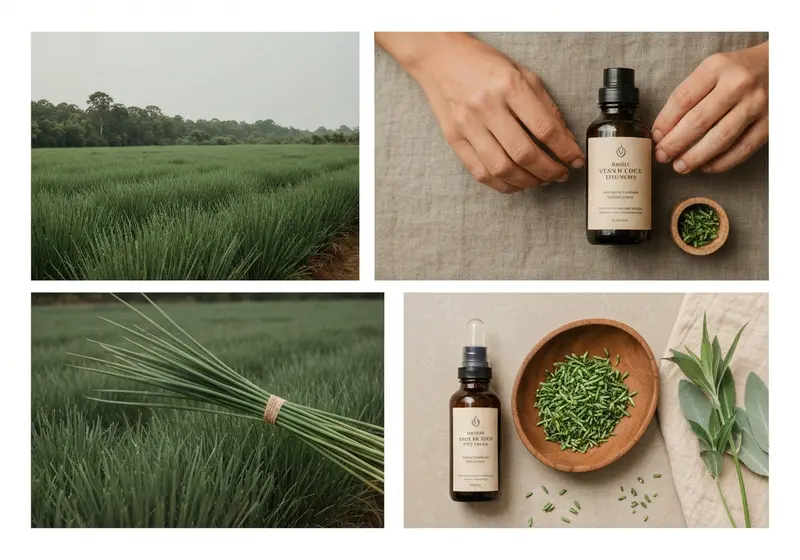
The transformation from freshly harvested vetiver roots to distillation-ready material requires careful processing that preserves aromatic compounds while preparing roots for efficient oil extraction. This critical phase significantly influences final oil quality and yield.
Initial Root Preparation
Proper root preparation begins immediately after harvest to maintain quality:
Washing and Cleaning
Thorough cleaning removes soil and debris without damaging root surfaces:
- Use cool, clean water to prevent compound volatilization
- Employ gentle agitation to dislodge soil particles
- Multiple rinses ensure complete soil removal
- Avoid harsh scrubbing that might damage root surfaces
- Remove dead or diseased root portions during washing
Trimming and Sorting
Systematic preparation optimizes processing efficiency:
- Remove remaining foliage and crown portions
- Trim damaged or diseased root sections
- Sort roots by diameter for uniform drying rates
- Separate fine feeder roots from main aromatic roots
- Cut longer roots to manageable lengths (6-12 inches)
Drying Methods and Considerations
Proper drying concentrates aromatic compounds while preventing spoilage:
Air Drying (Traditional Method)
Natural air drying remains the preferred method for premium oil production:
- Environment: Well-ventilated, shaded areas with low humidity
- Arrangement: Single layers on raised platforms or screens
- Duration: 7-14 days depending on root size and weather
- Monitoring: Regular turning prevents mold development
- End Point: 8-12% moisture content for optimal storage
Controlled Drying Systems
Commercial operations may utilize controlled environments:
- Solar drying systems provide consistent, gentle heat
- Dehydrators offer precise temperature and airflow control
- Temperature limits of 95-104°F (35-40°C) preserve volatile compounds
- Forced air circulation reduces drying time while maintaining quality
Quality Assessment During Processing
Monitoring root quality throughout processing ensures optimal outcomes:
Visual Indicators
- Color changes from cream/white to light brown indicate proper drying
- Absence of mold or discoloration suggests proper handling
- Uniform drying across root surfaces prevents quality variations
Aromatic Assessment
- Characteristic earthy, woody fragrance intensifies with proper drying
- Off-odors may indicate contamination or improper processing
- Consistent aroma across batches suggests standardized processing
Storage and Handling
Proper storage maintains root quality until distillation:
Storage Conditions
- Temperature: Cool, stable temperatures (60-70°F)
- Humidity: Low humidity environments prevent mold growth
- Airflow: Adequate ventilation prevents moisture accumulation
- Light: Dark storage preserves aromatic compounds
Container Selection
- Breathable materials (jute sacks, woven bags) allow air circulation
- Avoid plastic containers that trap moisture
- Smaller containers facilitate easier handling and inventory management
- Label containers with harvest date and processing information
Pre-Distillation Preparation
Final preparation steps optimize distillation efficiency:
- Size Reduction: Chop or chip roots to 1/4 to 1/2 inch pieces
- Moisture Adjustment: Some processors lightly moisten dried roots before distillation
- Quality Check: Final inspection removes any compromised material
- Batch Preparation: Consistent batch sizes ensure uniform distillation results
The relationship between proper processing and final oil quality cannot be overstated. Methods used in traditional vetiver root extraction have evolved over generations to preserve the complex aromatic compounds that make vetiver oil so highly valued.
From Roots to Essential Oil: The Distillation Process
The transformation of carefully prepared vetiver roots into precious essential oil represents both ancient wisdom and modern technique. Steam distillation, the preferred method for vetiver oil extraction, requires understanding of both the process mechanics and the delicate aromatic compounds being captured.
Steam Distillation Fundamentals
Steam distillation works by using water vapor to gently extract volatile aromatic compounds from plant material:
Process Overview
- Steam passes through chopped vetiver roots
- Heat and moisture release aromatic compounds
- Steam and oil vapors travel to condensation chamber
- Cooling converts vapors back to liquid form
- Oil and water separate naturally by density difference
Equipment Requirements
Professional vetiver distillation requires specific equipment configurations:
- Boiler: Generates steam at controlled pressure and temperature
- Distillation Chamber: Holds root material and allows steam circulation
- Condenser: Cools vapor mixture back to liquid state
- Separator: Allows oil and water to separate naturally
- Collection Vessels: Food-grade materials for oil storage
Vetiver Essential Oil
Vetiver Essential Oil from our own shop, in sizes from 0.5 oz to bulk.
From $18.99
Shop Now →