
The Terpene Profile of Vetiver Oil: A Deep-Dive into Its Complex Aroma Chemistry
The deep, earthy aroma of vetiver essential oil tells a story written in molecules—a complex narrative of sesquiterpenes, acids, and aldehydes that dance together to create one of nature's most grounding scents. Understanding the vetiver terpene profile opens a window into the sophisticated chemistry that makes this oil so treasured in perfumery and aromatherapy circles.
Unlike many essential oils dominated by a few key compounds, vetiver's character emerges from an intricate symphony of over 100 identified components. This chemical complexity not only explains its distinctive scent but also provides insight into why quality can vary so dramatically between sources and distillation methods.
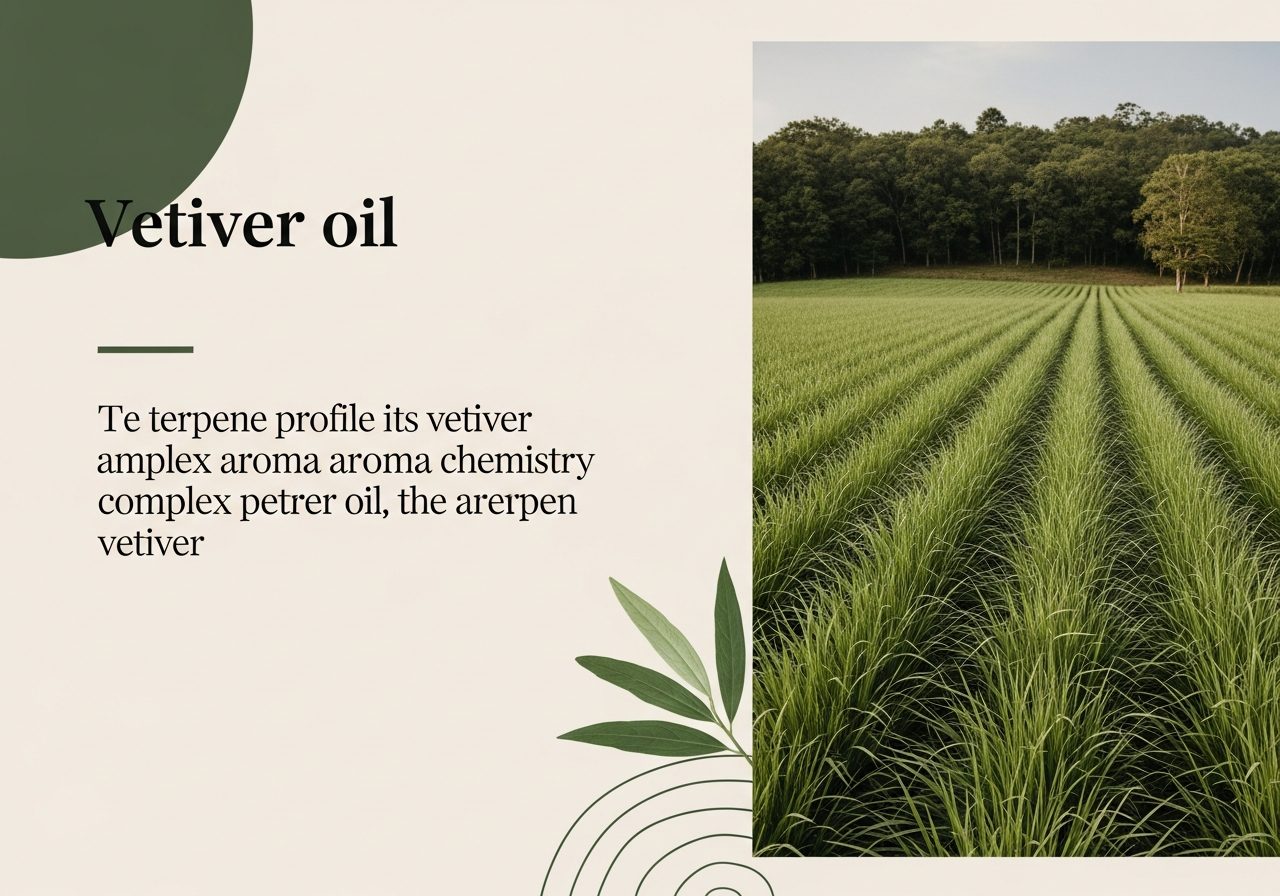
Understanding Vetiver's Chemical Foundation
The vetiver aroma chemistry centers around sesquiterpenes—complex 15-carbon molecules that form the backbone of its distinctive scent profile. Research observations suggest that these compounds typically comprise 60-80% of vetiver oil's total composition, though exact percentages vary significantly based on growing conditions, harvest timing, and extraction methods.
The oil's complexity begins with its raw material: the roots of Chrysopogon zizanioides. Unlike aerial parts of plants that often yield lighter, more volatile compounds, vetiver roots concentrate heavier molecules that have been slowly synthesized over months or years of growth. This underground alchemy creates the foundation for vetiver's notably persistent and grounding aroma.
Primary Sesquiterpene Components
Scientific analysis has identified several key sesquiterpenes that contribute to vetiver's vetiver scent compounds:
- Khusimol: Often representing 10-25% of the oil, this compound contributes woody, slightly sweet notes
- α-Vetivone: Typically 2-8% of composition, adding dry, earthy characteristics
- β-Vetivone: Usually 1-4%, providing subtle smoky undertones
- Vetiselinenol: Generally 3-7%, contributing fresh, slightly green aspects
- Khusenic acid: Varying 1-5%, adding depth and fixative properties
These percentages represent general ranges observed in research, as actual composition can vary considerably based on numerous factors including soil type, climate, and processing methods.

The Science Behind Vetiver's Distinctive Scent
The magic of vetiver oil terpenes lies not just in individual compounds but in their synergistic interactions. Research suggests that the oil's characteristic aroma emerges from complex molecular relationships that create what perfumers describe as its "rooty" complexity.
Scent Evolution and Volatility
Unlike top-note essential oils that reveal their character immediately, vetiver's sesquiterpene-rich profile creates a slow-release aromatic experience. Studies indicate that different compounds volatilize at different rates:
| Compound Category | Volatility | Scent Contribution |
|---|---|---|
| Light sesquiterpenes | Higher volatility | Initial fresh, green notes |
| Sesquiterpene alcohols | Medium volatility | Heart woody, earthy tones |
| Sesquiterpene acids | Lower volatility | Deep base notes, fixative properties |
This volatility spectrum explains why vetiver functions so effectively as a base note in perfumery, providing both immediate grounding presence and long-lasting aromatic persistence.
Regional Variations in Chemical Composition
Geographic origin significantly influences the vetiver terpene profile. Research observations from different growing regions reveal fascinating variations:
Haitian Vetiver: Some studies suggest higher khusimol content (15-25%), contributing to its prized smooth, woody character. The volcanic soil and climate conditions may influence this elevated concentration.
Indian Vetiver: Research indicates potentially higher vetivone content (up to 12% combined α and β), creating earthier, more robust aromatic profiles.
Indonesian Vetiver: Studies suggest distinctive acid profiles, with some samples showing elevated khusenic acid levels that contribute to exceptional longevity.
These variations highlight why serious practitioners often source vetiver from specific regions for particular applications, much like wine connoisseurs select grapes from favored terroirs.
Research Insights into Vetiver's Complex Chemistry
Scientific investigation into vetiver aroma chemistry continues to reveal new insights about this complex oil. Recent analytical techniques have identified trace compounds that may play outsized roles in its overall aromatic character.
Emerging Compound Identification
Advanced chromatographic analysis has revealed additional components that contribute to vetiver's full scent profile:
- Cyclocopacamphene: Present in trace amounts, some research suggests this compound may contribute subtle camphoraceous notes
- Prezizanoic acid: Found in minute quantities, potentially influencing the oil's fixative properties
- Various sesquiterpene ethers: Newly identified compounds that may contribute to regional scent variations
While these components exist in very small percentages, research observations suggest they may significantly influence overall aromatic perception—demonstrating how vetiver's complexity extends far beyond its major constituents.
Distillation Impact on Chemical Profile
The extraction method profoundly influences the final vetiver oil terpenes composition. Comparative studies have examined how different approaches affect chemical outcomes:
Steam Distillation: Research indicates this traditional method typically preserves the full spectrum of compounds, though longer distillation times may slightly alter ratios between different sesquiterpenes.
Hydrodistillation: Some studies suggest this water-based method may extract slightly higher percentages of water-soluble compounds, potentially influencing the acid content profile.
CO2 Extraction: Limited research suggests this method might preserve more volatile compounds that traditional distillation could lose, though the resulting product technically becomes a CO2 extract rather than an essential oil.
Understanding these processing influences helps explain quality variations and assists in selecting oils for specific applications where particular chemical characteristics are desired.
Quality Assessment Through Chemical Analysis
Professional evaluation of vetiver oil quality increasingly relies on understanding its chemical fingerprint. Gas chromatography-mass spectrometry (GC-MS) analysis provides detailed insights into composition, but interpreting these results requires understanding what constitutes quality in vetiver's complex chemistry.
Key Quality Indicators
Research-based quality assessment focuses on several chemical markers:
Khusimol Content: While not the sole quality indicator, oils with khusimol levels below 8% may suggest either inferior starting material or processing issues. However, very high levels (above 30%) might indicate adulteration.
Acid Content Balance: Quality vetiver typically shows measurable levels of vetivenic and khusenic acids. Their absence might suggest over-processing or synthetic adulteration.
Compound Diversity: Authentic vetiver should display the characteristic complexity of numerous compounds. Simplified profiles with only a few major peaks may indicate synthetic reconstruction.
Regional Consistency: Oils should match expected chemical profiles for their claimed geographic origin, with appropriate variations for natural factors like seasonal differences.
Common Adulteration Patterns
Unfortunately, vetiver's high value and complex chemistry make it a target for adulteration. (See: NIH — Vetiver Research.) Chemical analysis has identified several concerning practices:
- Addition of synthetic khusimol to boost apparent quality metrics
- Blending with cheaper oils like cedarwood or patchouli
- Use of synthetic aromachemicals to mimic vetiver's scent profile
- Over-dilution with carrier oils not disclosed on labeling
Sophisticated chemical analysis can detect these adulterations, but consumers should source from reputable suppliers who provide detailed analytical data and maintain transparent sourcing practices.
Safety Considerations and Chemical Stability
Understanding vetiver's chemical composition also informs safety considerations. Research observations suggest that vetiver oil generally demonstrates excellent stability and low reactivity, though certain precautions remain important.
Chemical Stability Profile
The vetiver scent compounds demonstrate remarkable stability compared to many essential oils:
Oxidation Resistance: The predominantly sesquiterpene composition shows less susceptibility to oxidation than oils rich in monoterpenes. Studies suggest vetiver oil can maintain chemical stability for years when properly stored.
Light Sensitivity: While stable, research indicates that prolonged UV exposure can gradually alter some compounds, particularly affecting the lighter sesquiterpenes that contribute to top-note freshness.
Temperature Tolerance: The oil's heavy molecular weight compounds remain stable across normal temperature ranges, though extreme heat may accelerate minor chemical changes over time.
Safety and Contraindications
While vetiver oil's chemical profile suggests generally good safety characteristics, certain considerations apply:
Skin Sensitivity: Though rare, some individuals may experience sensitivity reactions. Always perform patch testing before topical use, especially with higher concentrations.
Pregnancy Considerations: Limited specific research exists on vetiver during pregnancy. Consult qualified healthcare providers before use during pregnancy or nursing.
Drug Interactions: While no significant interactions are documented in current research, individuals taking medications should consult healthcare providers before using vetiver oil therapeutically.
Proper Dilution: For topical applications, proper dilution is essential. Research suggests maximum safe dilution rates of 2-5% in carrier oils for most applications.
Storage and Handling Best Practices
Maintaining vetiver oil's chemical integrity requires proper storage:
- Store in dark glass bottles to minimize light exposure
- Maintain cool, stable temperatures (60-70°F ideal)
- Ensure tight sealing to prevent oxidation
- Keep away from electromagnetic fields that might affect molecular stability
The Future of Vetiver Chemical Research
Ongoing research continues expanding our understanding of vetiver's complex chemistry. Emerging analytical techniques promise even deeper insights into the molecular mechanisms behind its distinctive aromatic profile.
Advanced Analytical Methods
New research approaches are revealing previously unknown aspects of vetiver chemistry:
Multidimensional Chromatography: This technique separates compounds that traditional methods might miss, potentially identifying new trace components that influence aroma.
Molecular Modeling: Computer simulations help predict how different compounds interact to create vetiver's overall scent impression.
Biosynthetic Pathway Analysis: Research into how vetiver plants create these compounds may inform cultivation practices that optimize desired chemical profiles.
Sustainability and Chemistry
Future research increasingly focuses on sustainable production methods that maintain optimal chemical composition:
- Investigating how organic cultivation affects terpene development
- Studying soil microbiome influences on root chemistry
- Developing gentle extraction methods that preserve delicate compounds
- Exploring how climate change might affect traditional chemical profiles
This research direction recognizes that understanding vetiver's chemistry must align with environmental stewardship and sustainable sourcing practices.
Practical Applications of Chemical Knowledge
Understanding vetiver's terpene profile extends beyond academic interest—this knowledge directly impacts practical applications across multiple industries.
Perfumery Applications
In fragrance creation, chemical knowledge guides blending decisions:
- High-khusimol vetiver works exceptionally well with florals
- Vetivone-rich oils complement spicy and woody notes
- Acid-heavy profiles provide exceptional longevity in base note applications
Quality Control in Manufacturing
Commercial applications increasingly rely on chemical profiling for consistency:
- Batch-to-batch quality verification through compound analysis
- Blending strategies to achieve consistent aromatic profiles
- Authentication protocols to prevent adulteration
Research and Development
Understanding specific compounds guides product development:
- Selecting vetiver sources for particular applications
- Developing storage solutions that preserve key compounds
- Creating educational materials that explain quality differences
Conclusion: Appreciating Vetiver's Chemical Artistry
The vetiver terpene profile represents one of nature's most sophisticated aromatic achievements—a complex molecular symphony that has captivated humans for thousands of years. From the robust earthiness of khusimol to the subtle green freshness of vetiselinenol, each compound contributes to an olfactory experience that remains unmatched in its grounding, centering quality.
This deep dive into vetiver aroma chemistry reveals why this oil commands such respect in professional circles. Its chemical complexity defies simple replication, ensuring that authentic vetiver oil remains a treasured natural product that connects us directly to the earth from which it springs.
For practitioners seeking to work with vetiver oil—whether in aromatherapy, perfumery, or personal wellness routines—understanding these chemical foundations enhances appreciation and guides more informed selection and application decisions. The science behind the scent illuminates not just what we smell, but why vetiver continues to serve as one of our most powerful tools for finding stillness in an increasingly chaotic world.
As research continues to unveil new insights into vetiver's molecular mysteries, our appreciation for this remarkable oil's complexity only deepens. In every drop lies the story of earth, time, and the elegant chemistry that transforms simple roots into liquid grounding—a reminder of nature's infinite capacity to surprise and center us through the simple act of taking a mindful breath.