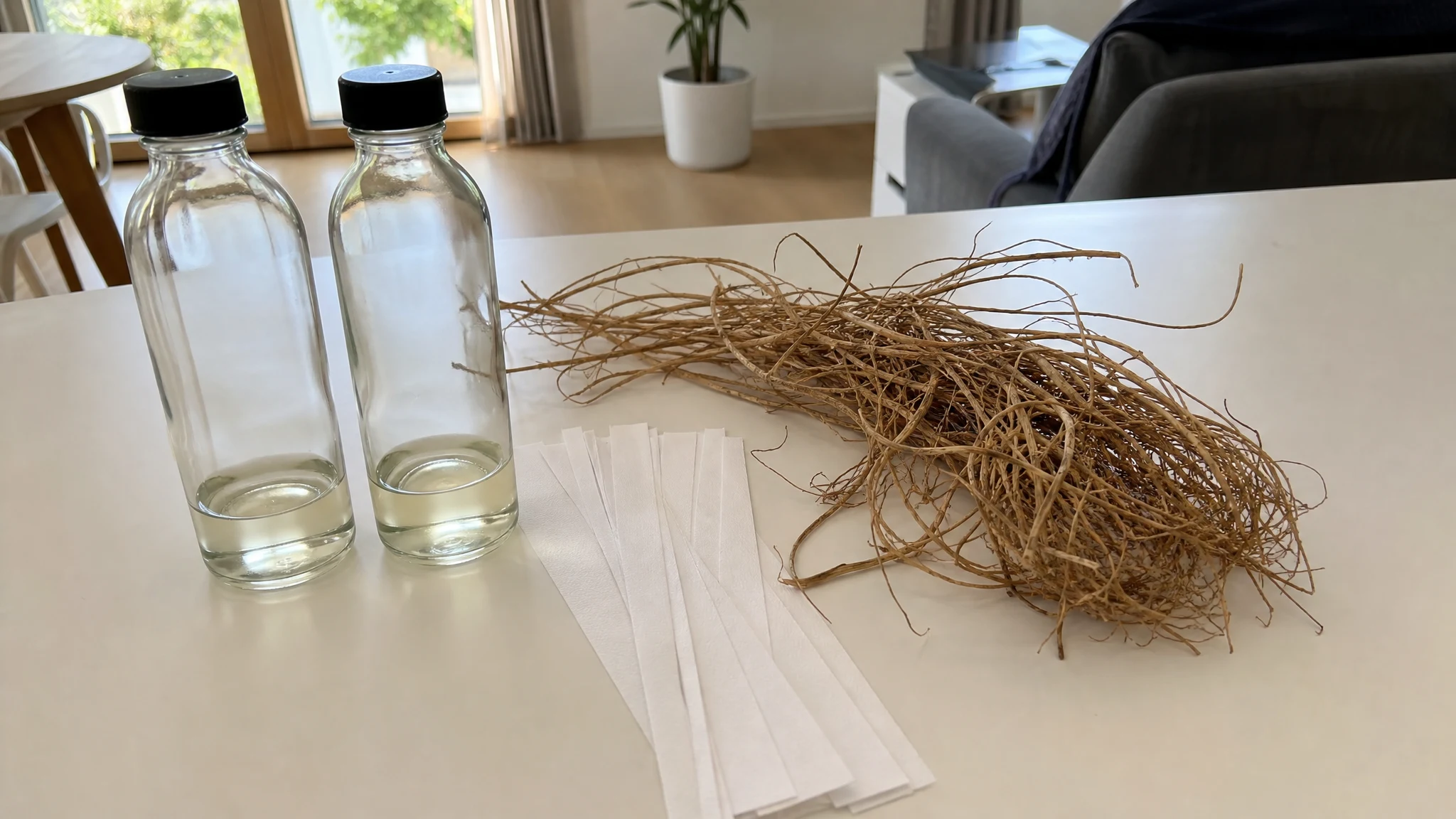
Vetiver in Perfumery: Why Perfumers Love It
Open a few perfume bottles at random and there is a decent chance vetiver is somewhere in the formula. One 2021 chemistry paper puts it in over a third of all fragrances, with worldwide use estimated at 300 to 400 tonnes a year. That is a lot of grass roots, and a lot of perfumers who find the same thing irresistible: a smell that is earthy, smoky, a little citrusy and quietly sweet, all at once.
Vetiver Essential Oil
Our own Vetiver Essential Oil, in sizes from 0.5 oz to bulk.
From $20.99
Shop Now →A smell with many facets
Vetiver is not a single note. The same paper analysed a Haitian oil and describes a grapefruit-like top character over a transparent woody-amber base. The citrus-and-rhubarb facet comes from alpha-vetivone, beta-vetivone and nootkatone, the damp-earth facet from geosmin, and a creamy, cedar-and-sandalwood background from (E)-isovalencenol. One compound in the woody-amber family has an odor threshold of 29 picograms per litre of air, which is why it matters so much even though it is not the biggest peak. The authors had identified 155 components, and say that is only a fraction of the several hundred present.
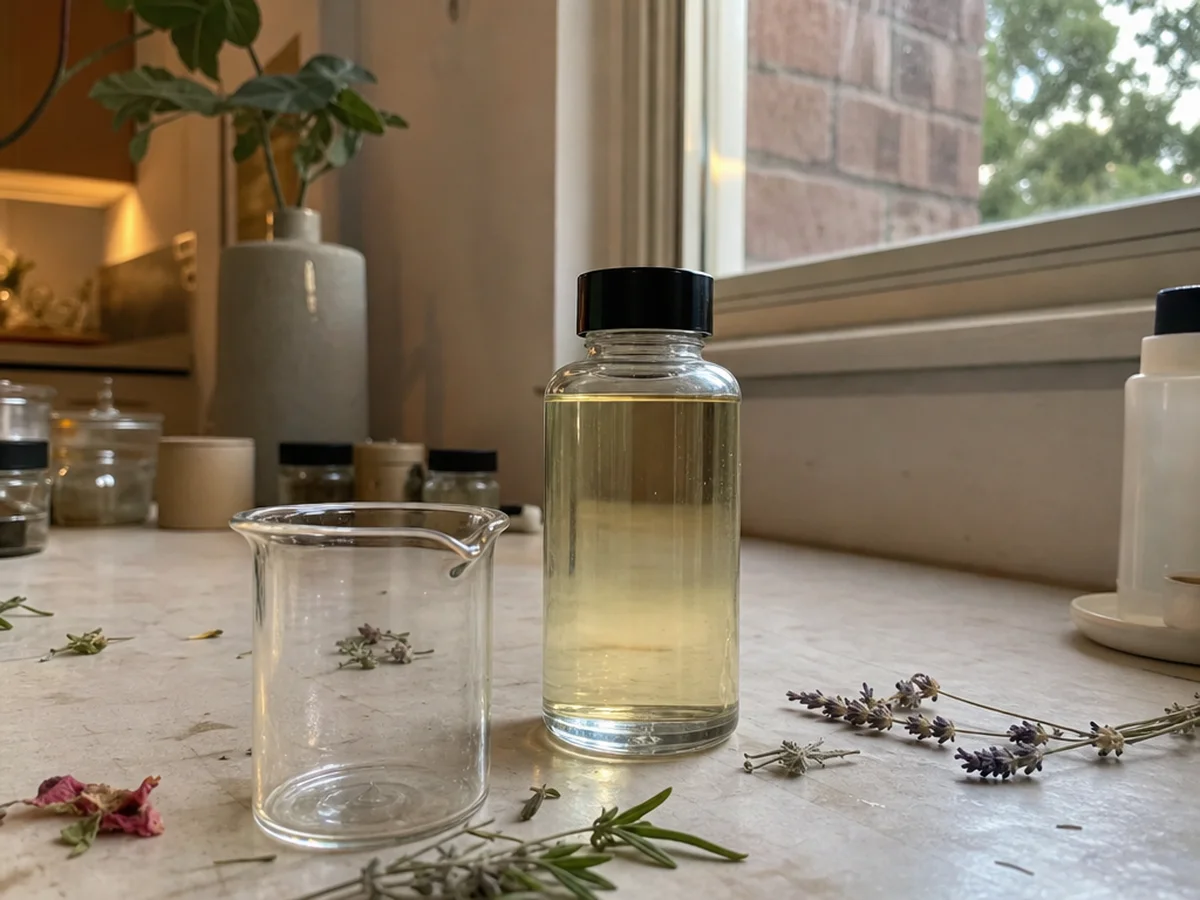
For anyone composing, that suggests two things. The scent comes from trace compounds, so a simple list of percentages tells you little about how an oil will smell. And "vetiver" can read bright and zesty or dark and earthy depending on which facets lead, which is part of why it works in both fresh and deep compositions.
No two lots are quite the same
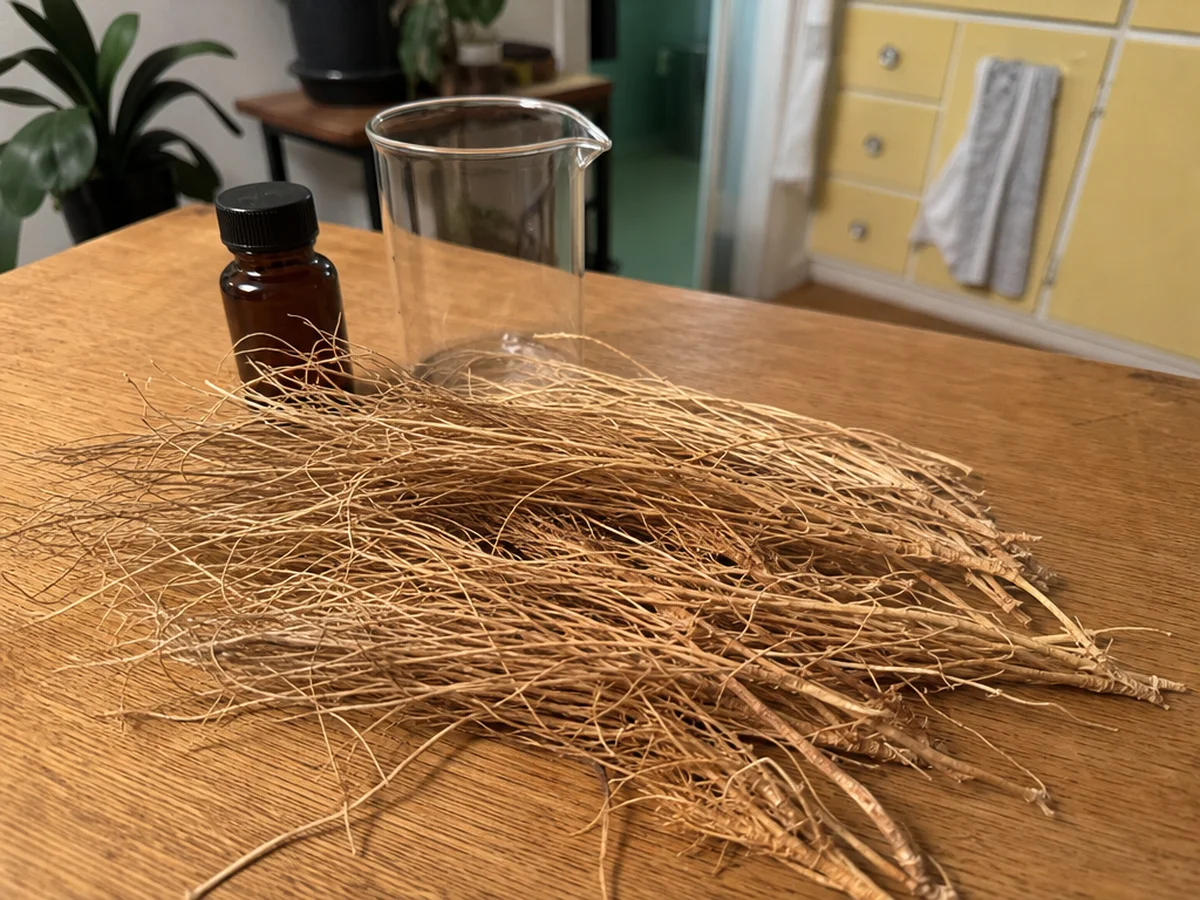
Vetiver is a crop, and crops vary. The oil is made at a modest yield, around 0.2 to 0.3 percent from dried roots, and about 60 percent of the world's supply comes from the Les Cayes area of Haiti, so most of what perfumers smell is shaped by one region, one year at a time. A formula tuned to one drum can read slightly differently with the next, and our post on Haitian, Javanese and Indian vetiver goes into how origins differ.
Time changes it too. In a study of one South Indian oil stored for 6 to 30 months, the smell moved from green and harsh toward something drier, softer, balsamic and sweeter that became more persistent, as some constituents fell and others rose. That was a single oil, so we read it as a reason to keep a small labelled sample of the lot you formulated with, and to compare the next lot against it. If you enjoy watching a scent mellow, vetiver is a rewarding oil to follow over months.
Is it really a fixative?
Formulators call vetiver a natural fixative, and we describe it as a base note too. What we can say with confidence is that it lingers: heavy components stay detectable on a smelling strip long after the lighter ones have gone, and the aged oil above became more persistent still. Whether it slows the evaporation of other materials in a blend is a different claim, with no measurement we can point to, so our advice is to use it for what it smells like and how long it stays, and to judge the effect on your own formula by smelling it over a day or a week.
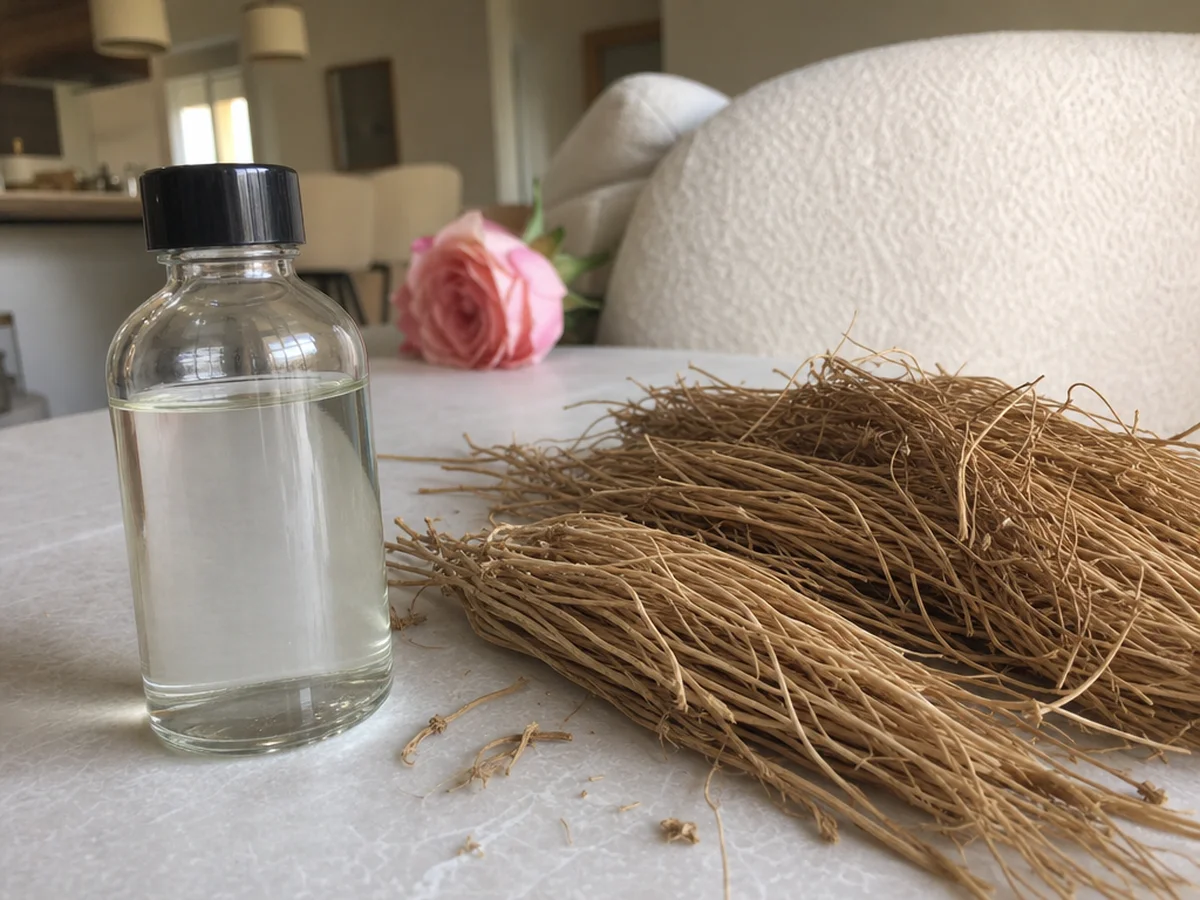
Judging a sample by nose
- Smell it three ways. Neat from the bottle, diluted on a strip, and on the strip again after an hour and after a day. The first shows the sharp opening, the later ones show what stays.
- Keep a reference. Label a small sample with the date and lot so you can set it beside the next one.
- Ask for the paperwork you need. The Certificate of Analysis we publish covers one batch and lists relative density and refractive index. If you need composition data for production work, ask us in writing through the contact page for the report for your lot before you rely on it, and ask any seller the same.
- Do not judge by thickness or color alone. Our post on judging a bottle explains why.
Learning vetiver as a beginner
If you are new to working with perfume materials, vetiver is a good teacher because it is so slow. Put a drop on a strip, then leave it alone. Come back after ten minutes, an hour and the next morning, and write down one word each time. Earthy, smoky, sweet, green, dry: your notes will drift, and that drift is the lesson. It shows you why base notes are used sparingly and why a little goes a long way in any blend.
Smell it next to something familiar, such as a cologne you already own, and try to find the vetiver inside it. Once you can pick the dry, woody backbone out of a finished perfume, you will begin to hear it everywhere.
From oil to wearable
For skin, our guidance is to dilute to 0.5% to 2% in a carrier oil and to patch test first, and Robert Tisserand's published table puts facial cosmetics at 0.5 to 1.2 percent and body products at 1 to 3 percent. Commercial perfume concentrations are far higher, and they are built from materials assessed against industry standards by a qualified safety assessor, so if you plan to sell a fragrance, check current IFRA standards and your region's cosmetics rules. For personal use, a diluted oil perfume is the gentler route, and our posts on cologne and layering vetiver take it step by step, with the safety side in the safety guide.
We sell one vetiver oil, neat, for your own experiments, so it suits someone learning the material with a small bottle and a notebook. Production perfumery that needs acetates, rectified fractions or a full data sheet is a job for a fragrance-materials house, and that is a perfectly good reason to use both.
Smell slowly, write things down, and let the oil show you what it does in its own time.
Vetiver Essential Oil
Vetiver Essential Oil from our own shop, in sizes from 0.5 oz to bulk.
From $20.99
Shop Now →Sources & Further Reading
- Ouyang X et al., 2021. The Smelling Principle of Vetiver Oil, Unveiled by Chemical Synthesis. Angewandte Chemie International Edition. PubMed Central
- Dubey N, Chhonkar SS, Raghav CS, 2011. Effect of Period of Storage on Physico-chemical Properties and Major Constituents of South Indian Vetiver (Vetiveria zizanioides Linn.) Oil. Indian Forester. indianforester.co.in
- Tisserand Institute. Dilution for essential oils. tisserandinstitute.org