Vetiver Oil Safety: Dilution, Patch Tests and Storage
Vetiver oil is wonderfully concentrated, and that is exactly why it lives in the bottle undiluted and goes on skin only after it has been mixed into a carrier. A little goes a very long way. This guide takes the practical route: who should check with a professional first, how to pick a dilution, how to measure a thick oil sensibly, and how to patch test.
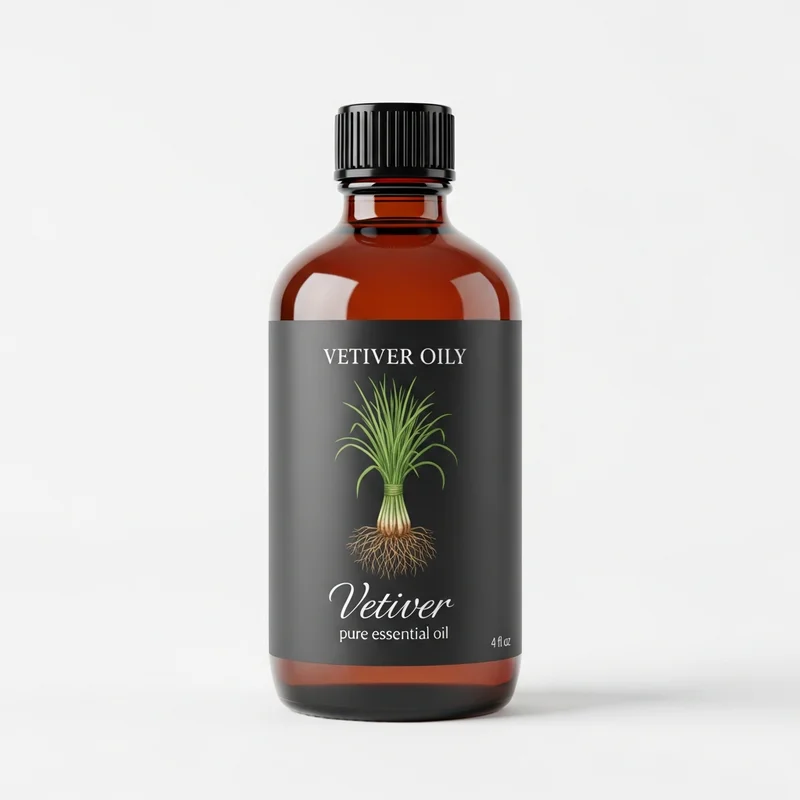
Vetiver Essential Oil
Our own Vetiver Essential Oil, in sizes from 0.5 oz to bulk.
From $20.99
Shop Now →Who should ask a professional first
A few situations depend on your health and not on anything a shop can tell you, so we would ask the relevant person before using essential oils at all:
- Pregnancy or breastfeeding. Tisserand's safety guidelines list pregnancy among the situations where you should seek the advice of a doctor or suitable practitioner before using essential oils. Our pregnancy post covers what has and has not been studied.
- Existing skin conditions or broken skin. A dermatologist can advise. Tisserand's lowest range, 0.2 to 1 percent, is meant for sensitive or impaired skin.
- Young children. Ask a pediatrician, and keep oils out of reach with child-resistant caps. See our post on children.
- Pets. The Merck Veterinary Manual says concentrated essential oils should never be applied directly to pets. Ask your veterinarian, and read our pet post.
- Swallowing. Our oil is for aromatic and cosmetic use only and is never taken internally. Details are in the swallowing post.
Choosing a dilution
Our guidance is to dilute vetiver to 0.5% to 2% in a carrier oil before it touches skin, and to patch test first. Robert Tisserand's published dilution ranges give useful context for where in that span to land:
| Use | Tisserand range |
|---|---|
| Sensitive or impaired skin | 0.2 to 1% |
| Facial cosmetics and deodorants | 0.5 to 1.2% |
| Body oils and lotions | 1 to 3% |
| Bath products | 2 to 4% |
Tisserand calls these guidelines rather than rules, and they cover essential oils in general rather than vetiver specifically. Because 2 percent sits above the range for the face and underarm, our own habit is to begin at 0.5 to 1 percent and only move up for a body oil if skin is happy. It is easy to add more later and impossible to take it back out.
Measuring a thick oil
Vetiver pours slowly, so its drops run large, and a drops-per-ounce chart can quietly give you a stronger mix than you intended. Tisserand makes the same point that no two drops are alike. Weighing is simpler and more reliable.
The arithmetic, as a worked example: 1 percent by weight means 1 g of oil in 99 g of mixture. The batch on our Certificate of Analysis has a relative density of 0.993, so 1 g of it is about 1 ml. Ten grams of body oil at 1 percent therefore needs about 0.1 g of vetiver, a small fraction of a ml. A scale that reads to 0.01 g, or a pipette, makes this easy, and warming the bottle slightly helps the oil flow.
A calm routine for your first blend
If you are new to working with a concentrated oil, a short routine keeps everything tidy. Clear a flat surface, put down a paper towel, and lay out a clean glass bottle, your carrier oil, a pipette and a label. Measure the carrier first, add the vetiver, cap the bottle and roll it between your palms. Then write the date and the percentage on the label before you do anything else. It takes a minute, and it means you will never wonder what is in the bottle three weeks from now.
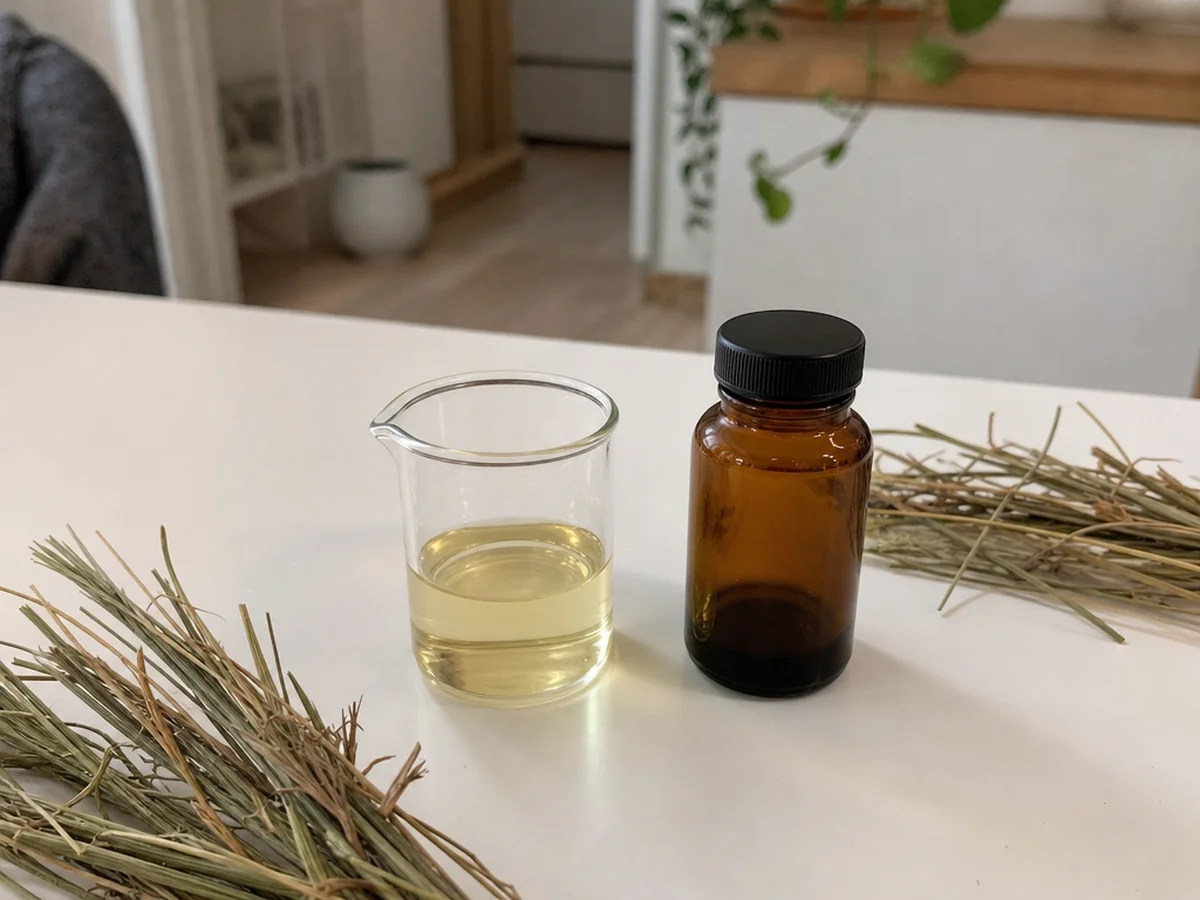
Vetiver is dark and thick, and it can leave a mark on light fabric and some surfaces, so keep towels and good worktops out of the splash zone. If you do spill, wipe it up straight away with a paper towel and wash the area with soap.
Patch testing, and what we know about allergy
Essential oils as a group are well-known contact allergens, which is why we always say to patch test. In one analysis of 10,930 patients patch tested to 12 essential oils, 8.3 percent reacted to at least one, and only six oils produced reactions in more than 1 percent, led by ylang ylang at 3.9 percent (Geier and colleagues, 2022). A review by de Groot and Schmidt found nearly 80 oils reported to cause contact allergy and noted that most reactions come from undiluted oils or high-concentration products. Vetiver is not among the named high-reaction oils in either abstract, but the abstracts do not show a verdict on it either, so we read them as general reasons to dilute and test.
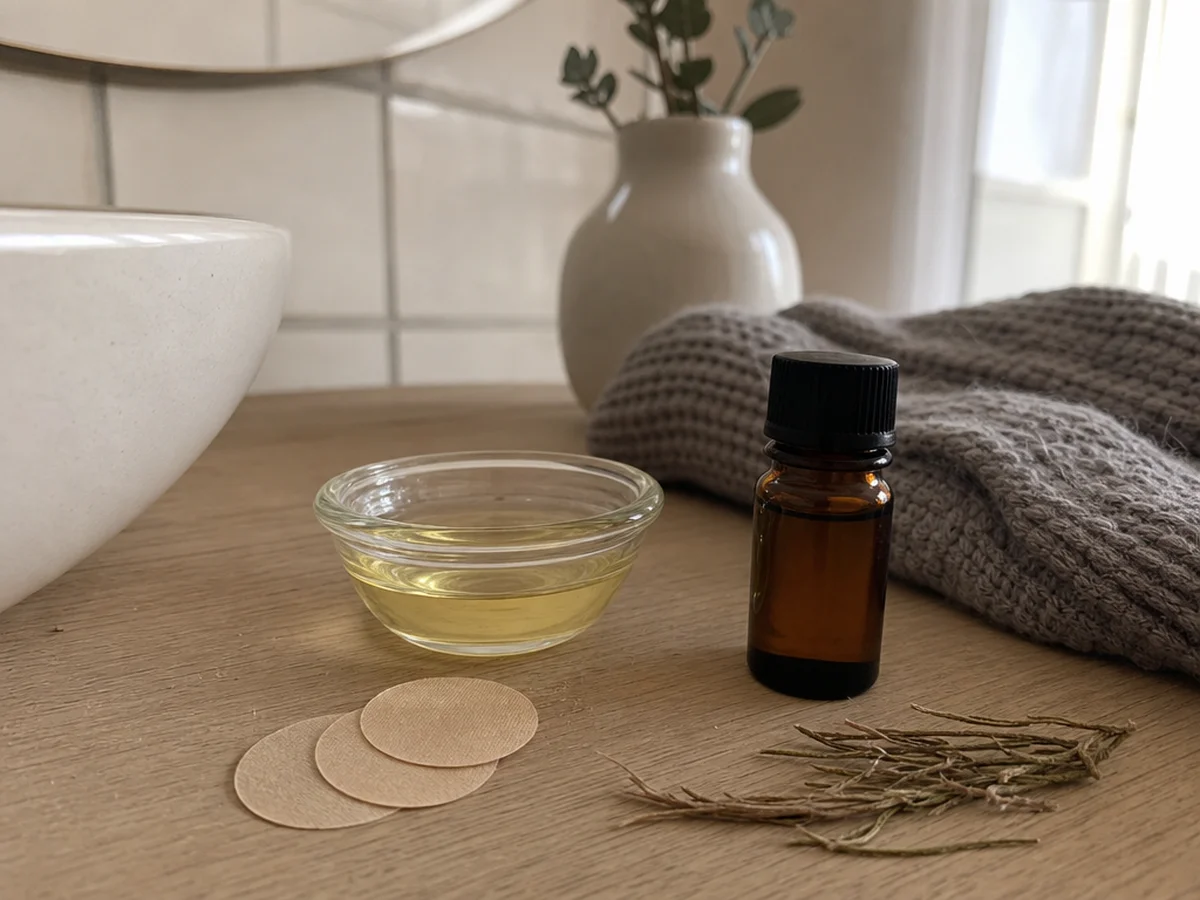
To patch test, mix the dilution you plan to use, apply a small amount to a small patch of skin, and watch it over the time your dermatologist or the product instructions suggest. If you see redness, itching, swelling or a rash, wash it off and stop. A persistent reaction is a job for a dermatologist or allergist.
Eyes, storage and when to stop
Keep vetiver away from the eyes. Store it sealed in a cool, dark place, and for larger containers, decant working amounts into smaller airtight bottles. Stop using it if skin reacts, see a physician for any breathing difficulty, and call your poison center if anyone swallows it. No dilution table replaces a clinician who knows your history.
One last habit we like: keep a small notebook next to your oils. Jot down the date, the percentage and how a blend felt on the day you tried it. After a few months you will have a personal record that is far more useful than any chart, and it makes it easy to repeat a blend you loved or adjust one you did not.
If you are new to the oil, our beginner's guide is a gentle place to start. And if you want a lot report for a bottle, ask us in writing through our contact page, because the Certificate of Analysis we publish covers one batch and shows density and refractive index.
Vetiver Essential Oil
Vetiver Essential Oil from our own shop, in sizes from 0.5 oz to bulk.
From $20.99
Shop Now →Sources & Further Reading
- Tisserand Institute. Safety Guidelines - Tisserand Institute. tisserandinstitute.org
- Tisserand Institute. Dilution for essential oils. tisserandinstitute.org
- Geier J et al., 2022. Contact sensitization to essential oils: IVDK data of the years 2010-2019. Contact Dermatitis. PubMed
- de Groot AC, Schmidt E, 2016. Essential Oils, Part IV: Contact Allergy. Dermatitis. PubMed
- Merck Veterinary Manual. Toxicoses From Essential Oils in Animals - Toxicology - Merck Veterinary Manual. merckvetmanual.com