Vetiver in Natural Perfume: How to Build a Base Note
Think of a good natural perfume as a small building. The citrus or herbal top is the front door you notice first, the heart is the living room, and vetiver is the floor that everything else stands on. Used with a light hand it gives a blend a quiet, earthy foundation. Used with a heavy one it swallows the house.
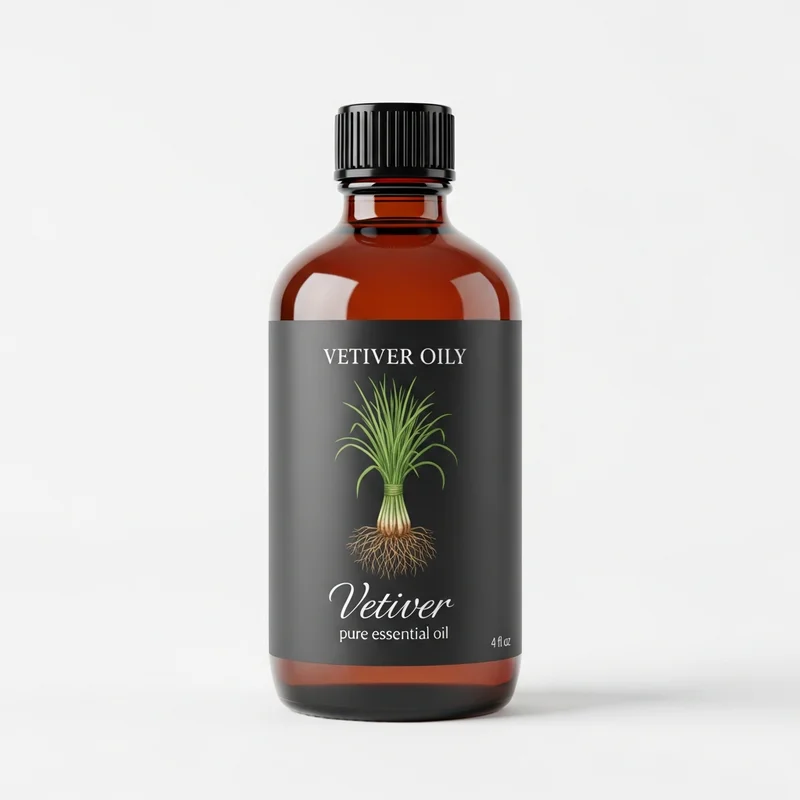
Vetiver Essential Oil
Our own Vetiver Essential Oil, in sizes from 0.5 oz to bulk.
From $20.99
Shop Now →Start by giving vetiver a job
Before you measure anything, decide which of three roles you want vetiver to play, because each calls for a different amount and different partners.
- A floor under a bright top. You love a sparkling citrus or herbal opening but it disappears in minutes. A little vetiver means something is left when it goes.
- An earthy centre. The blend is about vetiver, and the other oils frame it.
- A dry, woody finish. You want the last hours to read as wood, with another base material sharing the load.
If you cannot name the job, you will keep adding vetiver until it smells like something, and that is how blends turn muddy.
What "base note" really means
Perfumers sort materials into top, middle and base by how quickly they evaporate, and vetiver sits firmly at the slow end. We describe our oil as a deep, earthy, smoky-sweet base note, and formulators often call it a natural fixative. Treat those words as a description of how a material behaves rather than a guarantee. Vetiver is also not one flat note. The 2021 study that identified its key odorant describes a grapefruit-like facet from the vetivones and nootkatone, an earthy one from geosmin and a creamy, cedar-and-sandalwood-like one from another molecule, with a dry woody-amber character behind it all. The same paper notes vetiver turns up in over a third of all fragrances. So expect a faint bright edge on top of all that depth, and let it show through.
How much: work backward from your skin
Because perfume sits on skin, the first ceiling comes from skin guidance, not from what smells good. Our dilution guidance is 0.5% to 2% of oil in a carrier with a patch test first. The Tisserand Institute gives 1% to 3% for body oils and lotions and 0.5% to 1.2% for facial products. For a leave-on blend we suggest staying at or below 2% total essential oil, and lower if your skin is easily bothered.
A quick piece of arithmetic shows how small a floor can be. If the finished blend is 2% essential oil in a carrier and vetiver makes up a tenth of the oil mix, vetiver is just 0.2% of what you wear. In 100 g of carrier that is 0.2 g of vetiver, which for the batch on our Certificate of Analysis (relative density 0.993) is about 0.2 ml. It feels tiny, and it is the right order of magnitude for a base.
Vetiver pours slowly and its drops vary, so mix a stock. One gram of vetiver in nine grams of carrier makes a 10% stock, and each drop of stock carries a tenth as much oil as a drop of neat oil. Mistakes become much smaller.
Build in this order
- Get the top and heart right without vetiver. Smell them on a blotter until you like them.
- Add vetiver stock one drop at a time, using a fresh blotter each time. Stop earlier than feels necessary. You can add more but you cannot take it back out.
- Add a second base only if you need one. Sandalwood and patchouli are classic partners, and we compare them in vetiver vs. sandalwood and vetiver vs. patchouli. Stacking three heavy bases is the quickest route to one dark smudge.
- Know your citrus. The Tisserand Institute notes that the phototoxic citrus oils are the expressed rind oils rather than distilled ones, so check which kind your bottle is before wearing the blend in sun.
Small habits at the bench
- Label every blotter in pencil with the formula and the time. They all look the same after ten minutes.
- Give your nose a break between sniffs by stepping outside for fresh air, so each blotter is judged fairly.
- Warm the vetiver bottle in your hand and let a thick drop fall on its own. Shaking it out leads to a heavier hand than you meant.
Check it across a day
Smell the blotter wet for the opening, at 30 minutes to see whether the heart survived, at two hours to see whether vetiver is covering everything, at four to six hours for the base you actually built, and the next morning for what lingers longest. A blotter is not skin, so after a patch test repeat the sequence on your own wrist.
One thing we like about vetiver as a floor is how it asks you to be patient. A blend that seems a little thin on the first day may read differently after a night in a closed bottle, so resist the urge to keep adding. Write down what you smell, leave it, and come back with fresh senses.
Where to go next
We sell vetiver oil only, so the carriers, other oils and bottles come from a perfumery or craft supplier. For pairings see our blending guide, for the bigger picture vetiver in perfumery, and for a finished format try the solid perfume balm.
Decide the job, keep the amount modest, add it last and give it a day. A floor you barely notice is exactly what a good blend needs.
Vetiver Essential Oil
Vetiver Essential Oil from our own shop, in sizes from 0.5 oz to bulk.
From $20.99
Shop Now →Sources & Further Reading
- The Smelling Principle of Vetiver Oil, Unveiled by Chemical Synthesis, Ouyang et al., Angewandte Chemie, 2021
- Dilution for essential oils, Tisserand Institute
- Citruses: a comparison of different oils, Tisserand Institute