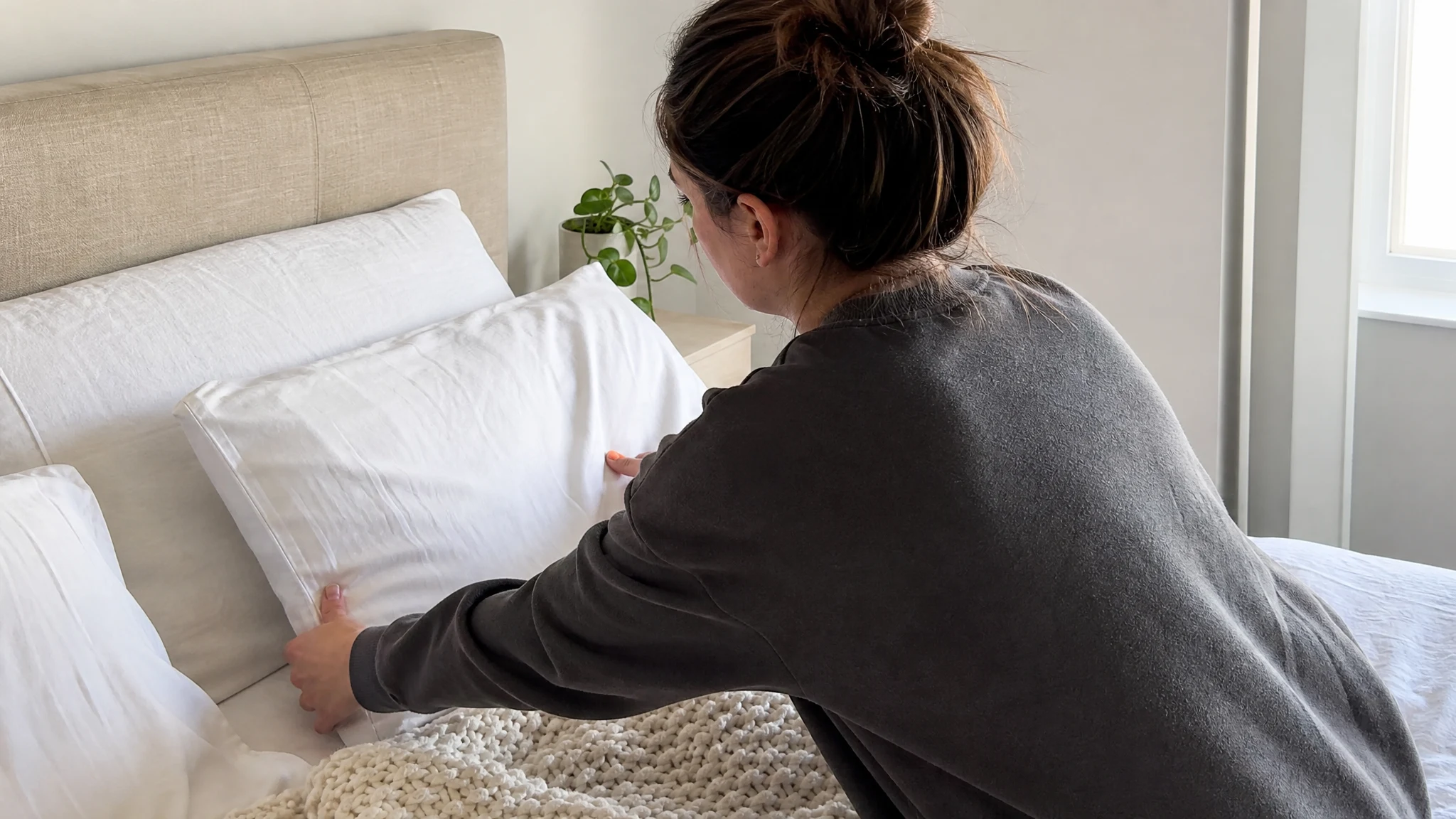
Water-Free Vetiver Linen Spray: How to Make It
Most vetiver linen spray recipes online are one line long: water, a few drops of oil, shake. It sounds easy, but oil does not mix with water, so the vetiver floats, and a bottle of water sitting in a bedroom for weeks is a place for microbes to grow. We prefer a small, water-free version, and here is how it works.
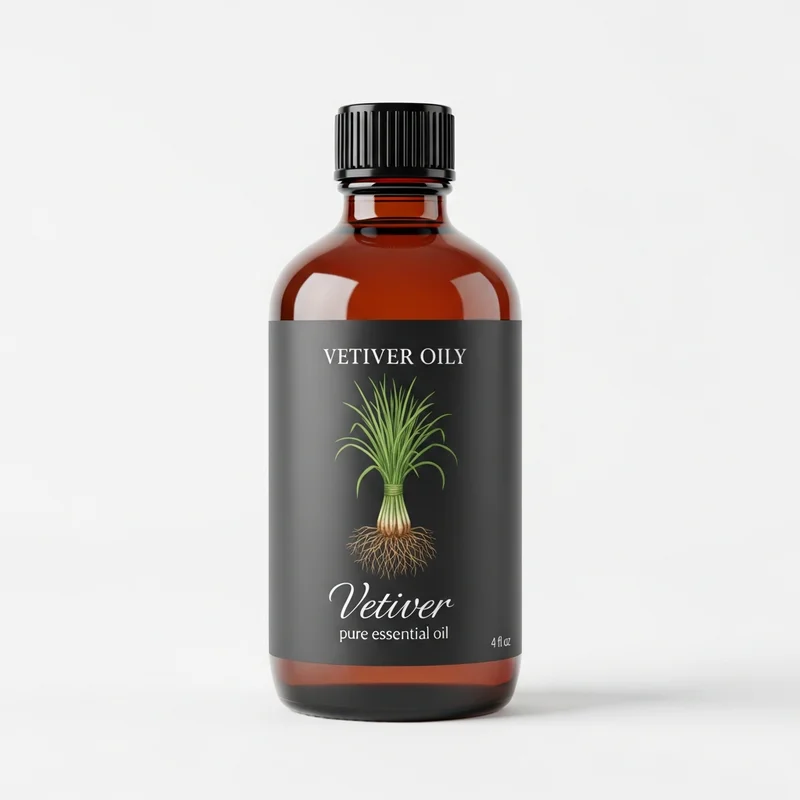
Vetiver Essential Oil
Our own Vetiver Essential Oil, in sizes from 0.5 oz to bulk.
From $20.99
Shop Now →Why the usual recipe struggles
As one supplier's formulation answer puts it, essential oils do not naturally mix with water, and without a solubiliser they separate and the spray turns cloudy. Getting a thick, dense oil like vetiver to stay dispersed is a formulation job with testing involved, not just a shake.
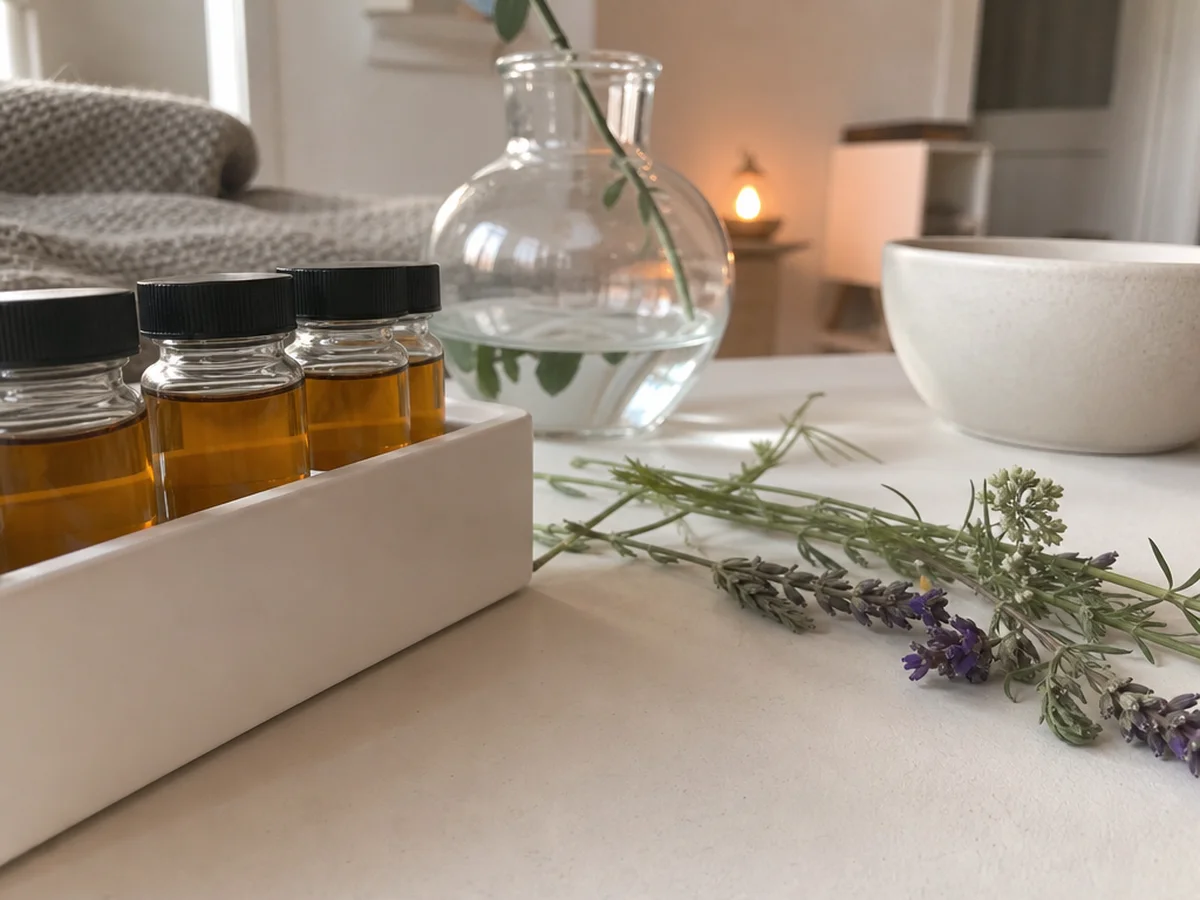
Then there is the microbial side. The US Food and Drug Administration lists contaminated water among the routes by which cosmetics can pick up harmful bacteria or fungi, notes that adding water waters down preservatives, and says preservatives can break down under warm or damp storage. It also says injuries from contaminated cosmetics are not common but can be serious. A real example involved a bedroom product: in October 2021 the CDC announced it had found the bacterium behind melioidosis in a lavender and chamomile aromatherapy room spray sold at about 55 Walmart stores. That was a commercial, imported product, so it says nothing about a spray you mix yourself, but it is a useful reminder that scented water does not sterilise itself and an essential oil in the bottle is not a preservative to count on.
The water-free recipe, by weight
An alcohol-only spray removes the water problem. The numbers below are arithmetic from our dilution guidance, offered as a starting point.
| Ingredient | Grams for 100 g | Share |
|---|---|---|
| Vetiver essential oil | 0.5 g | 0.5% |
| High-proof perfumer's or cosmetic-grade ethanol | 99.5 g | 99.5% |
Why 0.5%? Linen touches skin for hours, and our guidance for vetiver on skin is 0.5% to 2% in a carrier oil, so the low end is the sensible start. The Tisserand Institute gives 0.2% to 1% for sensitive skin and 0.5% to 1.2% for the face, so 0.5% sits inside both. For the batch on our Certificate of Analysis (relative density 0.993 at 20 C), 0.5 g is about 0.5 ml. Use a scale reading to 0.1 g, since drops of thick oil are large and uneven. We do not sell ethanol, spray bottles or atomisers, so those come from a perfumery-supplies seller.
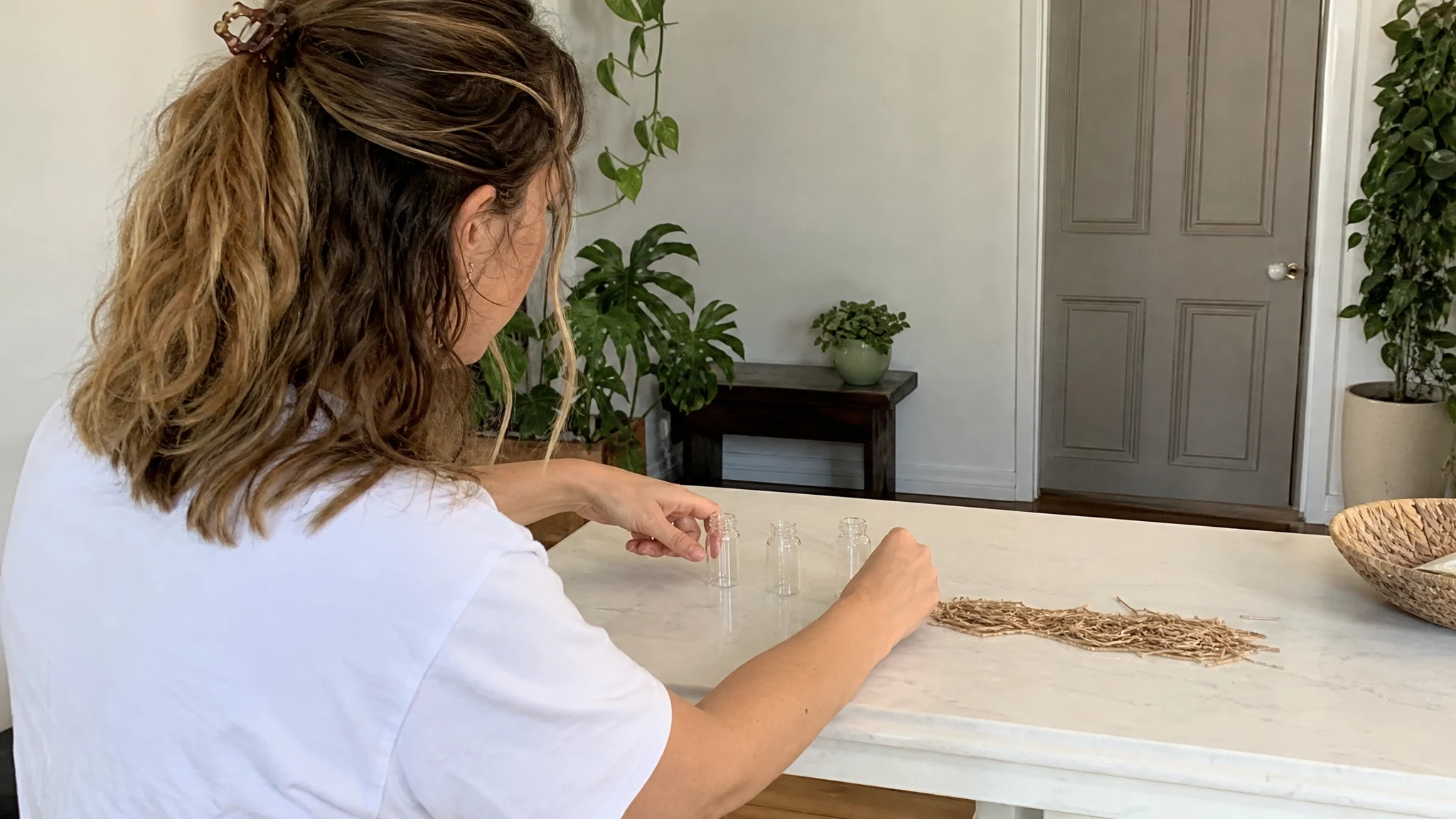
Weigh the vetiver into a clean glass bottle first, add the ethanol, cap and swirl, and let it sit for a few days in the dark. Look at it against a white card. A clear liquid means the oil has dissolved. Cloudiness or sediment means it has not, and it should stay off your bedding. A study of South Indian vetiver oil found solubility in 80% alcohol fell as the oil aged over 6 to 30 months of storage, which is a good reason to choose a strong, high-proof ethanol and to filter if needed.
Stains and fabric
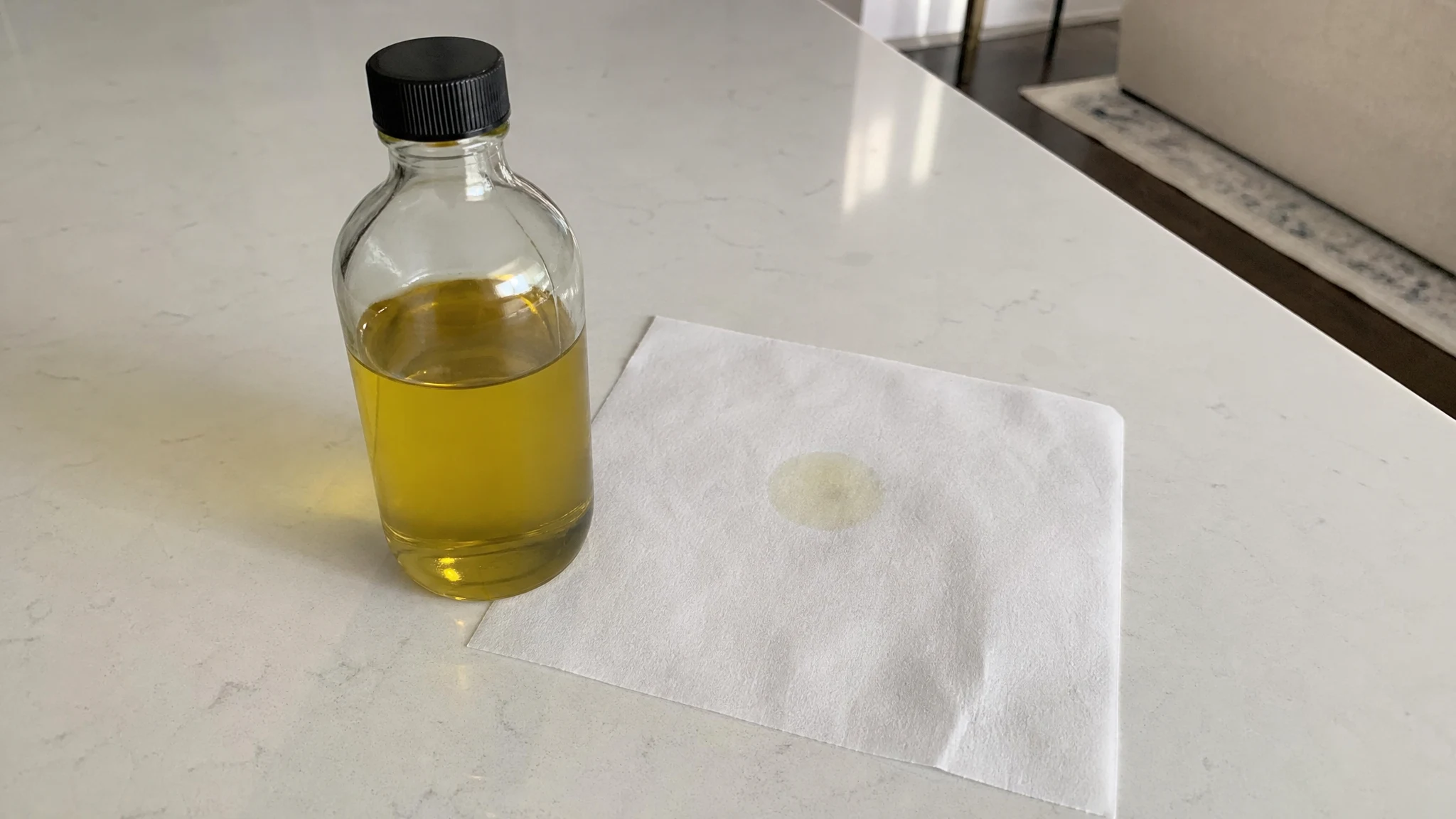
The standard printed on our Certificate of Analysis describes the oil as a brown/red liquid, and we describe it as thick and deep amber to brown. It follows that a dark oil can mark pale fabric, and alcohol can lift some dyes. Test first: spray a hidden corner, let it dry fully and look in daylight. Spray from about an arm's length so the fabric is misted rather than wet, and never onto a pillow while someone lies on it. Ethanol is flammable, so keep the damp fabric away from candles, heaters and irons.
Sensitivity and pets
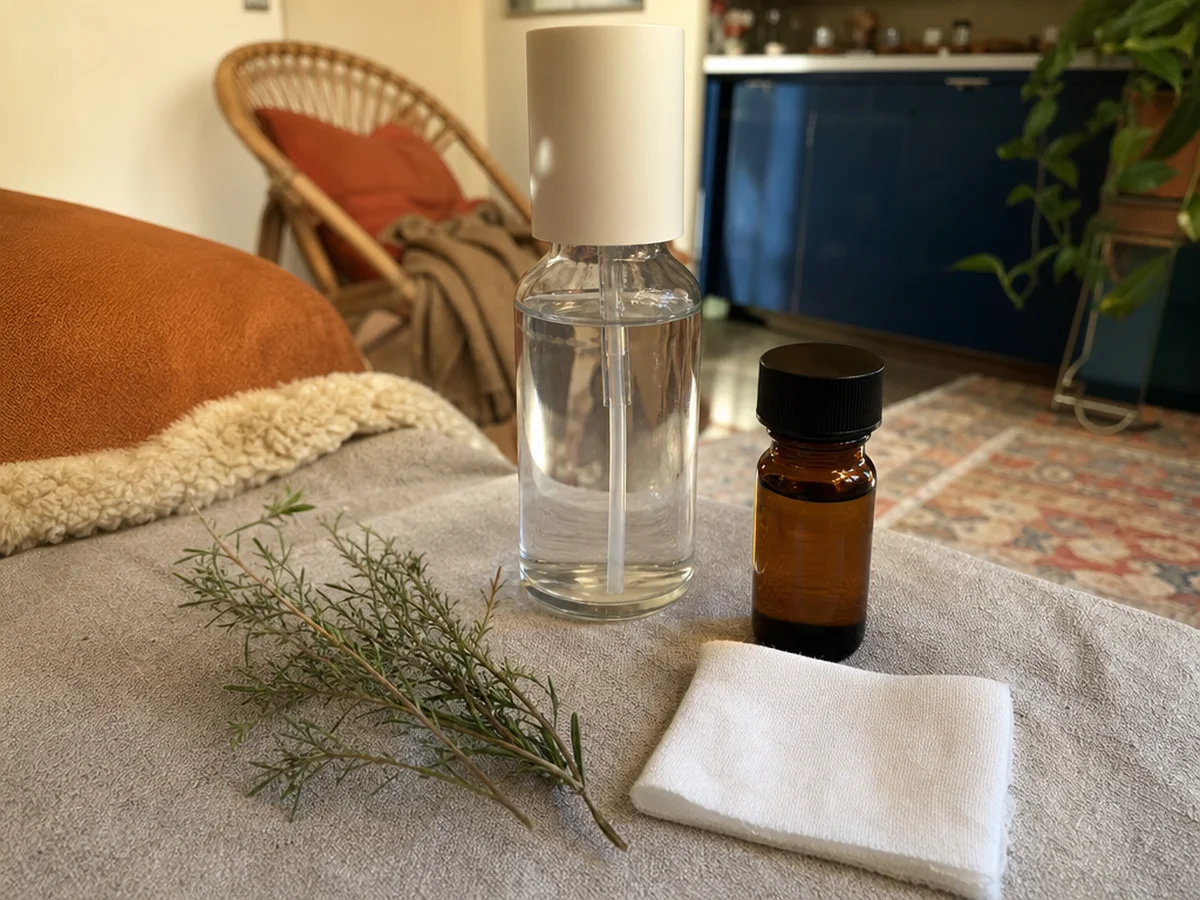
Scent on bedding is in contact with skin for a long time. A large German analysis of dermatology patch-test results from 2010 to 2019 found that essential oils as a group provoke reactions in some patients. If you have eczema or a known fragrance allergy, ask a dermatologist before scenting your bedding, and keep sprays out of rooms where pets sleep. Our pets post explains why.
If you want it water-based anyway
We would not make one for storage. If you do want a water-based spray, make a very small batch, use it within a day or two, discard what is left and use a freshly cleaned bottle each time. A spray that is stored needs a preservative system chosen by a cosmetic chemist, who will also set the solubiliser.
Using it on fabric
A light mist from arm's length is all that is needed. Alcohol dries quickly, and the scent that remains on cotton is soft and dry rather than loud. Linen and cotton hold a base note like vetiver well, and you will likely notice it more when you fold or move the cloth than when it is lying flat. Let each item dry fully before you use it.
Where it works best
Think of curtains, a throw, a wardrobe shelf lined with cloth, or the inside of a drawer. Spray the cloth, not the shelf, and let it dry before putting anything on it. Vetiver is deep amber to brown, so if you are scenting anything pale, always test a hidden corner first and check it in daylight.
What not to expect
We love the aroma of vetiver, deep, earthy and smoky-sweet, and a linen spray is a fragrance for fabric, nothing more. The National Center for Complementary and Integrative Health says of aromatherapy for insomnia that it does not know whether it helps because little rigorous research has been done, so we make no claim about rest. If you are curious, our sleep evidence post covers what is known.
For a room fragrance instead of a fabric one, see the room spray recipe or the diffuser guide, and to judge the scent first, what vetiver smells like. If you need batch data for a formulation, ask in writing through the contact page.
Make it small, make it fresh and spray it lightly. If yours turns cloudy, wet or old, pour it out and start again.
Vetiver Essential Oil
Vetiver Essential Oil from our own shop, in sizes from 0.5 oz to bulk.
From $20.99
Shop Now →Sources & Further Reading
- Microbiological Safety and Cosmetics | FDA
- CDC Identifies Rare Bacteria in Aromatherapy Product | CDC Online Newsroom | CDC
- Room Spray Turns Cloudy After Mixing Essential Oils and Polysorbate 20
- Dilution for essential oils, Tisserand Institute
- Effect of Period of Storage on Physico-chemical Properties and Major Constituents of South Indian Vetiver (Vetiveria zizanioides Linn.) Oil, Dubey et al., Indian Forester, 2011
- Contact sensitization to essential oils: IVDK data of the years 2010-2019. Geier et al., Contact Dermatitis, 2022
- Aromatherapy | NCCIH