Vetiver Candles: Scent Load, Wax and a Worked Example
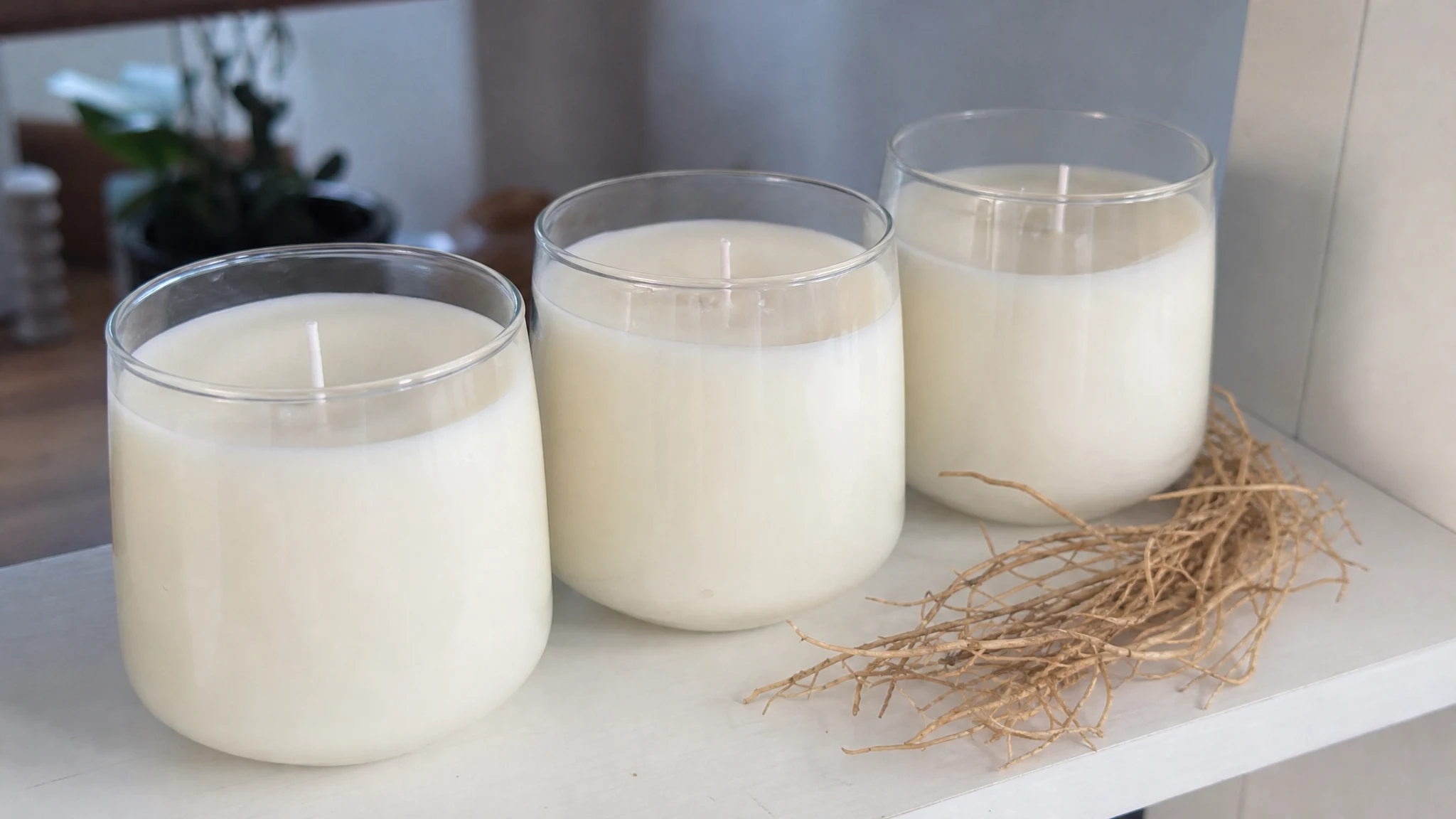
The best candle scents often work like a good chord: something bright on top and something dark underneath. Vetiver is a natural for the dark part. Its aroma is deep, earthy and smoky-sweet, and perfumers call it a base note because it sits low and lingers. In a candle that suggests a supporting role, giving a citrus or a conifer something warm to rest on.
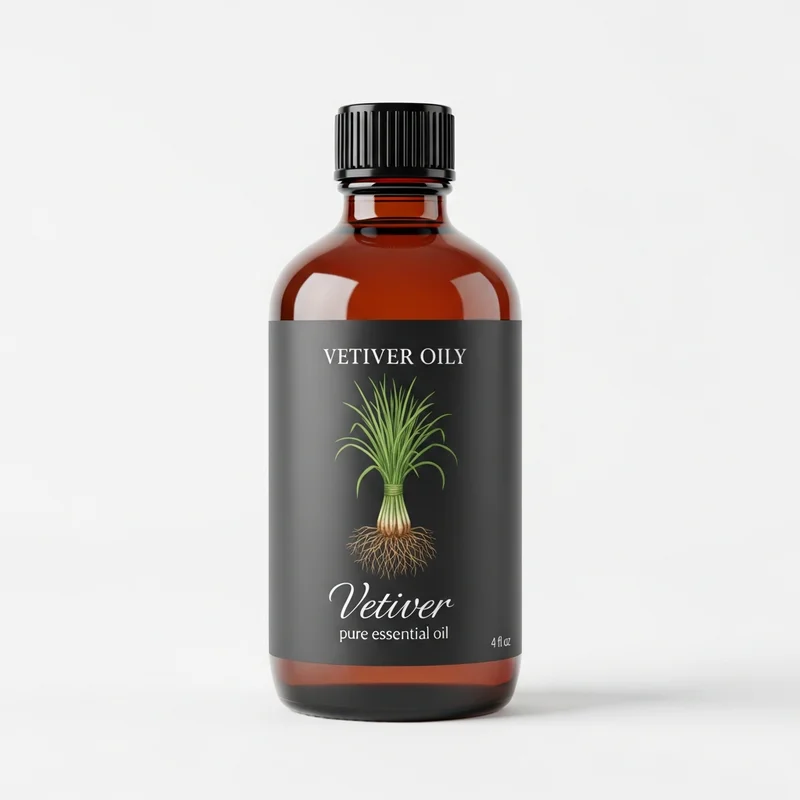
Vetiver Essential Oil
Our own Vetiver Essential Oil, in sizes from 0.5 oz to bulk.
From $20.99
Shop Now →Check that your oil is suited to wax
Candle suppliers separate fragrance oils from essential oils. CandleScience, which sells wax and scents, says you can use essential oils as long as they are candle-approved, advises checking the recommended usage rate on that oil's product page, and suggests starting low because some oils shift at higher loads. Its own soy example uses patchouli at about 6% of the finished weight: 41 g of oil in 680 g of wax.
No supplier publishes a vetiver figure that we know of, so 6% is a ceiling borrowed from a neighbouring oil and not a vetiver-specific number. If your wax supplier lists a lower maximum for essential oils, follow that. If you plan to sell candles, the rest of the supplier's checklist applies too: a warning label on the bottom of the container, a wick matched to your jar and wax by burn testing, and whatever documents your market expects. We do not publish an IFRA certificate for our oil, so sellers who need one should arrange it with their supplier first.
Weigh it, do not count drops
CandleScience is firm on this: measure essential oils by weight, never by drops, because oils vary in density. Vetiver is a good argument for it. A thick, slow-pouring oil clings to the dropper and falls in large, uneven drops. A kitchen scale reading to 0.1 g takes the guesswork out. On the batch described in the Certificate of Analysis on our site, the relative density was 0.993, so a gram of oil is very close to a millilitre.
A worked example
This is arithmetic based on the supplier guidance above, offered as a starting point to adjust, not a recipe with a promised result. Take a 300 g pour at 6% scent:
- Wax: 282 g (94%)
- Vetiver essential oil: 12 g (4%), which is about 12 ml on the density above
- A brighter candle-approved essential oil: 6 g (2%), such as a citrus or a conifer from your supplier's list, after checking its own recommended load
Keeping vetiver at two thirds of the scent lets it do what it does best, which is anchor. If your supplier's page for either oil gives a lower maximum, use the lower number and reduce vetiver first to make room.
The method follows CandleScience's soy tutorial, and the temperatures belong to that wax, so use the numbers your own wax supplier gives:
- Melt the wax. In the tutorial, essential oil goes in when the wax reaches 185°F (85°C).
- Add both oils by weight and stir gently for 2 minutes, scraping the stirrer, since thick vetiver clings to it.
- Pour at the supplier's pour temperature (135°F, 57.2°C in the tutorial) into jars fitted with the wick the supplier's chart specifies.
- Let the candle rest. The tutorial calls for 2 weeks before burning, and it is worth the wait, since it is part of the supplier method.
Wick choice is the one part we cannot give you. It changes pool depth, soot and how warm the glass gets, and it is settled by burn testing in your own jar.
Pairing ideas for the second oil
Because vetiver sits low, the second oil can be something brighter or greener. Citrus on top gives a lighter first impression, while a conifer-type oil adds a forest feel that suits vetiver's earthy side. Whatever you pick, check that it is candle-approved and note its maximum load first, then reduce vetiver to leave room for it.
Things to keep in mind
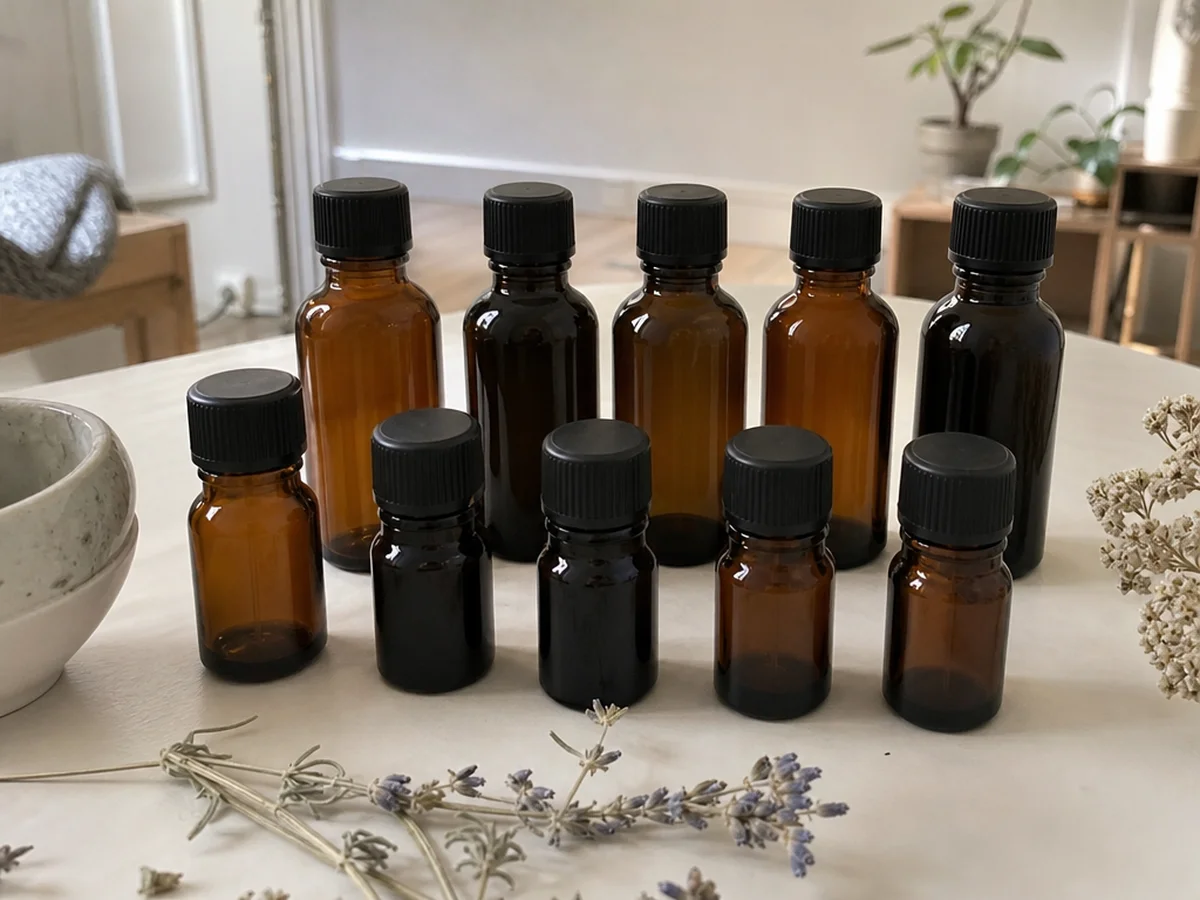
Choose jars with a wide mouth so you can read the pour and the finished surface, and label each trial with its percentage of vetiver. Small test candles cost little and teach you a great deal about how a dark oil sits in wax.
Vetiver is dark, with a deep amber-to-brown colour, and it can tint pale wax. Do not expect it to leave a white candle white.
The Merck Veterinary Manual lists candles among passive diffusers: they do not release droplets of oil, but they can irritate the airways of animals, and birds are at particular risk from airborne fragrance. If birds or a cat share your home, ask your veterinarian before burning scented candles. People with asthma or fragrance sensitivity should check with a physician or allergist, and any candle should be burned in sight and away from anything that catches.
The oil stays neat in the bottle and is meant for aromatic and cosmetic use only. If you move on to skin products, read the safety guide first. Between batches, our notes on storing vetiver keep an opened bottle in good order. For second-scent ideas, the blending post and the perfumery guide describe how vetiver plays with other oils. Wax, jars, wicks and the second oil come from a candle-supply shop.
Let the wax cool before you judge
A freshly poured candle is not the finished candle, and a cold, unlit one smells different from one that is burning. Smell the jar after it has set and then again a few days later, and keep notes. The supplier method includes a long rest for a reason, so plan to wait before you decide the scent is right or wrong.
Make one small jar at the 4% vetiver split, let it rest properly and judge the burn before you commit to a bigger batch.
Vetiver Essential Oil
Vetiver Essential Oil from our own shop, in sizes from 0.5 oz to bulk.
From $20.99
Shop Now →Sources & Further Reading
- CandleScience. How to Make Soy Candles with Essential Oils. candlescience.com
- Merck Veterinary Manual. Toxicoses From Essential Oils in Animals. merckvetmanual.com