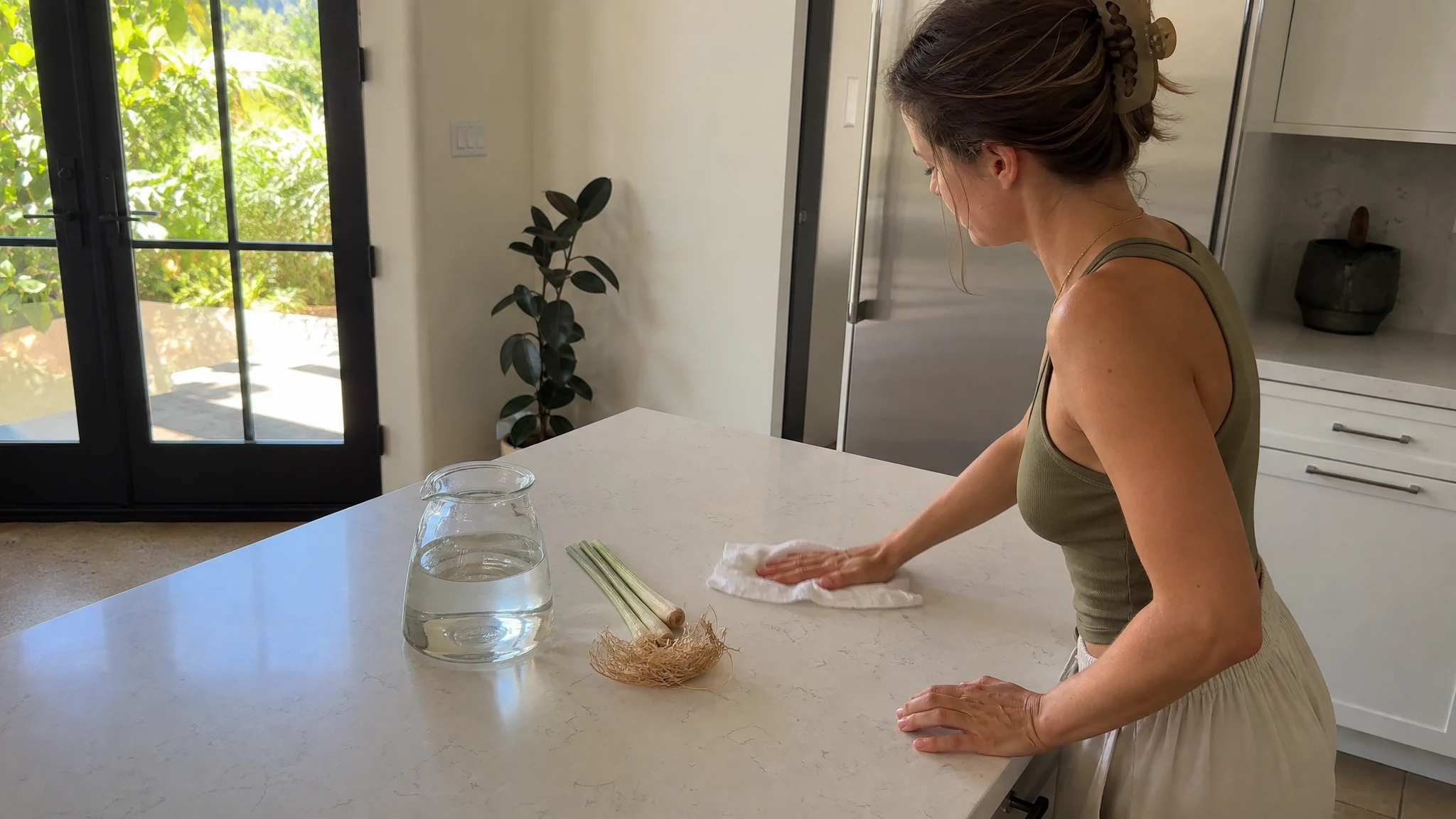
Vetiver and Lemongrass Room Spray: Why We Use Alcohol
Picture a room spray that opens bright and green with lemongrass, then settles into the smoky, earthy depth of vetiver. That is easy to make at home, and the one decision that matters most is not which oil you pick but what you mix it into. Most online recipes say water. We say alcohol, and the reason has a recent news story behind it.
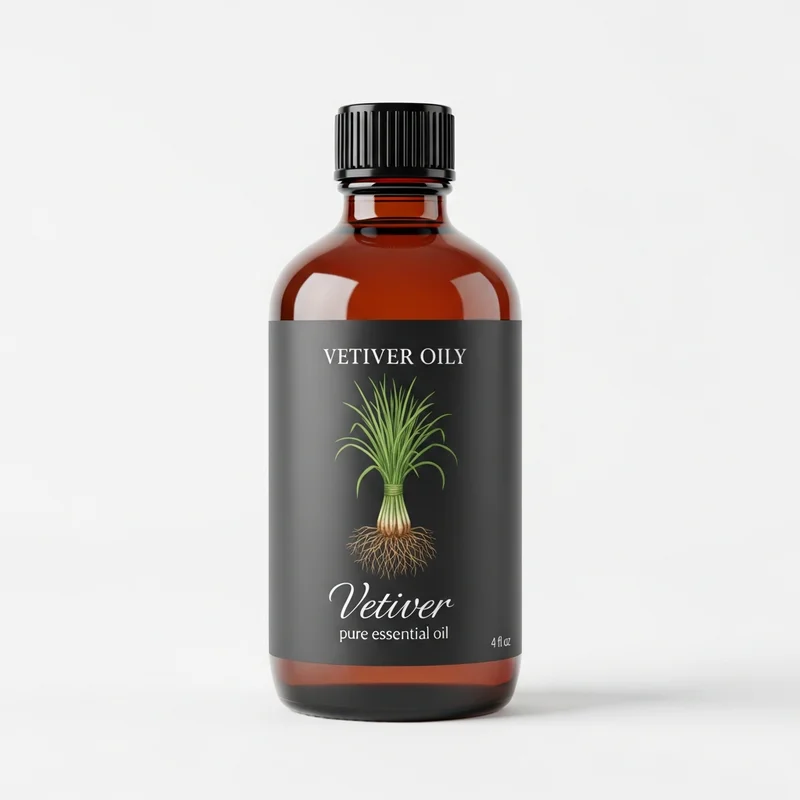
Vetiver Essential Oil
Our own Vetiver Essential Oil, in sizes from 0.5 oz to bulk.
From $20.99
Shop Now →Why we leave the water out
In October 2021 the CDC announced that it had found the bacterium that causes melioidosis in a bottle of lavender and chamomile essential oil room spray sold at about 55 Walmart stores and online. The bottle came from the home of a Georgia resident who had become ill, and four people in Georgia, Kansas, Texas and Minnesota had been sickened that year. That was a factory product, so it does not tell us what happens in a kitchen. It does make one point that holds anywhere: water sitting in a bottle is a place where microbes can live, and a spray puts what is in the bottle into the air you breathe.
The FDA's guidance on cosmetics says the same thing in general terms. It lists contaminated water among the sources of contamination, and it warns that adding water to a product waters down the preservatives meant to keep microorganisms in check. A room spray is not a cosmetic, but the biology is the same.
There is a second reason, and it is simpler. Essential oils do not dissolve in water. They float, cling to the nozzle and the bottle wall, and the last sprays come out more concentrated than the first. Vetiver, which is thick and slow-pouring, sticks even more. High-proof alcohol dissolves both oils evenly and has no water to spoil.
The formula
This is a 100 g batch, calculated by weight from the percentages below.
| Ingredient | Grams | Share |
|---|---|---|
| High-proof perfumer's alcohol (fragrance-grade ethanol) | 98.0 g | 98% |
| Vetiver essential oil | 1.5 g | 1.5% |
| Lemongrass essential oil | 0.5 g | 0.5% |
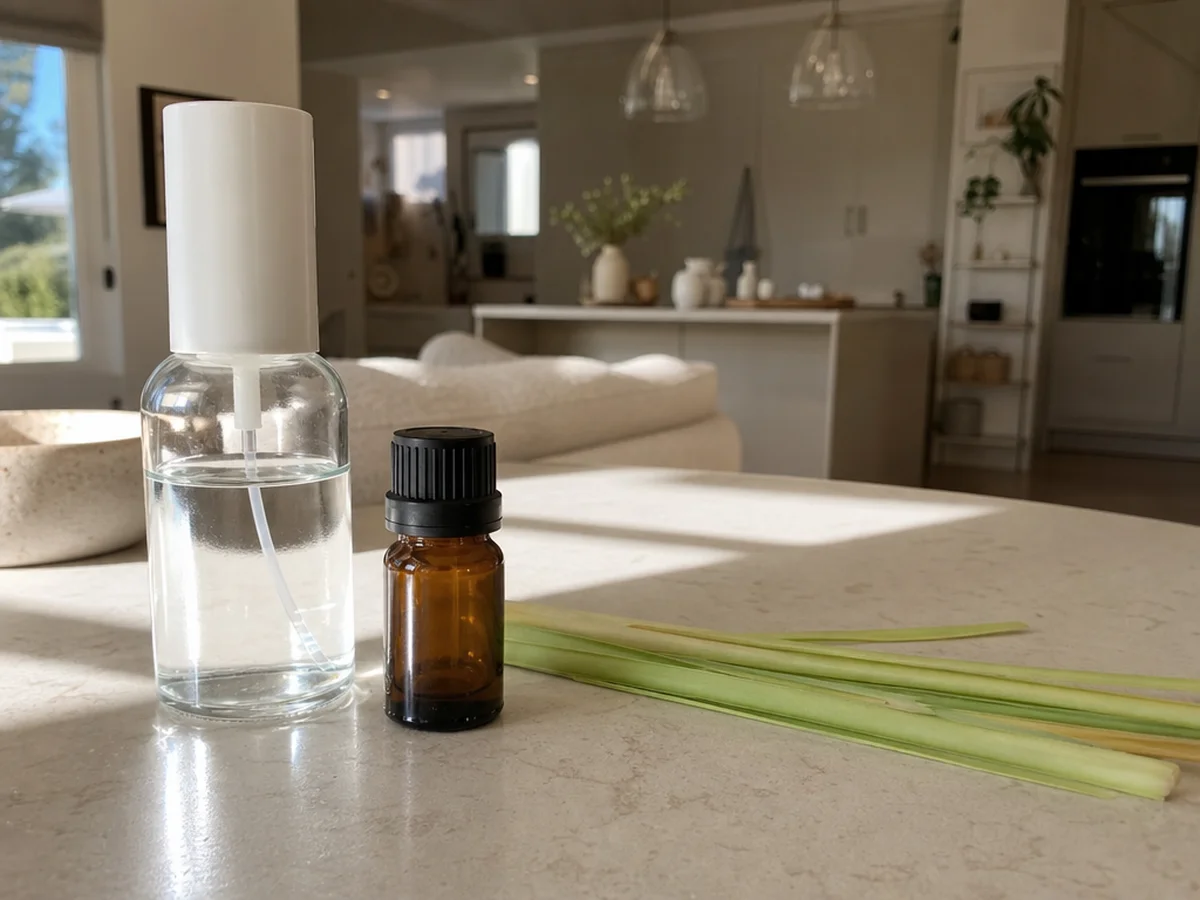
The batch on our published Certificate of Analysis has a relative density of 0.993, so 1.5 g of that vetiver is close to 1.5 ml. Weigh it rather than counting drops. Put the vetiver in a clean glass bottle first, add the lemongrass, then the alcohol, cap, and shake until the oil film on the glass disappears. Use a fine-mist spray head and expect to rinse it now and then, since a thick oil can slowly build up in the nozzle. Shake before each use.
We keep the vetiver at three times the lemongrass because vetiver is the foundation of the scent and lemongrass is the accent.
A word about lemongrass
Lemongrass smells like a lemon peel in a green field, and that scent comes from citral. The Plant Resources of South-East Asia entry for Cymbopogon flexuosus names citral as the main chemical constituent of the oil. Citral is also a recognised skin sensitiser: a 2008 toxicology paper by Lalko and Api worked out a human threshold for dermal sensitisation, and the IFRA index of standards lists citral as a restricted fragrance ingredient. That is why we keep the lemongrass small, and why we suggest spraying into the air rather than onto skin. If you react to lemon-scented products or have a known fragrance allergy, leave the lemongrass out. A vetiver and alcohol spray on its own is lovely and perfectly valid.
Using it sensibly
- Spray into the air, away from people, and not onto bare skin.
- Alcohol is flammable, so never spray near a flame, a candle or a hot cooker.
- Try a hidden corner of any fabric first. Alcohol and a deep brown oil can mark some finishes.
- Use brief sprays in a ventilated room rather than misting a small closed space.
Pets deserve a thought. The Merck Veterinary Manual notes that cats are especially sensitive to essential oils, that dogs are still at risk, and that birds are at high risk from fragrances and aerosolised particles. If you share your home with animals, ask your veterinarian before using any scented spray, and see our post on vetiver and pets.
Keeping it
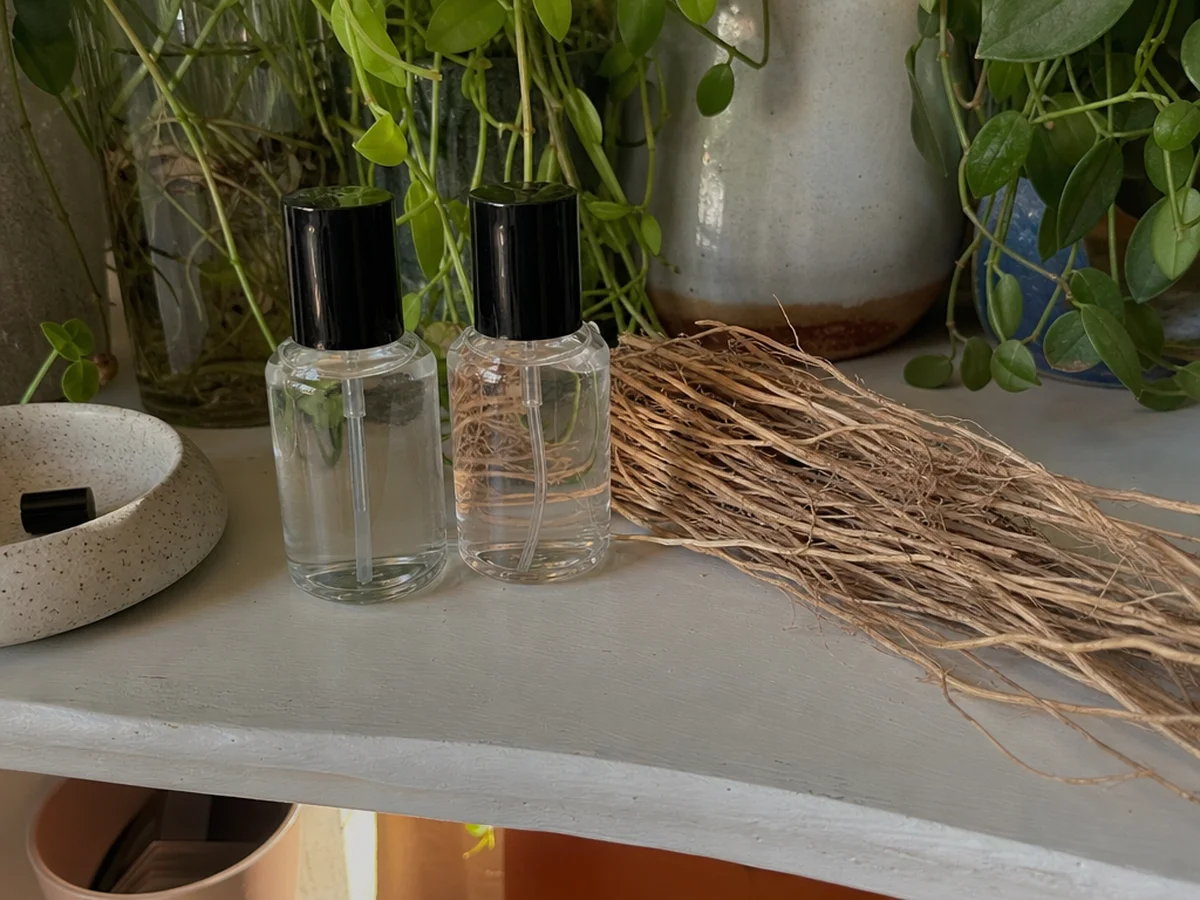
With no water in the bottle, the route the FDA describes stays closed as long as the bottle does. Do not top it up with water or pour it into a bottle that held a water-based product. Write the date on the label, and if it changes colour or smell, or you see anything floating in it, discard it. For the oil itself, our storage guide covers the neat bottle, and the same alcohol idea works for body use in our cologne post. To scent bedding, try the linen spray post.
Making it feel like yours
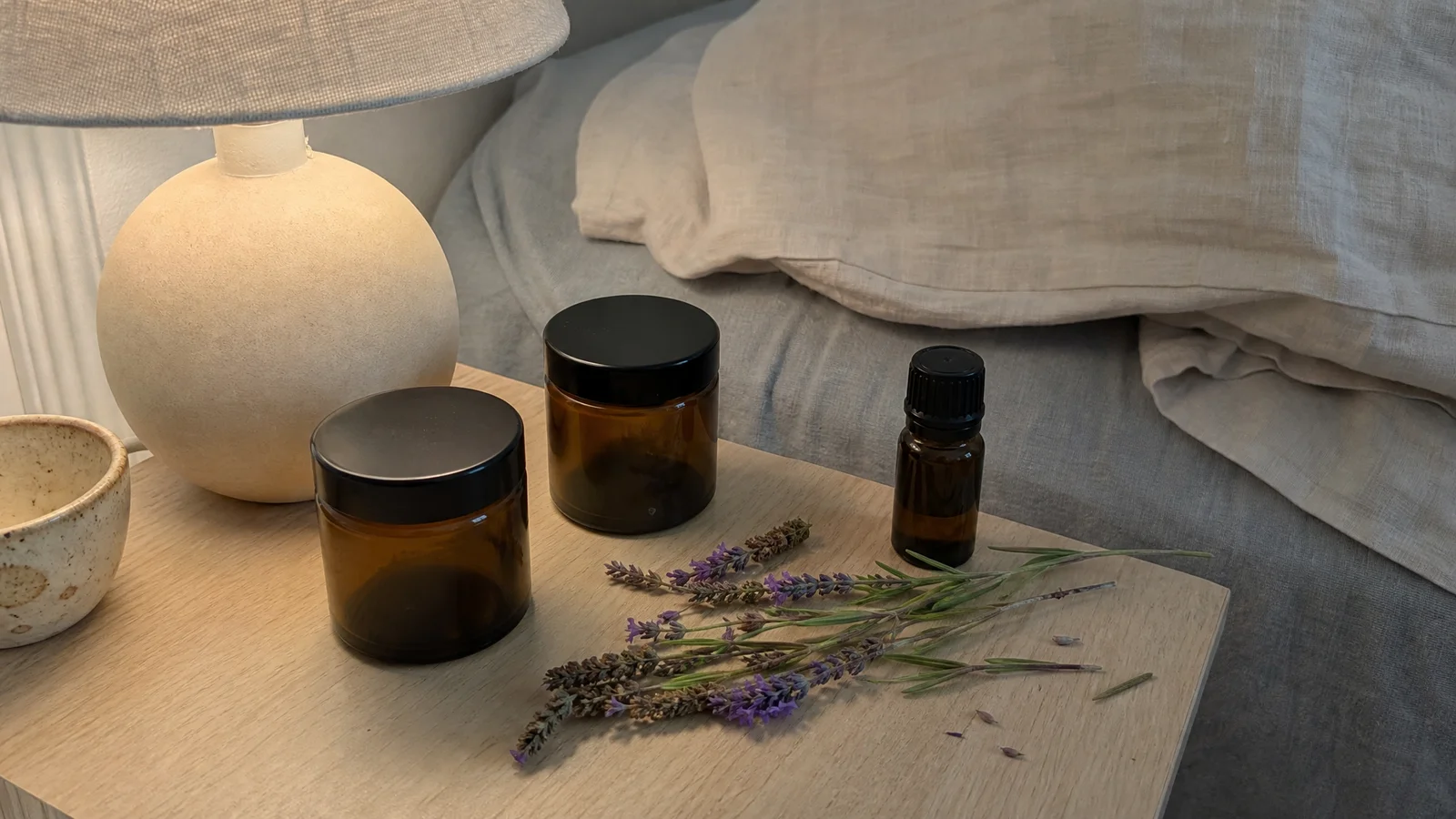
Part of the pleasure is the setup. Use a clean glass spray bottle, and amber or dark glass if you can find it, since light is no friend to a scent. Choose a label you like, write the date on it and note the percentages, and keep a small notebook so that next time you remember which blend you preferred. Smell the first few sprays in the air a metre or so away rather than right at the nozzle, because the character of the scent in the air is what you will live with.
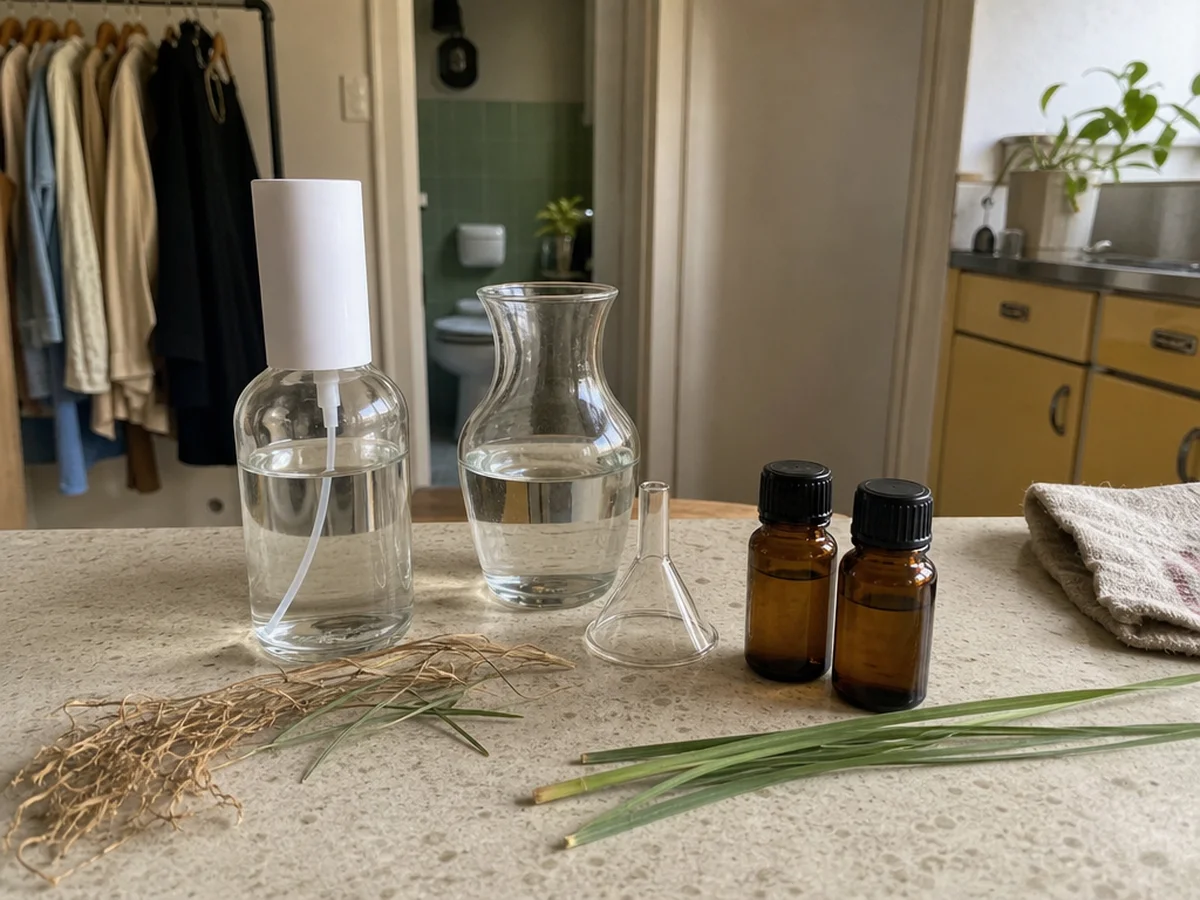
Think about where it will go. A hallway or entrance can take a little more than a bedroom, and a very small, closed room needs even less. Starting light and building up, a spray at a time, always works better than the reverse.
We sell the vetiver only, so alcohol, lemongrass oil and spray bottles come from a craft or perfumery supplier. If you want GC-MS or other lot results before blending, write to us through the contact page.
It is a small project with a big payoff: one bottle that makes a room smell like rain on a hillside, mixed on a kitchen scale in ten minutes.
Vetiver Essential Oil
Vetiver Essential Oil from our own shop, in sizes from 0.5 oz to bulk.
From $20.99
Shop Now →Sources & Further Reading
- CDC: CDC Identifies Rare Bacteria in Aromatherapy Product
- FDA: Microbiological Safety and Cosmetics
- Cymbopogon flexuosus (PROSEA) - Pl@ntUse
- Lalko J, Api AM, 2008: Citral: identifying a threshold for induction of dermal sensitization
- IFRA: Index of IFRA Standards - 51st Amendment
- Merck Veterinary Manual: Toxicoses From Essential Oils in Animals