Vetiver and Chamomile Massage Oil: A Simple Recipe
A massage oil is really just a carrier oil with a little fragrance in it. The carrier gives your hands glide; the essential oils decide what the room smells like. Vetiver is a wonderful fragrance for that job, with its deep, earthy, smoky-sweet character, and a touch of chamomile adds a soft, apple-like note on top. This is how we would put one together, by weight, so you can repeat it exactly.
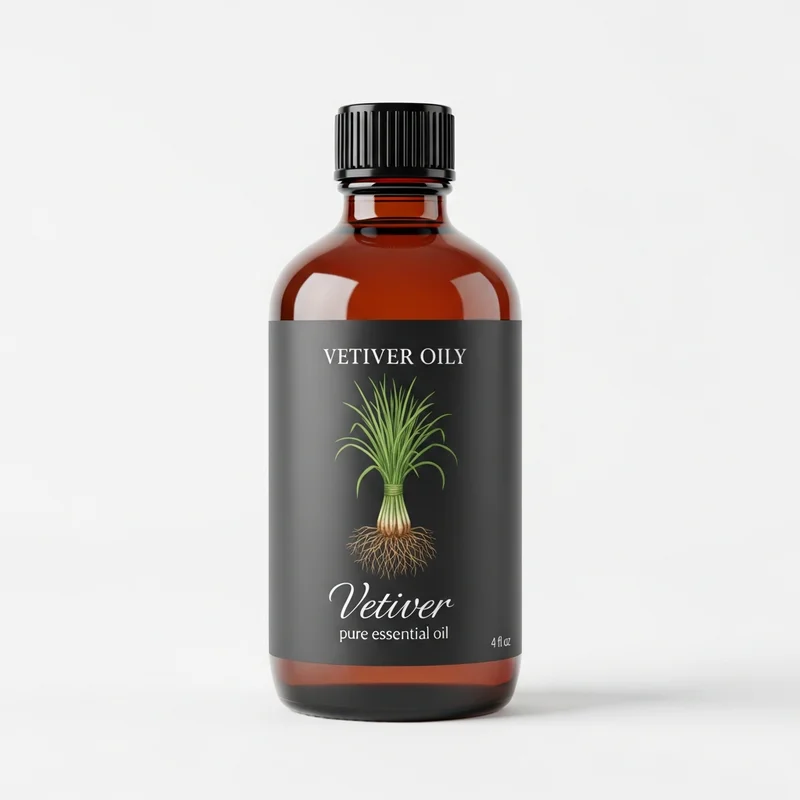
Vetiver Essential Oil
Our own Vetiver Essential Oil, in sizes from 0.5 oz to bulk.
From $20.99
Shop Now →What the oil is for
We would build this recipe around scent and the pleasure of an unhurried rub, and leave it there. We sell vetiver as an external, cosmetic-use oil, and nothing here makes a claim about muscles, nerves or anything else in the body. For context, the National Center for Complementary and Integrative Health says it does not know whether aromatherapy helps with insomnia because little rigorous research has been done (NCCIH, Aromatherapy). A fragrance you love is reason enough.
Choosing the strength
Our dilution guidance for vetiver is 0.5% to 2% in a carrier oil, with a patch test first. Robert Tisserand's general ranges are 1% to 3% for body oils and lotions, 0.5% to 1.2% for facial products and deodorants, and 0.2% to 1% for sensitive or impaired skin (Tisserand Institute, Dilution for essential oils). Those figures cover essential oils as a group, not vetiver specifically.
We chose 1.5% total essential oil for this recipe because it keeps both oils comfortably inside the body range, and because two fragrances on the same skin add up. Whole-body, repeated use is a good place to be conservative. If you would rather keep things simpler, drop the chamomile and make it a 1% vetiver oil.
The recipe
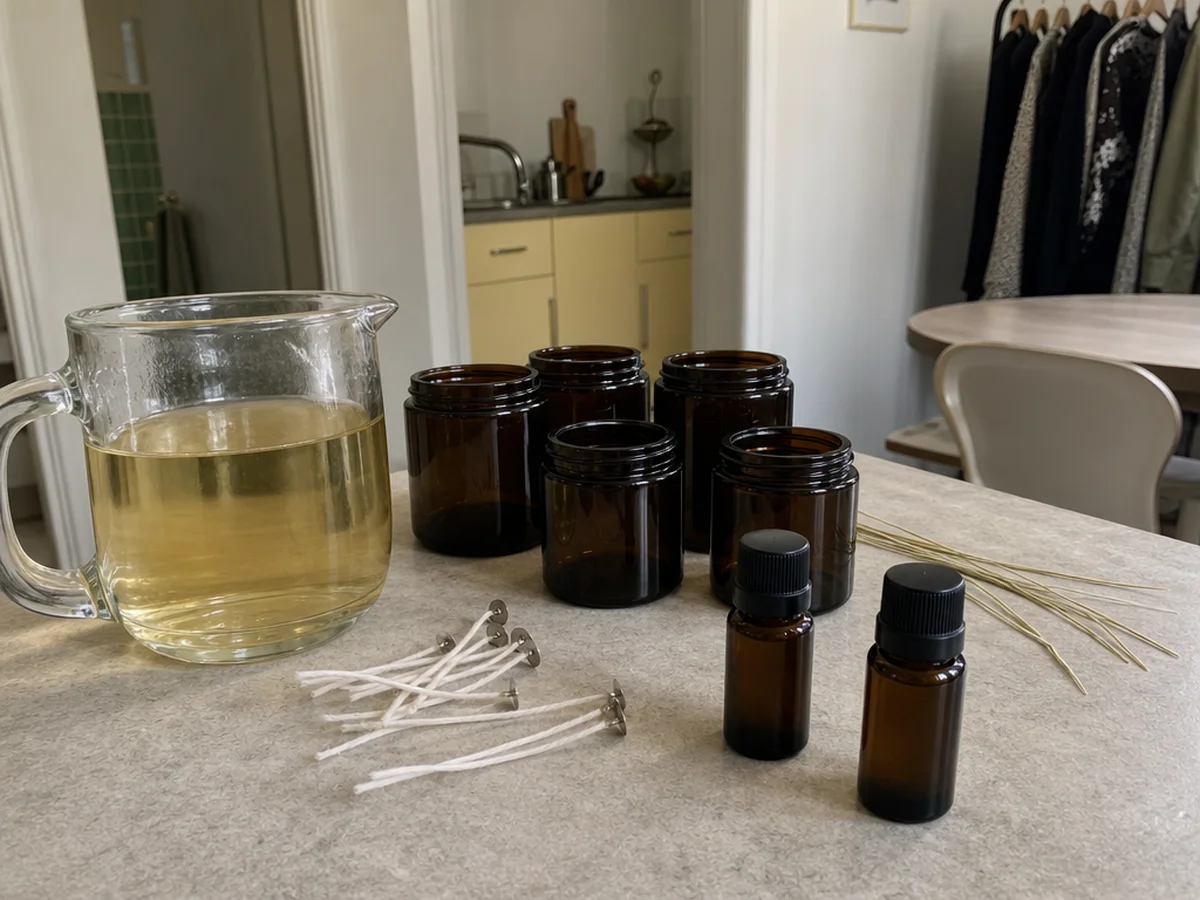
This is a formulation worked out from the guidance above and simple arithmetic. Weigh everything; drops are unreliable for a thick oil like vetiver.
| Ingredient | Grams | Share of 100 g |
|---|---|---|
| Carrier oil (one oil, or a blend of two) | 98.5 g | 98.5% |
| Vetiver essential oil | 1.0 g | 1.0% |
| Roman chamomile essential oil (optional) | 0.5 g | 0.5% |
Without chamomile, use 99.0 g carrier and 1.0 g vetiver. The batch on our Certificate of Analysis has a relative density of 0.993 at 20 C, so 1.0 g of it is close to 1.0 ml. By the rough convention of 20 drops per milliliter that is about 20 drops, though a thick oil makes larger drops, so expect fewer.
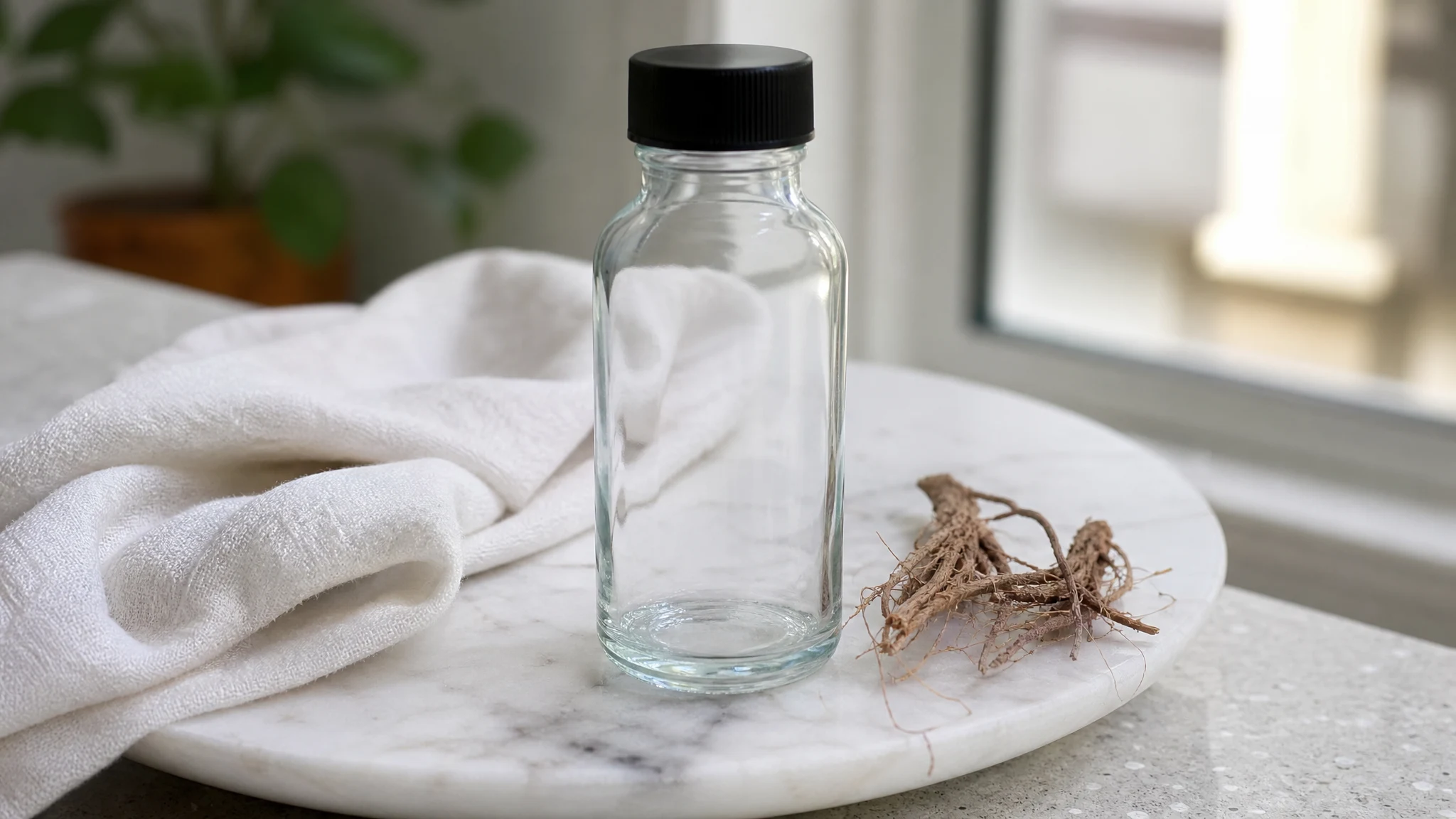
- Weigh the carrier into a clean, dry glass bottle. Amber or cobalt glass keeps light off the oil.
- Weigh in the vetiver. It is slow-pouring, so warm the closed bottle in your hand for a minute and give it time to drain onto the scale.
- Add the chamomile if you are using it, cap, and shake for about 30 seconds.
- Label the bottle with the date and the percentage. It saves guesswork next month.
The carrier matters more than most recipes admit, and we sell none of them. Our carrier oil guide explains how to choose one, and a carrier supplier that prints a best-by date is a good place to buy.
What you will smell
The first thing you will notice when you open the finished bottle is the earthy, smoky-sweet depth of vetiver, and then the soft apple-like top of chamomile if you included it. At this low percentage the scent is gentle rather than loud, so do not be surprised if it seems quiet at first. Give your nose a minute and it will find the detail.
About the chamomile
Chamomile is the one ingredient here with a clear allergy note. The NCCIH reports that people are more likely to react to chamomile if they are allergic to related plants such as ragweed, chrysanthemums, marigolds or daisies (NCCIH, Chamomile: Usefulness and Safety). That page covers chamomile as an herb and does not discuss essential oils, so we use it as a pointer rather than a rule. If you react to those plants, leave the chamomile out and ask an allergist.
It also helps to know that fragrance allergy is not rare with essential oils generally. One review counts nearly 80 oils that have caused contact allergy, notes that most reactions come from undiluted oils or high-concentration products, and mentions that professionals who give massages can develop occupational contact dermatitis (de Groot AC, Schmidt E, Essential Oils, Part IV: Contact Allergy. Dermatitis 2016). Dilution and moderation are your friends here.
Making the rub itself a pleasure
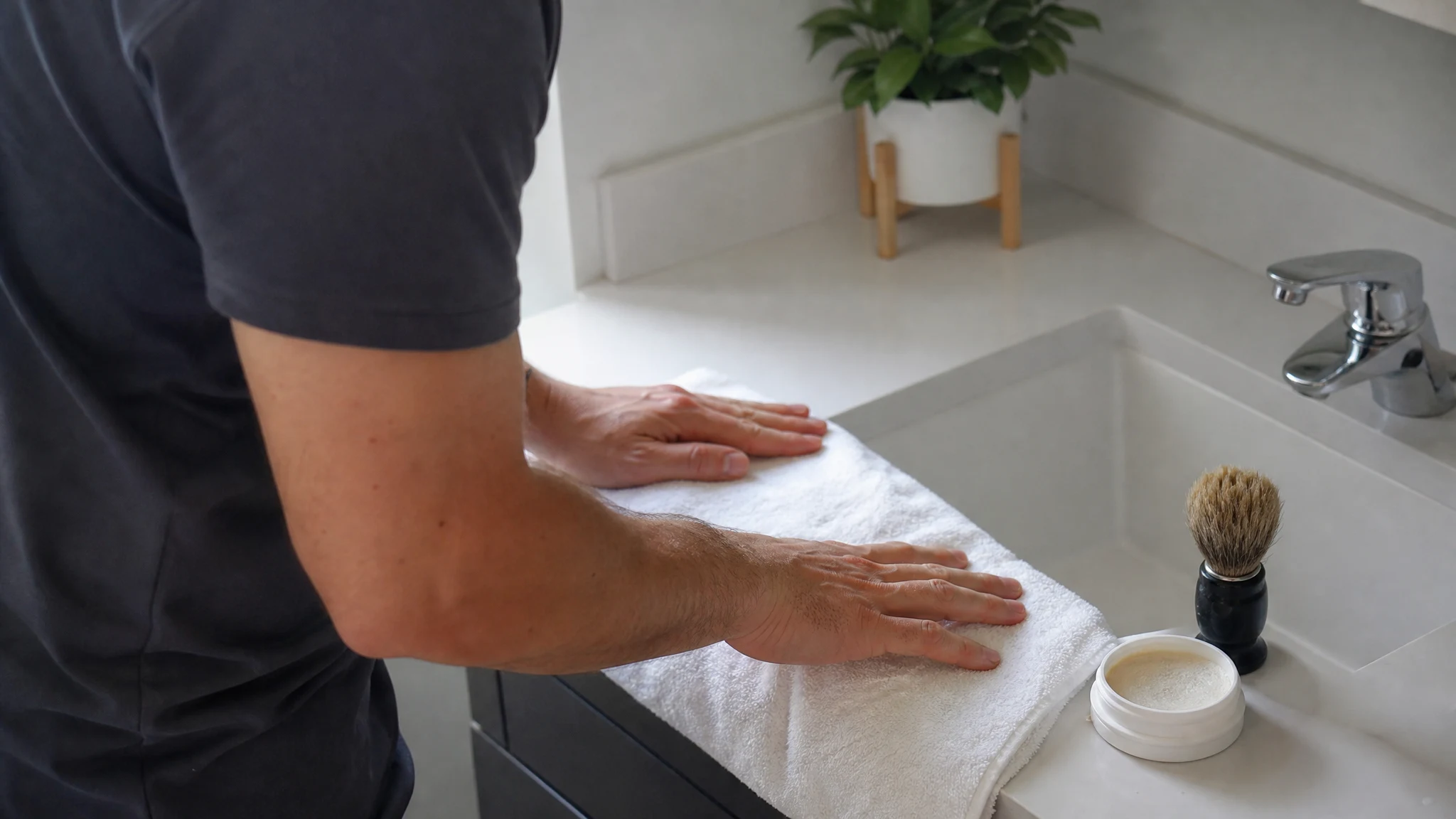
Warm the bottle in your hands so the oil feels pleasant going on, and warm your palms before they touch skin. Use slow, even strokes and enough oil to glide without pooling. Keep a towel under the person being massaged, because a dark scented oil can leave a mark on sheets and light fabric.
Patch test, then enjoy
Put a little of the finished oil on the inner forearm and check it at the time you would normally wash it, then again the next day. Stop at any redness, itching or swelling. If you have eczema, broken skin or a history of fragrance reactions, check with a dermatologist first. Pregnant or nursing readers, and parents thinking of using it on a child, should ask an OB/GYN, midwife or pediatrician; our post on children covers what the guidance says.
The vetiver bottle keeps for years in a cool, dark place, but a blend lasts only as long as its carrier, so make small batches and smell the oil before each use. Our storage post has more. If you want to see how a different second oil changes the character, our vetiver and lavender balm is the natural next experiment.
Start with the one-oil version at 1% and add chamomile once you know you like it. That way, if your skin ever objects, you know exactly which ingredient to blame.
Vetiver Essential Oil
Vetiver Essential Oil from our own shop, in sizes from 0.5 oz to bulk.
From $20.99
Shop Now →