Vetiver After-Shave Balm Recipe, Made by Weight
There is something very appealing about a vetiver after-shave: an earthy, smoky-sweet scent that sits quietly on the skin instead of announcing itself. A balm is a good way to wear it, because the carrier oil and butter hold the aroma close and give it a slow, even release. Here is a simple formula, worked out in grams, with the thinking behind it.
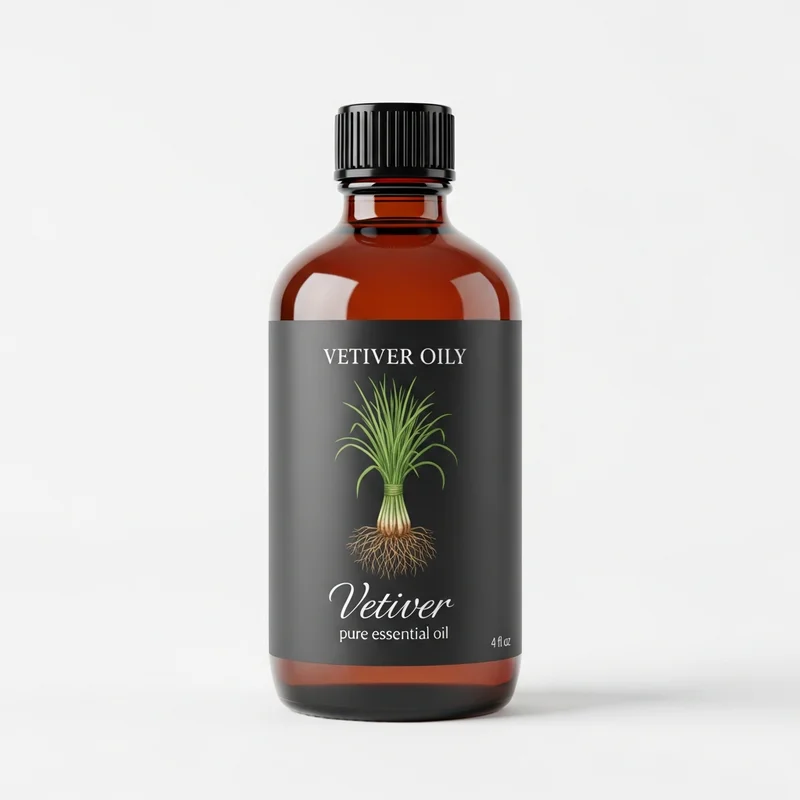
Vetiver Essential Oil
Our own Vetiver Essential Oil, in sizes from 0.5 oz to bulk.
From $20.99
Shop Now →Start with the shave
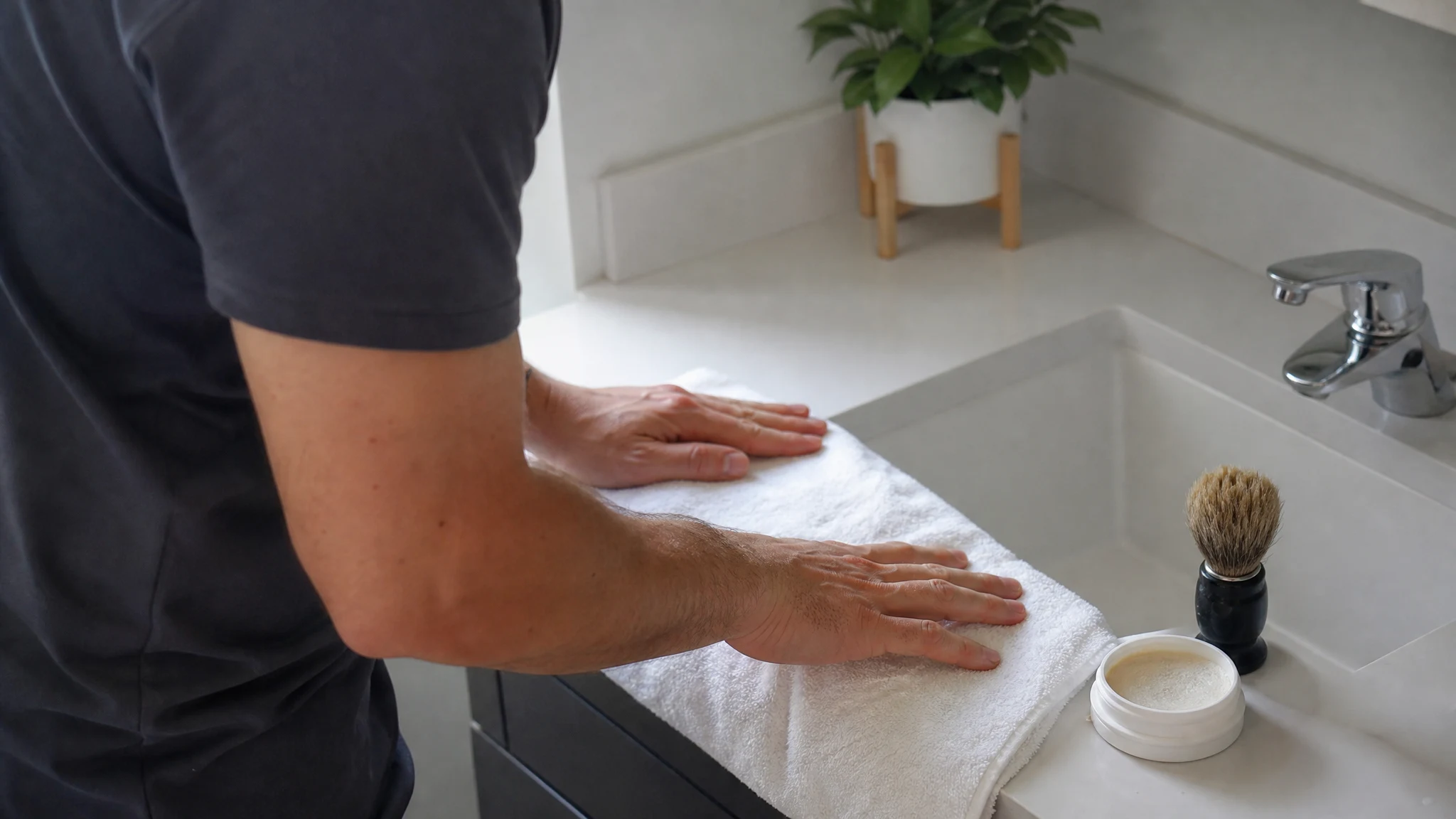
A balm is the last step, and the steps before it do most of the work. The American Academy of Dermatology's advice on razor bumps is to wash with a cleanser that will not clog pores, use a moisturizing shaving cream, shave in the direction the hair grows, soften the hair first with a warm shower or damp cloth, and replace a disposable razor after 5 to 7 shaves. It finishes with a soothing after-shave formulated for the purpose, and says that if you still get razor bumps after changing your habits, a board-certified dermatologist is the person to see.
So we think of this balm as a scent choice on a plain, gentle base. If your skin is red, stinging, cut or rashy after shaving, leave the essential oil out and use the base alone. If you have reacted to scented products before, ask a dermatologist about patch testing first. Fragrance is the one ingredient you can drop from a balm without losing its point, and we would rather you did than risk an unhappy face.
Why a low dose
Our guidance for vetiver oil is to dilute to 0.5% to 2% in a carrier and patch test first. The Tisserand Institute's general table gives 0.5% to 1.2% for the face and sensitive areas and 0.2% to 1% for reaction-prone skin. Freshly shaved skin has just met a blade, so we sit at the bottom of our range: 0.5% by weight. It is enough for a pleasant scent on a product you might use daily.
The wider allergy research adds a reason to stay modest. A 2016 review found nearly 80 essential oils have caused contact allergy, with most reactions coming from undiluted oils or high-concentration products. Vetiver was not among the nine oils that gave more than 2% positive patch tests, but vetiver-specific data are thin, so the sensible rule is to keep the concentration low.
The formula
This is a formulation built from the guidance above and basic arithmetic, for a 100 g batch.
| Ingredient | Grams | Percent |
|---|---|---|
| Liquid carrier oil of your choice | 54.5 | 54.5% |
| Shea butter | 30 | 30% |
| Beeswax | 15 | 15% |
| Vetiver essential oil | 0.5 | 0.5% |
Weigh everything. The batch on our Certificate of Analysis had a relative density of 0.993 at 20 C, so 0.5 g of that oil is about half a milliliter. By the usual convention of about 20 drops per milliliter that is around 10 drops, but vetiver is thick and its drops are larger, and the Tisserand Institute notes that drop conversions are always approximate. A scale that reads to 0.01 g takes the guesswork out, which is why this recipe is in grams. We do not sell carrier oils, shea butter or beeswax, so look for them at a craft supply shop or a good grocery; our carrier oil guide can help you pick one.
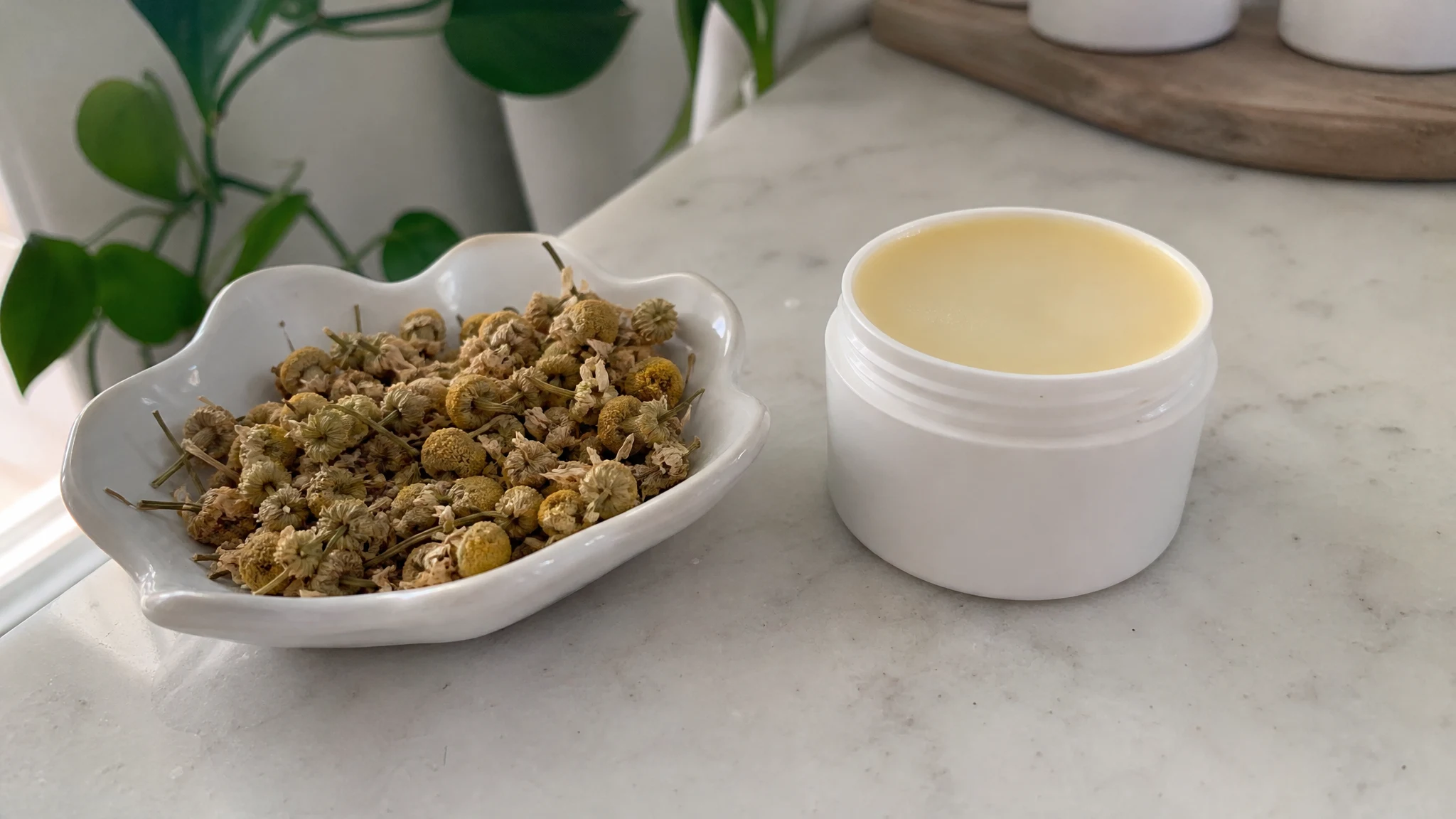
As a rule of thumb, the beeswax gives the balm its firmness and the shea gives it glide. If it is too hard to scoop, reduce the wax by a gram or two next time; if it slumps in a warm bathroom, add a little.
If the first batch smells stronger than you like once it has set, do not try to fix it by adding more wax or oil. Make a new small batch with a little less vetiver and note the weight. Fragrance can seem stronger while the balm is warm and liquid than it does after it has set, so judge it the next day.
Method
- Melt the beeswax, shea and carrier oil together in a heat-safe jug set in a pot of simmering water, stirring until clear.
- Take it off the heat and let it cool until pourable but no longer steaming, so less of the aroma evaporates.
- Stir in the vetiver oil (warming the bottle first helps it flow), pour into a clean tin or jar, and leave it to set.
- Label it with the date, and use a clean spatula or clean fingers each time.
We keep this balm water-free on purpose. The FDA advises against adding water to cosmetic products because it waters down the preservatives meant to keep microorganisms from growing, and it lists dipping fingers into a product as a way contamination happens. A water-based lotion needs a proper preservative system, which is a job for a cosmetic chemist.
Making it feel like yours
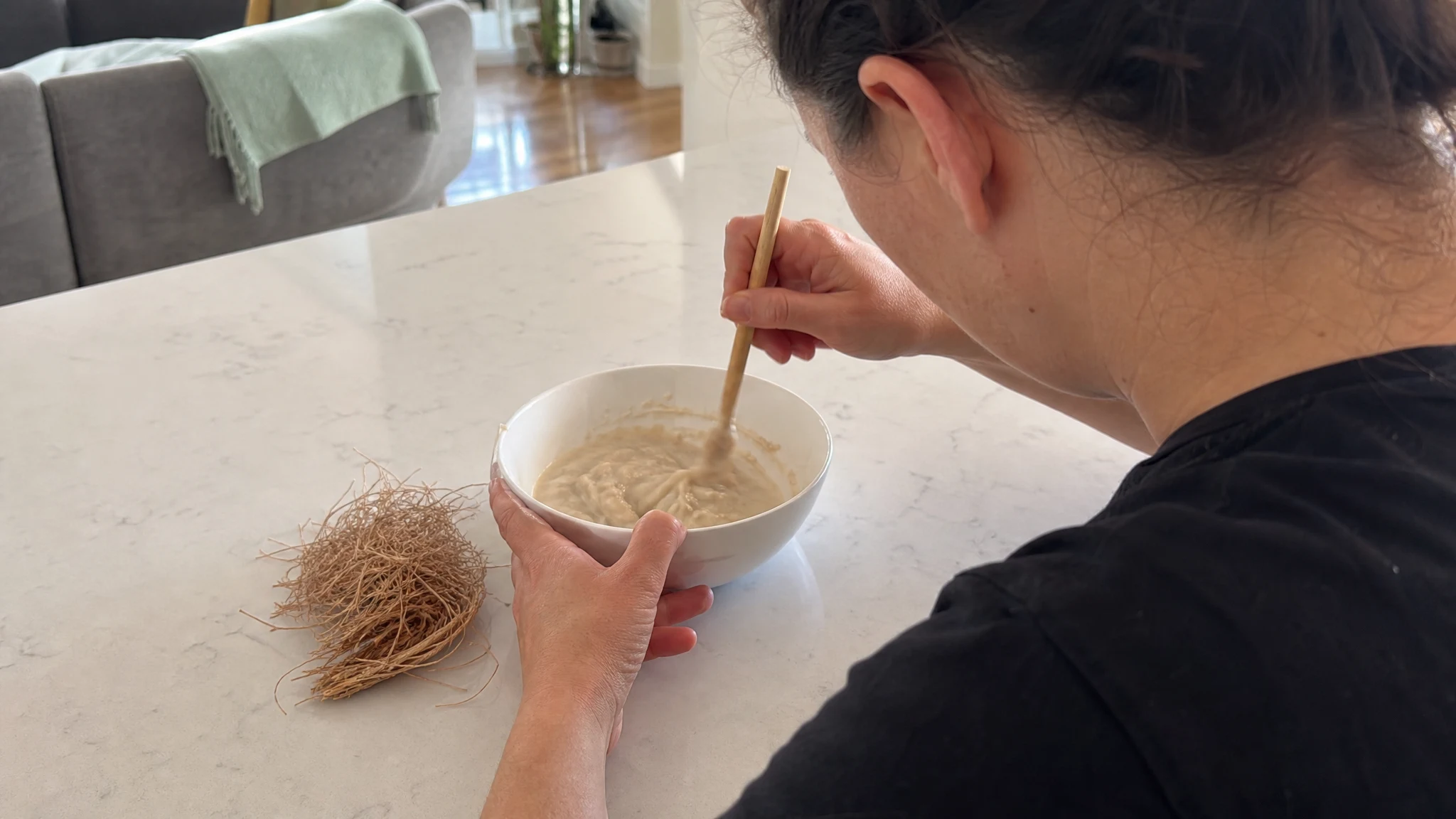
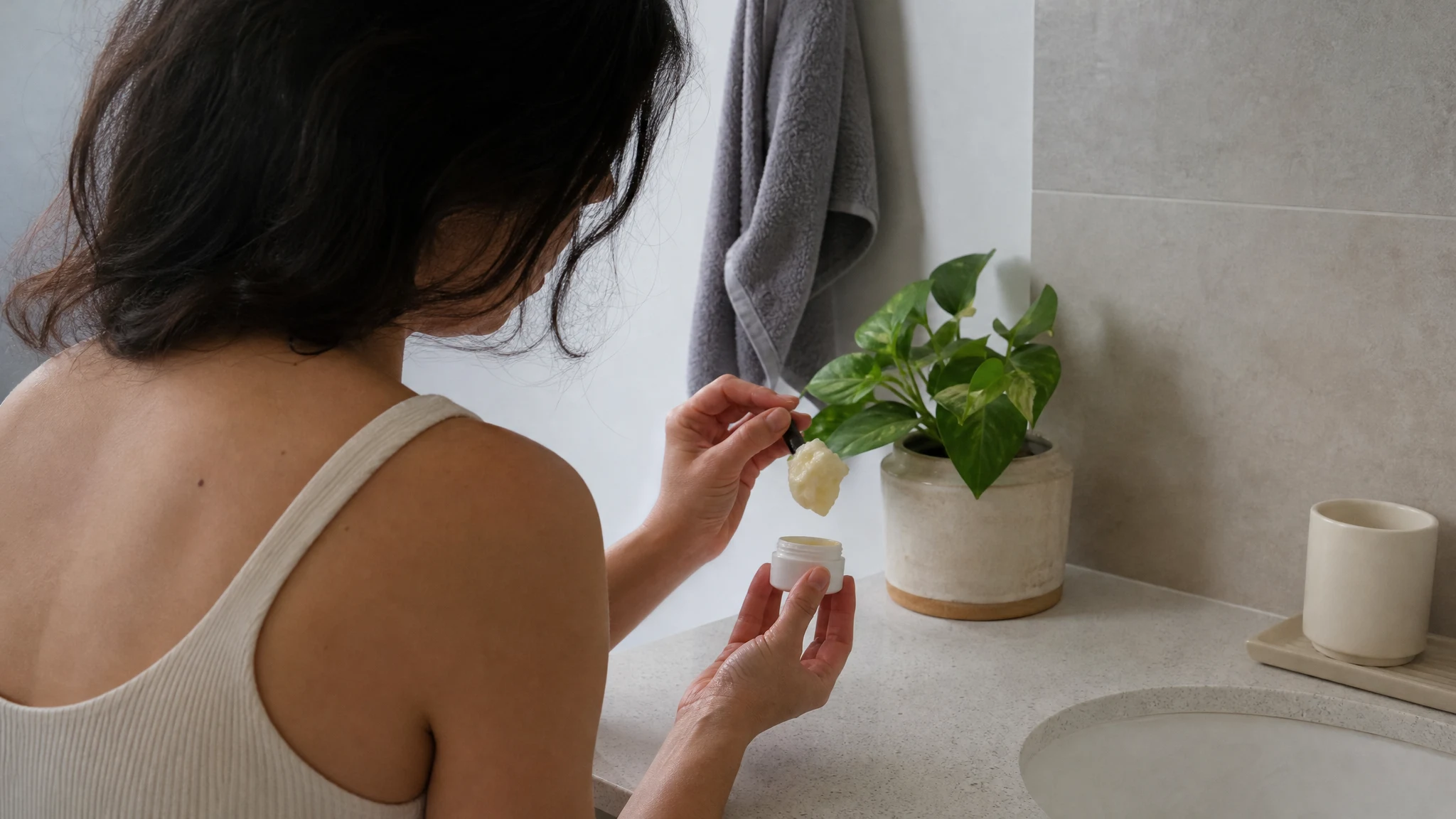
A balm is a quiet product, so small details matter. Choose a tin that is easy to open with damp fingers, keep it by the sink where you will see it, and scoop with a clean spatula rather than your fingers when you can. As you stir the oil in, you will notice the deep, earthy scent of vetiver rise from the jug before it settles into the wax. It is a nice moment, and a good time to decide whether you want a touch more or less next time.
Patch test and use
Dab a little on the inner forearm and wait a day. Keep the balm off cuts and broken skin and away from the eyes, and stop if anything stings or reddens. Vetiver oil has a deep amber to brown color that can tint light fabric, so wipe your hands before reaching for a white collar.
For more on handling the oil, see our safety and dilution guide and vetiver for men.
Vetiver Essential Oil
Vetiver Essential Oil from our own shop, in sizes from 0.5 oz to bulk.
From $20.99
Shop Now →