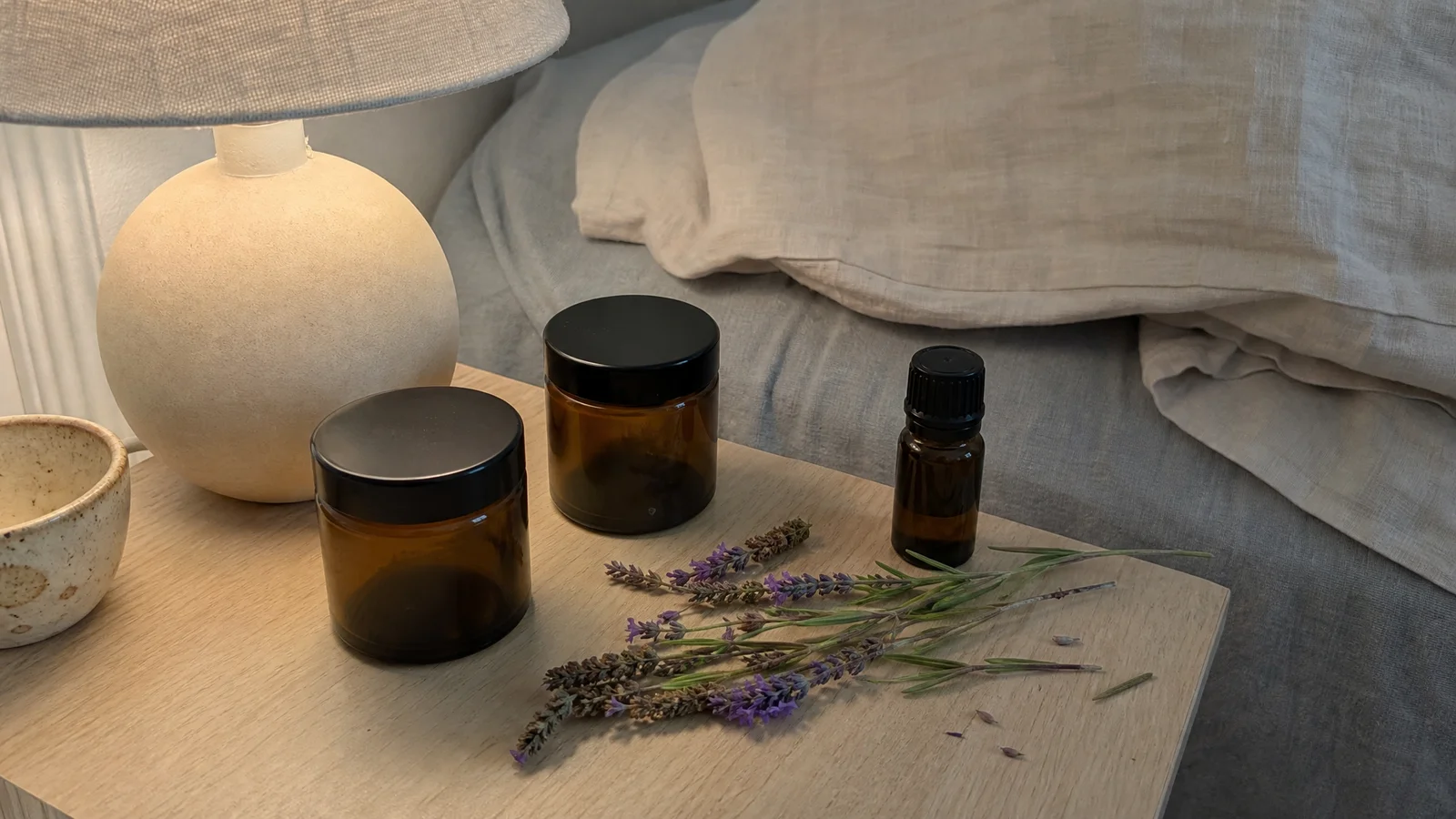
Vetiver and Lavender Balm: A Simple Recipe by Weight
There is something satisfying about a small tin you open at the end of the day: a waxy, smooth balm that smells of dark earth and soft lavender. That ritual is the point of this recipe. We will give you the formula by weight, then be straight about the science, because the studies on bedtime scents are more interesting, and a lot less tidy, than the marketing suggests.
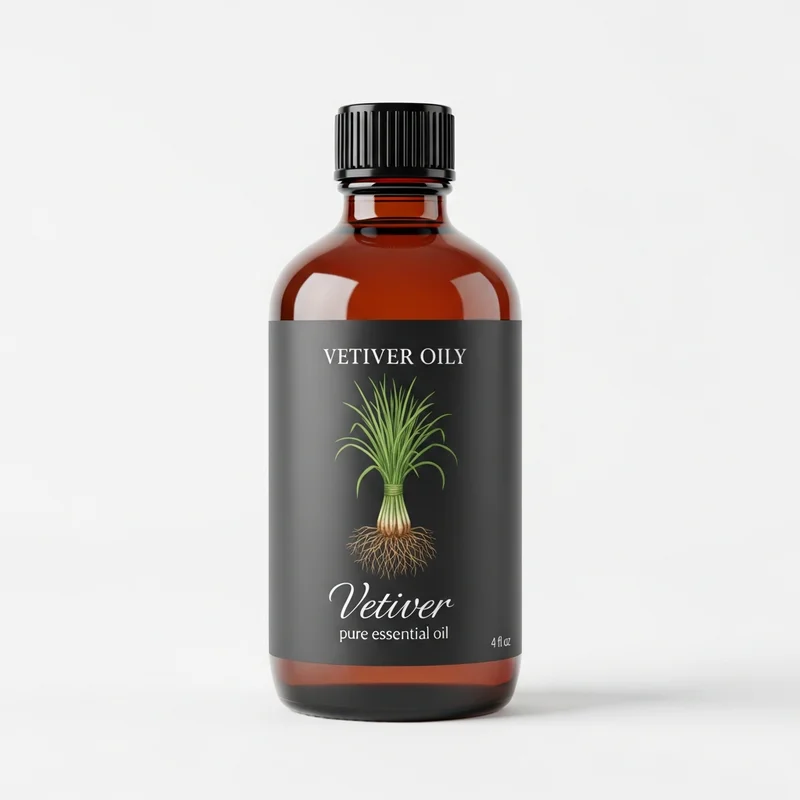
Vetiver Essential Oil
Our own Vetiver Essential Oil, in sizes from 0.5 oz to bulk.
From $20.99
Shop Now →What studies on vetiver and sleep tested
None of them tested a balm. The animal work on vetiver actually points in an unexpected direction: in adult male Wistar rats, inhaling vetiver oil increased total waking time and reduced slow-wave sleep, which the authors read as a refreshing effect (Cheaha D et al., Modification of sleep-waking and electroencephalogram induced by vetiver essential oil inhalation. J Intercult Ethnopharmacol 2016).
The human trial is a 2026 randomised, single-blind study of intensive care nurses in Türkiye. Groups of 36 received a bedtime aromatherapy massage for four weeks, with a chamomile-lavender blend, with vetiver oil, or with a jojoba placebo. Fatigue scores fell in all three groups, including the placebo massage, and the authors themselves call for larger, double-blind studies using objective sleep measures (Burkev FG et al., The Effect of Aromatherapy on Fatigue and Sleep Quality in Intensive Care Nurses: A Randomised Placebo-Controlled Trial. Nurs Crit Care 2026). That fits what the National Center for Complementary and Integrative Health says about aromatherapy and insomnia: it is not known whether it helps, because little rigorous research has been done (NCCIH, Aromatherapy).
Our reading is this. A calm, repeatable bedtime routine with a scent in it seems to go along with people feeling better, and the plain jojoba massage did too. So the ritual may do much of the work, and the best advice we can give is to choose one you will actually repeat. If you have trouble sleeping most nights, that is a conversation for a physician, not a balm. We sell an external, cosmetic-use oil, nothing more.
The formula
This is a formulation worked out from the guidance cited here and simple arithmetic. We sell only the vetiver; wax, carrier and lavender come from a supplier of your choice.
| Ingredient | Grams (per 100 g) |
|---|---|
| Beeswax | 20 |
| Liquid carrier oil (jojoba, sweet almond or similar) | 78 |
| Vetiver essential oil | 1 |
| Lavender (Lavandula angustifolia) essential oil | 1 |
Twenty grams of wax to 78 grams of oil makes a balm that is firm enough to hold its shape in a tin yet soft enough to scoop. If your room runs warm, nudge the wax up a little; if you want something softer, nudge it down.
Why 2% total
Tisserand's general ranges are 1% to 3% for body oils and lotions, 0.5% to 1.2% for facial products, and 0.2% to 1% for sensitive or impaired skin (Tisserand Institute, Dilution for essential oils). Our own guidance for vetiver is 0.5% to 2% in a carrier oil with a patch test first. At 1% vetiver and 1% lavender, vetiver sits inside our range and the total sits inside the body range. For anything near the face or throat, or on skin that reacts easily, halve the essential oils to 0.5 g each.
Weigh, do not count
Vetiver is thick and slow-pouring, and the batch on our Certificate of Analysis has a relative density of 0.993 at 20 C, so a gram is close to a milliliter. The common convention of about 20 drops per milliliter runs high for a thick oil. A scale that reads to 0.01 g takes the guesswork out.
Method
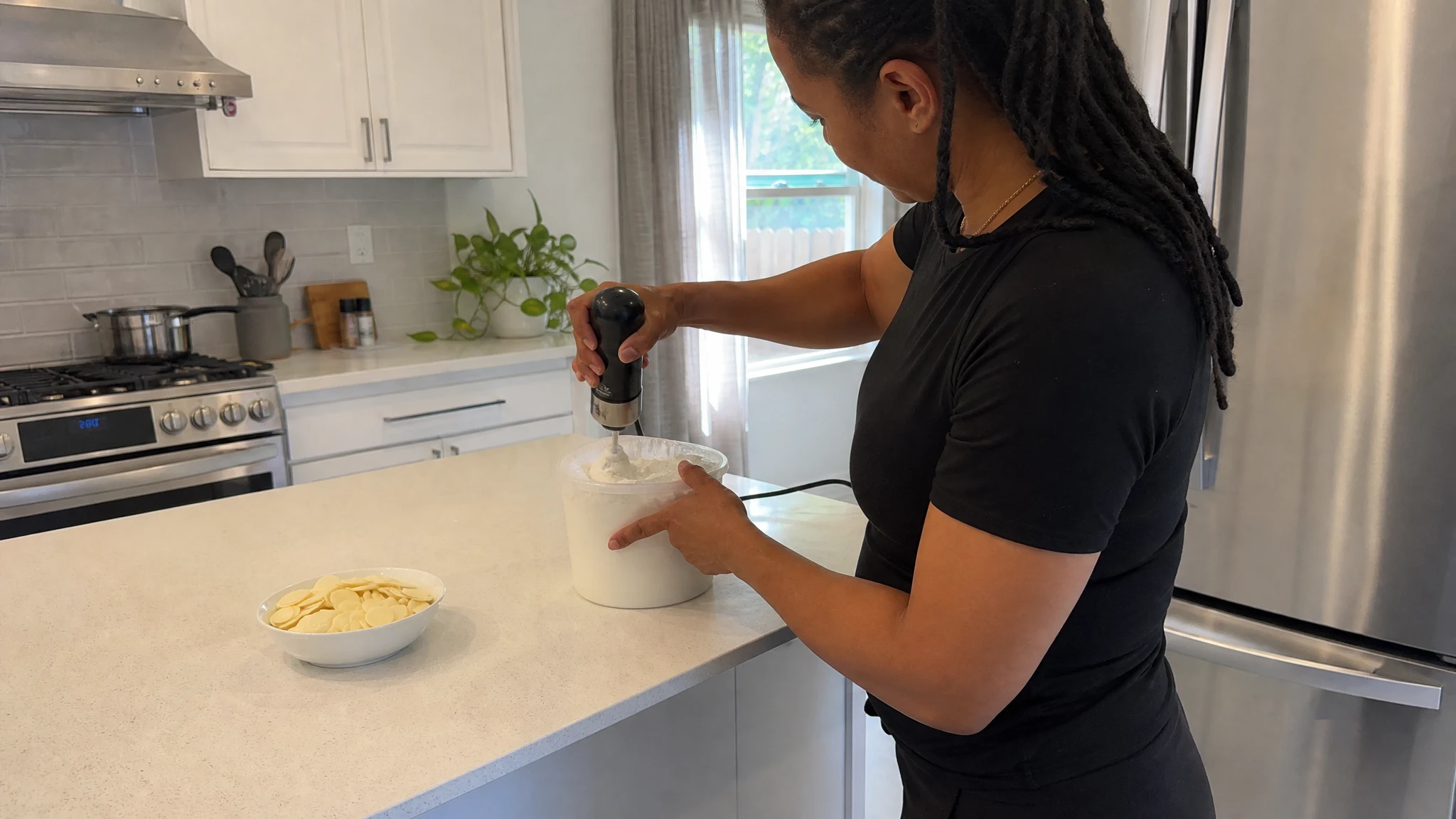
- Weigh the wax and carrier oil into a heat-safe jar and warm it gently in a water bath until the wax has melted completely.
- Take it off the heat and let it cool until it is still liquid but no longer hot to hold. A cooler base keeps more of the aroma.
- Stir in the vetiver and lavender, pour into clean, dry tins and leave undisturbed until set.
Because the balm contains no water, it stays simple to keep; use clean fingers or a dry spoon, keep the lid on, and keep the tin out of bathroom steam.
What the finished balm is like
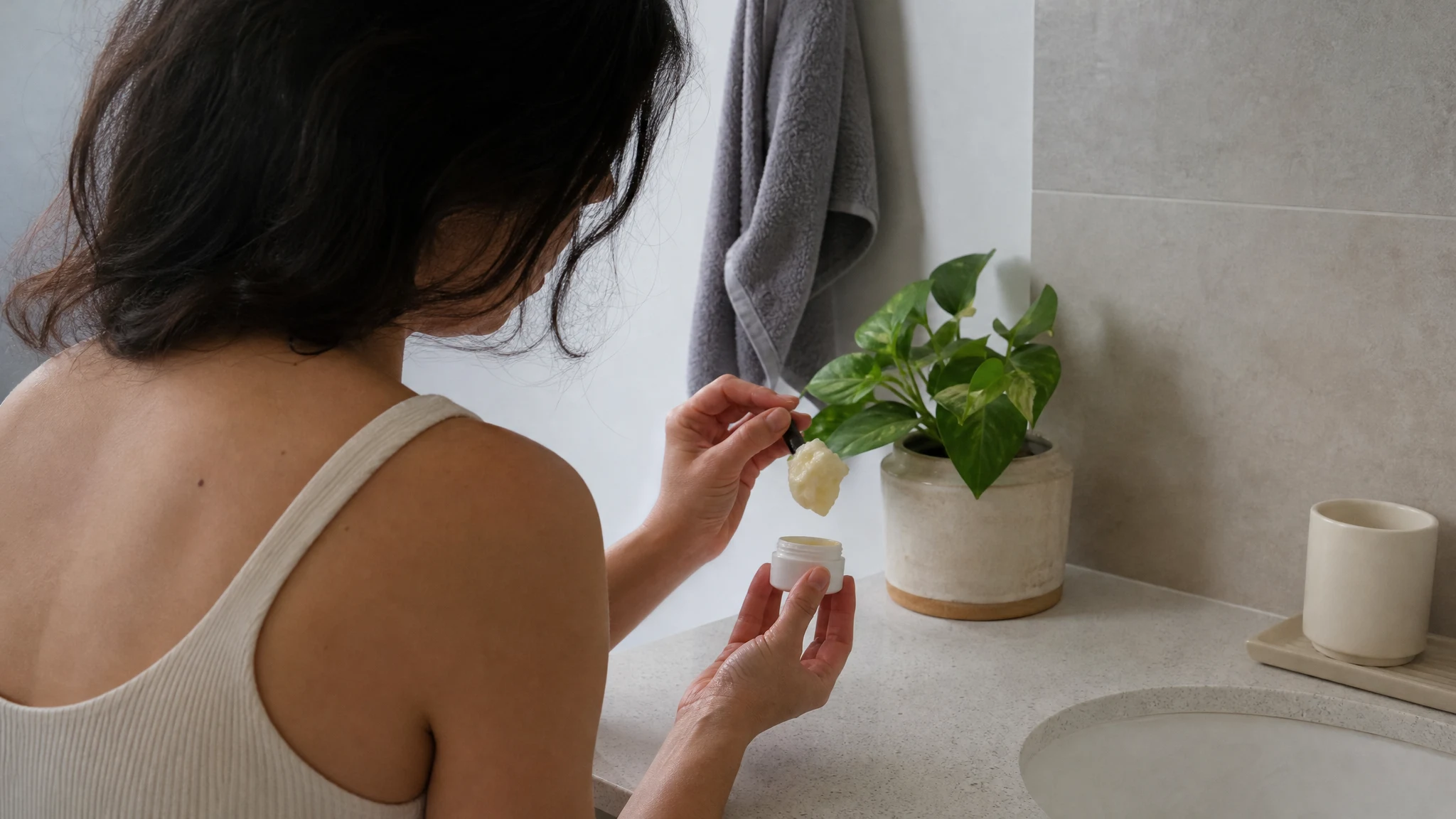
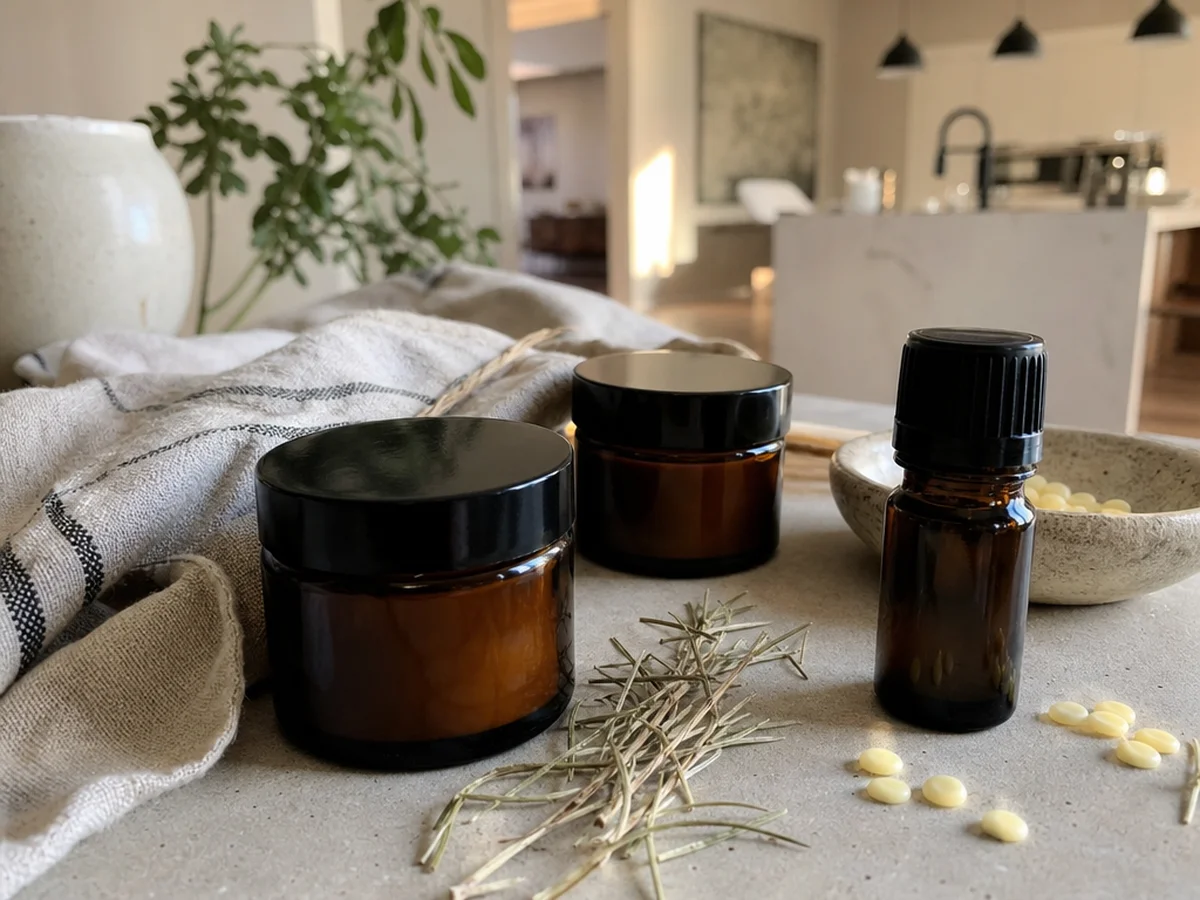
When it sets, the balm should feel smooth and a little waxy, softening as it warms on your fingertips. Open the tin and you will smell lavender first, bright and herbal, and then the deep, earthy, smoky-sweet vetiver underneath. Vetiver is a base note, so it is the part that lingers. If you would like the lavender to lead, keep the weights as given and let the balm sit for a day, since the scents settle and blend as it cools completely.
Tins and little habits
Small tins are easier to keep clean than big jars. Wash and fully dry them before you pour. Use a clean fingertip or a small spoon, and wipe the rim before closing the lid. If you give a tin to a friend, write the ingredients and the percentage on the lid so they know exactly what is in it.
Who should skip it
Ask a pediatrician before using any lavender product on a child, and keep this off young children. Pregnant or nursing readers, and anyone taking medicine, should ask an OB/GYN, midwife or pharmacist. If you have reacted to fragrance before, ask a dermatologist. Patch test the finished balm on the inner forearm for a day before you use it more widely, and stop if the skin reddens or itches. Our post on children covers the wider picture.
If you enjoy this one, our sleep evidence post reads the studies in more detail, and the chamomile massage oil uses a different second note.
Light the lamp low, open the tin, and let the scent mark the end of the day. A good ritual does not need a promise attached to it.
Vetiver Essential Oil
Vetiver Essential Oil from our own shop, in sizes from 0.5 oz to bulk.
From $20.99
Shop Now →Sources & Further Reading
- Cheaha D et al., Modification of sleep-waking and electroencephalogram induced by vetiver essential oil inhalation. J Intercult Ethnopharmacol 2016
- Burkev FG et al., The Effect of Aromatherapy on Fatigue and Sleep Quality in Intensive Care Nurses: A Randomised Placebo-Controlled Trial. Nurs Crit Care 2026
- NCCIH, Aromatherapy
- Tisserand Institute, Dilution for essential oils