Vetiver Hair Oil Mask: A Coconut Oil Recipe by Weight
Hair oil masks have a lovely ritual to them: warm oil, a quiet half hour, and hair that feels smooth afterwards. In this one the carrier does the conditioning and vetiver brings the aroma, a deep, earthy, smoky-sweet note that makes the whole thing feel like a treat. Here is a simple recipe and the reasoning behind it.
Vetiver Essential Oil
Our own Vetiver Essential Oil, in sizes from 0.5 oz to bulk.
From $20.99
Shop Now →Why coconut oil is the base
The study that stands out on oils and hair compared mineral oil, sunflower oil and coconut oil on hair tresses, applied before or after washing. Of the three, coconut oil was the only one that reduced protein loss, for both undamaged and damaged hair. The authors explain that coconut oil is a triglyceride of lauric acid, with a low molecular weight and straight chain that let it penetrate the hair shaft, while sunflower oil's bulkier structure and mineral oil's hydrocarbon make-up do not.
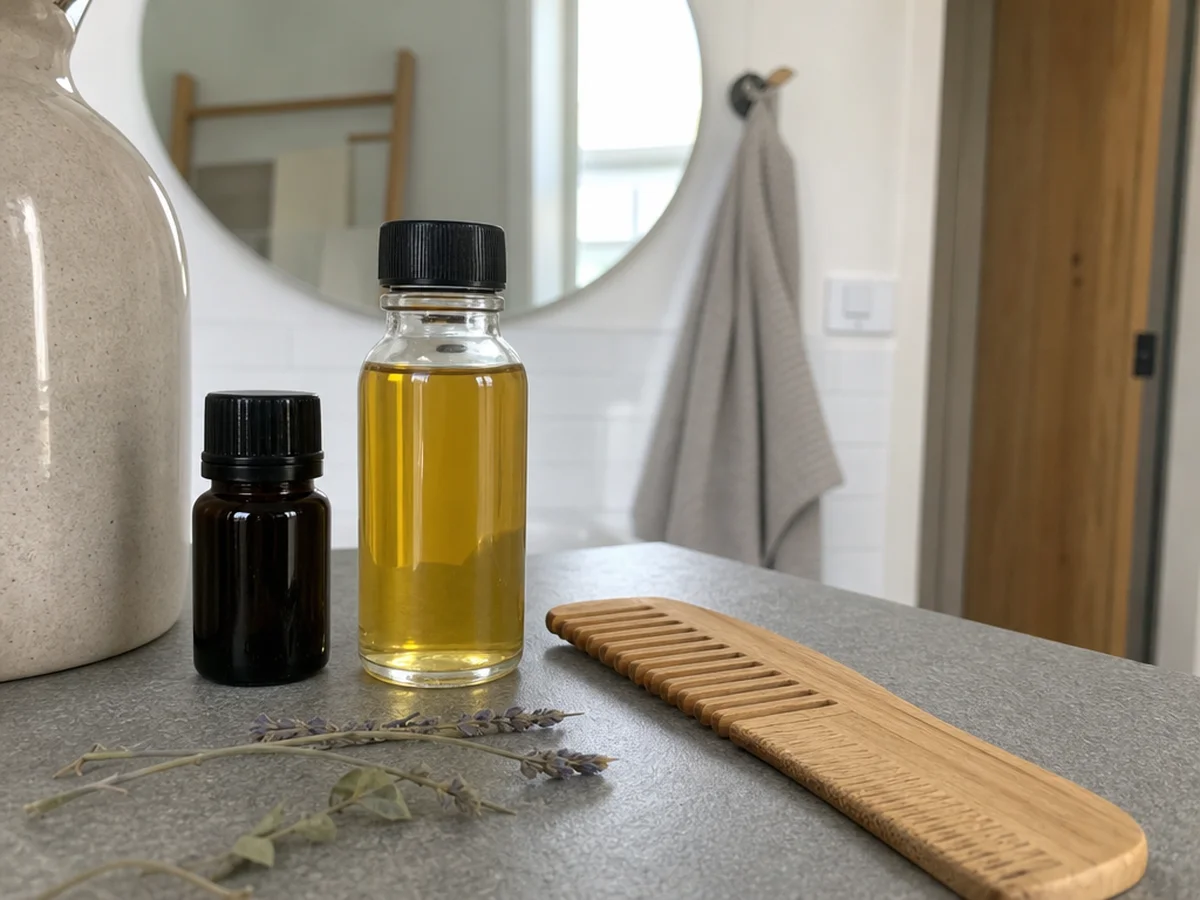
A fair reading comes with two notes. The authors worked for a hair-oil company, and it was a laboratory test on hair tresses, not a trial on heads over months. It also did not involve vetiver. So the sensible conclusion is the one we build on: coconut oil is the oil with research behind it for pre-wash hair care, and vetiver is there for the scent. For the full set of carrier options, our carrier oil guide is a handy companion. We sell vetiver only, so coconut oil comes from a grocery or supply shop.
The formula, by weight
This is a pre-wash mask, worked out from the guidance cited and simple arithmetic.
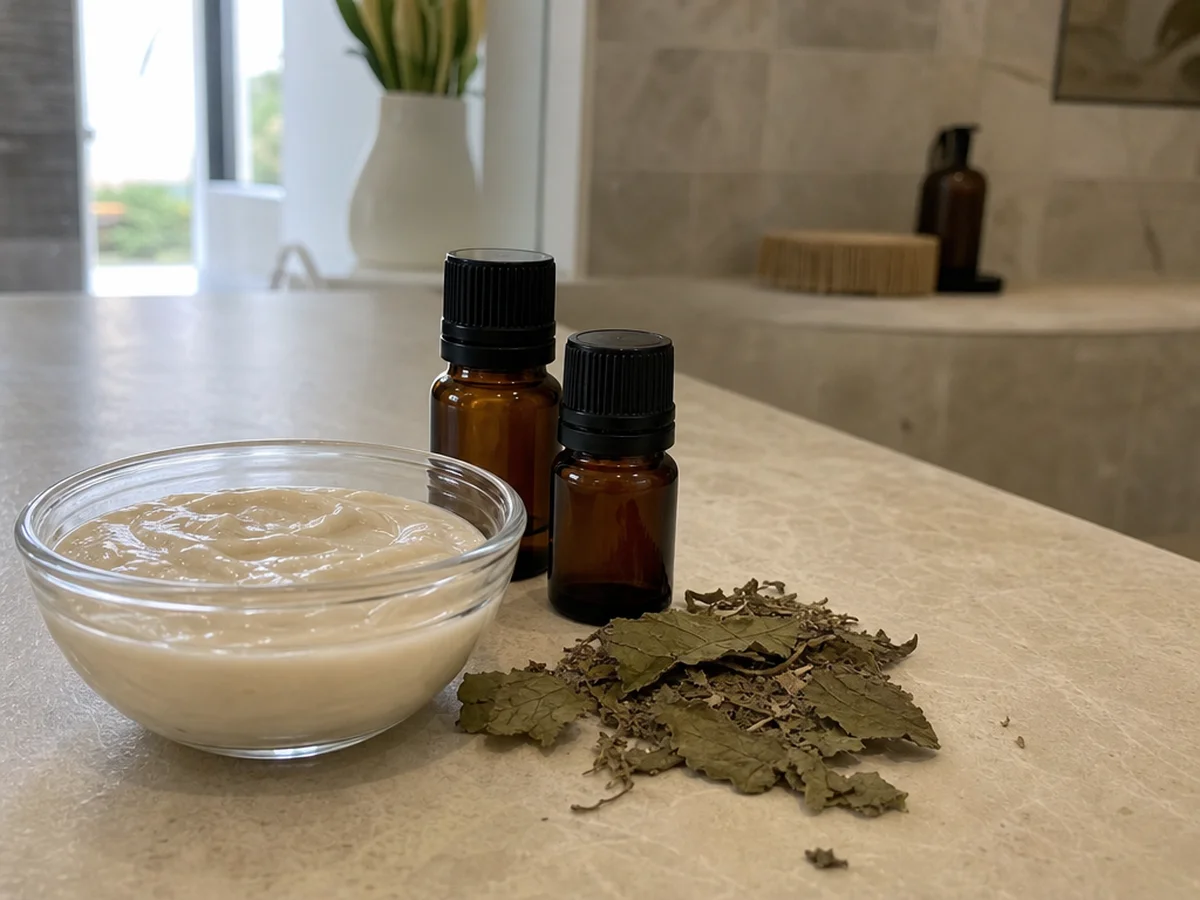
| Ingredient | Grams | Share |
|---|---|---|
| Coconut oil | 100 | 99.5% |
| Vetiver essential oil | 0.5 | 0.5% |
Why this small amount of vetiver? Our guidance is to dilute to 0.5% to 2% in a carrier oil and patch test first, and a mask sits on the scalp, which is skin. The Tisserand Institute's general table lists 0.5% to 1.2% for the face and sensitive areas, 0.2% to 1% for reaction-prone skin and 2% to 4% for wash-off products, and it does not address the scalp specifically. We take the bottom of our range and would not go above 1% (1 g in 100 g) for this mask. Vetiver is also so strong that 0.5% is plenty of aroma.
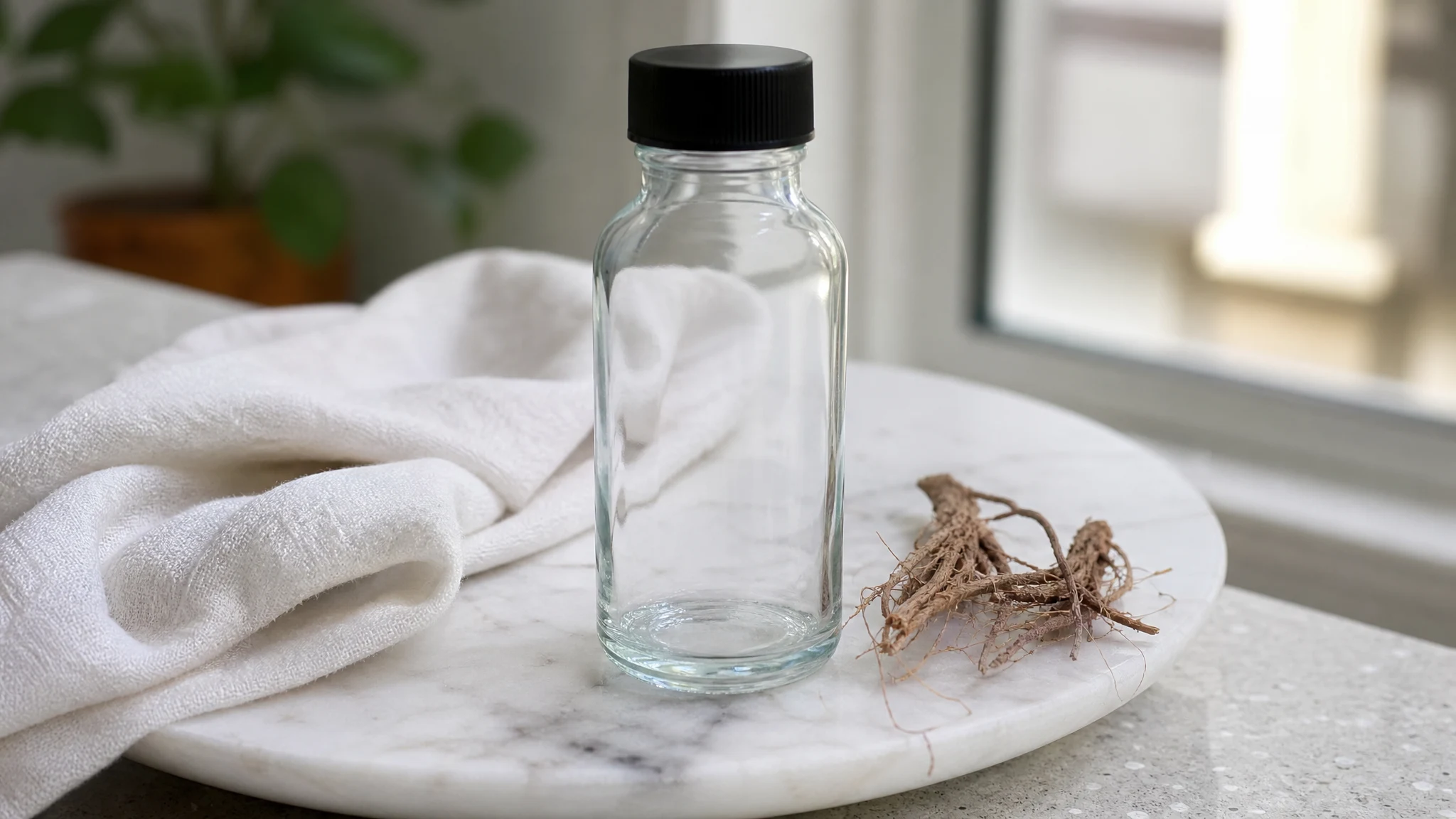
Weigh it if you can. The batch on our Certificate of Analysis had a relative density of 0.993, so 0.5 g is about half a milliliter, and because vetiver is thick and slow-pouring, counting drops is imprecise. Warming the bottle for a minute helps it flow, and a scale that reads to 0.01 g is the easiest tool.
Why one essential oil, and no kitchen extras
The classic version of this mask adds several oils and sometimes honey, avocado or vinegar. We keep ours simple. Every extra essential oil is another possible source of a reaction on a scalp, and the allergy data are a reminder: a dermatology network study of 10,930 patients tested to twelve essential oils found ylang ylang gave the highest rate of positive reactions at 3.9%, and vetiver was not among the twelve. If you do add a second oil, keep the combined essential oil share at or below that 1% ceiling.
Fresh ingredients are a different kind of product. The FDA notes that adding water to cosmetics waters down the preservatives meant to keep microorganisms from growing, and that some microorganisms grow faster in warm or damp conditions. A mask with fruit, honey or vinegar has no preservative system, so it should be made fresh, used once and rinsed out. The oil-only mask contains no water, so it keeps in a clean, dry jar.
How to use it
- Patch test first: a small amount on the inner forearm for 24 hours. Skip the mask if skin reddens, itches or burns.
- If the coconut oil is solid, warm the jar in a bowl of warm water. Avoid the microwave.
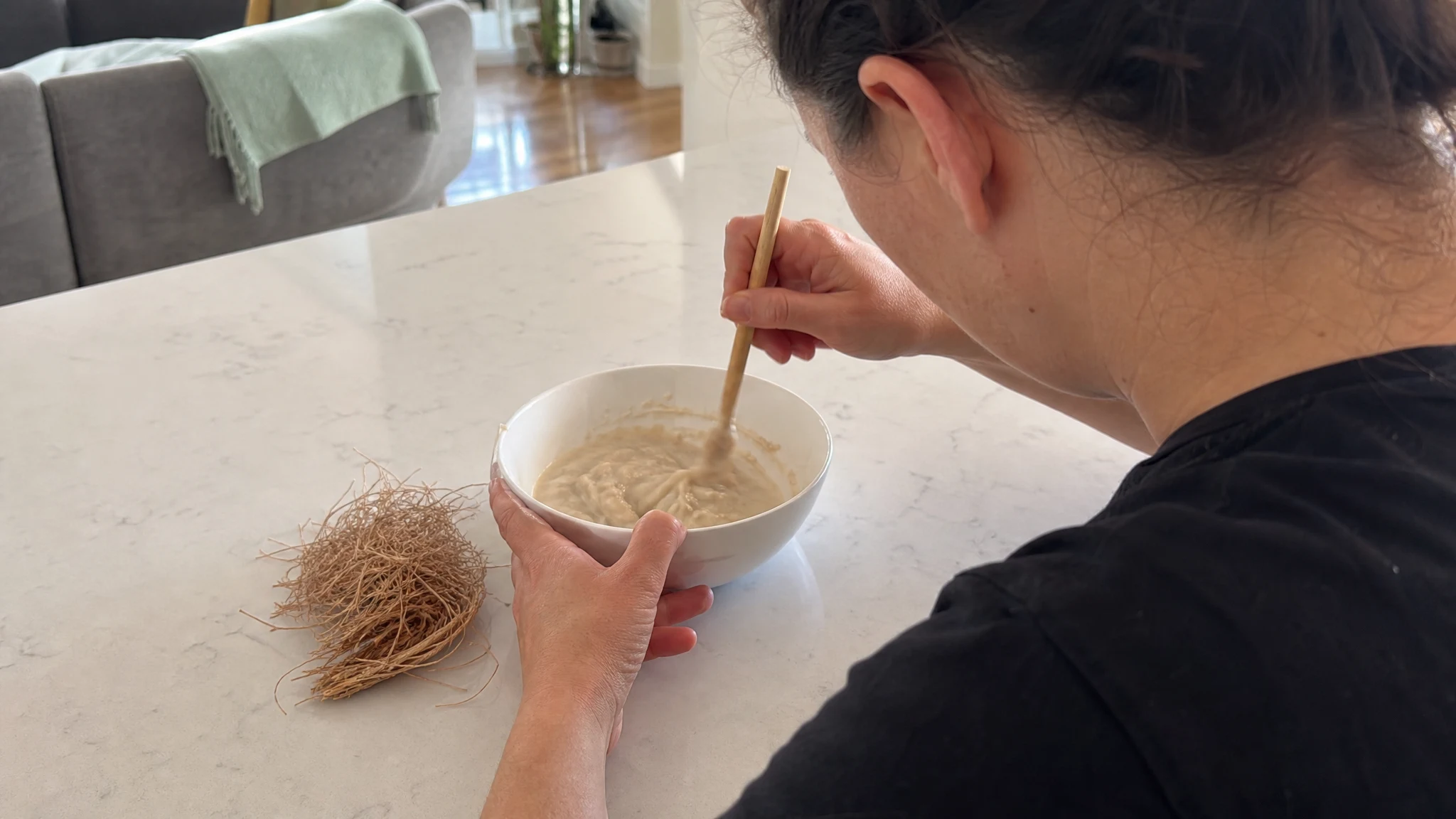
- Work a small amount through dry hair, focusing on the lengths and ends, with only a thin film on the scalp. The study gives no contact time, so we do not suggest one.
- Wash it out with shampoo, because oil does not rinse away with water alone.
Keep it out of the eyes and off a scalp that is inflamed, flaking or has sores.
What to expect from the scent
At 0.5% the vetiver is a whisper, and that is deliberate. Coconut oil has its own soft, sweet smell, and the earthy, smoky-sweet note of vetiver sits underneath it. When you warm the jar and stir, you will smell the coconut first and the vetiver a moment later. If it seems too faint, resist the urge to add more oil. Give your nose time, since a thick base note builds gradually and a stronger mask only means more fragrance on your scalp.
Small practical tips
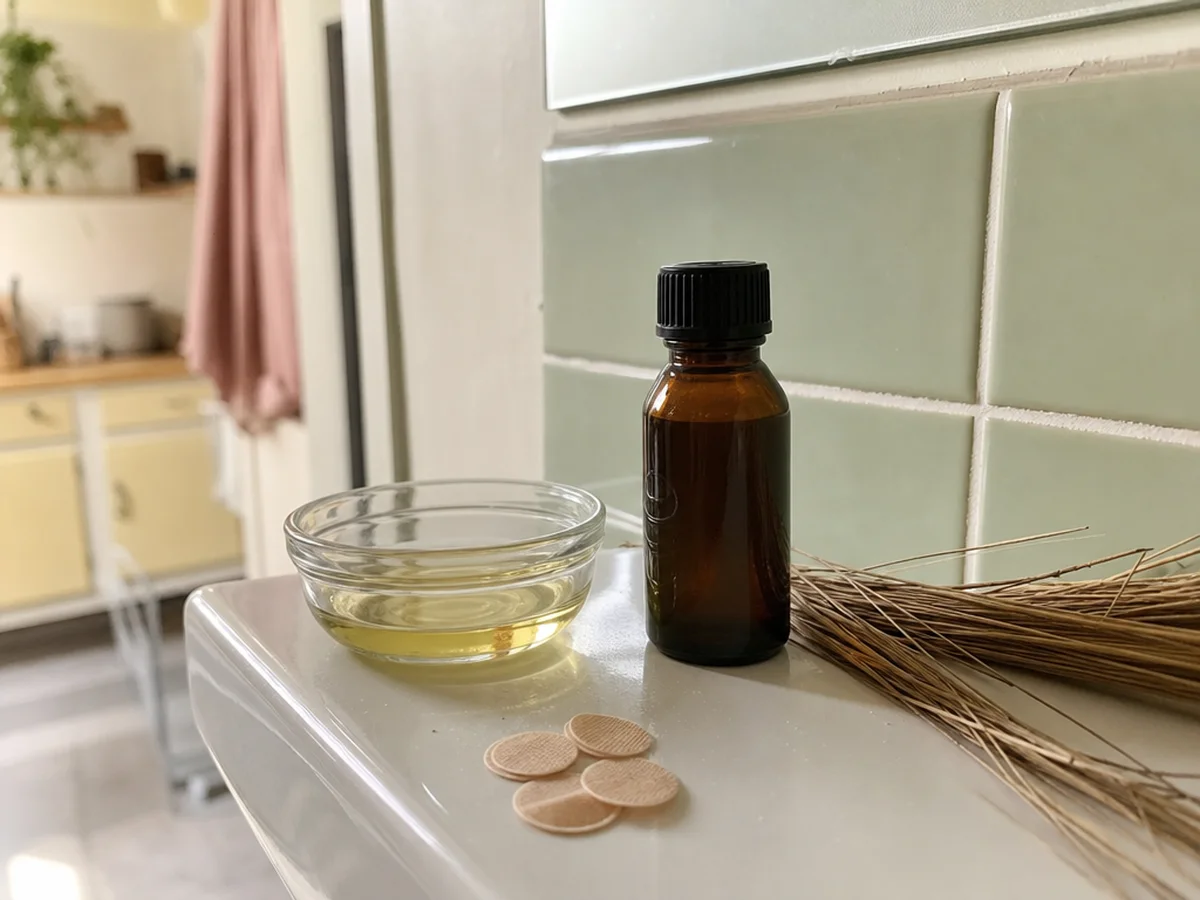
- Wrap an old towel around your shoulders and sleep on one if you leave the mask on for long, because oil marks fabric. Vetiver is also deep amber to brown, so it can tint pale cloth.
- Make only as much as you need for one session if your coconut oil is a soft, scoopable kind. A small jar is easier to keep clean.
- Wipe the neck of the vetiver bottle before you cap it, so the thick oil does not seal the lid shut.
Who should skip it
Anyone with a scalp condition, persistent itching or redness should see a dermatologist rather than reach for a mask. If you have reacted to fragrance or essential oils, use plain coconut oil. If you are allergic to coconut, choose a different oil. If you are pregnant or nursing, have a medical condition, or are thinking about use on a child, check with your healthcare provider first, as our disclaimer advises. For more on handling the oil, see our safety and dilution guide, or compare partner scents in vetiver versus patchouli.
A little warm coconut oil, a whisper of vetiver, and a slow evening: that is the whole recipe.
Vetiver Essential Oil
Vetiver Essential Oil from our own shop, in sizes from 0.5 oz to bulk.
From $20.99
Shop Now →Sources & Further Reading
- Rele and Mohile, Effect of mineral oil, sunflower oil, and coconut oil on prevention of hair damage (Journal of Cosmetic Science, 2003)
- Tisserand Institute, Dilution for essential oils
- Geier et al., Contact sensitization to essential oils: IVDK data of the years 2010-2019 (Contact Dermatitis, 2022)
- FDA, Microbiological Safety and Cosmetics