Vetiver Shampoo Bar: Scent, pH and Hair Questions
A shampoo bar scented with vetiver sounds like the perfect forest-floor wash: earthy, smoky-sweet, and free of plastic. Before you reach for the oil, it helps to understand one thing about the bar itself. A traditional shampoo bar is soap, soap is alkaline, and hair prefers things on the acid side. Vetiver can add scent; the pH is set by the soap.
Vetiver Essential Oil
Our own Vetiver Essential Oil, in sizes from 0.5 oz to bulk.
From $20.99
Shop Now →What the research says about pH and hair
A 2014 paper in the International Journal of Trichology reviewed the literature on shampoo pH and measured 123 commercial shampoos. They ranged from pH 3.5 to 9.0, and about 62% sat above 5.5. The authors conclude that an alkaline pH may increase the negative electrical charge on the hair surface, which increases friction between fibres and may lead to cuticle damage and breakage. They also say studies are still needed to establish the best pH range for scalp and hair.
That gives a balanced picture. Alkaline washes are common, so a soap bar is not automatically a disaster. But a cold-process bar sits at the alkaline end, and nobody has shown that it is as gentle on hair as a low-pH wash. If your hair is dry, coloured or tangles easily, we would make a small batch first and see how your hair responds. Skin matters too: the 2006 Lambers study found that soaps strongly affect skin pH, and that tap water at around pH 8, common in Europe, raised forearm skin pH for up to six hours.
A simple way to judge a test bar is to use it for a few weeks and watch for three things: more tangling when wet, hair that feels coated or dull, and an itchy scalp. If any of those appear, the bar is the likely cause, and returning to your usual shampoo will confirm it.
Is it still soap?
If the bar is just for you, this does not matter. If you plan to sell it, the FDA says not every product marketed as soap meets its definition. To qualify, most of the non-volatile matter must be an alkali salt of fatty acids, and the product must be labelled and sold solely as soap. A bar sold as a shampoo is a cleansing shampoo, which the FDA lists among cosmetics. An anti-dandruff claim would make it both a cosmetic and a drug.
The lye question
Saponification needs sodium hydroxide, which is caustic. Gloves, eye protection, good ventilation and a clear plan for the nearest running water are not optional, and children and pets should be out of the room. If you have never made soap, make your first batch with an experienced soapmaker or a class, and not alone from a web post.
We are deliberately not giving a full lye recipe. The lye amount has to be calculated for the exact oils and fats you use, and an error leaves either a caustic or a greasy bar. Use a reputable lye calculator and run your oils through it. What we can add is the scent side.
How much vetiver oil goes in a rinse-off bar
Our guidance is 0.5% to 2% in a carrier, with a patch test. The Tisserand Institute lists 2 to 4% for bath and wash-off products such as soap, because they are on the skin only briefly. We recommend staying within our own 0.5% to 2% range, and counting the percentage against the total batch weight to keep things conservative.
| Total batch weight | Vetiver at 1% | Vetiver at 2% |
|---|---|---|
| 500 g | 5 g | 10 g |
| 1,000 g | 10 g | 20 g |
The batch on our published Certificate of Analysis has a relative density of 0.993, so 10 g of that oil is about 10 ml. Weigh it, because vetiver is thick and drop counts vary. It also has a deep amber-to-brown colour that can tint a bar. Soap makers often adjust the amount after a small test batch, judging the scent by nose once the bar has cured.
Keep lather out of your eyes, because a bar rubbed over the scalp runs down the face.
Judging the scent properly
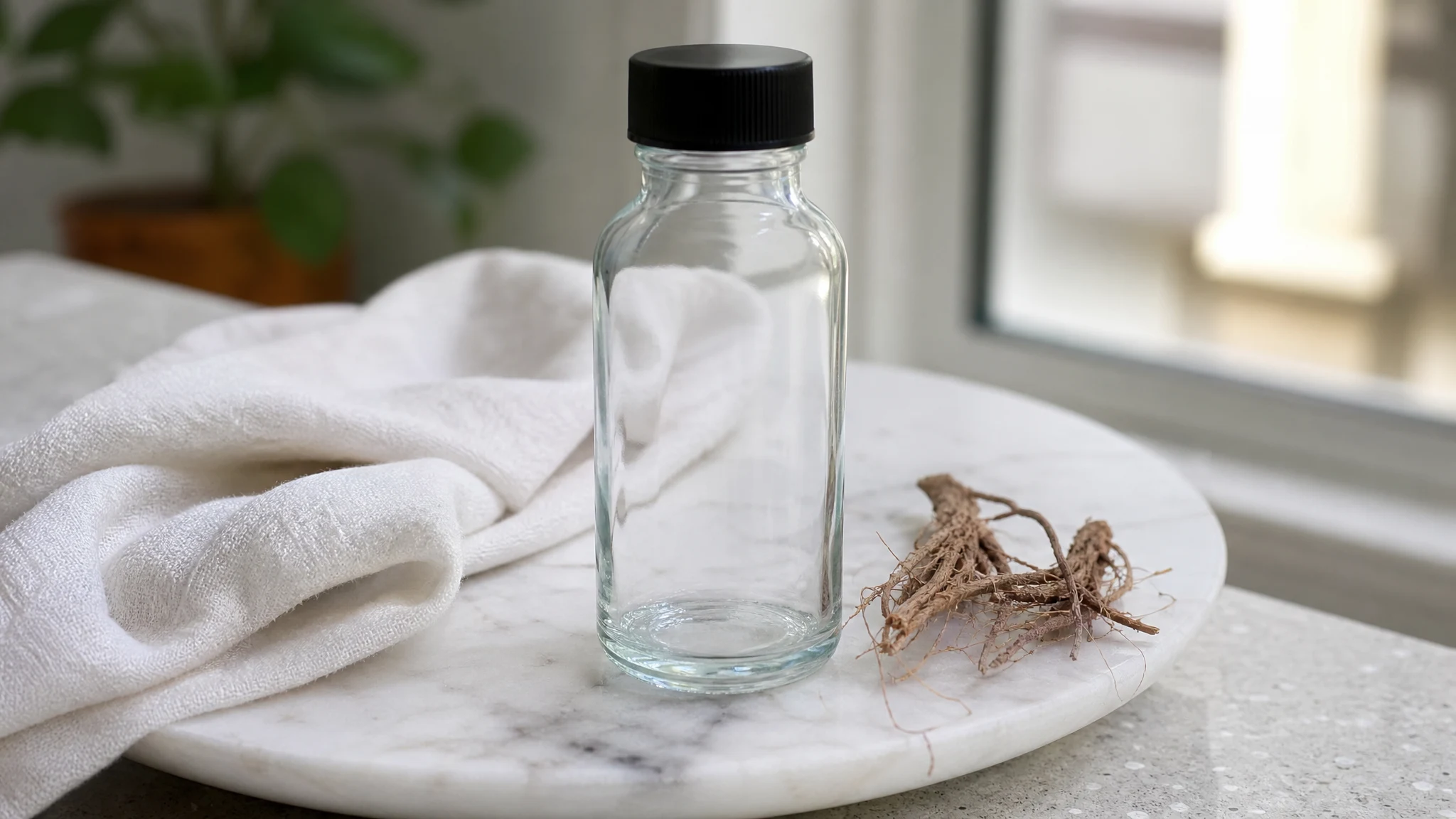
Vetiver is thick and slow-pouring, so warm the bottle in your hands for a few minutes and weigh the oil rather than trying to count drops. Do not judge the scent on the day you pour it. Once the bar has cured, rub it between wet palms and smell the lather instead of the dry bar. You may notice the dark, smoky edge of the neat oil sits further back, with the woody, slightly sweet side coming forward, though that is a matter of nose and of the other fats in your recipe.
Because the oil is a deep amber to brown, a pale bar may take on a warm tint. That is a handy visual clue when you are comparing test batches: label each one with the date and the percentage you used, so a few weeks later you can line them up and pick the one you like best.
If the pH is a worry
- A bar built on synthetic surfactants rather than soap is another route. The trichology authors describe newer anionic surfactants as gentler than soap. Ask the maker before adding any essential oil.
- Use the vetiver bar on hands and body instead, which sidesteps the hair-friction question.
- If your concern is a flaky or itchy scalp, a dermatologist is the person to see.
Craft suppliers sell the fats, lye and moulds, as we sell only the vetiver oil. For more about the oil's scent, read what vetiver smells like, and for soap in general, our soap making post. A leave-in option is in the hair mask post, and our hair post covers what has been studied.
A last practical point: store a finished bar on a draining dish between uses, so it dries out and lasts longer. A bar that sits in a puddle turns mushy, and that has nothing to do with the vetiver.
Make the bar for the joy of soap making, scent it with care, and judge it on your own hair.
Vetiver Essential Oil
Vetiver Essential Oil from our own shop, in sizes from 0.5 oz to bulk.
From $20.99
Shop Now →Sources & Further Reading
- Gavazzoni Dias MF et al., 2014: The Shampoo pH can Affect the Hair: Myth or Reality?
- Lambers H et al., 2006: Natural skin surface pH is on average below 5, which is beneficial for its resident flora
- FDA: Is It a Cosmetic, a Drug, or Both? (Or Is It Soap?)
- Tisserand Institute: Dilution for essential oils