Vetiver Oil on the Scalp: What Research Covers
Walk down any shampoo aisle and you will see how many people hope an oil can do something for their hair. Vetiver has a lovely, grounding smell that suits a hair product, and that is where we are comfortable placing it. No study we found has tested vetiver oil on human hair or scalp, so the useful question becomes what does the research on other oils tell us, and how do you work out what is happening with your own hair first.
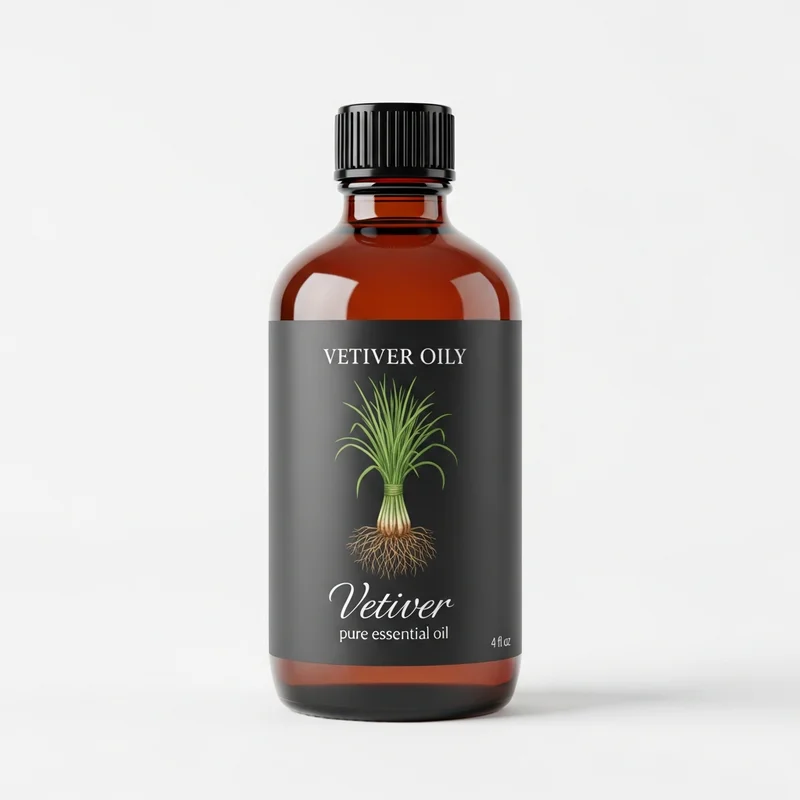
Vetiver Essential Oil
Our own Vetiver Essential Oil, in sizes from 0.5 oz to bulk.
From $20.99
Shop Now →Start with the cause
The American Academy of Dermatology says hair falls out for many reasons, and that knowing the cause matters before doing anything about it. The list includes inherited thinning, illness, surgery, childbirth, tight hairstyles, scalp infections and autoimmune patches. It also points out that shedding 50 to 100 hairs a day is normal. MedlinePlus adds thyroid problems, some medicines and low protein intake. Each of these calls for something different, and none is something an essential oil can sort out. The Academy recommends seeing a board-certified dermatologist, and notes that the earlier treatment starts, the more likely regrowth is.
What oils have actually been tested for
Three studies come up again and again, and none involves vetiver. A 1998 trial randomized 86 people with alopecia areata, an autoimmune patchy condition, to massage a blend of thyme, rosemary, lavender and cedarwood in carrier oils into the scalp every day, or carrier oils alone, for seven months. Improvement was seen in 19 of 43 in the oil group and 6 of 41 in the control group. That is the strongest human result in the area, but it concerns one diagnosis and one blend, so it cannot tell you which oil mattered or whether it applies to other kinds of thinning.
A 2015 trial compared rosemary oil with 2% minoxidil in 100 people with inherited thinning. Both groups had higher hair counts after six months, with no significant difference between them, but there was no untreated group for comparison. A mouse experiment found peppermint oil in jojoba oil sped regrowth on shaved backs. Notice what these have in common: a defined condition, a named oil, a carrier, a timeline in months and a comparison. A few drops of vetiver in a shampoo bottle has none of that.
For vetiver itself, a Europe PMC search on 5 November 2026 for vetiver with hair, alopecia or scalp returned 32 records, and none we looked at was a hair trial. The studies that exist concern a vetiver extract that raised sebum in cell lines and volunteers' skin (not our oil, and not tested on the scalp), and lab tests on bacteria. A review of cosmetics research concluded vetiver oil offered no particularly significant cosmetic value in formulations apart from its scent.
A scented hair product, done sensibly
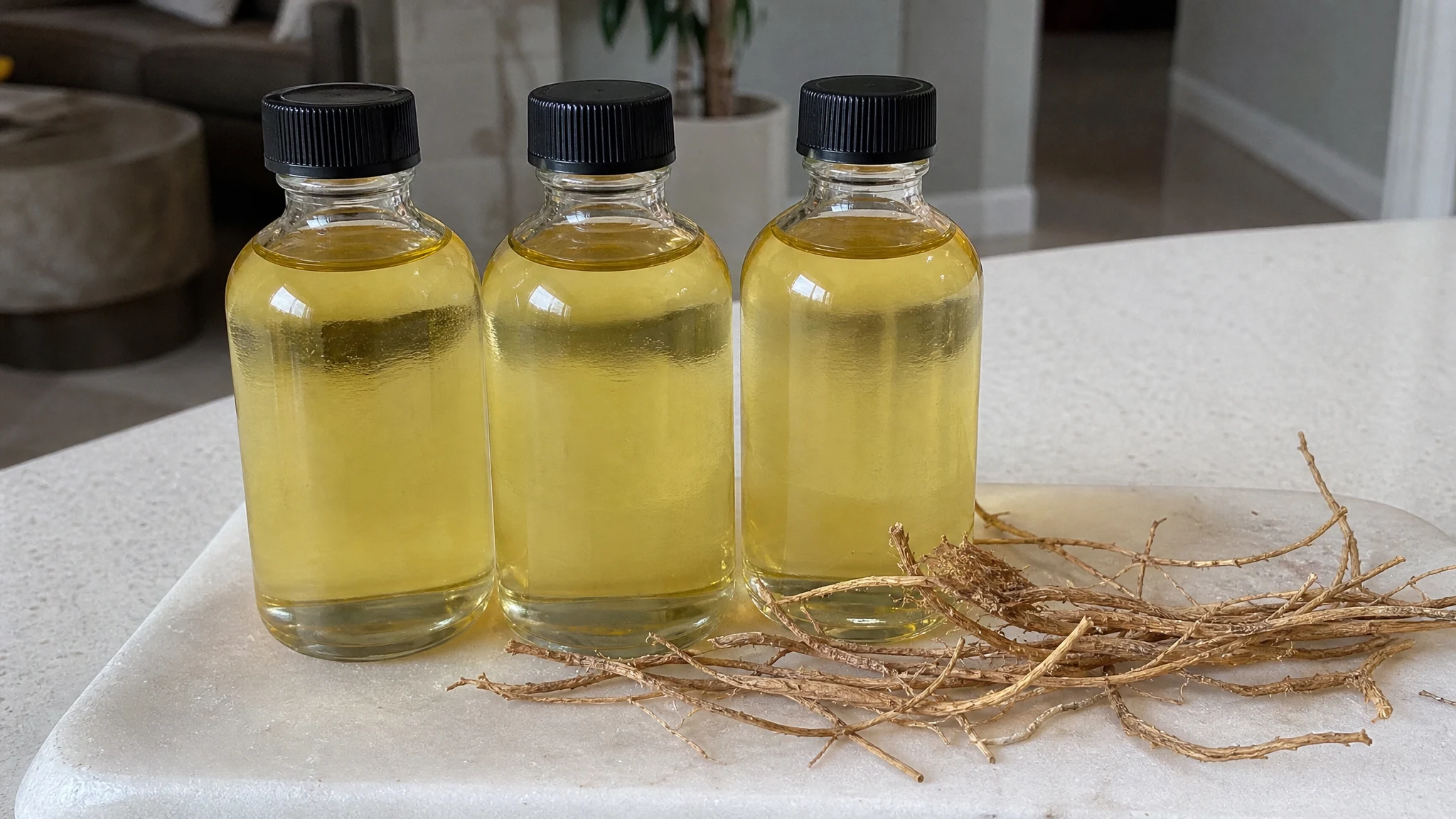
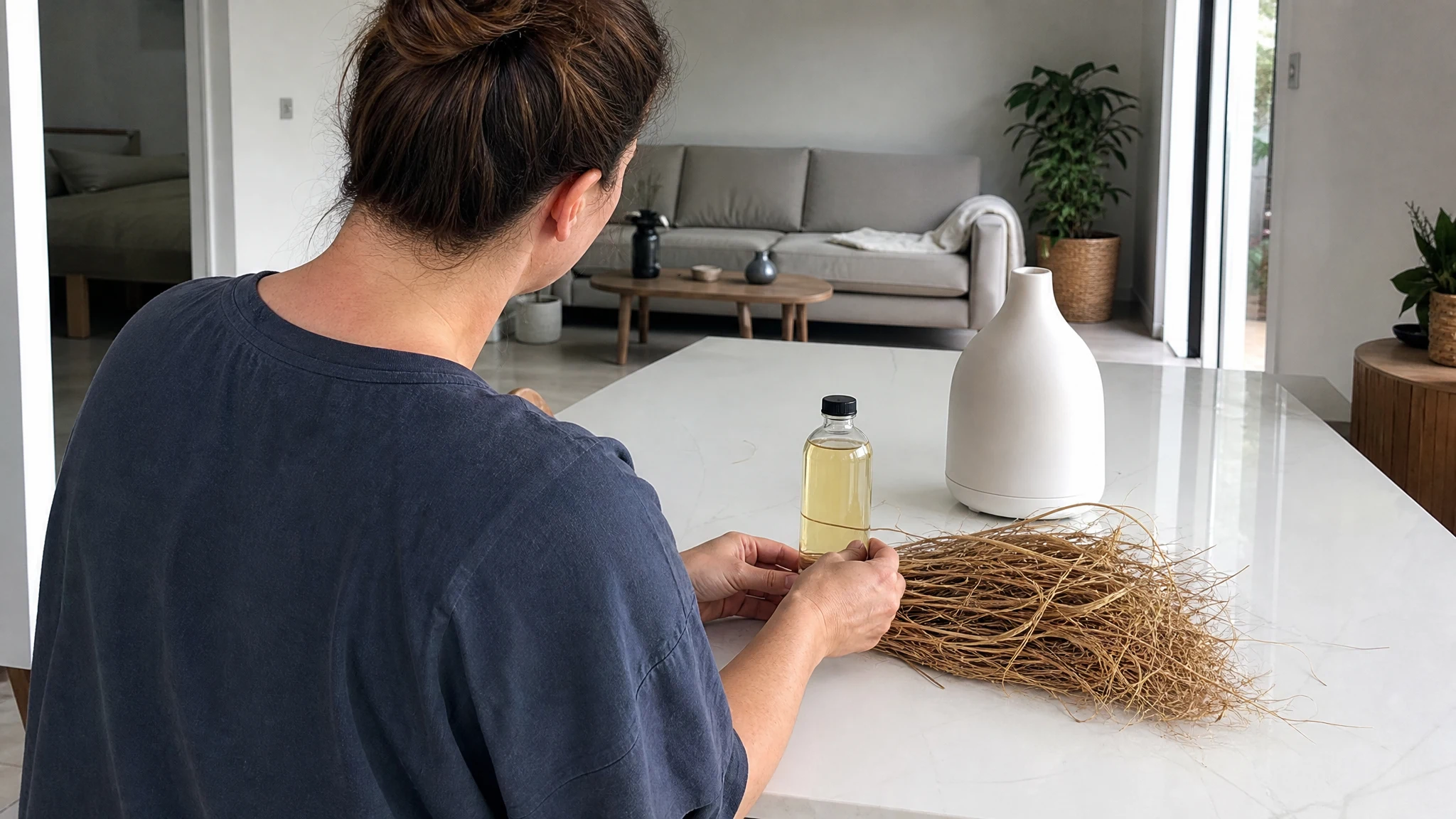
Our vetiver essential oil is steam-distilled from roots, thick and slow-pouring, with a deep, earthy, smoky-sweet aroma. As a fragrance it can scent a hair product nicely. Here is how we would keep it comfortable.
- Stay low. Our guidance is 0.5% to 2% in a carrier oil with a patch test, and we would start at the low end and check IFRA standards for your own formulation.
- Weigh instead of counting drops. One percent of 100 g of base is 1 g of oil, and drop counts for a thick oil vary. The certificate we publish for one batch lists a relative density of 0.993, so 1 g is a little over 1 ml.
- Skip the scalp if it is red, scaly, itchy or sore. Irritated skin is where fragrance reactions are most likely.
- Keep it away from eyes, and rinse hands well after handling the oil.
The carrier oil, shampoo base or conditioner is something you would pick up at a supply shop, since we sell vetiver only. Our hair mask formula shows the arithmetic in practice, and our carrier oil guide covers the base.
Questions to ask any hair product page
Whenever a page links an essential oil to hair, a few quick questions keep you grounded. What condition was studied, and was it the one you have? Was the oil tested alone or as part of a blend? Was there a comparison group using plain carrier oil? And is the page selling something? If the answers are vague, the claim is mostly marketing, and you can safely move on.
Keeping a scented routine small
If you like the idea of a lightly scented hair product, treat it as a fragrance project and keep it modest. A little goes a long way, so you do not need more than the tiny amount your blend calls for. Oil and water do not mix, so if you scent a water-based product, give it a good shake before each use, and expect to use a base made for that job. Smell the finished product after a day, because a thick, earthy scent can feel stronger than you expected once it has settled.
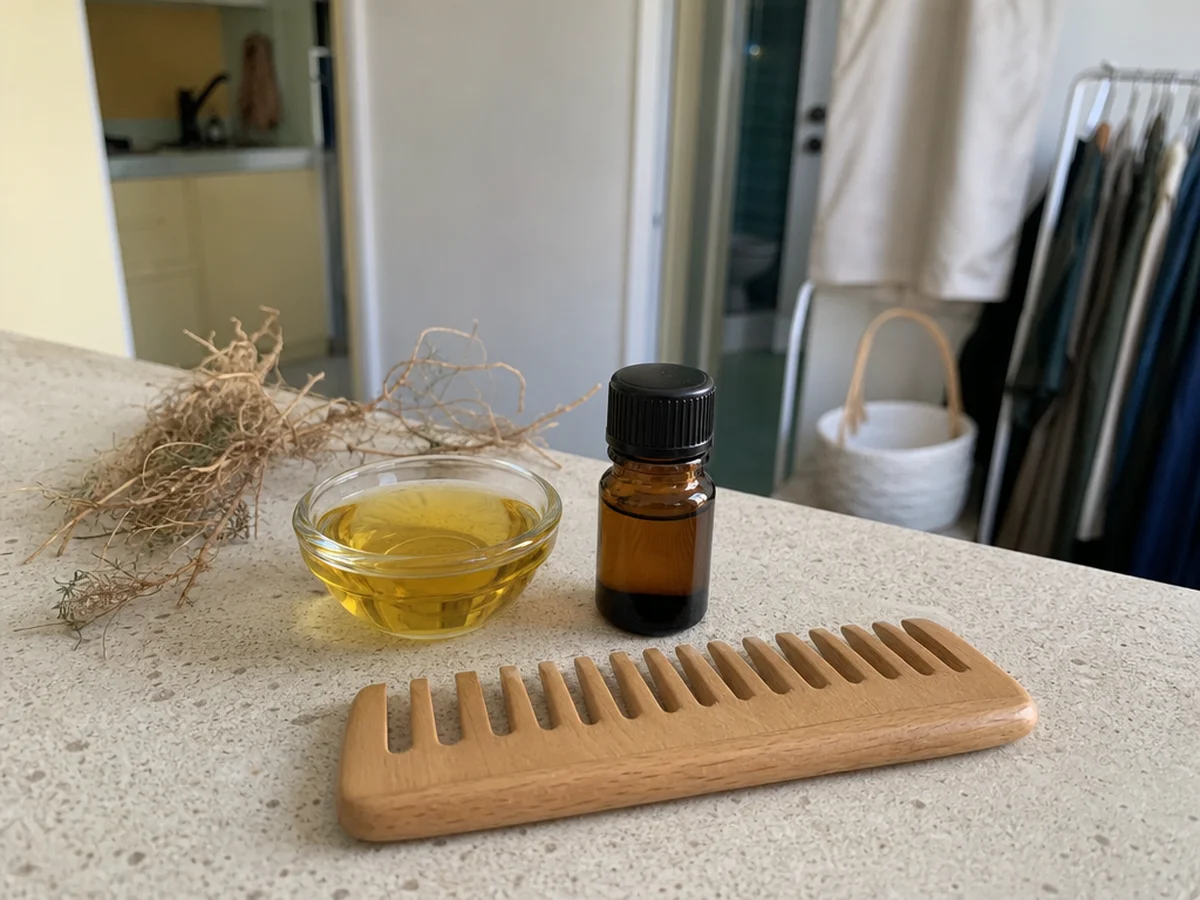
Think about the little rituals too: a wide-tooth comb, a clean towel, a bottle with a pump so you are not tipping the oil. A deep, smoky-sweet fragrance pairs nicely with a slow routine, and that is a good enough reason to enjoy it without asking it to do anything for your hair.
Wash your hands after handling the oil, wipe any drips from the bottle, and remember it can mark light towels and pillowcases. Keep the bottle capped and out of reach of children and pets.
If your hair is changing and you want to know why, book the dermatologist first and enjoy the scent second. The two get along beautifully. Our shop lists the sizes we sell, and larger quantities are on our bulk page.
Vetiver Essential Oil
Vetiver Essential Oil from our own shop, in sizes from 0.5 oz to bulk.
From $20.99
Shop Now →Sources & Further Reading
- American Academy of Dermatology. Hair loss: Overview
- American Academy of Dermatology. Hair loss: Diagnosis and treatment
- Hair Loss | Alopecia | Alopecia Areata | MedlinePlus
- Hay et al. Randomized trial of aromatherapy. Successful treatment for alopecia areata. Archives of Dermatology, 1998
- Panahi et al. Rosemary oil vs minoxidil 2% for the treatment of androgenetic alopecia: a randomized comparative trial. Skinmed, 2015
- De Tollenaere et al. Overall renewal of skin lipids with Vetiver extract for a complete anti-ageing strategy. International Journal of Cosmetic Science, 2021
- Burger et al. Vetiver Essential Oil in Cosmetics: What Is New? Medicines, 2017