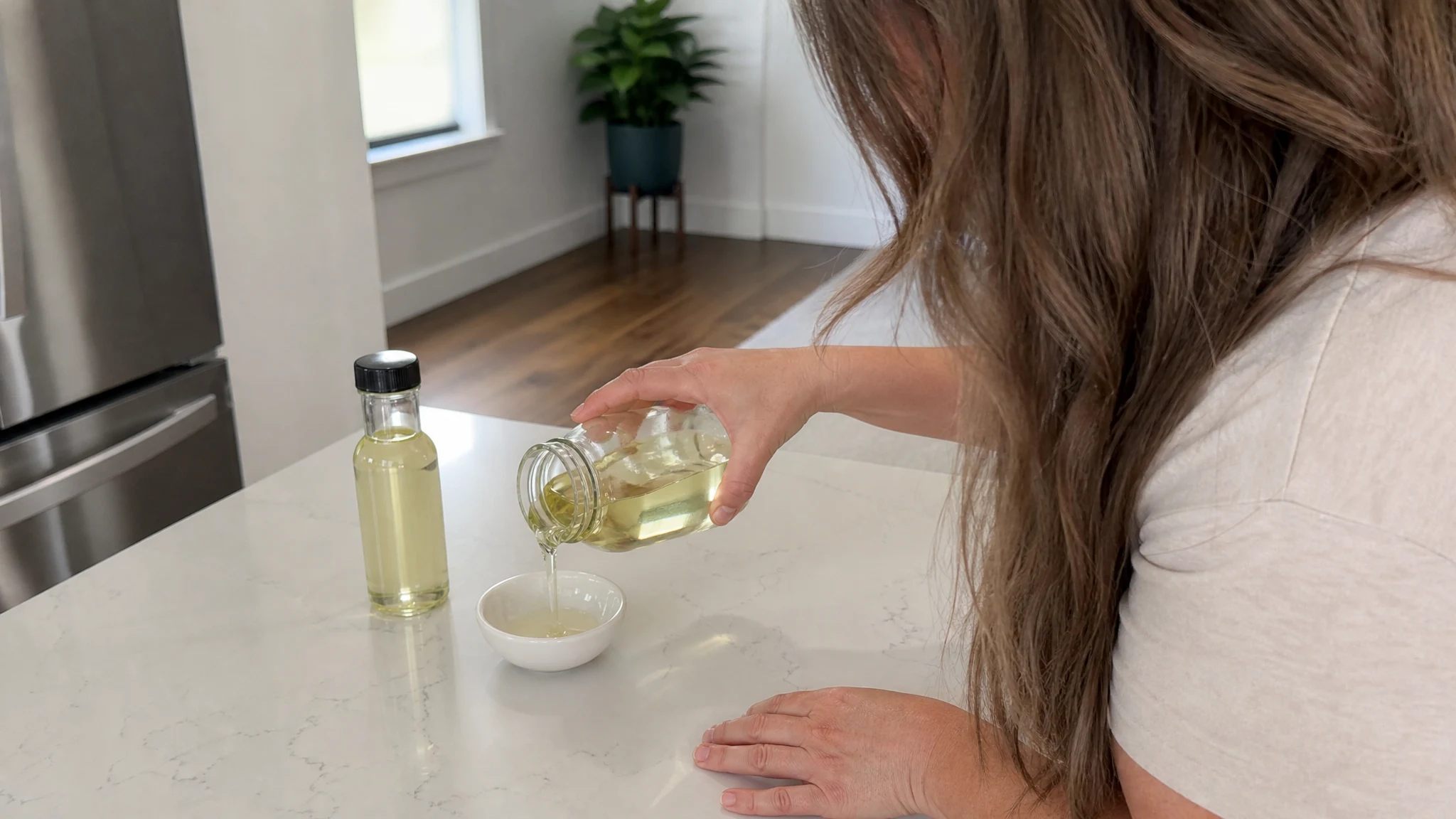
Carrier Oil for Vetiver: How to Choose and How Much
Most people start a vetiver blend by asking which carrier oil to buy. We would start one step earlier: how strong do you want the blend? The carrier follows from that answer, and so does the amount of vetiver you pour out. We sell vetiver neat and no carriers, so what follows is the order we would think it through, not a pitch.
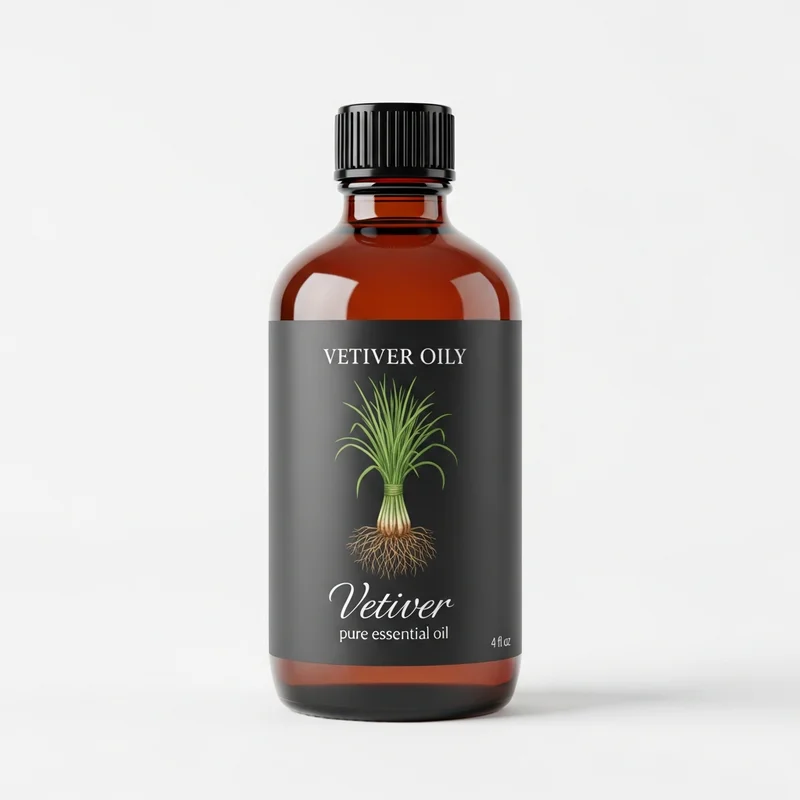
Vetiver Essential Oil
Our own Vetiver Essential Oil, in sizes from 0.5 oz to bulk.
From $20.99
Shop Now →Start with the percentage
Our dilution guidance is 0.5% to 2% in a carrier oil, with a patch test first. Robert Tisserand's published ranges are organized by where the product goes: 0.2% to 1% for sensitive or impaired skin, 0.5% to 1.2% for facial cosmetics, 1% to 3% for body oils and lotions, and 2% to 4% for bath products (Tisserand Institute, Dilution for essential oils). He treats them as guidelines for essential oils generally, and so do we. Where they differ, we start at the lower figure. A body oil at 1% sits comfortably inside both sets. For anything near the face, stay at or below 1%. Our dilution and safety guide goes further into this.
The arithmetic, in milliliters
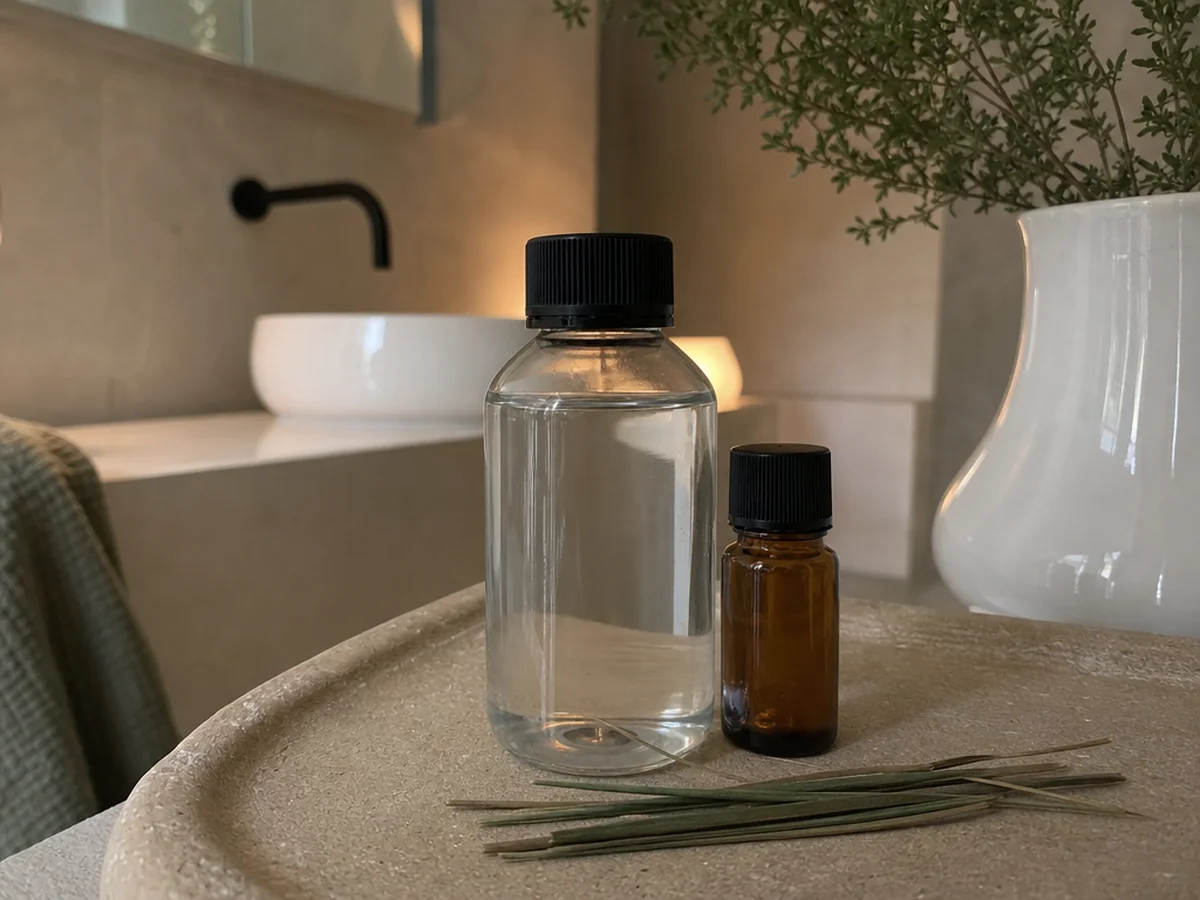
Drops are a poor unit for vetiver. Tisserand points out that drop conversions are always approximate because no two drops are the same, and a thick oil makes bigger drops than a thin one. The batch on our Certificate of Analysis has a relative density of 0.993 at 20 C, so a milliliter of it weighs about 0.993 g. One ounce of carrier is 29.57 ml, so by volume:
| Dilution | Vetiver oil in 30 ml (1 oz) of carrier |
|---|---|
| 0.5% | about 0.15 ml |
| 1% | about 0.30 ml |
| 2% | about 0.59 ml |
If you only have a dropper, a rough convention is about 20 drops per milliliter, which would put 1% near 6 drops per ounce. With a thick oil treat that as a ceiling. A small scale that reads to 0.01 g is a better tool, and warming the closed bottle in your hand helps the oil move.
Jojoba and almond, and why they feel different
Vetiver itself is slow to change, which is why we describe it as typically keeping its character for 6 to 8 years in a cool, dark place. A carrier is a different story. Most carriers are triglyceride oils built largely from unsaturated fats, and those are the ones that can turn rancid with time. Almond oil is a good example: a study of four almond cultivars grown in Morocco found its fatty acids were predominantly unsaturated, mostly oleic (about 57% to 64%) and linoleic (about 25% to 30%) (Melhaoui R et al., Characterization of Sweet Almond Oil Content of Four European Cultivars (Ferragnes, Ferraduel, Fournat, and Marcona) Recently Introduced in Morocco. Scientifica 2021).
Jojoba is built differently. A 2021 review describes it as about 98% wax, mainly wax esters, rather than a classic triglyceride oil (Gad HA et al., Jojoba Oil: An Updated Comprehensive Review on Chemistry, Pharmaceutical Uses, and Toxicity. Polymers 2021). That chemical difference is why jojoba is so often chosen for blends that will sit in a bottle for months. This is our reasoning from the composition, not a stability test.
So our practical advice is simple. For a roller bottle you will use over many months, jojoba is the first carrier we would look at. For a massage oil mixed and used within a week, feel matters more than keeping qualities, so choose the one you like on your skin. If you choose almond, remember it comes from a tree nut and is not for anyone with a nut allergy.
What to ask the person selling you the carrier
- What is it exactly? A botanical name and a best-by date tell you far more than "almond oil" on a label.
- Refined or unrefined? Unrefined carriers carry their own smell, which competes with vetiver's. A neutral, refined oil lets vetiver lead. That is a perfumer's preference, not a measurement.
- How is it packed? Heat, light and oxygen drive oxidation, so dark glass, a tight cap and a smaller bottle all help.
Try it on your hands first
Before you pour a whole bottle of carrier into a blend, put a little on the back of your hand and rub it in. Notice how quickly it sinks in, whether it leaves a slick film and whether it has a smell of its own. Vetiver is a strong, lingering scent, and a carrier with a noticeable odor will compete with it, so a neutral feel and a quiet smell are usually what you want.
Matching carrier to project
A solid balm brings in wax, and our solid perfume post walks through that. A beard or shave product touches facial skin, which is where the lower range applies, and the beard oil post uses it. Whatever you make, patch test a small amount of the finished blend on your inner forearm first. Fragrance reactions are a known issue with essential oils generally, and one review counts nearly 80 oils that have caused contact allergy (de Groot AC, Schmidt E, Essential Oils, Part IV: Contact Allergy. Dermatitis 2016). If you have eczema, broken skin or a past fragrance reaction, ask a dermatologist before using it, and ask a pediatrician, an OB/GYN or a veterinarian about children, pregnancy and pets.
Start small
Carriers come in small sizes, and a small bottle is used up before it can go stale. Label whatever you make with the carrier, the percentage and the date, so the next batch can be adjusted rather than guessed.
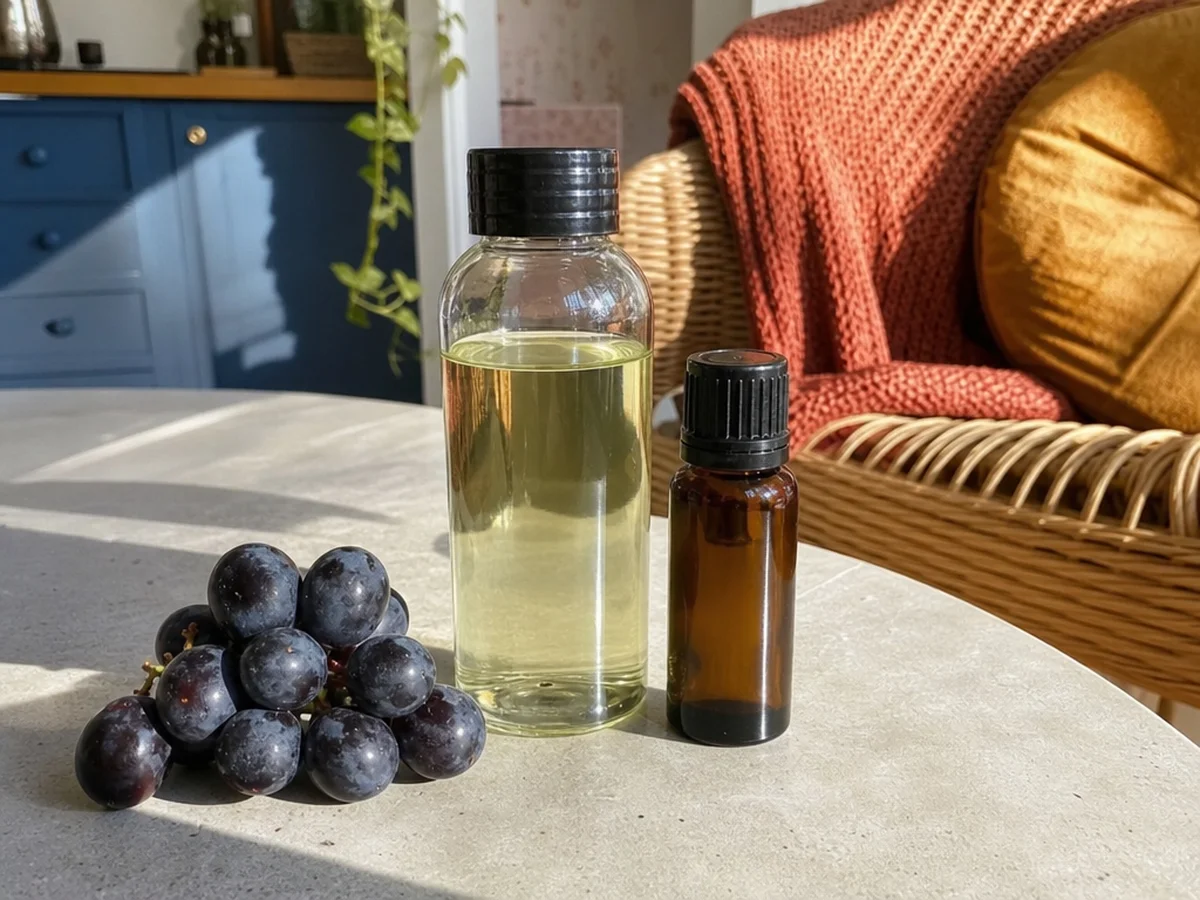
Vetiver's scent is persistent enough that it can fool your nose, so rely on the arithmetic rather than on how strong it smells. A blend that seems faint after a few minutes is usually just your nose adjusting.
Vetiver Essential Oil
Vetiver Essential Oil from our own shop, in sizes from 0.5 oz to bulk.
From $20.99
Shop Now →Sources & Further Reading
- Tisserand Institute, Dilution for essential oils
- Melhaoui R et al., Characterization of Sweet Almond Oil Content of Four European Cultivars (Ferragnes, Ferraduel, Fournat, and Marcona) Recently Introduced in Morocco. Scientifica 2021
- Gad HA et al., Jojoba Oil: An Updated Comprehensive Review on Chemistry, Pharmaceutical Uses, and Toxicity. Polymers 2021
- de Groot AC, Schmidt E, Essential Oils, Part IV: Contact Allergy. Dermatitis 2016