Vetiver Roller Blends: How Much Oil Per 10 ml Bottle
Roller bottles are the friendliest way to carry a scent, and vetiver suits them: one swipe on a wrist and its dry, smoky-sweet depth lasts for hours. Because the oil is thick, dark and persistent, the amount that smells right in the bottle is usually more than you want on skin. The one decision that matters is the percentage.
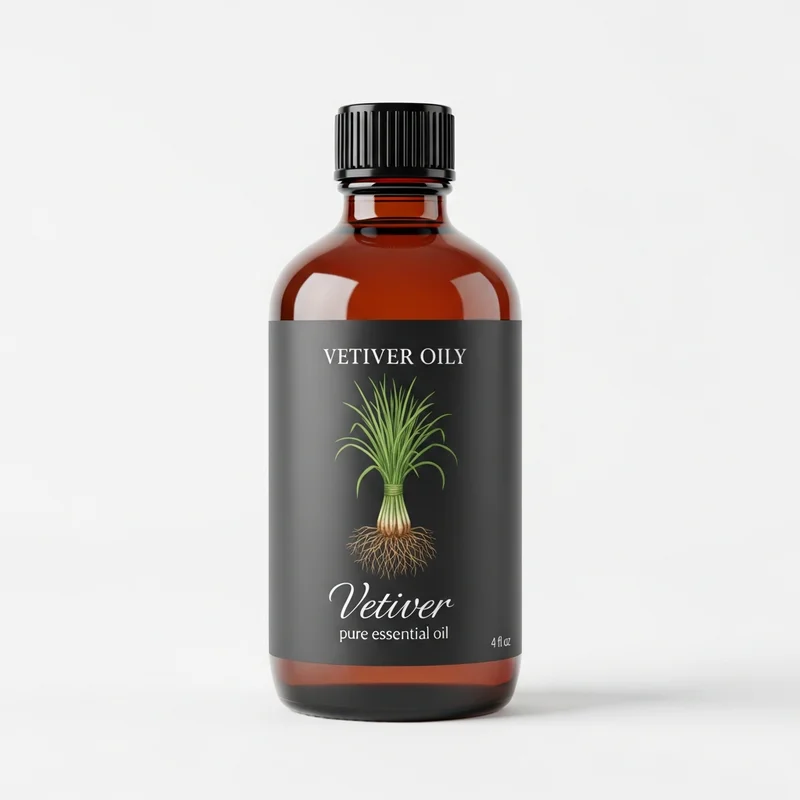
Vetiver Essential Oil
Our own Vetiver Essential Oil, in sizes from 0.5 oz to bulk.
From $20.99
Shop Now →Start with the percentage, not the drops
The Tisserand Institute's dilution page is the reference most formulators use. It gives 0.5% to 1.2% for the face and sensitive areas, and 1% to 3% for body oils and lotions. Its rollerball line is higher, 3% to 10%, but that is aimed at pain and "feel good" uses, which are not what we are talking about. The page also notes that drop conversions are only approximate. We recommend diluting our vetiver to between 0.5% and 2% in a carrier oil, with a patch test first.
For a scent roller on the wrists or neck, our suggestion is 0.5% to 1%. Vetiver is a base note that lingers, so a low percentage already announces itself on warm skin, and nothing we read supports going higher for fragrance. We treat 2% as a ceiling, not a target, and we start low because published guidance for the face runs lower than our upper figure.
The arithmetic for a 10 ml roller
If you can, weigh rather than count. The batch on our Certificate of Analysis has a relative density of 0.993, so 1 ml of that oil weighs about 0.993 g. The figures below use that density, are rounded, and apply to that batch; another batch may differ slightly. As a rough convention an essential oil gives about 20 drops to the millilitre, but vetiver is viscous, so its drops are larger and you should expect fewer.
- 0.5%: about 0.05 ml (0.05 g) in 10 ml, close to one drop.
- 1%: about 0.1 ml (0.1 g), roughly two drops by the convention, probably fewer for this oil.
- 2%: about 0.2 ml (0.2 g), roughly four drops by the same convention.
At this scale one large drop can shift the percentage a lot, so a small pipette, or a scale reading to 0.01 g, is worth having. Mixing in a small cup before filling the bottle makes it easier to correct.
Choosing the carrier
We sell vetiver oil and no carrier oils, so you will find the carrier at a craft or supply shop, a pharmacy or a grocery. Jojoba is the usual roller choice, and its chemistry explains why: a 2021 review reports that about 98% of jojoba oil is wax, mainly wax esters, rather than the triglycerides in most vegetable oils (Gad et al., 2021). That is why it is called a liquid wax. Whatever you choose, check the best-by date and smell it first, since an old carrier makes an old blend. Our carrier oil buying guide goes through the options.
We also suggest keeping the blend oil-only, with no water, hydrosol or aloe. That is our own reasoning, since water-containing mixtures need preservatives while a simple oil blend does not.
Adding other oils
Vetiver blends well with sandalwood, patchouli, lavender, bergamot, rose and cedarwood, and any of them make a lovely roller. The point to remember is that each partner brings its own limits, and the total essential oil percentage, not vetiver's share alone, has to stay in the range you chose. As an example, a 2016 review of contact allergy to essential oils counted nearly 80 oils that have caused reactions, with nine, sandalwood among them, showing more than 2% positive patch tests, and noted that most reactions come from undiluted oils or strong products (de Groot and Schmidt, 2016). A roller at 1% total is far below that, which is the case for keeping the combined share low. We sell vetiver only, so partners come from elsewhere.
For ratios that treat vetiver as the base under lighter oils, see the blending post, and for why base notes belong at the low end, see the perfumery post.
What a roller is for
A roller is a scent product, and we make no claim that it calms or focuses anyone. The inhalation research on vetiver is in rats and points in different directions: anxiolytic-like behaviour in one study (Saiyudthong et al., 2015) and more waking in another (Cheaha et al., 2016). For anxiety, poor sleep or pain, see a physician; our anxiety post lays out the studies.
Who should skip it, and a few practical notes
- Anyone who has reacted to fragrance or essential oils before should ask a dermatologist or allergist about patch testing first.
- If you are pregnant, nursing, on medication or have a medical condition, consult your healthcare provider before use.
- Keep the bottle away from children and pets. Merck's veterinary manual names cats and birds as most at risk from essential oils and recommends diluted rather than concentrated products around animals.
- Keep it away from eyes and broken skin.
- Use amber glass and store the roller in a cool place; heat and light age oils faster, as our storage post explains.
- Vetiver is a deep brown, so let it dry on skin before dressing, as it can mark pale fabric.
Patch test the finished blend first, and read our safety guide for the limits in more detail. Our oil is sold neat, so the dilution is always yours to make.
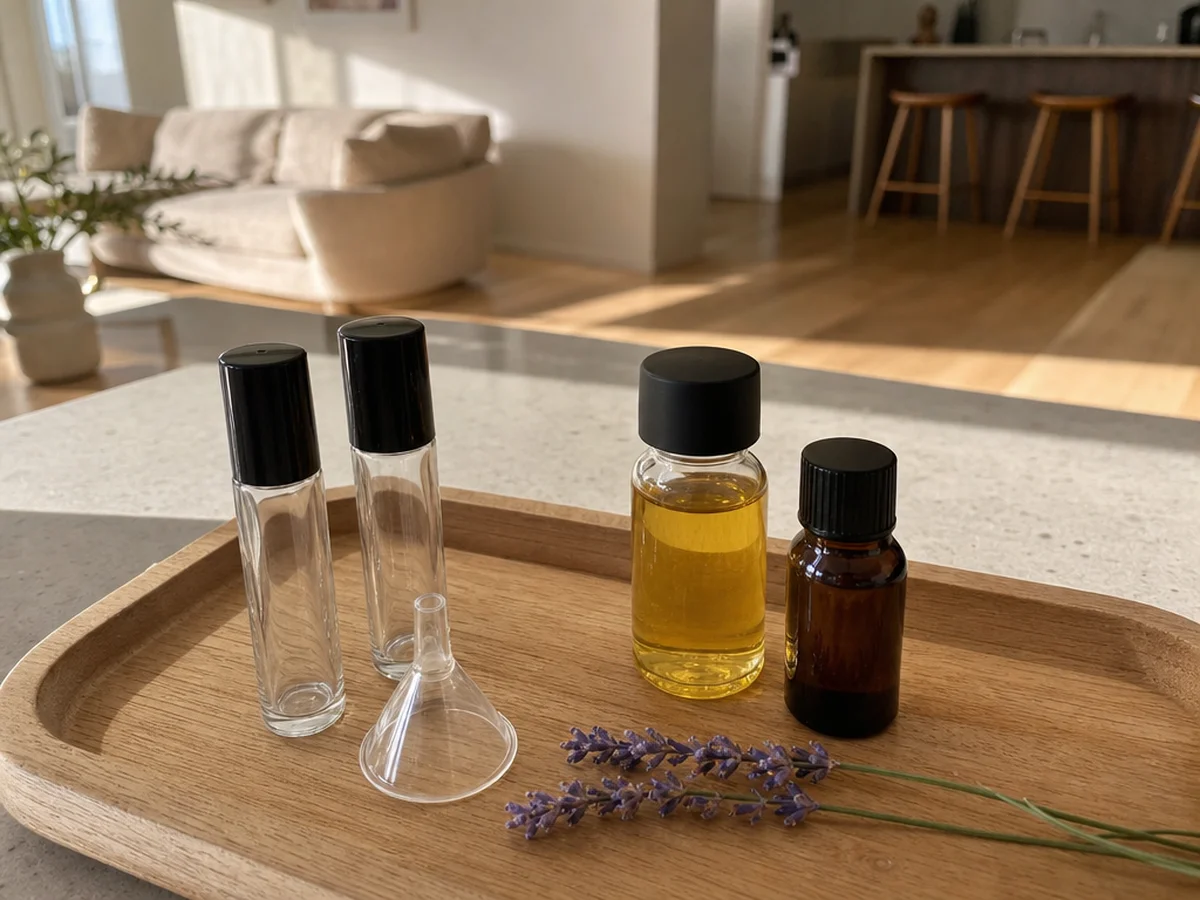
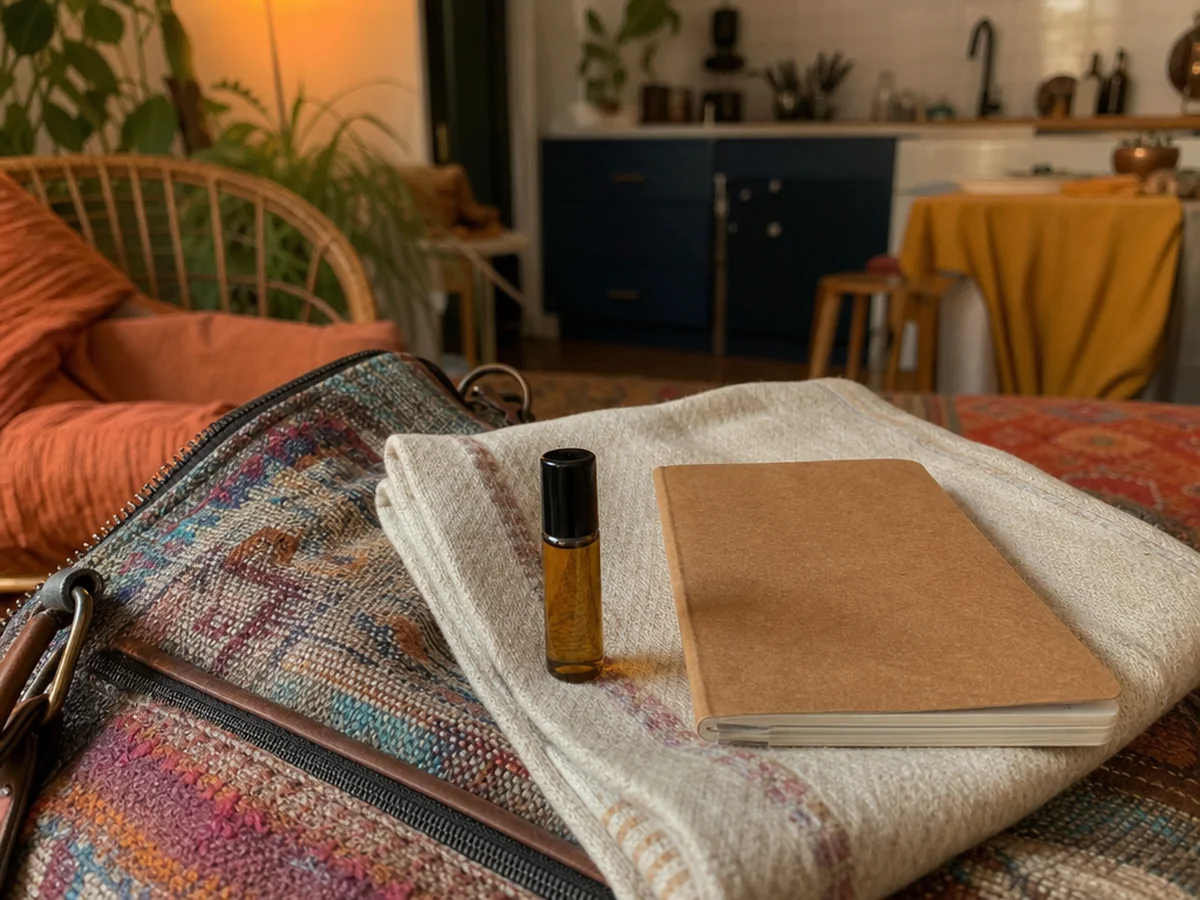
When your roller is ready, give it a gentle roll between your palms and test it on one wrist before you commit. Press the ball lightly and make one slow pass instead of several, since a thick, dark oil can look heavier on the skin than it feels. Wait a few minutes and notice how the scent settles before adding more. Keep a tissue handy to wipe the ball and the neck of the bottle, and cap it firmly so it travels well in a bag.
A good roller is quiet: low percentage, fresh carrier, and a base note that does its talking over the afternoon.
Vetiver Essential Oil
Vetiver Essential Oil from our own shop, in sizes from 0.5 oz to bulk.
From $20.99
Shop Now →Sources & Further Reading
- Tisserand Institute. Dilution for essential oils. tisserandinstitute.org
- Gad HA et al., 2021. Jojoba Oil: An Updated Comprehensive Review on Chemistry, Pharmaceutical Uses, and Toxicity. Polymers. PMID 34073772
- de Groot AC, Schmidt E, 2016. Essential Oils, Part IV: Contact Allergy. Dermatitis. PMID 27427818
- Saiyudthong S et al., 2015. Anxiety-like behaviour and c-fos expression in rats that inhaled vetiver essential oil. Natural Product Research. PMID 25553641
- Cheaha D et al., 2016. Modification of sleep-waking and electroencephalogram induced by vetiver essential oil inhalation. Journal of Intercultural Ethnopharmacology. PMID 27069728
- Merck Veterinary Manual, March 2025. Toxicoses From Essential Oils in Animals. merckvetmanual.com