Vetiver Sandalwood Solid Perfume: A Balm Recipe by Weight
A solid perfume is the most modest form of fragrance there is: a little wax, a little oil, a little scent in a tin that lives in a pocket. Vetiver and sandalwood suit it well, since both are low-key, woody and happy to sit close to the skin. Two details decide how it turns out, though. One is how much essential oil goes on your skin, and the other is where the sandalwood comes from.
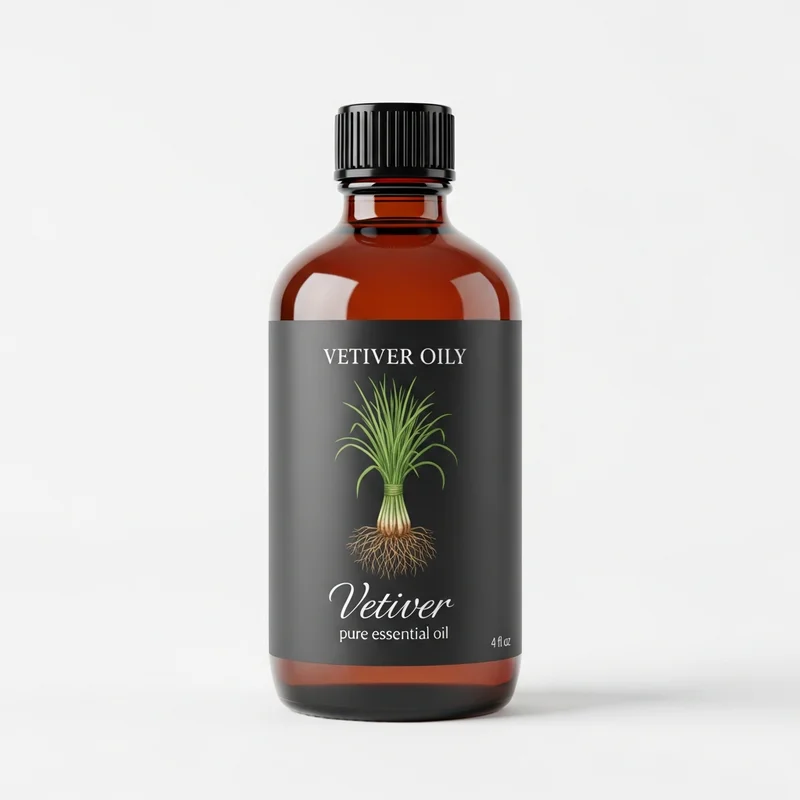
Vetiver Essential Oil
Our own Vetiver Essential Oil, in sizes from 0.5 oz to bulk.
From $20.99
Shop Now →Choose the strength first
A balm is a leave-on skin product, so the total of scent is set by skin guidance and not by how loud you want it. Our dilution guidance for vetiver is 0.5% to 2% in a carrier oil with a patch test first. The Tisserand Institute gives 1% to 3% for body oils and lotions, 0.5% to 1.2% for facial products and 0.2% to 1% for sensitive or impaired skin. Pulse points on the neck sit close to the face, so we suggest keeping both oils together at 2% or less, and at 1% if your skin reacts easily to scented products. The formula below uses 2% as its ceiling, which makes it the strongest version, not the standard one.
The base: beeswax and jojoba
Beeswax gives a balm its body and keeps it solid in a warm pocket. Jojoba is the usual liquid partner because it is not a typical triglyceride oil. A 2021 review in Polymers describes it as mostly wax esters. Both come from a craft or cosmetic-ingredient supplier, as we sell neither. For a vegan balm, candelilla or carnauba wax can stand in for beeswax; they are harder waxes, so expect to adjust the proportions.
A starting formula, by weight
This formula is arithmetic from the guidance above, offered as a place to begin. A wax-to-oil ratio of roughly 1 to 3 is our suggestion: more wax gives a firmer balm, more oil a softer one. It contains no water, so it does not need the preservative system a water-based product would.
| Ingredient | Per 100 g | For a 30 g tin |
|---|---|---|
| Beeswax | 24 g | 7.2 g |
| Jojoba oil | 74 g | 22.2 g |
| Vetiver essential oil | 1 g | 0.3 g |
| Sandalwood essential oil | 1 g | 0.3 g |
| Total essential oil | 2 g (2%) | 0.6 g (2%) |
For the batch on our Certificate of Analysis (relative density 0.993), 0.3 g of vetiver is about 0.3 ml, a handful of drops. Vetiver is thick and drops vary, so use a scale that reads to 0.01 g, or mix a 10% stock (1 g vetiver in 9 g jojoba) and use 3 g of stock in place of 0.3 g of oil, taking 2.7 g off the jojoba. The even split between the two oils is simply a starting point. Smell as you go and nudge it by the drop.
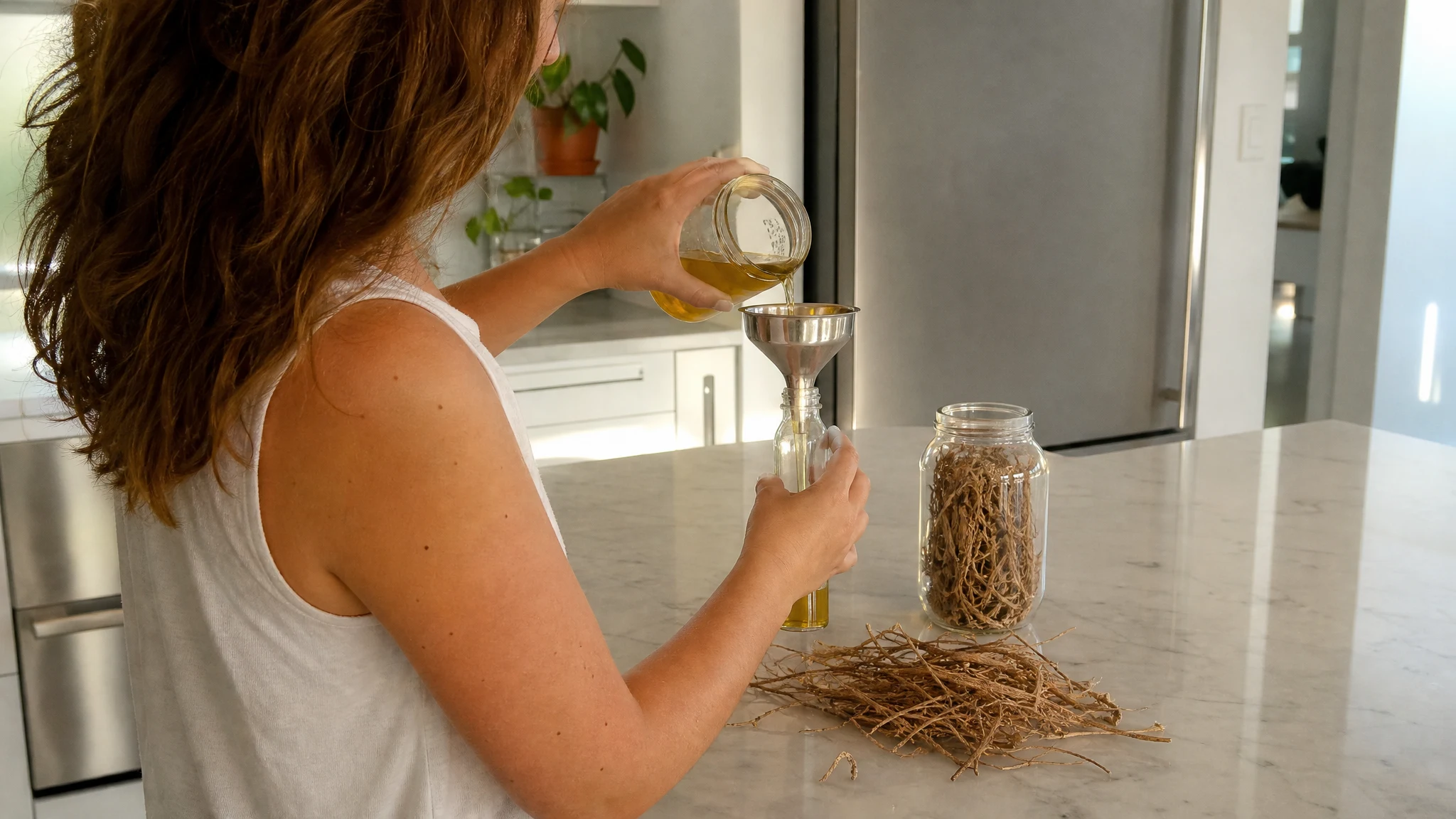
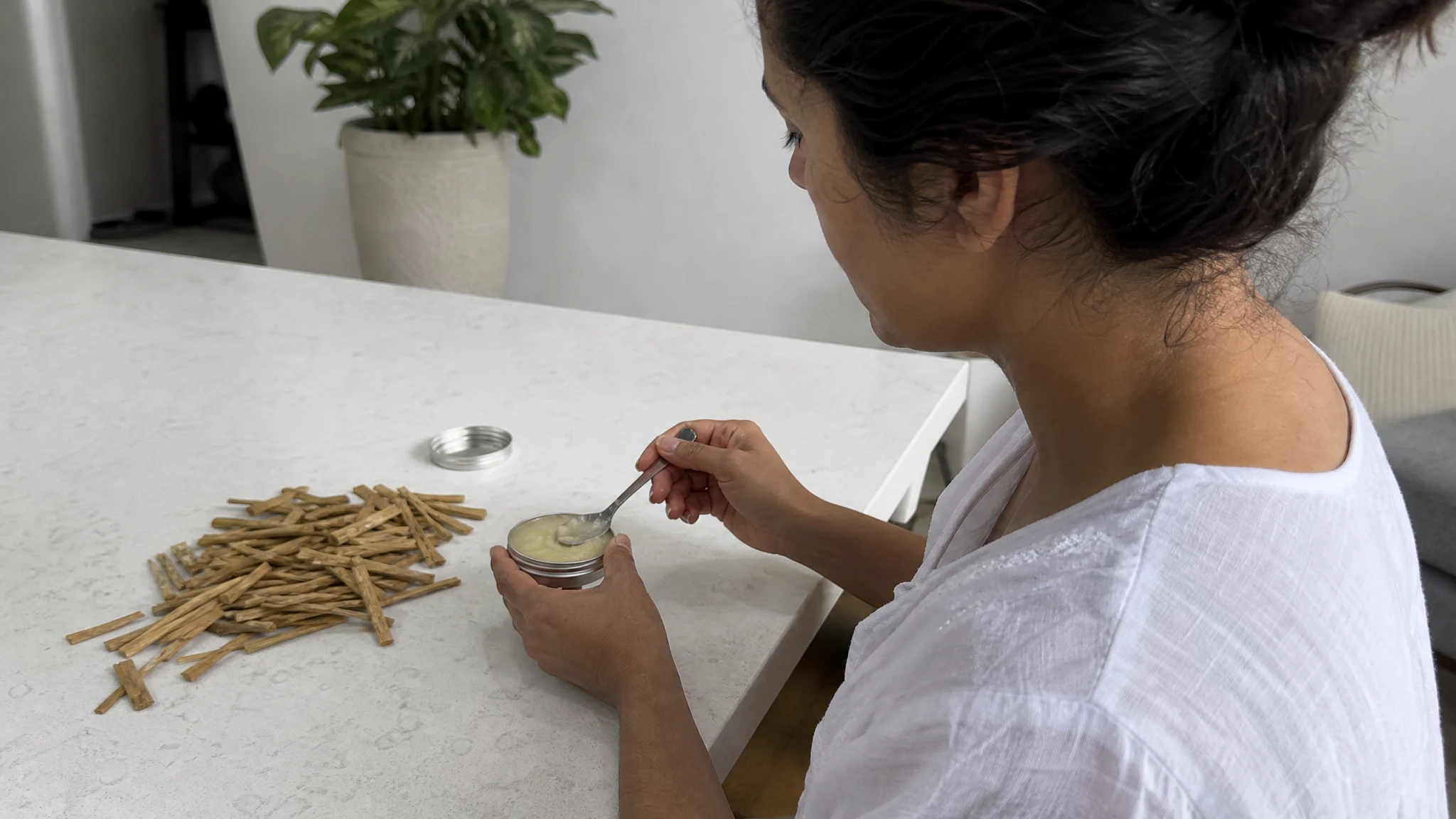
- Melt the beeswax and jojoba together in a heatproof jar set in hot water, stirring until clear.
- Take it off the heat and let it cool until a film starts to form at the edge. Adding the oils after the worst of the heat has passed means less scent evaporates.
- Stir in the vetiver and sandalwood.
- Pour into the tin and leave it undisturbed until set. If it is too firm the next day, remelt with a little more jojoba. If it is too soft, add a little more wax.
Patch test on the inner forearm for a day first, use it on intact skin, and keep it away from eyes, children and pets. To wear it, warm a little between a fingertip and the tin and press it onto one or two spots rather than rubbing a wide area. Keep the tin closed, away from heat and light, and label it with the date and percentages so you can adjust the next batch.
A small tin is also a lovely thing to make because the details are simple. A shallow, wide-mouthed tin is easier to dip into than a deep one, and a tin that closes firmly will not leak in a bag. Smell the balm after it has set and again after a day, since the scent often feels rounder once the wax has cooled completely. Keep a little notebook with the weights beside you, so the next batch can be even better.
Ask where the sandalwood comes from
Sandalwood is the ingredient where origin matters most, and "sandalwood oil" on a label can describe quite different materials, from different species with different chemistry. Ask your supplier for the species name, the country of origin and whether it is plantation grown. We do not sell sandalwood, so we cannot vouch for anyone else's. If you would like to see how the two oils compare before you buy, read our vetiver vs. sandalwood piece.
A word on sensitivity
In a German analysis of patch-test data from dermatology clinics covering 2010 to 2019, sandalwood oil was among the oils that produced reactions. Those were patients already being tested for skin problems, so the figures are not rates for the general public, but they are a good reason to patch test any blend and not only the vetiver in it. If you have reacted to fragrance before, check with a dermatologist before adding a new scented product near your neck, and stop using it if a rash appears.
What to expect
It will not smell like a store-bought vetiver perfume with its top and heart notes. It will smell like a vetiver and sandalwood balm: close, quiet and woody. For the logic of keeping vetiver small, see how to layer vetiver, and for keeping the oil in good shape, how to store vetiver oil.
Keep the oils at 2% or less, ask about the sandalwood and let a small tin do the work.
Vetiver Essential Oil
Vetiver Essential Oil from our own shop, in sizes from 0.5 oz to bulk.
From $20.99
Shop Now →Sources & Further Reading
- Dilution for essential oils, Tisserand Institute
- Jojoba Oil: An Updated Comprehensive Review on Chemistry, Pharmaceutical Uses, and Toxicity. Gad et al., Polymers, 2021
- Contact sensitization to essential oils: IVDK data of the years 2010-2019. Geier et al., Contact Dermatitis, 2022