Vetiver vs Sandalwood: Which Woody Base Fits Your Blend?
Sandalwood has a long reputation as the gold standard of woody base notes, and vetiver is the underdog that perfumers keep reaching for. Put them side by side and the most useful difference has little to do with smell. It is about how easily the name on a bottle can be wrong.
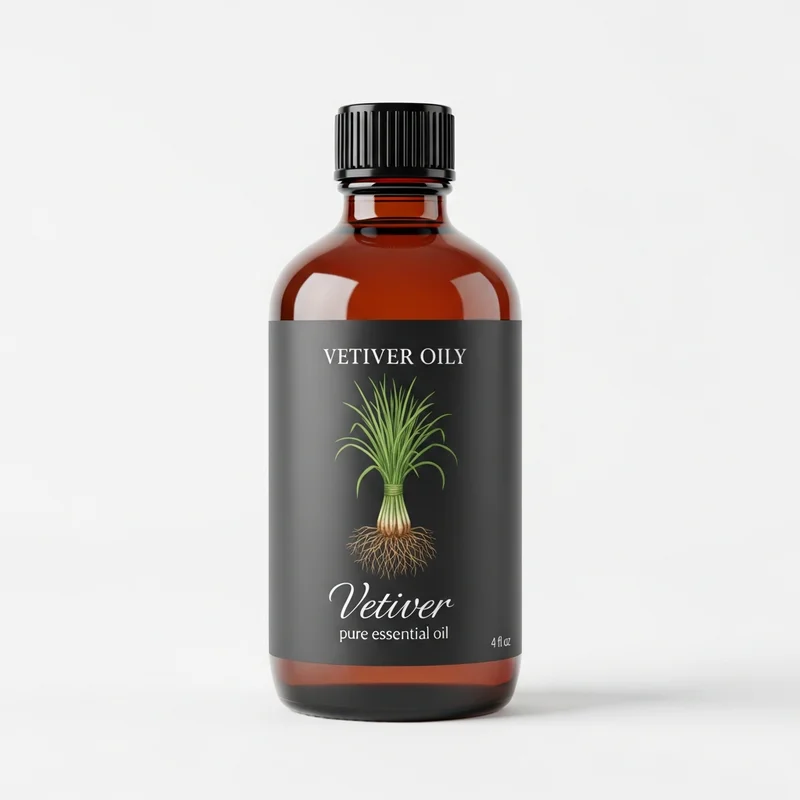
Vetiver Essential Oil
Our own Vetiver Essential Oil, in sizes from 0.5 oz to bulk.
From $20.99
Shop Now →What a 2021 study found in six bottles
A Polish research group bought six oils sold as sandalwood and ran each through gas chromatography with mass spectrometry, comparing the results to the international standard for sandalwood oil, ISO 3518:2002. None of the six met it, mainly because of low alpha-santalol. Only one contained both alpha- and beta-santalol, the pair that marks true Santalum album. Three were dominated by compounds that pointed to Amyris balsamifera oil, a different woody oil. Two were synthetic mixtures, one mostly benzyl benzoate and the other built from fragrance chemicals. The product label gave correct information in only three of the six cases.
Six bottles is a small sample, and it does not give a rate for the whole market. What it does give is a buying habit that works for every oil, vetiver included: ask which species and plant part, ask for the batch report for the lot you are buying, and compare it to the standard. For our oil, the Certificate of Analysis we publish covers one batch and lists density and refractive index. If you need GC-MS, optical rotation or acid value for your lot, ask us in writing through the contact page and get the report before you rely on it. Our guides to spotting adulteration and reading grades explain what to look for.
Two woody bases, two characters
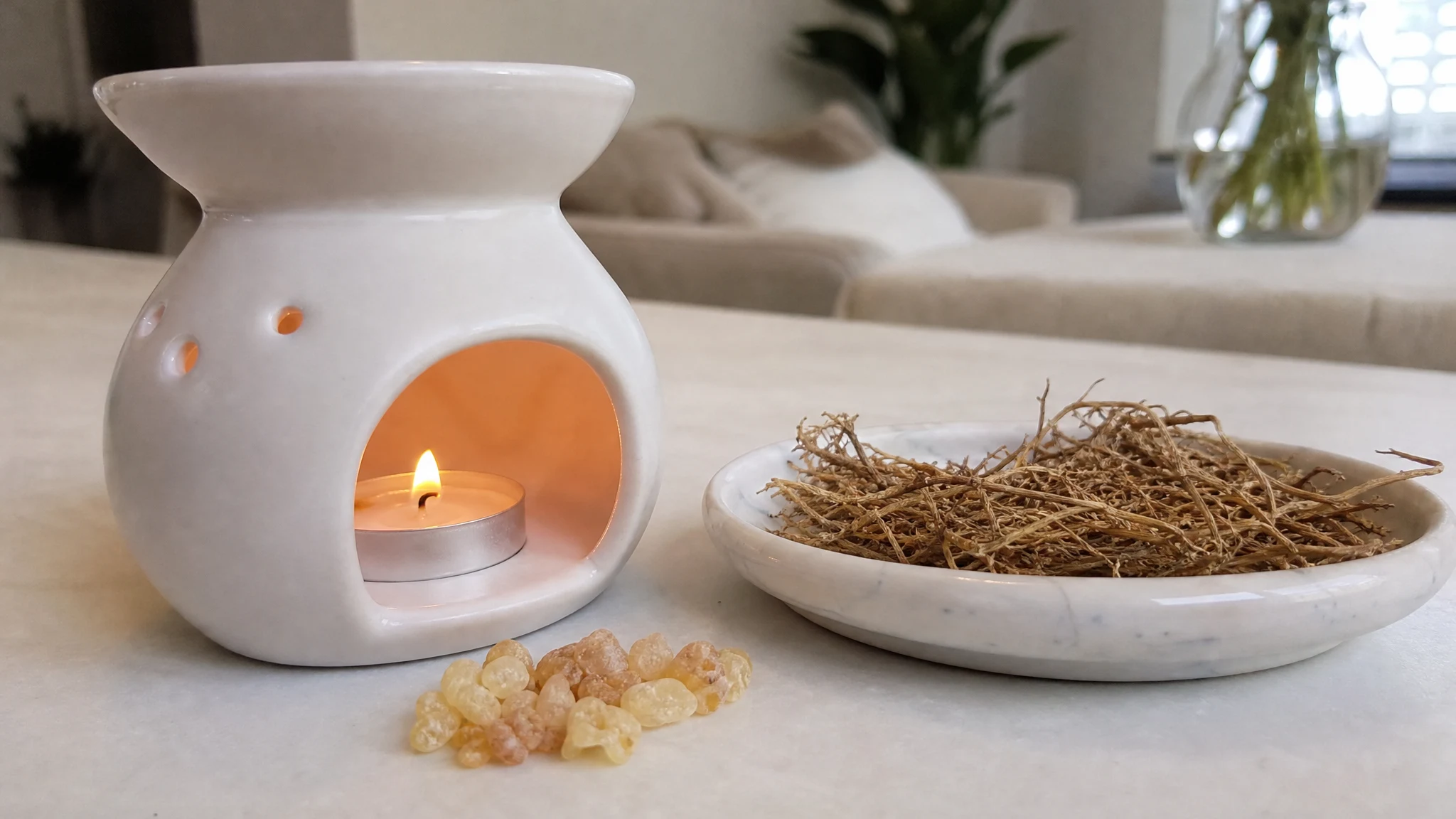
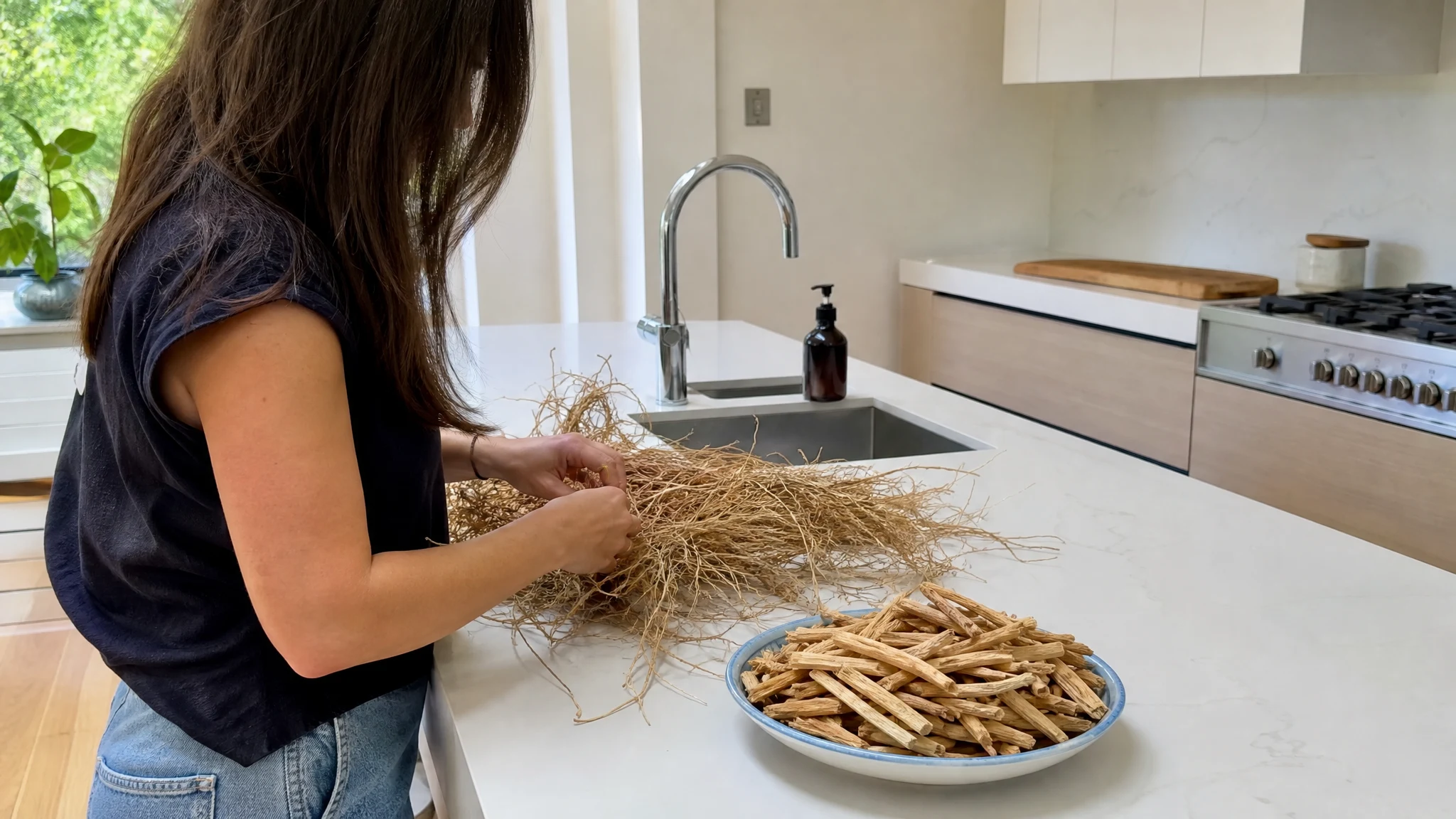
Sandalwood is the classic woody base. Vetiver is earthier and smokier, and the 2021 chemistry paper on its key odorant describes a grapefruit-like lift, an earthy edge and a creamy, sandalwood-like background in the same oil. That last note is one reason the two blend so naturally. We describe our vetiver as deep, earthy and smoky-sweet, and sandalwood is one of the oils we list as a classic partner. If you want to see them together, our formulations for a solid perfume balm and incense cones are worked out from cited guidance and simple arithmetic. We do not sell sandalwood, so smell it before you buy it from anyone.
How to compare them on a strip
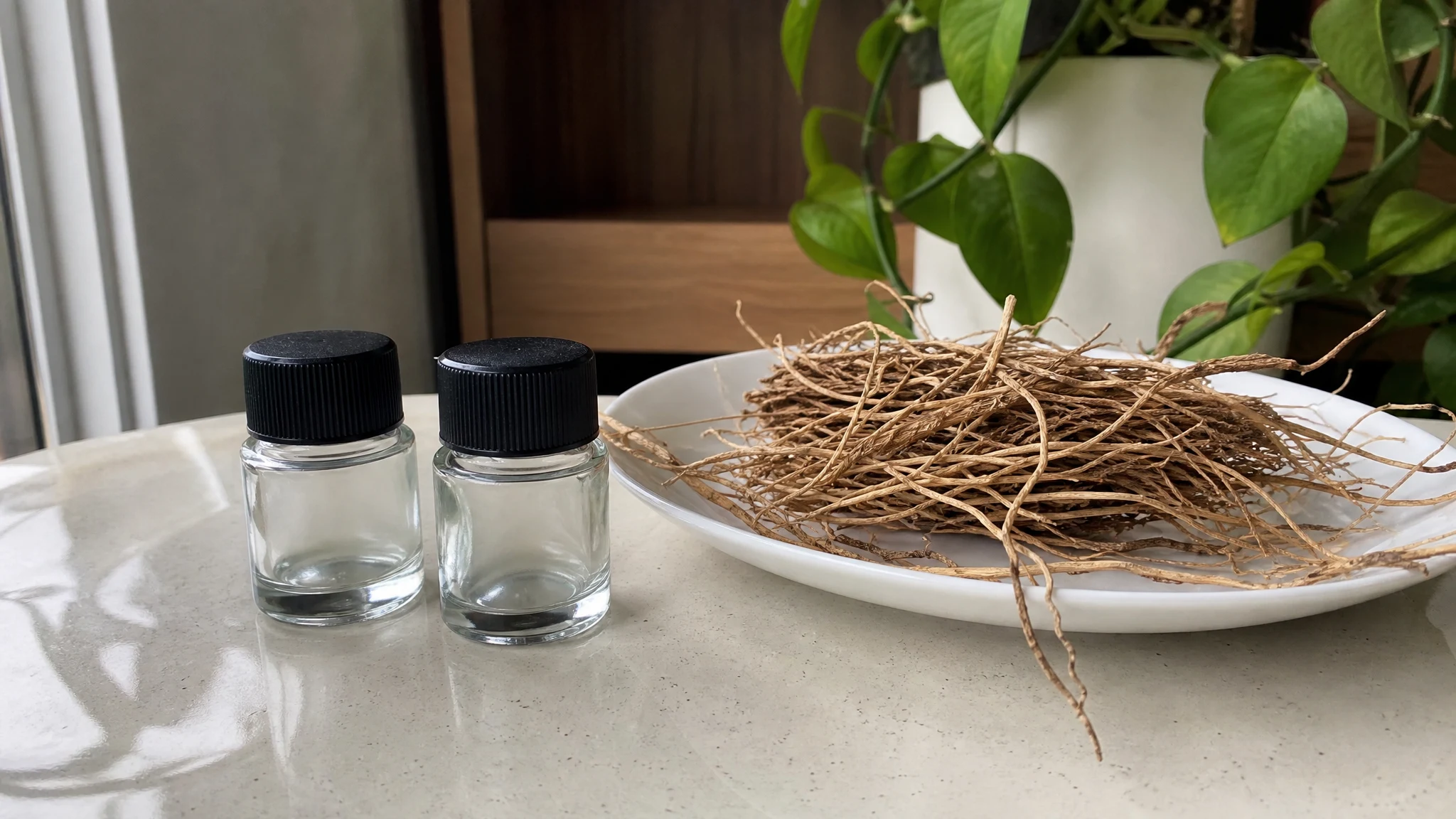
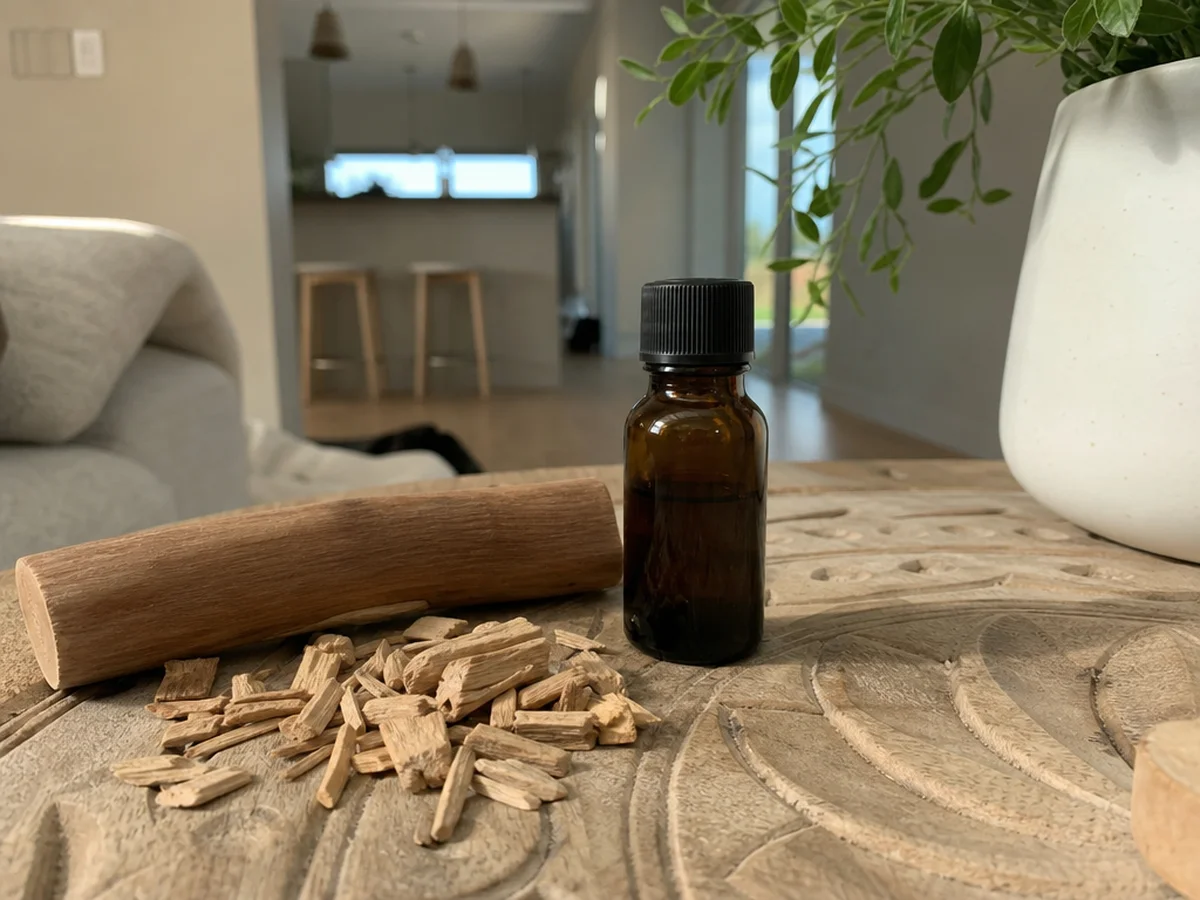
Dip two paper strips, one in each oil, and label them before you do anything else. Smell them right away, after a few minutes and after an hour. Notice which one is smoky, which one is sweeter and which one is still there when you walk back into the room. Vetiver is thick and slow-pouring, so a single drop is plenty, and warming the bottle in your hands makes it easier to handle.
It is worth reading the label while you are at it. Look for the plant's name and the part used, and keep a note of what each bottle says. That habit costs nothing and pays off whenever you want to compare bottles from different suppliers later on.
A word on skin
Fragrant oils can occasionally bother skin, and sandalwood has a number attached to it. In a German dermatology network, 10,930 people with suspected contact dermatitis were patch tested to 12 essential oils between 2010 and 2019. Of those, 908 (8.3%) reacted to at least one, and sandalwood oil was among six oils with more than 1% positive reactions, at 1.8%. These were patients already attending skin clinics, so the figures overstate what an everyday user would see. They do show why a patch test is worth doing with any oil.
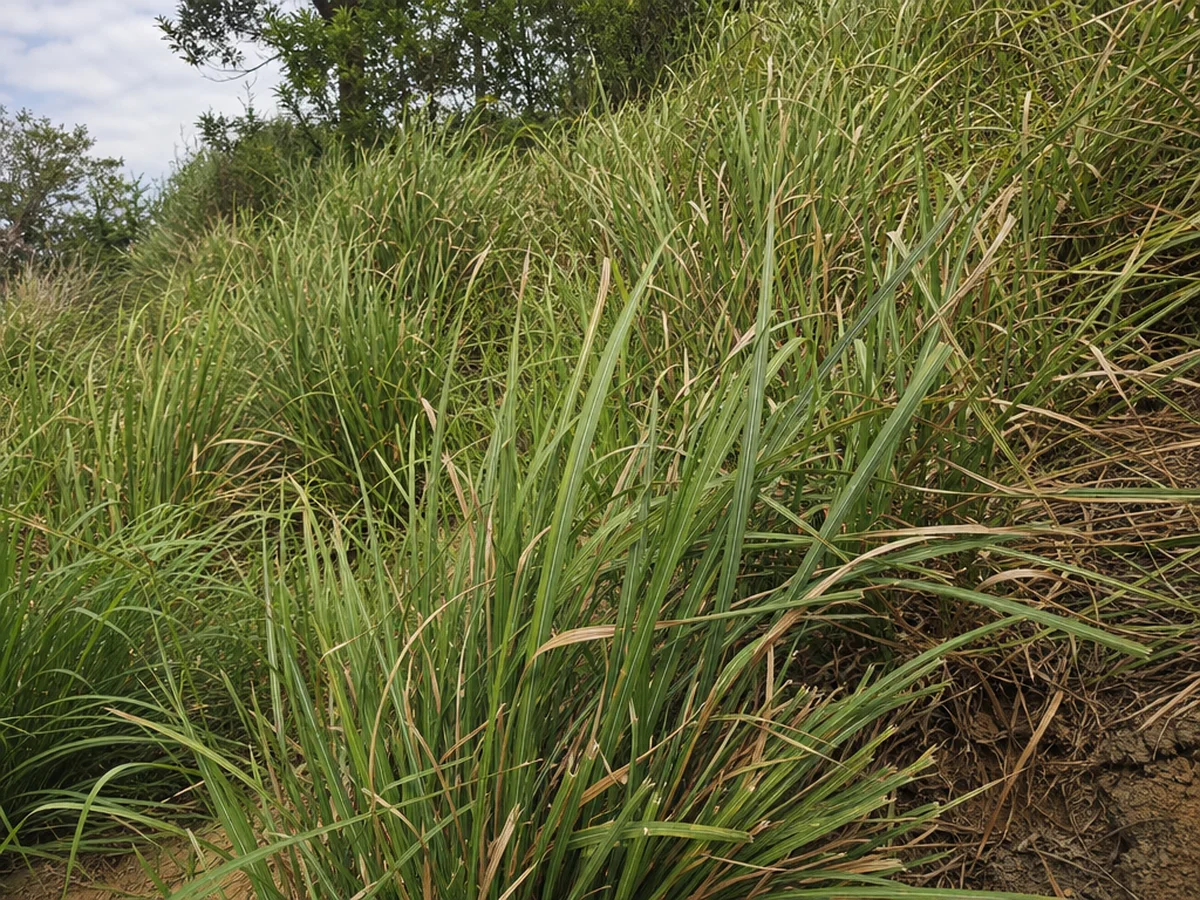
For vetiver, we sell our oil neat and recommend diluting to 0.5% to 2% in a carrier oil. We would start at 0.5%, patch test, and keep it away from eyes, children and pets. Anyone with fragrance allergies or dermatitis should ask a dermatologist before using either oil, and our safety guide has the steps.
If you are building a blend
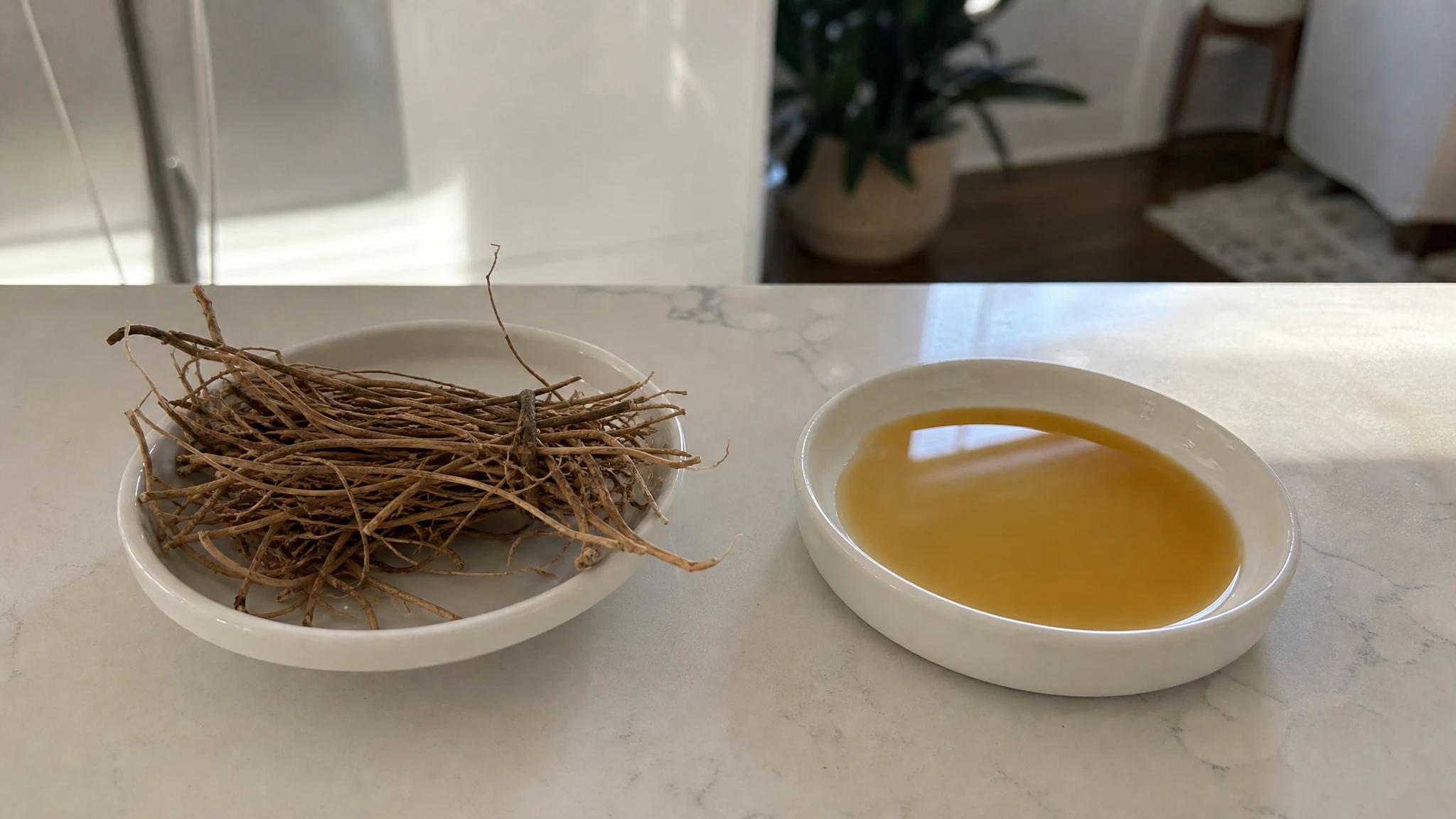
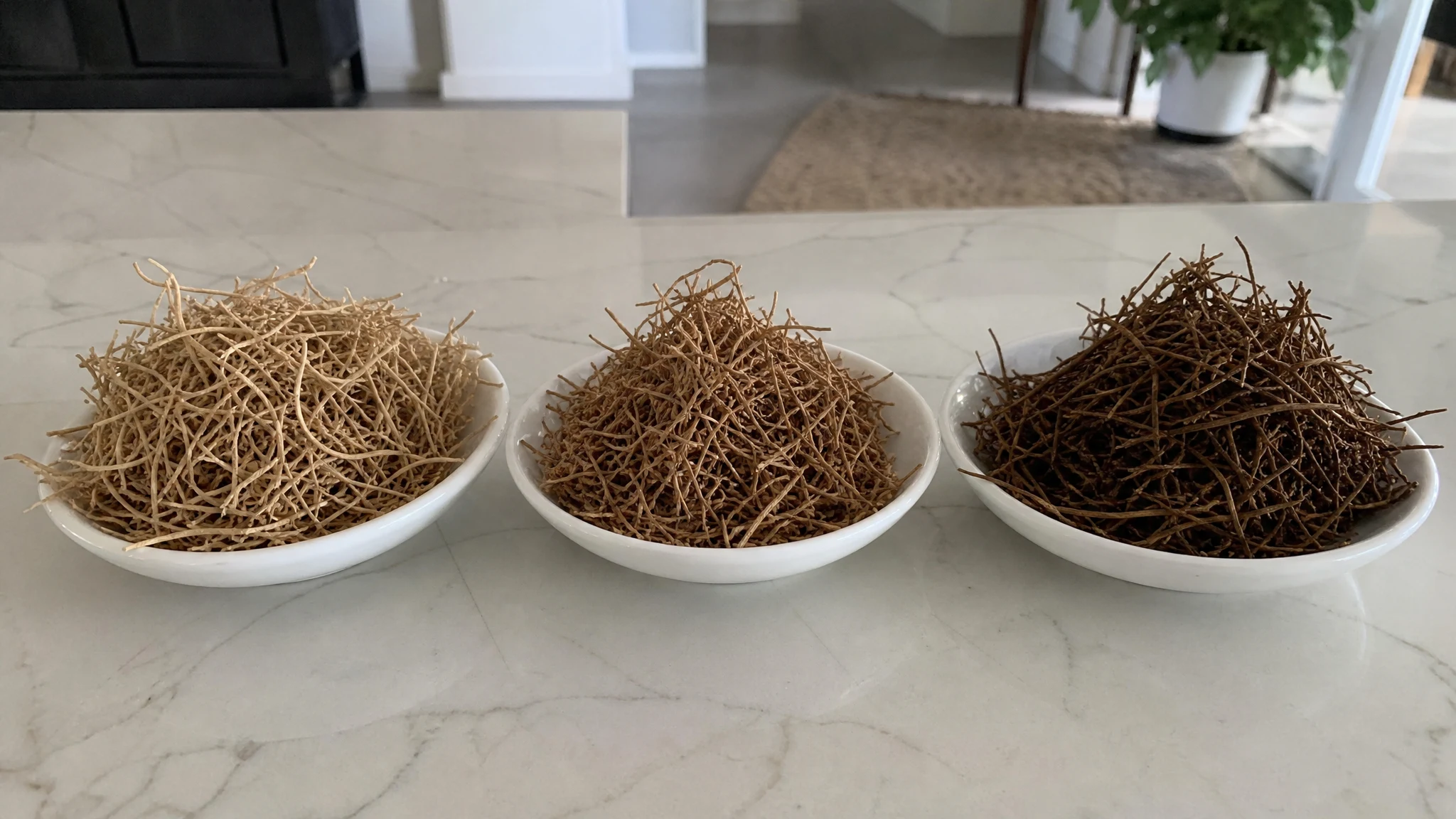
Vetiver is a deep amber to brown, so it can tint pale soaps and candle wax. If you work with pale materials, a small test batch will show you what to expect. Start low: vetiver is strong, and it is easier to add a little more than to take any away. We sell vetiver only, so sandalwood comes from another supplier, and the same habit of testing small applies there.
Which one, and when
Choose vetiver when you want an earthy, smoky base; choose sandalwood when a santalol-driven woodiness is what your blend needs, bought with the species named and an analysis you can read. Choose both when you want depth with a softer edge. If you are weighing a second earthy base, vetiver and patchouli is the next comparison to read, and our perfumery guide shows how a base note earns its place.
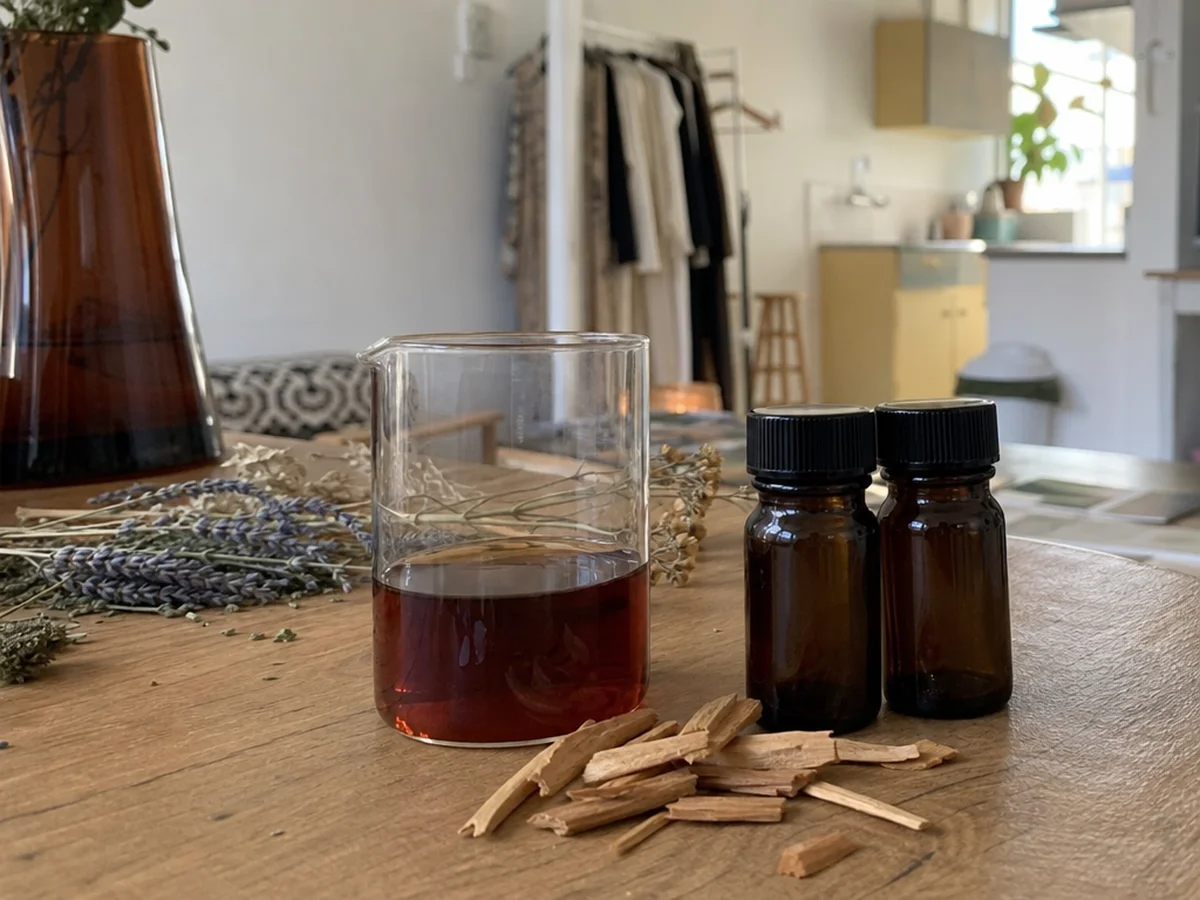
A good base note should be what the label says it is, so the best advice we can give for either oil is the same: ask to see the report.
Our advice for any woody base is to let it sit with you for a few days. Keep the labelled strips somewhere you will pass them, and notice which one you reach for without thinking. That small, unscientific habit tells you what you actually like, and it costs nothing.
Vetiver Essential Oil
Vetiver Essential Oil from our own shop, in sizes from 0.5 oz to bulk.
From $20.99
Shop Now →Sources & Further Reading
- Kucharska M et al., A Comparison of the Composition of Selected Commercial Sandalwood Oils with the International Standard. Molecules, 2021
- Geier J et al., Contact sensitization to essential oils: IVDK data of the years 2010-2019. Contact Dermatitis, 2022
- Ouyang J et al., The Smelling Principle of Vetiver Oil, Unveiled by Chemical Synthesis. Angew Chem Int Ed Engl, 2021