Vetiver Oil vs CBD Oil: What Each One Actually Is
People often ask which of the two is "better for anxiety," and the honest answer starts with a correction: these are not two versions of the same thing. Vetiver oil is a steam-distilled aromatic root oil that we sell for fragrance and cosmetic use. CBD oil is a cannabis-derived extract that the US Food and Drug Administration treats very differently. Looking at each on its own terms is more useful than a head-to-head.
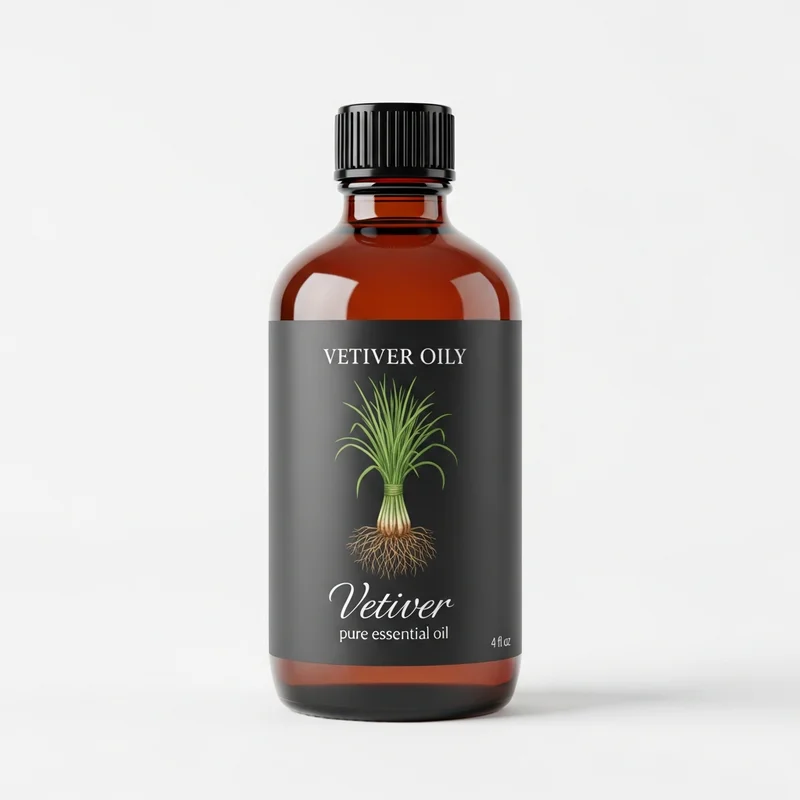
Vetiver Essential Oil
Our own Vetiver Essential Oil, in sizes from 0.5 oz to bulk.
From $20.99
Shop Now →If anxiety is the reason you are here
The National Institute of Mental Health says about a third of US adolescents and adults will experience an anxiety disorder at some point in their lives. Persistent anxiety is a reason to talk to a physician, psychiatrist or psychologist, and neither product below is a substitute for that conversation. We make no claim for our oil about any condition.
What vetiver oil has been studied for
The research is small, and most of it is in animals.
- Rats, inhaled. Male Wistar rats inhaled vetiver oil at 1%, 2.5% or 5% w/w for 7 minutes before a maze test. The 2.5% group showed an anxiolytic-like profile like that of diazepam at 1 mg/kg, along with more c-fos activity in part of the amygdala (Saiyudthong et al., 2015). That is behaviour in a maze, not anxiety in a person.
- Nurses, massage. A 2026 randomised trial gave intensive care nurses a vetiver oil massage, a chamomile-lavender blend or a jojoba placebo for four weeks. Sleep and fatigue scores improved in all three groups, including placebo, and the trial was single-blind (Burkev et al., 2026). It measured sleep and fatigue, not anxiety.
We looked for a trial of vetiver oil alone in people with anxiety and did not find one. The National Center for Complementary and Integrative Health adds that, in a lemon versus lavender comparison, neither scent changed stress indicators, and that little rigorous research exists on aromatherapy for sleep problems.
What CBD has been studied for
CBD has far more clinical research behind it, and the picture is still mixed. The NCCIH reports limited evidence on anxiety: one small study of 24 people with social anxiety disorder found less anxiety in a simulated public-speaking test after CBD than after placebo. It also says effects on sleep in people without other illnesses are uncertain. A 2026 narrative review concluded that preclinical studies consistently suggest anxiolytic-like effects, but clinical evidence remains inconsistent and fails to establish robust therapeutic efficacy, and it calls CBD an investigational agent (Kishi et al., 2026).
CBD also comes with cautions that matter to anyone considering it. The FDA's consumer page notes that Epidiolex, a prescription drug for certain seizure disorders, is the only CBD product it has approved. It reports liver injury seen during that review, says CBD can raise or lower the effects of other medicines, and says combining CBD with alcohol or sedating drugs increases drowsiness. It also reports that many products tested did not contain the CBD amount they claimed, and the NCCIH likewise says over-the-counter products may contain more or less CBD than the label states, plus contaminants such as THC. Anyone who takes prescription medicine should ask a pharmacist or physician before using CBD.
Side by side
| Question | Vetiver essential oil | CBD oil |
|---|---|---|
| What it is | Steam-distilled root oil used for fragrance and cosmetics | Cannabis-derived extract, regulated as above |
| Route in the studies | Inhaled, or diluted on skin in massage | Mostly oral in the clinical trials |
| Human anxiety evidence | None found for the oil alone | Limited and mixed |
| Main cautions | Needs dilution for skin; never taken internally | Liver effects, drug interactions, drowsiness, label accuracy |
For our oil, we recommend 0.5% to 2% in a carrier oil with a patch test first, away from eyes, children and pets, and never taken internally. We found no source that tested the two products together, so we cannot say how they interact.
A practical way to sort the shelf
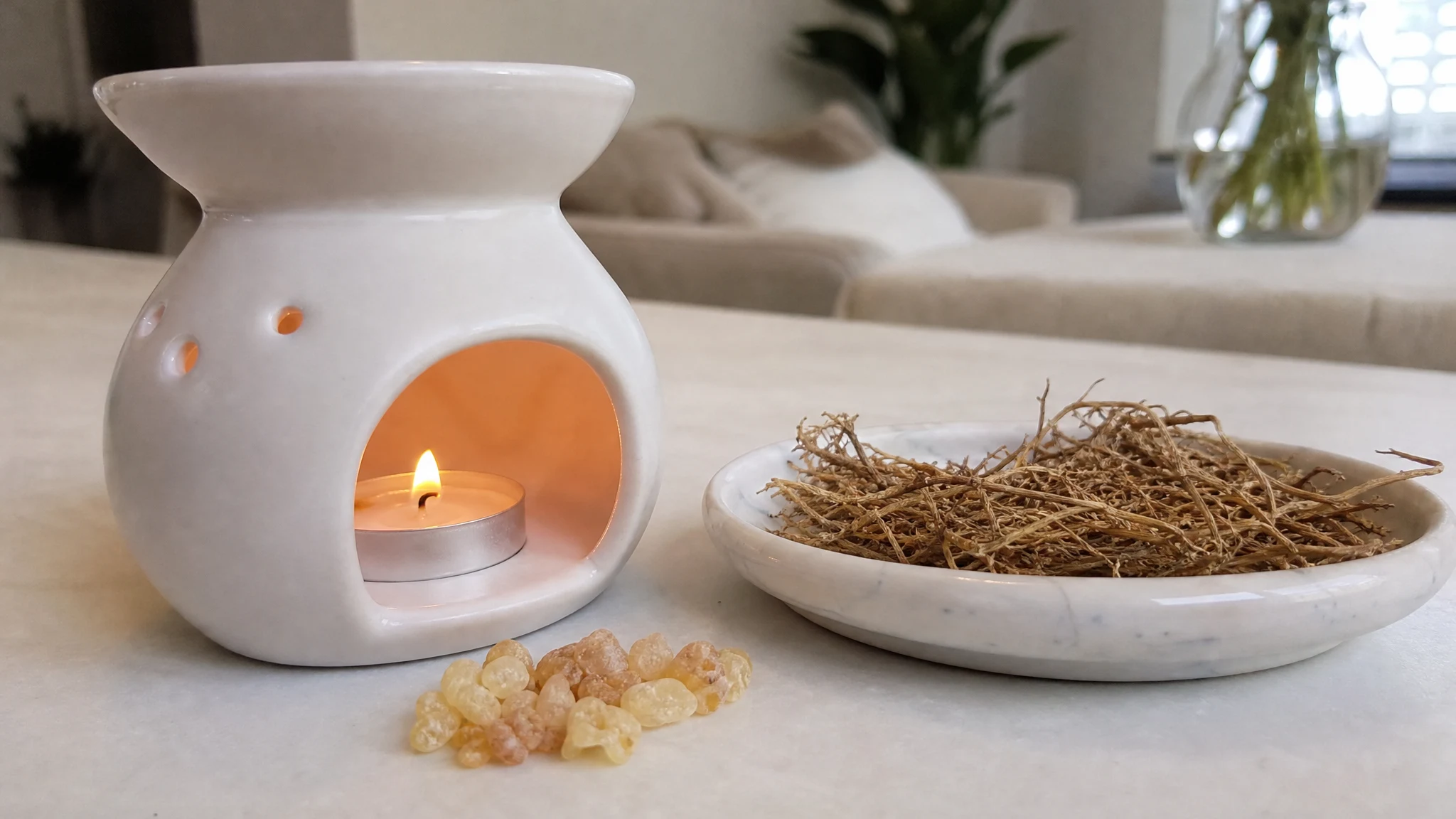
When two oils get lumped together in a search, slow down and read three things on each label: what it is made from, how it is meant to be used, and who is supposed to oversee it. Vetiver is a steam-distilled root oil you smell or dilute onto skin. CBD products come in many forms and have their own rules. Two bottles with the word "oil" on them can be very different things, and the label will tell you more than the headline.
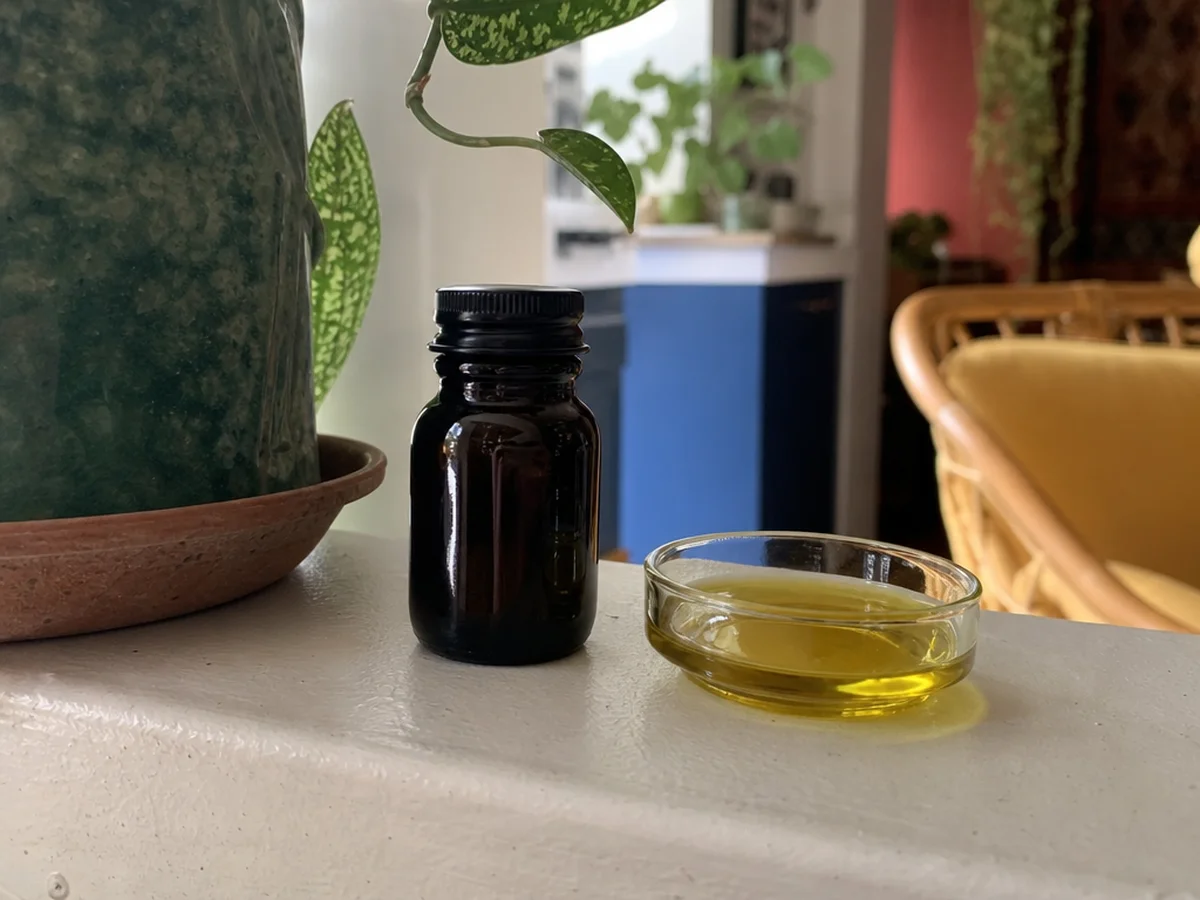
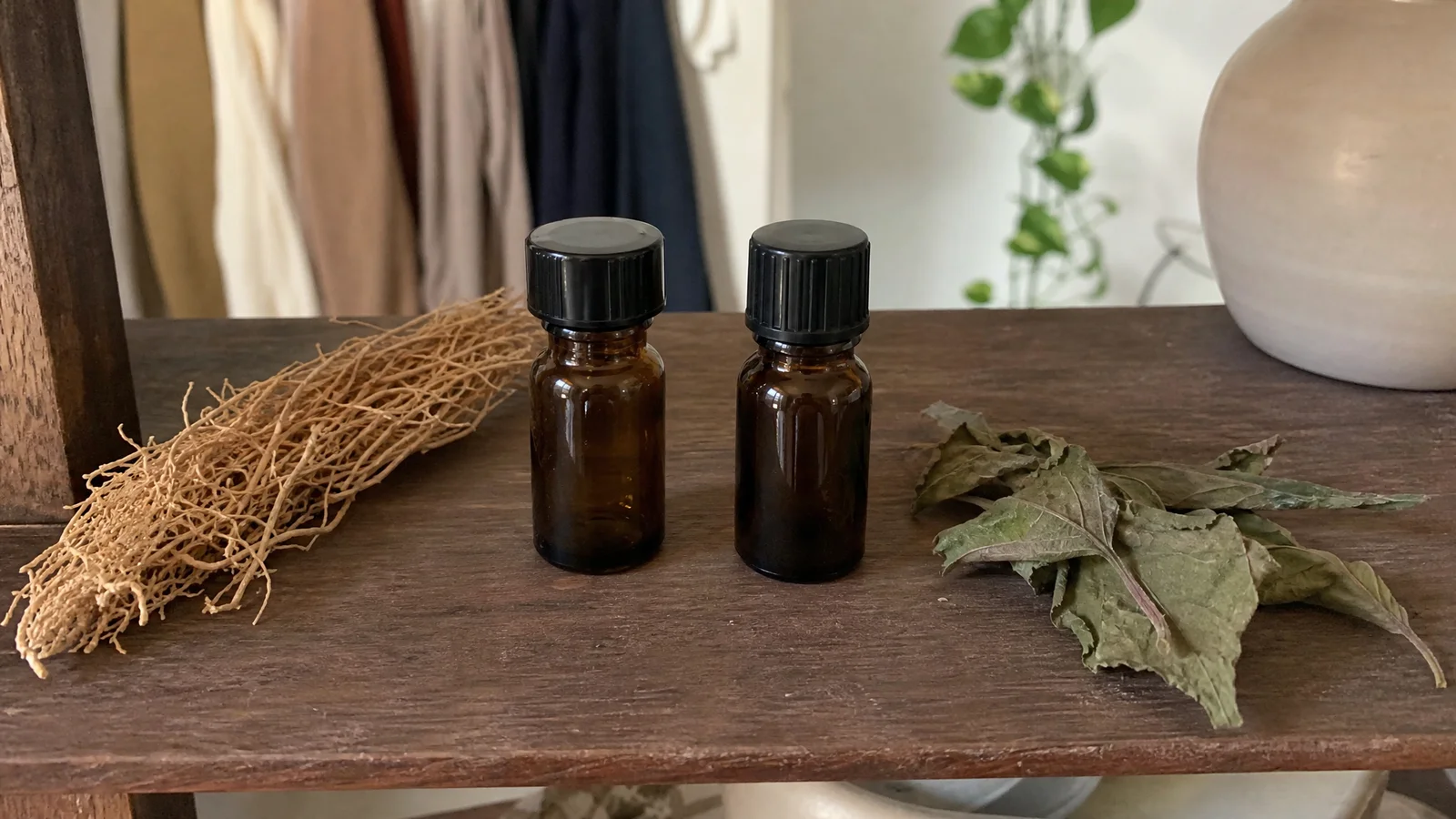
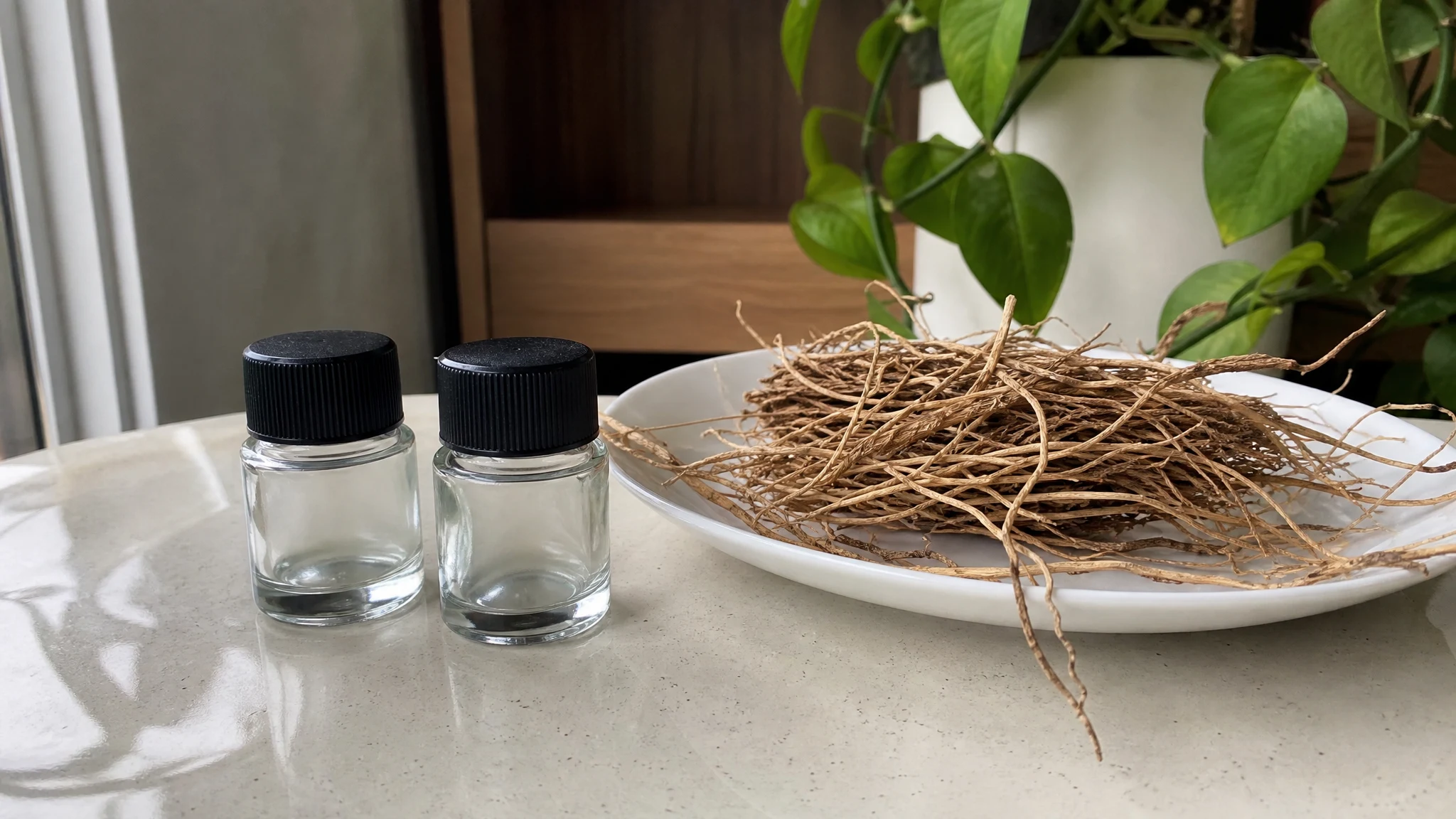
If you do pick up vetiver, give the oil a moment of respect. It is thick and slow-pouring, so warm the bottle in your hands and use a pipette for control. A little goes a very long way.
How we would choose
If you love the smell of vetiver, enjoy it as a smell, and do not buy it expecting an effect on mood. If a clinician is already helping you with anxiety, ask them about your plan before adding anything, and ask a pharmacist before pairing CBD with other medicines. If CBD is what you are shopping for, ask the seller for a batch report showing cannabinoid content, because both the FDA and NCCIH warn that labels can be wrong.
For more on what has been tested, see our post on vetiver oil and anxiety, the sleep evidence post, and the dilution and safety guide. If you are curious how another aromatic oil compares on scent, try vetiver and lavender.
Whichever one catches your eye, write down your question before you shop. If the question is about a health condition, take it to a clinician first. If the question is "what smells good in my home", you are already in the right aisle.
They are different tools with different evidence, and the clearest thing to say about either is what has actually been measured.
Vetiver Essential Oil
Vetiver Essential Oil from our own shop, in sizes from 0.5 oz to bulk.
From $20.99
Shop Now →Sources & Further Reading
- National Institute of Mental Health, reviewed December 2024. Anxiety Disorders. nimh.nih.gov
- Saiyudthong S et al., 2015. Anxiety-like behaviour and c-fos expression in rats that inhaled vetiver essential oil. Natural Product Research. PMID 25553641
- Burkev FG et al., 2026. The Effect of Aromatherapy on Fatigue and Sleep Quality in Intensive Care Nurses: A Randomised Placebo-Controlled Trial. Nursing in Critical Care. PMID 42630137
- NCCIH, updated January 2020. Aromatherapy. nccih.nih.gov
- NCCIH, updated November 2019. Cannabis (Marijuana) and Cannabinoids: What You Need To Know. nccih.nih.gov
- Kishi Y et al., 2026. Psychiatric effects of cannabidiol, cannabinol, and tetrahydrocannabinol: A narrative review of clinical evidence and risk profiles. PCN Reports. PMID 42466383
- US FDA, content current as of March 2020. What You Need to Know (And What We’re Working to Find Out) About Products Containing Cannabis or Cannabis-derived Compounds, Including CBD. fda.gov