Vetiver Oil vs Hydrosol: Strength, Shelf Life and Uses
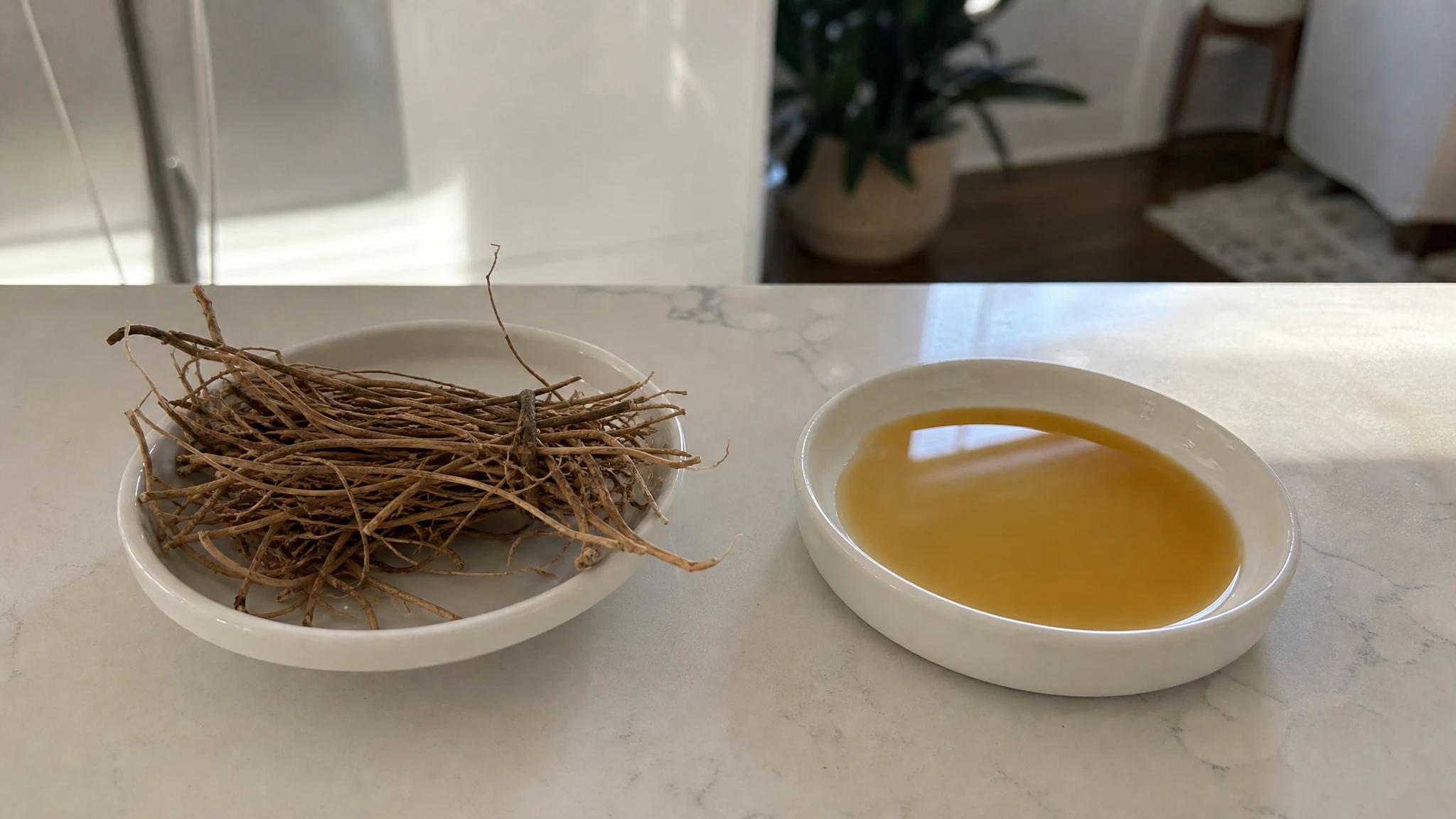
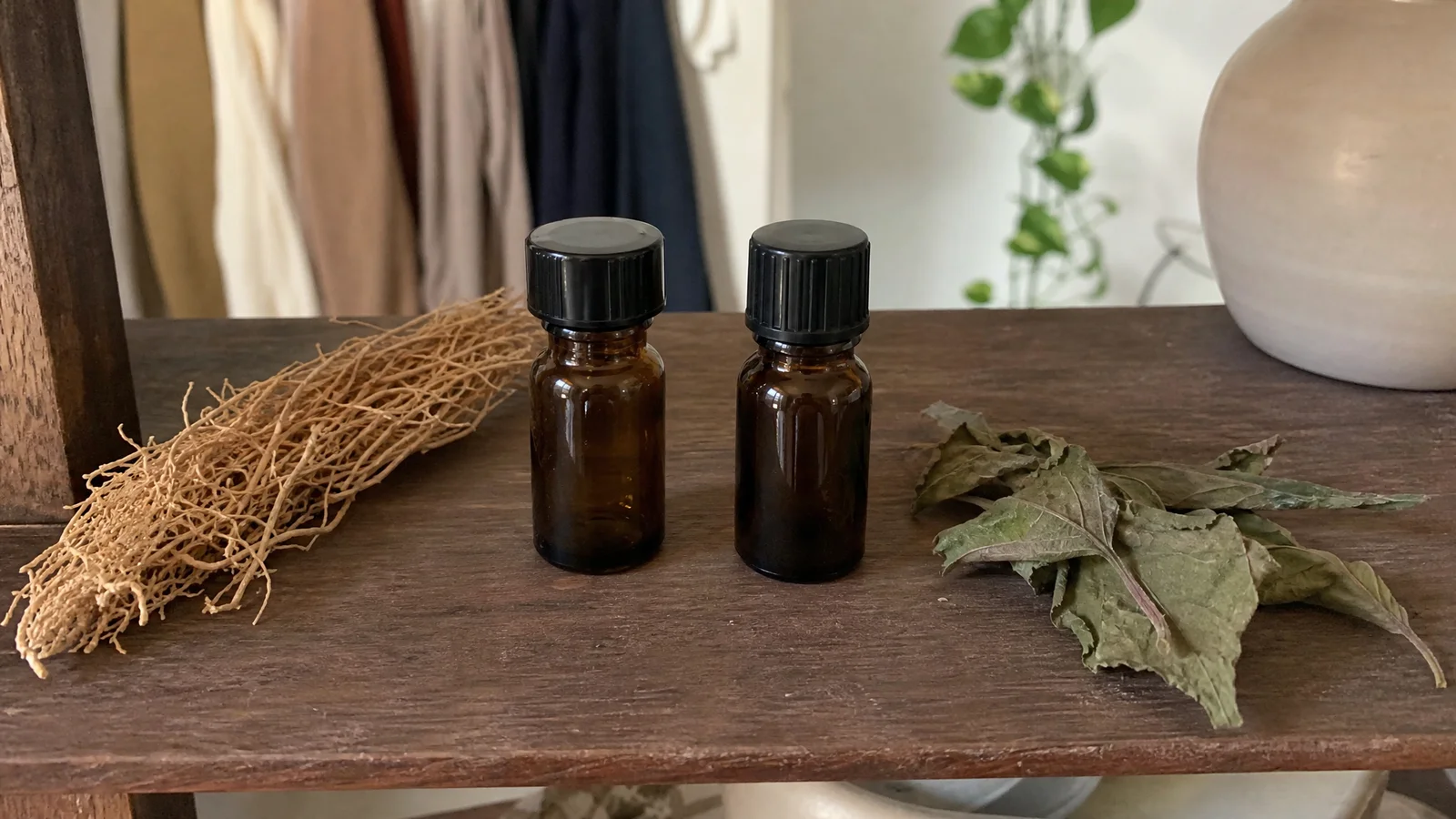
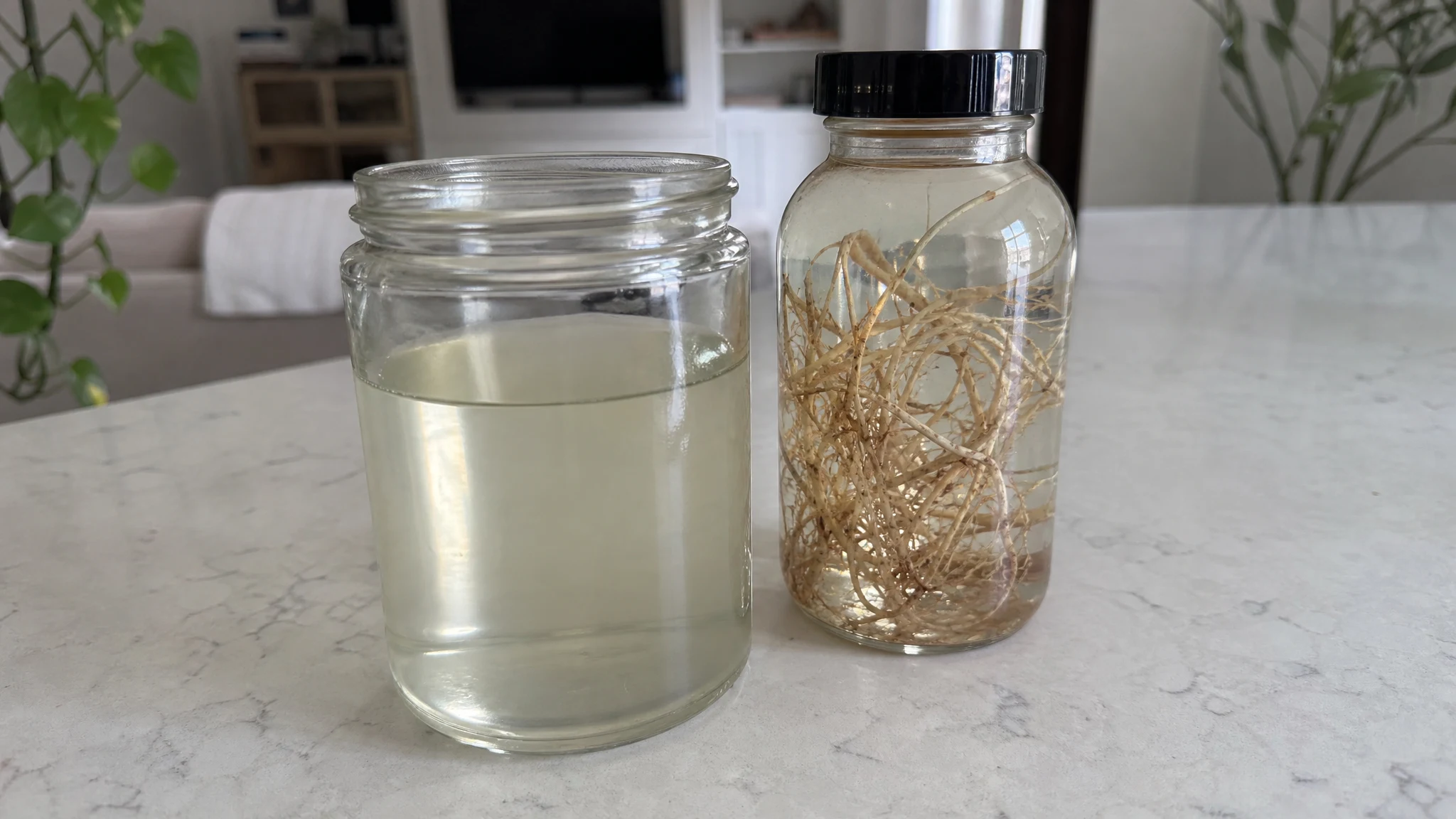
Pour one distillation into a collecting vessel and you get two things: a thick, dark oil and a layer of lightly scented water. The oil is the vetiver oil we sell. The water is the hydrosol, sometimes sold as floral water or hydrolat, and we do not make or sell one. Choosing between them comes down to a surprisingly simple question about water.
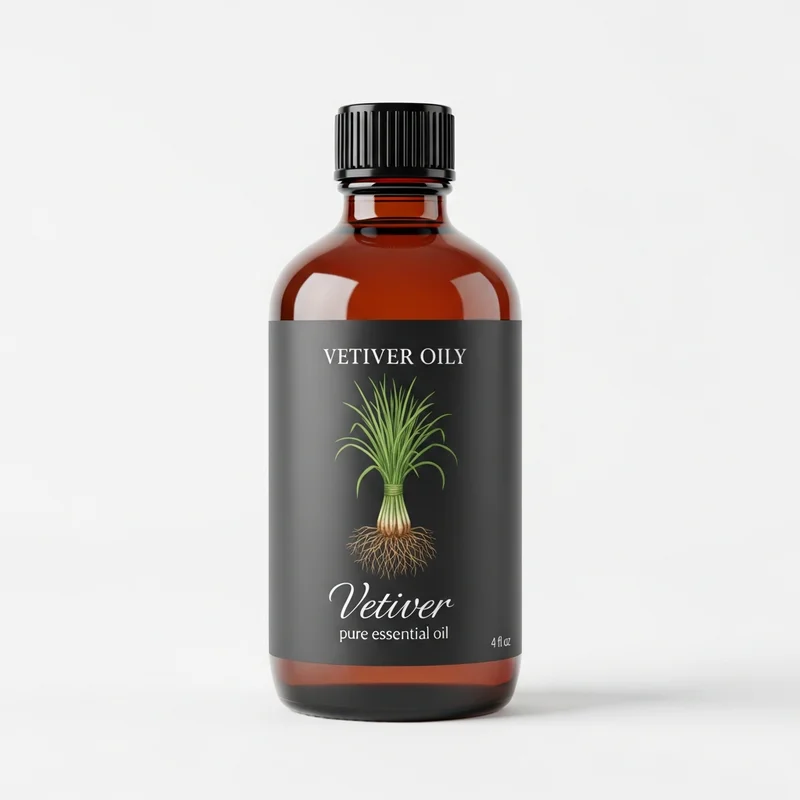
Vetiver Essential Oil
Our own Vetiver Essential Oil, in sizes from 0.5 oz to bulk.
From $20.99
Shop Now →Strength: concentrate versus mist
Distillation condenses steam and oil vapor together, and on cooling the condensate separates into an oil layer and a water layer. The water layer is the hydrosol, and it holds only a little scent. Work on orange blossom and rose hydrosols describes them as containing less than 1 g/L of dispersed essential oil, with median essential-oil concentrations of 677 mg/L for orange blossom and 205 and 116 mg/L for two rose types (Labadie and colleagues, 2015). Those are other plants, so they are not vetiver figures, but they show the scale: under 1 g/L is well below a tenth of a percent, against 100 percent for the oil.
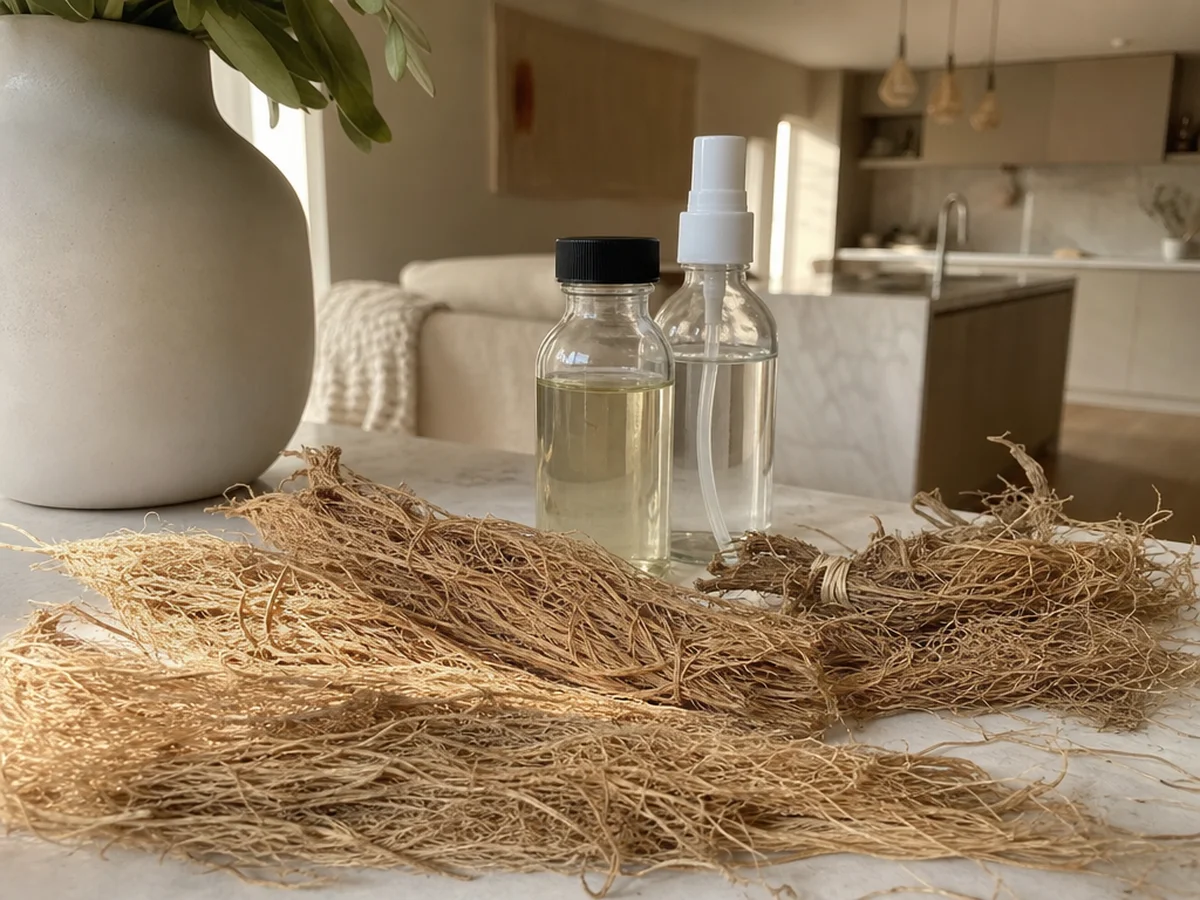
That is a lovely thing for a light, fresh mist and a poor fit for a project that needs real scent strength. A vetiver distillation, according to the Osmotheque, takes more than 24 hours and a huge amount of water, which gives the hydrosol side a sense of how much water is in play. Our own oil's relative density on the Certificate of Analysis is 0.993 at 20 C, close to water, and that suggests, as our inference rather than a documented fact, that vetiver oil may not separate from the water as cleanly as a lighter oil does.
Keeping: dry oil versus living water
This is where the two products really part ways. In the same study of 22 hydrosol samples, every one stored in a non-sterile container grew microbes, at room temperature and in the fridge. Contaminated samples reached about 7 log10 CFU/mL, against a French pharmacopeia recommendation of 2. The organisms were environmental Gram-negative bacteria, mainly Pseudomonas and Burkholderia cepacia complex. The authors concluded that the small amount of essential oil in a hydrosol and cold storage are not enough to keep it stable, and that preservatives or aseptic packaging are needed.
A follow-up from the same group found that several authorized preservatives held spoilage bacteria in check for more than 90 days at 30 C, though only at concentrations close to the authorized limits. It also found that pathogens of concern grew poorly in rose and orange blossom hydrosols, so the main issue is spoilage rather than pathogens (Labadie, Cerutti and Carlin, 2016). Both papers tested rose and orange blossom, not vetiver, and the sensible reading is that any hydrosol should be treated as perishable until the seller shows a microbial test or a preservative system.
The oil is the opposite kind of material. It contains no water, and we say it typically keeps its character for 6 to 8 years in a cool, dark place. That is the long-lived choice for anything you want to keep in a cupboard.
What it will touch
For the oil, our guidance is to dilute to 0.5% to 2% in a carrier oil, patch test first, and keep it away from eyes, children and pets. It is never taken internally. We do not know of a published analysis of vetiver hydrosol, so we cannot tell you how strong one is, how long it lasts, or how skin responds to it. Anyone who is pregnant or has a skin condition should ask a doctor or dermatologist before using any new product on skin. Our safety guide covers the oil's dilution in detail.
Enjoying the oil the simple way
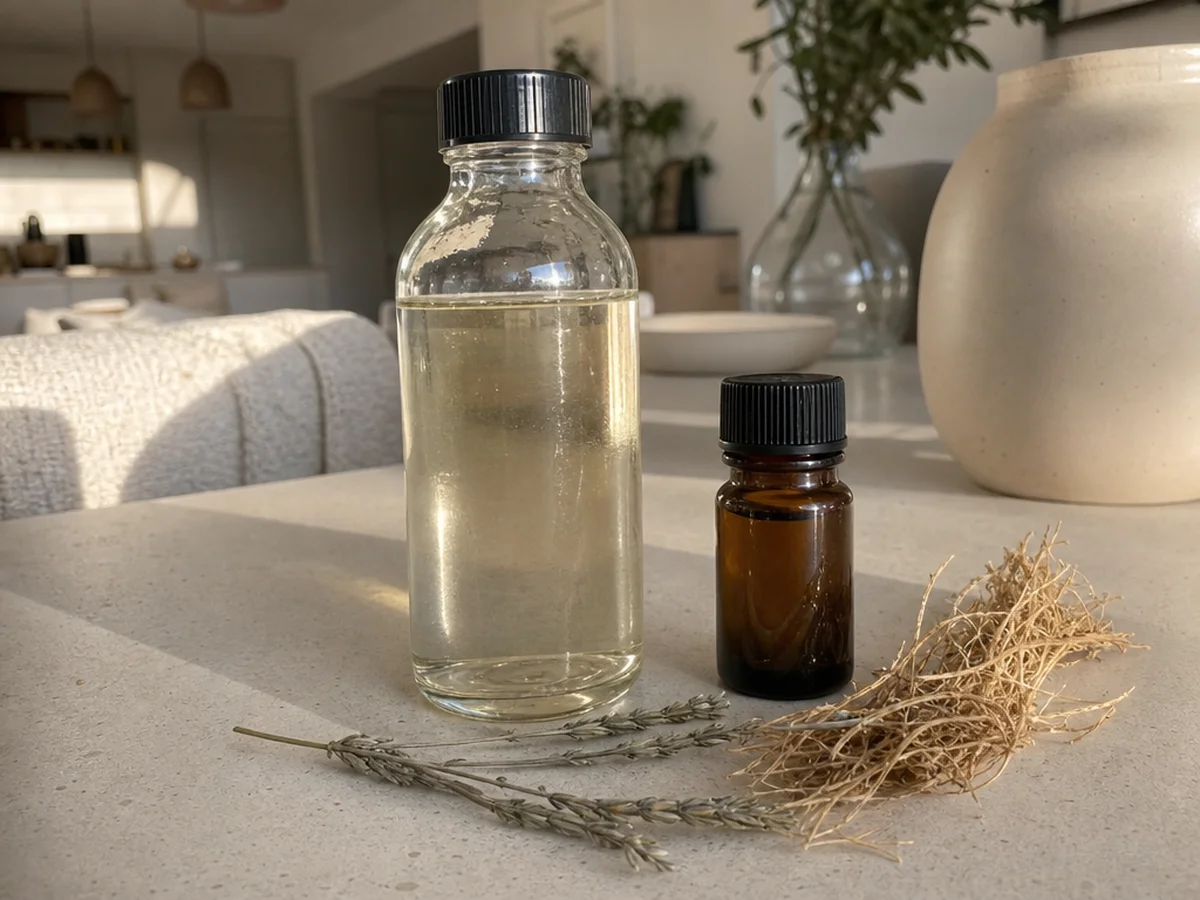
If you are still deciding, our suggestion is to start with the plainest possible trial. Put one drop of the oil on a blotter strip and carry it around the house for an afternoon. You will smell it strongly at first, then softly, then as a faint, earthy trace much later. That slow fade is what a concentrated base note does, and it is the quality people are really after when they say they want vetiver in a room spray or a candle.
A tiny amount goes a long way, so there is no need to be generous. Keep the bottle capped between uses, wipe the neck, and store it somewhere cool and dark. Because the oil holds no water, it asks very little of you in return, which is a real comfort for anyone who has watched a homemade product turn cloudy in the cupboard.
Which one for which job
- Scent in a candle, soap, perfume base or diffuser: the oil, because it carries the aroma and brings no water with it.
- A room or linen mist: look for a hydrosol from a maker who shares a microbial test and names the preservative, or make an alcohol-based or oil-based spray. Our posts on linen spray and room spray cover the practical side.
- A hydrosol anyway: buy from a seller that names the plant, the distillation date and the preservation method, and ask what they use. We cannot vouch for anyone else's, and we sell the oil only.
Short version: oil for strength and shelf life, hydrosol for a light mist if you can find one that is properly stabilized. For more on how vetiver oil is made in the first place, see our extraction post, and for storing the oil itself, our storage post. If the oil is what you were after, the lot report for any bottle is available on request in writing through our contact page.
Vetiver Essential Oil
Vetiver Essential Oil from our own shop, in sizes from 0.5 oz to bulk.
From $20.99
Shop Now →Sources & Further Reading
- Labadie C et al., 2015. Hydrosols of orange blossom (Citrus aurantium), and rose flower (Rosa damascena and Rosa centifolia) support the growth of a heterogeneous spoilage microbiota. Food Research International. PubMed
- Labadie C, Cerutti C, Carlin F, 2016. Fate and control of pathogenic and spoilage micro-organisms in orange blossom (Citrus aurantium) and rose flower (Rosa centifolia) hydrosols. Journal of Applied Microbiology. PubMed
- Bala C, 2015. Vetiver : a palette of woody fragrances - Osmotheque. osmotheque.fr