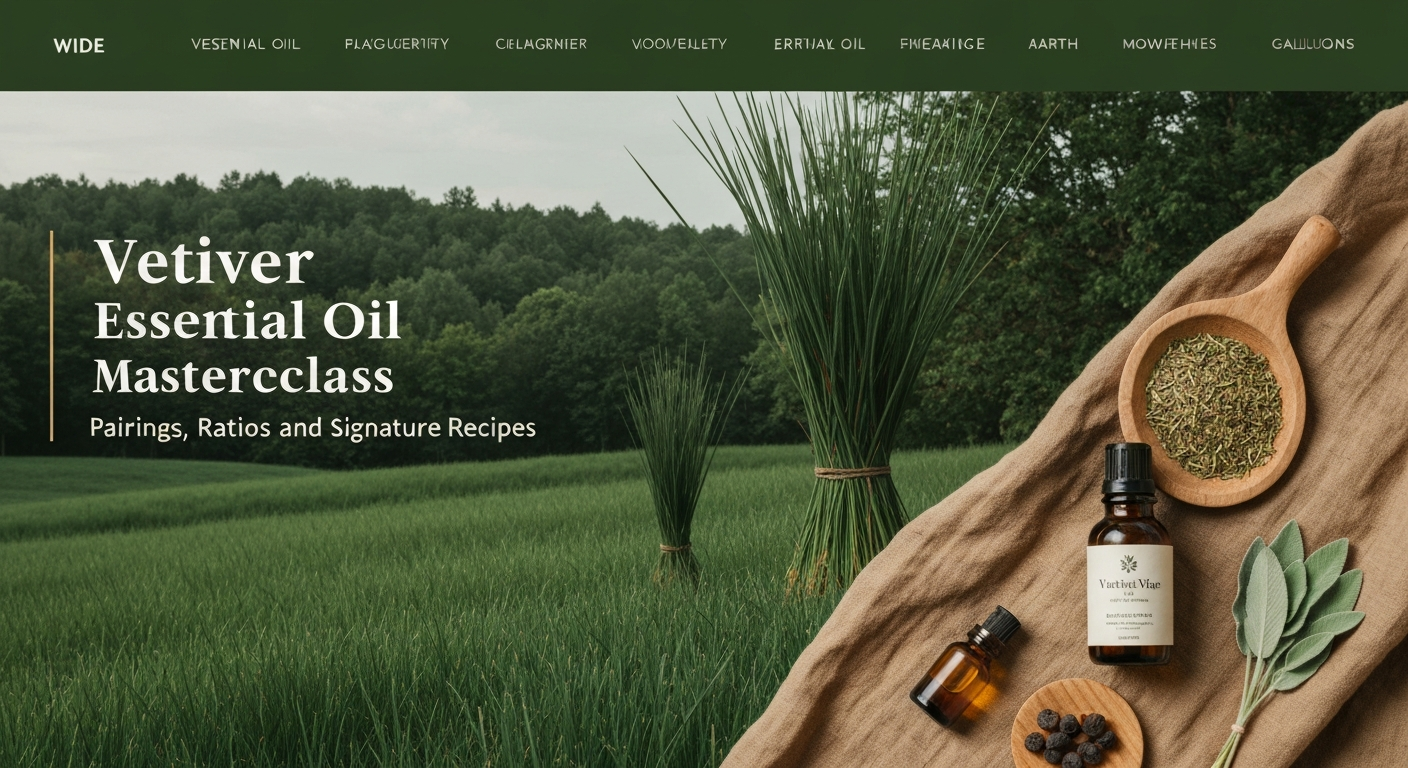
Vetiver Essential Oil Blending Masterclass: Pairings, Ratios, and Signature Recipes
The earthy wisdom of vetiver essential oil reveals itself most beautifully when paired with complementary oils. Like a master perfumer crafting a symphony of scent, learning to blend vetiver opens doorways to deeply grounding, complex aromatic experiences that honor both tradition and personal expression.
Vetiver Essential Oil
Our own Vetiver Essential Oil, in sizes from 0.5 oz to bulk.
From $18.99
Shop Now →This comprehensive guide explores the art and science of vetiver oil blends, offering you the knowledge to create signature combinations that resonate with your unique aromatic preferences while maintaining the oil's revered grounding qualities.
Table of Contents
- Foundations of Vetiver Blending
- Understanding Aromatic Families
- Classic Vetiver Pairings
- Mastering Blending Ratios
- Signature Blend Recipes
- Seasonal Blending Approaches
- Safety Guidelines and Best Practices
- Storage and Aging Your Blends
Key Takeaways
- Vetiver serves as both an anchoring base note and a bridging element in complex blends
- Understanding aromatic families helps predict which oils will create harmonious vetiver essential oil combinations
- Proper dilution ratios are essential for safety and optimal scent development
- Aging blends allows aromatic molecules to marry and develop deeper complexity
- Each application method (diffusion, topical, ambient) requires different blending approaches
Foundations of Vetiver Blending
Before exploring specific vetiver oil blends, it's essential to understand vetiver's unique aromatic profile and how it interacts with other essential oils. Vetiver's complex molecular composition creates a foundation that can anchor light, volatile oils while being lifted by brighter top notes.
Vetiver's Aromatic Character
Vetiver essential oil presents as a rich, earthy base note with nuanced facets that emerge depending on its companions. The oil's primary components—including vetiverol, khusimol, and various sesquiterpenes—create depth and tenacity that traditional perfumery has valued for centuries.
In the context of blending, vetiver functions as:
- Grounding anchor: Provides stability and longevity to lighter oils
- Aromatic bridge: Connects disparate scent families through its complex profile
- Depth creator: Adds sophisticated base notes that evolve over time
- Balancing element: May help temper overly sweet or sharp aromatics
Blending Philosophy
Successful vetiver blending embraces the principle of aromatic harmony—creating compositions where each element supports and enhances the others. Rather than competing for attention, well-blended vetiver combinations create unified aromatic experiences that tell complete scent stories.
Understanding Aromatic Families

Creating harmonious vetiver blending guide requires understanding how different aromatic families interact with vetiver's earthy complexity. Each family brings unique characteristics that can complement or contrast with vetiver's grounding nature.
Citrus Family Interactions
Citrus oils provide bright, uplifting top notes that beautifully contrast vetiver's earthiness. These volatile compounds evaporate quickly, making vetiver's persistence valuable for extending citrus presence in blends.
Harmonious citrus partners include:
- Bergamot: Its Earl Grey-like sophistication pairs elegantly with vetiver's complexity
- Sweet Orange: Creates warm, approachable blends with universal appeal
- Grapefruit: Adds energizing brightness while vetiver provides grounding balance
- Lemon: Offers crisp clarity that highlights vetiver's subtle facets
Floral Family Synergies
Floral oils bring romantic, nurturing qualities that can soften vetiver's intensity while benefiting from its anchoring properties. The key lies in choosing florals that complement rather than compete with vetiver's earthiness.
Compatible floral companions:
- Lavender: Creates calming, balanced blends perfect for evening use
- Geranium: Adds rosy warmth with herbaceous undertones that echo vetiver's complexity
- Ylang-ylang: Contributes exotic sweetness balanced by vetiver's grounding influence
- Rose: Forms sophisticated, deeply romantic combinations
Woody Family Harmonies
Woody oils share vetiver's grounding qualities while offering different aromatic perspectives on earthiness and depth. These combinations often create the most seamlessly integrated blends.
Woody partners include:
- Sandalwood: Adds creamy, meditative qualities to vetiver's earthiness
- Cedarwood: Contributes dry, pencil-like woody notes
- Patchouli: Creates intensely earthy, bohemian-inspired combinations
- Frankincense: Brings sacred, resinous depth
Herbaceous and Green Families
Herbaceous oils can either complement vetiver's natural green facets or provide fresh contrast to its earthiness. These combinations often feel most natural and garden-like.
Herbaceous companions:
- Clary Sage: Offers nutty, wine-like complexity
- Basil: Provides fresh, culinary brightness
- Rosemary: Adds invigorating, camphoraceous clarity
- Eucalyptus: Contributes cooling, medicinal freshness
Classic Vetiver Pairings
Certain combinations have stood the test of time in traditional aromatherapy and perfumery. These classic what oils blend with vetiver pairings offer reliable starting points for both beginners and experienced blenders.
The Sacred Trio: Vetiver, Sandalwood, and Frankincense
This combination has been treasured across cultures for meditation and spiritual practices. Each oil contributes distinct qualities while creating synergistic depth.
Aromatic profile: Deep, resinous, and profoundly grounding with sweet, woody undertones.
Traditional uses: Meditation spaces, prayer rooms, and contemplative environments.
Basic ratio: 3 parts vetiver, 2 parts sandalwood, 1 part frankincense
The Garden Walk: Vetiver and Lavender
Perhaps the most accessible vetiver pairing, this combination balances earthiness with floral calm. The contrast creates complexity while maintaining approachability.
Aromatic profile: Herbaceous, calming, with smooth transitions from fresh to earthy.
Popular applications: Evening relaxation, bedroom diffusion, calming personal care products.
Basic ratio: 2 parts vetiver, 3 parts lavender
The Sunny Day: Vetiver and Bergamot
This pairing demonstrates how opposites attract in aromatherapy. Bergamot's bright, citrusy character dances beautifully above vetiver's earthy foundation.
Aromatic profile: Uplifting yet grounded, sophisticated and energizing.
Ideal contexts: Morning routines, workspace environments, mood-balancing applications.
Basic ratio: 1 part vetiver, 4 parts bergamot
The Earth Mother: Vetiver and Patchouli
For those drawn to intensely earthy aromatics, this pairing creates deeply grounding experiences. Both oils share earthy qualities while offering distinct personalities.
Aromatic profile: Rich, earthy, with wine-like depth and complexity.
Best suited for: Those who appreciate bold, earthy scents and grounding experiences.
Basic ratio: 2 parts vetiver, 1 part patchouli
The Evening Garden: Vetiver and Ylang-Ylang
This exotic pairing balances vetiver's earthiness with ylang-ylang's sweet, floral intensity. The result feels both tropical and grounding.
Aromatic profile: Sweet, exotic, with earthy depth and floral richness.
Perfect for: Romantic environments, tropical-inspired blends, evening use.
Basic ratio: 3 parts vetiver, 1 part ylang-ylang
Mastering Blending Ratios

Understanding proper ratios is crucial for successful vetiver essential oil combinations. Vetiver's intensity means that a little often goes a long way, and finding the right balance requires both knowledge and experimentation.
The Base Note Principle
As a base note, vetiver typically comprises 10-30% of most blends. Its persistence means it will be the last scent perceived, making its proportion critical to the overall impression.
| Blend Type | Vetiver Percentage | Characteristics |
|---|---|---|
| Vetiver-dominant | 40-60% | Deeply earthy, grounding, intense |
| Vetiver-prominent | 25-40% | Clearly earthy with balanced complexity |
| Vetiver-supporting | 15-25% | Grounding base for brighter top notes |
| Vetiver-accenting | 5-15% | Subtle earthiness, adds depth |
Working with Drop Ratios
For small-batch blending, working with drop ratios provides precision and reproducibility. Here are foundational ratios for different blend styles:
Balanced Blends (Total: 10-12 drops)
- Earth and Sky: 3 drops vetiver + 6 drops bergamot + 2 drops lavender
- Garden Meditation: 4 drops vetiver + 4 drops lavender + 3 drops sweet orange
- Sacred Grove: 4 drops vetiver + 3 drops sandalwood + 2 drops frankincense + 1 drop rose
Vetiver-Forward Blends (Total: 10-12 drops)
- Earthen Temple: 6 drops vetiver + 2 drops sandalwood + 2 drops patchouli + 1 drop ylang-ylang
- Deep Forest: 5 drops vetiver + 3 drops cedarwood + 2 drops pine + 1 drop bergamot
Dilution Guidelines for Different Applications
Safe dilution is essential for topical applications. Always perform patch tests and consult with qualified aromatherapy practitioners when creating products for skin use.
| Application | Dilution Rate | Example (1 oz carrier) |
|---|---|---|
| Facial products | 0.5-1% | 3-6 drops total blend |
| Body products | 1-2% | 6-12 drops total blend |
| Massage oils | 2-3% | 12-18 drops total blend |
| Diffusion | Neat | 3-5 drops total per 100ml water |
Signature Blend Recipes
These carefully crafted recipes represent different aromatic moods and applications. Each has been designed to showcase vetiver's versatility while creating distinctive sensory experiences.
Grounding Blends
"Root and Stone" - Deep Earth Meditation
For profound grounding and contemplative practices
- 5 drops vetiver
- 3 drops sandalwood
- 2 drops patchouli
- 1 drop frankincense
Application: Diffuse during meditation or add to carrier oil for grounding massage. (See: NIH — Vetiver Research.) This blend works beautifully in vetiver roller blends for on-the-go centering.
"Quiet Morning" - Gentle Awakening
For peaceful starts and mindful mornings
- 3 drops vetiver
- 4 drops sweet orange
- 3 drops lavender
- 1 drop geranium
Application: Perfect for bedroom diffusion or morning personal care routines.
Uplifting Blends
"Sunrise Garden" - Energizing Earth
For motivation balanced with stability
- 2 drops vetiver
- 5 drops bergamot
- 3 drops lemon
- 1 drop rosemary
Application: Ideal for workspace diffusion or morning shower products.
"Tropical Awakening" - Exotic Energy
For creative inspiration and joyful grounding
- 3 drops vetiver
- 4 drops grapefruit
- 2 drops ylang-ylang
- 2 drops lime
Application: Perfect for creative spaces or uplifting personal fragrance.
Evening Blends
"Velvet Dusk" - Luxurious Wind-Down
For sophisticated evening relaxation
- 4 drops vetiver
- 3 drops lavender
- 2 drops bergamot
- 1 drop rose
Application: Beautiful for evening baths, bedroom diffusion, or as inspiration for DIY vetiver perfume projects.
"Sacred Night" - Deep Rest
For profound relaxation and sleep preparation
- 4 drops vetiver
- 4 drops lavender
- 2 drops sandalwood
- 1 drop chamomile
Application: Ideal for pillow sprays, evening massage oils, or bedtime diffusion.
Seasonal Specialties
"Autumn Equinox" - Balanced Transitions
For seasonal changes and inner balance
- 4 drops vetiver
- 3 drops sweet orange
- 2 drops clary sage
- 1 drop cinnamon leaf
Application: Perfect for fall diffusion or seasonal personal care products.
"Spring Renewal" - Fresh Beginnings
For new growth and gentle energy
- 3 drops vetiver
- 4 drops lemon
- 3 drops geranium
- 1 drop eucalyptus
Application: Ideal for spring cleaning, fresh starts, or renewal rituals.
Seasonal Blending Approaches

Vetiver's grounding nature makes it an excellent anchor for seasonal blends, providing stability while allowing seasonal oils to express their unique characteristics. Understanding how to adapt your vetiver oil blends to different seasons creates more dynamic and contextually appropriate aromatherapy experiences.
Spring: Renewal and Growth
Spring blends benefit from vetiver's grounding presence balanced with fresh, green, and citrus oils that reflect the season's renewal energy.
Spring characteristics to embrace:
- Fresh, green scents that echo new growth
- Light citrus oils for optimism and clarity
- Floral notes that suggest blooming gardens
- Clean, crisp combinations that feel revitalizing
Recommended spring companions for vetiver:
- Lemon and grapefruit for fresh energy
- Geranium and petitgrain for green florals
- Eucalyptus and spearmint for crisp clarity
- Basil and rosemary for herbaceous freshness
Summer: Lightness and Joy
Summer blends use vetiver sparingly, allowing bright, joyful oils to dominate while benefiting from subtle grounding. The key is creating blends that feel cooling and uplifting.
Summer blending principles:
- Higher ratios of citrus and mint for cooling effects
- Light florals like lavender and neroli
- Minimal vetiver (5-15% of blend) for subtle grounding
- Fresh, aquatic-feeling combinations
Summer-friendly vetiver combinations:
- Vetiver + lime + peppermint for cooling relief
- Vetiver + bergamot + lavender for balanced freshness
- Vetiver + lemon + eucalyptus for clean energy
Autumn: Warmth and Grounding
Autumn naturally complements vetiver's earthy nature. This season allows for richer, more complex blends that mirror the depth and warmth of fall.
Autumn aromatic themes:
- Warm spices like cinnamon and clove
- Rich woods like cedarwood and sandalwood
- Sweet citrus like sweet orange and mandarin
- Resinous oils like frankincense and myrrh
Signature autumn combinations:
- Vetiver + sweet orange + cinnamon leaf + clove
- Vetiver + sandalwood + frankincense + bergamot
- Vetiver + cedarwood + lavender + mandarin
Winter: Depth and Contemplation
Winter blends can feature vetiver more prominently, creating deeply grounding experiences perfect for the season's introspective energy.
Winter blending approach:
- Higher vetiver percentages (25-40%)
- Rich, warming oils like ginger and black pepper
- Cozy spices like cardamom and nutmeg
- Sacred oils like frankincense and myrrh
Winter warming combinations:
- Vetiver + ginger + sweet orange + cardamom
- Vetiver + frankincense + sandalwood + rose
- Vetiver + black pepper + bergamot + lavender
Safety Guidelines and Best Practices
Creating safe, effective vetiver essential oil combinations requires understanding proper dilution, contraindications, and best practices for different applications.
Essential Safety Protocols
Always perform patch tests: Before using any new blend topically, test a small amount on the inside of your wrist and wait 24 hours to check for reactions.
Proper dilution is crucial: Essential oils should always be diluted in appropriate carrier oils for topical use. Never apply undiluted essential oils directly to skin.
Quality matters: Use only high-quality, pure essential oils from reputable sources. Synthetic fragrances or adulterated oils may cause unexpected reactions.
Storage considerations: Keep blends in dark glass containers away from heat and light. Label with contents and date of creation.
Special Considerations for Vetiver
Vetiver is generally considered safe for most people when used properly, but awareness of its characteristics helps ensure positive experiences:
Intensity awareness: Vetiver's strong, persistent scent can be overwhelming for some people. Start with lower concentrations and adjust as needed.
Individual sensitivity: Some people may be more sensitive to earthy, root-based oils. Begin with minimal amounts to assess personal tolerance.
Pregnancy and nursing: Consult with qualified healthcare providers before using essential oils during pregnancy or while nursing.
Application-Specific Guidelines
Diffusion Safety
- Use 3-5 drops total blend per 100ml of water
- Diffuse for 15-30 minutes at a time with breaks
- Ensure adequate ventilation in diffusion areas
- Keep diffusers away from children and pets
Topical Application Safety
- Never exceed 3% dilution for body products
- Use 0.5-1% dilution for facial products
- Avoid eye area and mucous membranes
- Some oils may increase photosensitivity—check individual oil profiles
Environmental Considerations
- Consider pets and family members when diffusing
- Some oils may be toxic to cats or other pets
- Ensure adequate ventilation in small spaces
- Store all oils safely away from children
Important: These guidelines are for educational purposes only. Always consult with qualified healthcare providers for personalized advice, especially if you have medical conditions, are pregnant, nursing, or taking medications.
Storage and Aging Your Blends
Proper storage and aging can significantly improve the quality and complexity of your vetiver blending guide creations. Understanding these processes helps you create more sophisticated, well-integrated aromatic experiences.
Optimal Storage Conditions
Essential oil blends are delicate compositions that require specific storage conditions to maintain their integrity and develop properly over time.
Container Selection
- Dark glass preferred: Amber or cobalt glass bottles protect oils from light degradation
- Proper sizing: Choose containers that minimize air space to reduce oxidation
- Quality closures: Ensure tight-fitting caps to prevent evaporation
- Avoid plastic: Many essential oils can degrade plastic containers over time
Environmental Factors
- Temperature control: Store in cool, stable temperatures (60-70°F ideal)
- Light protection: Keep away from direct sunlight and artificial light
- Humidity considerations: Avoid areas with high humidity fluctuations
- Vibration minimization: Store in stable locations away from frequent movement
The Art of Aging Blends
Like fine wines, vetiver essential oil combinations often improve with age as aromatic molecules integrate and mature. This process, called "marrying," creates more harmonious and complex scent profiles.
Aging Timeline
| Time Period | Characteristics | Best For |
|---|---|---|
| Fresh (0-1 week) | Individual oils distinct, bright top notes prominent | Immediate use, testing ratios |
| Settling (1-4 weeks) | Initial integration, some sharp edges softening | Personal use, fine-tuning |
| Married (1-3 months) | Well-integrated, complex development | Optimal use period for most blends |
| Aged (3+ months) | Deep integration, some top notes may fade | Complex, sophisticated applications |
Aging Best Practices
- Label clearly: Include blend name, components, ratios, and creation date
- Gentle mixing: Occasionally roll bottles gently to encourage integration
- Sample periodically: Track how your blend develops over time
- Document changes: Keep notes on how aging affects your blends
Quality Assessment Over Time
Regular evaluation helps you understand how your blends age and when they reach optimal development.
Signs of Positive Aging
- Smoother scent transitions between notes
- Increased complexity and depth
- Better longevity and projection
- More harmonious overall impression
Signs of Degradation
- Off odors or rancid scents
- Significant color changes
- Separation or cloudiness
- Loss of characteristic aromatics
Creating Your Personal Blend Library
Developing a collection of aged vetiver blends provides you with sophisticated aromatic tools for different occasions and moods.
Organization Systems
- By application: Group blends for diffusion, topical use, and ambient scenting
- By mood: Organize blends for energizing, calming, grounding, and uplifting purposes
Vetiver Essential Oil
Vetiver Essential Oil from our own shop, in sizes from 0.5 oz to bulk.
From $18.99
Shop Now →