Vetiver Oil for Hormone Balance: Cortisol, PMS, and Menopause
There is a reason vetiver has been called the "oil of tranquility" in aromatherapy circles for generations. Its scent, deep, smoky, and rooted in the earth itself, has a way of settling a restless mind. For many people navigating the natural shifts of hormonal change, whether that is a monthly cycle, a stressful season, or the transition of menopause, vetiver oil has become a quiet companion in daily rituals. This article looks at what vetiver oil is, why its aroma is associated with grounding and cortisol balance, and how people traditionally use it during PMS and menopause, always with an eye toward safety and realistic expectations.
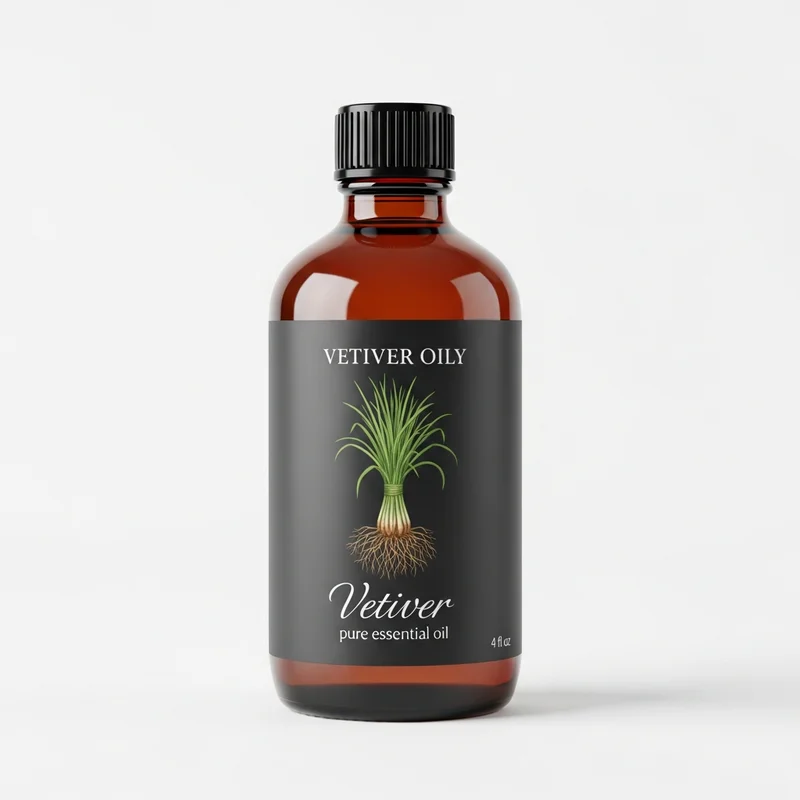
Vetiver Essential Oil
Our own Vetiver Essential Oil, in sizes from 0.5 oz to bulk.
From $18.99
Shop Now →What Is Vetiver Oil?
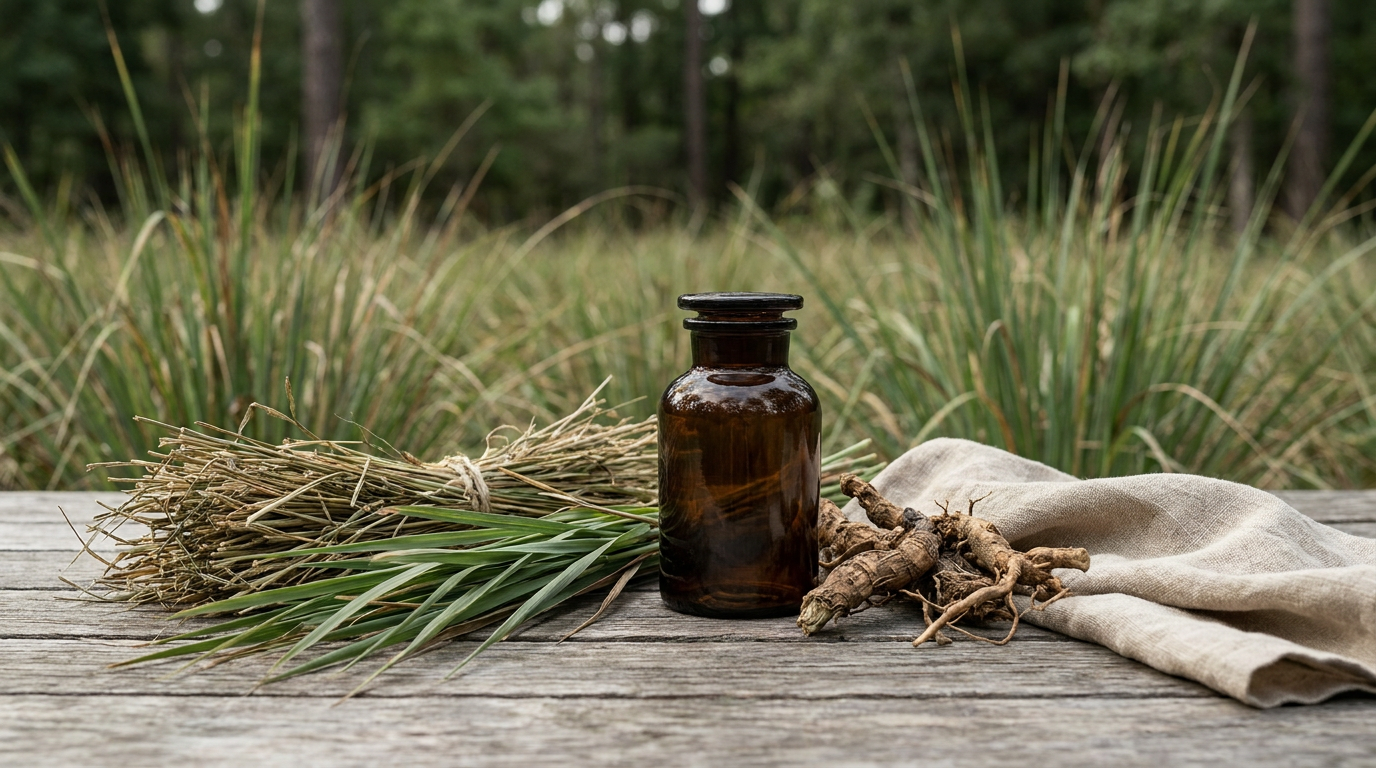
Vetiveria zizanioides, commonly known as vetiver, is a perennial grass native to India and now cultivated widely across tropical regions, including Haiti and Indonesia. Unlike oils drawn from flowers or leaves, vetiver oil is steam-distilled from the plant's fibrous root system, which gives it that distinctive earthy, woody depth. Distillers and aromatherapists often compare its aroma to damp soil after rain, or the inside of an old cedar chest. It is thick, viscous, and slow to evaporate, which is part of why its scent lingers so long after application or diffusion.
In traditional aromatherapy literature, vetiver is grouped with grounding oils like sandalwood and patchouli. Practitioners have long associated it with a sense of stability, the kind of steadiness one might feel standing barefoot on packed earth. This grounding quality is central to why it shows up so often in conversations about vetiver oil hormones and emotional balance.
Vetiver Oil and Cortisol: What the Research Suggests
Cortisol is often described as the body's primary stress hormone, released in response to physical or emotional pressure. Interest in vetiver oil cortisol research has grown alongside broader curiosity about how scent and the nervous system interact. Some preliminary studies on inhaled aromatics, vetiver included, suggest that certain scent compounds may influence the body's stress response pathways, though this research is still emerging and should not be mistaken for settled science.
It is important to be precise here: no essential oil, vetiver or otherwise, has been shown to directly lower cortisol levels in a clinically established way. What some research suggests, and what generations of aromatherapy practice have anecdotally supported, is that the act of inhaling a calming scent may help promote a sense of relaxation, which in turn may support a more balanced internal state during stressful moments. Anecdotal evidence suggests many people find the ritual of applying or diffusing vetiver oil brings a moment of pause into an otherwise hurried day, and that pause itself has value.
Grounding is not about erasing stress. It is about creating small, repeatable moments where the body remembers how to slow down.
Vetiver Oil, PMS, and the Monthly Cycle
Hormonal fluctuation across the monthly cycle is a deeply individual experience, and people report a wide range of physical and emotional shifts in the days leading up to menstruation. Vetiver oil is traditionally used for its grounding properties during this window, often blended with clary sage or lavender in a diffuser or diluted for topical application.
Some practitioners suggest that the earthy, stabilizing quality of vetiver may help promote a sense of calm during a time when emotions can feel unpredictable. This is not a claim that vetiver corrects hormonal shifts or resolves the underlying biology of the cycle. It is simply that the scent, used mindfully, may support the kind of steady breathing and slower pace that many people find helpful during that week. If cycle-related symptoms are significant or disruptive, a qualified healthcare provider is the appropriate resource for guidance, not an essential oil alone.
A Simple Grounding Ritual for Cycle Support
- Add 3 to 4 drops of vetiver oil to a diffuser alongside 2 drops of lavender in the evening.
- Dilute 1 drop of vetiver oil in 1 teaspoon of a carrier oil, such as jojoba or fractionated coconut oil, and apply to the soles of the feet before bed.
- Pair the scent with a few minutes of slow, seated breathing, letting the aroma become a cue for stillness rather than a stand-alone fix.
Vetiver Oil for Menopause: A Grounding Companion
Menopause brings its own long arc of hormonal transition, often spanning years rather than days. Many people search for vetiver for menopause specifically because the transition can bring restless nights, mood shifts, and a general sense of internal unsteadiness. Vetiver's role here is much the same as elsewhere: it is not a corrective agent for hormonal change, but a traditional aromatic tool that some people incorporate into a broader self-care routine.
People navigating this life stage often report that the deep, earthy aroma helps anchor an evening wind-down routine, especially when sleep feels elusive. A few drops in a diffuser an hour before bed, or a dab of diluted oil on the wrists and neck, can become a signal to the body that it is time to slow down. Some also blend vetiver with clary sage or geranium, oils that share a grounding, floral-earthy profile often associated with feminine hormonal support in traditional aromatherapy, though again, this pairing reflects historical use rather than proven physiological effect.
How to Use Vetiver Oil Safely
Vetiver oil is potent and should always be diluted before topical application. A general guideline for adults is a 1 to 2 percent dilution, which translates to roughly 1 to 2 drops of essential oil per teaspoon of carrier oil. Because vetiver is thick, it blends more easily when gently warmed between the palms first.
- Patch test first. Apply a small diluted amount to the inner forearm and wait 24 hours before broader use, checking for any redness or irritation.
- Avoid undiluted use on skin. Vetiver oil should never be applied directly to skin without a carrier oil.
- Pregnancy and nursing. Anyone who is pregnant, nursing, or managing an existing condition should speak with a qualified healthcare provider before introducing any essential oil into their routine.
- Children and pets. Essential oils, including vetiver, are generally not recommended for young children or animals without specific professional guidance.
- Diffusing. Use in a well-ventilated space and limit diffusion sessions to 30 to 60 minutes at a time.
Building a Grounding Ritual Around Vetiver
What draws so many people back to vetiver oil is not a single dramatic effect but the quiet accumulation of small, repeated moments of calm. A drop on a cotton pad tucked into a pillowcase. A few minutes of diffusing while journaling. A grounding blend applied to the feet before a long day. None of these practices replace the guidance of a qualified healthcare provider, and none of them are a substitute for medical care when it comes to significant hormonal symptoms.
But as part of a broader wellness routine, one that might also include steady sleep habits, gentle movement, and mindful breathing, vetiver oil offers something simple: a scent that asks the body to slow down and remember the ground beneath it. For many people moving through the natural rhythms of monthly cycles or the longer arc of menopause, that quiet invitation is worth returning to, day after day.
As always, anyone considering essential oils as part of their wellness routine, particularly during significant hormonal transitions, should consult a qualified healthcare provider to discuss what is right for their individual circumstances.