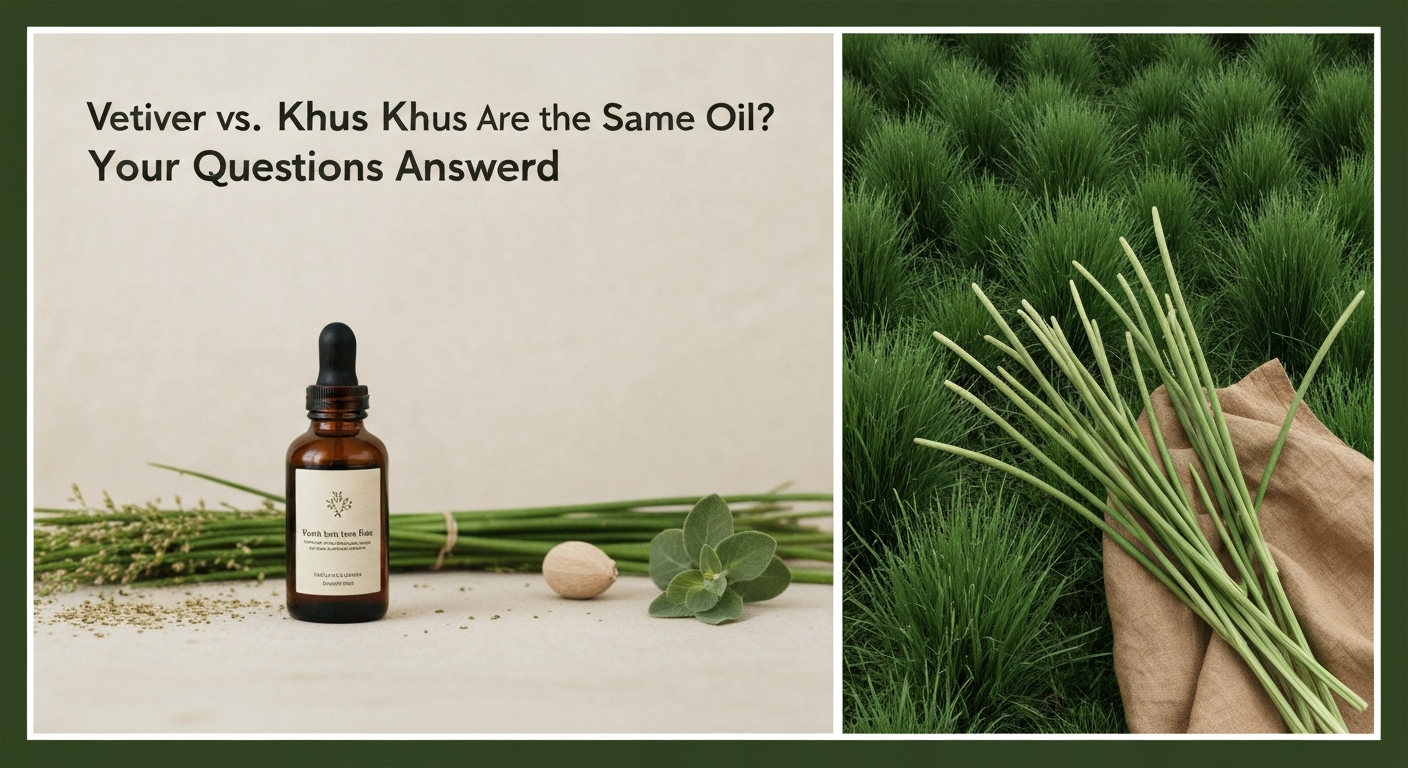
Vetiver vs. Khus Khus: Are They the Same Oil? Your Questions Answered
The aromatic world of essential oils often brings confusion, especially when different names refer to similar plants. One of the most common questions we receive centers around vetiver and khus khus – are they truly the same, or do subtle differences exist? This comprehensive FAQ guide will help you navigate these earthy, grounding fragrances with clarity and understanding.
Basic Identity Questions
Q: Are vetiver and khus khus the same plant?
Yes, vetiver and khus khus refer to the same botanical species: Vetiveria zizanioides (also known as Chrysopogon zizanioides). The term "khus khus" is primarily used in India and other South Asian regions, while "vetiver" is the more internationally recognized name. Both names describe the same fragrant grass species that has been treasured for centuries for its distinctive earthy aroma.
Q: Why do these oils sometimes smell different if they're from the same plant?
While vetiver and khus khus come from the same species, environmental factors can influence their aromatic profiles. Growing conditions, soil composition, climate, and harvesting methods may create subtle variations in scent. Additionally, different regions may process the roots differently, leading to minor differences in the final essential oil. Geographic origin plays a significant role – for example, you might notice variations between Haitian and Javanese vetiver varieties.
Q: Is there a difference in quality between vetiver and khus khus oils?
Quality depends on factors like sourcing, distillation methods, and storage rather than the name used. Both vetiver and khus khus oils can be of excellent quality when properly harvested and distilled. Look for oils from reputable suppliers who provide information about origin, extraction method, and purity testing. The terminology used doesn't indicate quality – focus instead on the supplier's transparency and testing practices.
Geographic and Cultural Questions
Q: Which regions primarily use the term "khus khus"?
The term "khus khus" is predominantly used in India, Pakistan, and other South Asian countries. In these regions, the plant holds deep cultural significance and has been used traditionally for centuries. The Hindi word "khus" refers to the fragrant roots that are woven into screens and used for natural cooling. Western markets and international aromatherapy communities typically use "vetiver" as the standard terminology.
Q: Does the cultural origin affect how the oil is used?
Traditional applications may vary by region, reflecting local customs and knowledge passed down through generations. In South Asian cultures, khus has been traditionally incorporated into cooling systems, perfumery, and spiritual practices. Western aromatherapy traditions often focus on vetiver's grounding properties for mindfulness and meditation. However, both cultural approaches recognize the plant's distinctive earthy, calming qualities.
Q: Are there regional preferences for specific vetiver varieties?
Yes, different regions often favor vetiver from specific growing areas. Indian markets may prefer locally grown khus, while international perfumery often seeks Haitian or Javanese varieties for their distinct aromatic characteristics. Each region's vetiver develops unique scent notes based on terroir – the combination of soil, climate, and local growing practices. Personal preference ultimately determines which variety resonates most with individual users.
Processing and Production Questions
Q: Are vetiver and khus khus oils extracted the same way?
Both oils are typically extracted through steam distillation of the dried roots, regardless of regional terminology. The fundamental extraction process remains consistent across different geographic locations. However, local traditions may influence specific details like drying duration, root preparation methods, or distillation timing. These subtle variations can contribute to regional differences in the final oil's aromatic profile.
Q: How long does the distillation process take for both oils?
Steam distillation for vetiver/khus khus roots typically requires 18-24 hours due to the dense, woody nature of the root material. This extended distillation time is necessary to extract the full spectrum of aromatic compounds from the roots. Some producers may use slightly different timing based on their specific equipment and desired oil characteristics, but the lengthy process remains consistent regardless of whether the oil is marketed as vetiver or khus khus.
Q: Can you tell the difference between vetiver and khus khus oils by appearance?
Pure vetiver/khus khus essential oils typically share similar visual characteristics – usually ranging from amber to dark brown in color with a thick, viscous consistency. Visual differences, when present, are more likely due to factors like age, storage conditions, or specific growing regions rather than the terminology used. The oil's appearance cannot reliably indicate whether it was marketed as vetiver or khus khus.
Shopping and Selection Questions
Q: Should I choose oil labeled as "vetiver" or "khus khus"?
Focus on the supplier's reputation, oil purity, and origin information rather than the label terminology. (See: NIH — Vetiver Research.) Both names refer to the same essential oil, so your choice should be based on quality indicators like organic certification, third-party testing, and transparent sourcing information. Read product descriptions carefully to understand the specific variety and origin, as these factors matter more than whether it's called vetiver or khus khus.
Q: Are vetiver and khus khus oils priced differently?
Pricing typically reflects factors like origin, quality, organic certification, and supplier markup rather than the name used. High-quality oil from either terminology should be priced similarly when other factors are equal. Be wary of significant price differences that seem based solely on naming – this might indicate marketing tactics rather than genuine quality differences.
Q: What should I look for when buying either oil?
Seek suppliers who provide detailed information about botanical name (Vetiveria zizanioides), country of origin, extraction method, and any purity testing. Look for oils stored in dark glass bottles with proper labeling including safety information. Reputable suppliers often offer detailed guidance about their specific vetiver variety, whether they call it vetiver or khus khus. For comprehensive guidance, explore our complete khus khus oil guide.
Usage and Application Questions
Q: Can I use vetiver and khus khus oils interchangeably in recipes?
Yes, since they're the same essential oil, you can substitute one for the other in aromatherapy blends and DIY recipes. Always maintain proper dilution ratios and safety guidelines regardless of the terminology used. Remember to perform patch tests when trying any new essential oil application, and consult qualified aromatherapy resources for appropriate dilution rates for your specific use.
Q: Do vetiver and khus khus oils blend well with the same companion oils?
Both respond beautifully to the same complementary oils since they share identical aromatic properties. Traditional pairings include sandalwood, rose, ylang-ylang, and citrus oils like bergamot or sweet orange. The earthy, grounding nature of the oil (whether called vetiver or khus khus) harmonizes well with both floral and woody essential oils in mindful blending practices.
Q: Are there any safety differences between the two?
Safety considerations remain identical since both terms refer to the same essential oil. Always dilute properly before topical use, typically 1-2% dilution for most applications. Pregnant or nursing individuals should consult healthcare providers before use, and anyone with sensitive skin should perform patch tests. The same safety guidelines apply regardless of whether your bottle says vetiver or khus khus.
Historical and Educational Questions
Q: Which name came first historically?
The term "khus" has ancient roots in Sanskrit and regional languages, reflecting the plant's long-standing cultural importance in South Asia. "Vetiver" derives from Tamil "vettiver," which later evolved through colonial trade terminology. Both names have historical legitimacy, representing different linguistic traditions for the same treasured plant. To explore more about this fascinating history, visit our detailed guide on vetiver's historical significance.
Q: Why do some products use both names?
Some suppliers use both terms to reach different market segments and honor various cultural traditions. This dual naming helps customers from different backgrounds recognize the oil they're seeking. It also acknowledges the global nature of the essential oil market, where the same botanical treasure is known by different names across cultures.
Q: Is one name more "correct" than the other?
Both names are equally valid, representing different cultural and linguistic traditions for the same plant. "Vetiver" has become the standard in international aromatherapy and scientific contexts, while "khus khus" maintains deep cultural significance in South Asian traditions. Neither name is more correct – they simply reflect different cultural relationships with this remarkable grounding plant.
Final Understanding
Whether you encounter this earthy, grounding oil labeled as vetiver or khus khus, you're exploring the same botanical treasure that has supported human well-being for centuries. The name matters less than the quality, sourcing, and your personal connection to its distinctive aroma. Choose based on supplier transparency, oil purity, and how the scent resonates with your mindful practices rather than the terminology used on the label.
Always consult with qualified healthcare providers before using essential oils for wellness purposes, especially if you have medical conditions or concerns.