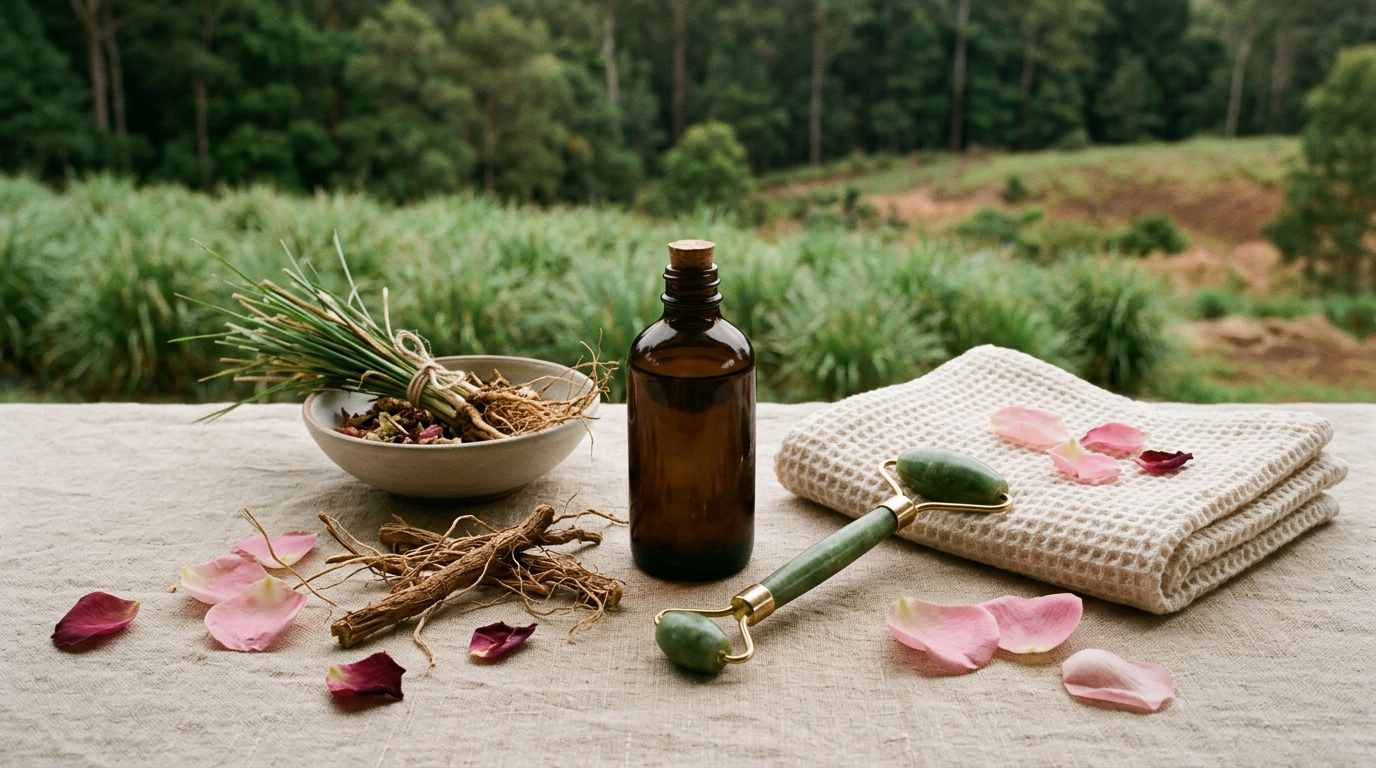
Vetiver vs Patchouli: Earthy Oils Head-to-Head for Skin and Fragrance
Two bottles. Both dark, rich, deeply rooted in the earth. Both beloved by perfumers and natural living enthusiasts alike. Yet vetiver and patchouli are genuinely different oils, and once you understand how, choosing between them becomes much easier.
This earthy essential oil comparison covers everything: where each oil comes from, how it smells, how it behaves in skin care formulations, and how it performs in fragrance blending. If you have been circling the question of patchouli or vetiver for your next purchase, this guide is for you.
Origins and Sourcing: Roots vs Leaves
The first and most fundamental difference between these two oils is where they come from on the plant.
Vetiver
Vetiver essential oil is steam-distilled from the roots of Chrysopogon zizanioides, a tall perennial grass native to India. The roots grow downward rather than spreading outward, which gives the plant its famous soil-binding qualities. Major producing regions include Haiti, Indonesia, Sri Lanka, and India. Each origin yields a noticeably different aromatic profile, so terroir matters significantly with vetiver.
Because the roots must be harvested, washed, dried, and then subjected to a long steam distillation (sometimes 24 hours or more), vetiver oil is labor-intensive to produce. This contributes to its relatively higher price point compared to many other essential oils.
Patchouli
Patchouli essential oil comes from the leaves and young stems of Pogostemon cablin, a bushy herb in the mint family. It is grown primarily in Indonesia, India, China, and Malaysia. Leaves are typically dried or lightly fermented before distillation, a step that deepens the oil's characteristic earthy sweetness.
Patchouli is generally more abundant and affordable than vetiver. The plant can be harvested multiple times per year, which makes production more scalable.
| Feature | Vetiver | Patchouli |
|---|---|---|
| Plant part used | Roots | Leaves and stems |
| Botanical family | Poaceae (grass) | Lamiaceae (mint) |
| Main origins | Haiti, Indonesia, India | Indonesia, India, China |
| Distillation method | Steam distillation (long) | Steam distillation |
| Relative cost | Higher | Moderate |
Scent Profile: How They Actually Smell
Both oils are earthy. That is where the easy comparison ends.
The Scent of Vetiver
Vetiver has a complex, smoky, rooty aroma that many people describe as smelling like damp earth after rain, or like the inside of an old wooden chest. There are dry, woody facets alongside something almost leathery or smoky. Haitian vetiver tends to be brighter and more citrusy at the top notes, while Indonesian vetiver often reads darker and smokier. Sri Lankan vetiver can be softer and more floral in comparison.
Vetiver is a base note in fragrance terminology. It has exceptional tenacity, meaning the scent lingers for a long time on skin and on fabric. This is partly why it is so widely used as a fixative in perfumery.
The Scent of Patchouli
Patchouli is earthy too, but warmer and sweeter. It carries a musty richness that some people associate with the 1960s counterculture movement, since the oil was widely used during that era. Beneath the earthiness there are hints of sweetness, spice, and something almost fermented or barnyard-like, which sounds strange but reads as deeply comforting to those who love it.
Like vetiver, patchouli is a base note with strong staying power. Aged patchouli (oil that has been stored for several years) is often considered superior, as the aroma mellows and deepens beautifully over time.
Side-by-Side Scent Summary
- Vetiver: smoky, rooty, dry, woody, sometimes leathery or faintly citrusy depending on origin
- Patchouli: warm, sweet, musty, earthy, faintly spicy, rich
If vetiver feels like soil and stone, patchouli feels like soil and wood smoke. They are close cousins in the fragrance family tree, but distinct personalities once you spend time with them.
Vetiver vs Patchouli in Skin Care
Both oils appear regularly in natural skin care formulations. Here is what the current landscape of use and research observation looks like for each.
Vetiver in Skin Care
Vetiver is traditionally used in Ayurvedic skin preparations, particularly for its cooling and grounding sensory qualities. Some research suggests that vetiver contains compounds such as khusimol and isovalencenol that are of interest to researchers studying how botanical extracts interact with skin. People report enjoying vetiver-based facial oils and serums for their grounding scent during evening routines.
In cosmetic formulations, vetiver is often used in very small amounts because its tenacity means a little goes a long way. It blends well with carrier oils like jojoba and rosehip. It is typically used at 0.5 to 1 percent dilution in face products and up to 2 to 3 percent in body products, always following standard dilution guidelines.
Patchouli in Skin Care
Patchouli has an even longer documented history in skin care traditions across Southeast Asia and South Asia. It is traditionally used in preparations designed to support the appearance of balanced, comfortable skin. Some research observations point to its main constituent, patchoulol, as a compound of interest in skin-focused studies.
Patchouli appears frequently in mature skin formulations, products aimed at supporting a smooth skin appearance, and in hair care. It is also a popular addition to body butters and balms because its warm sweetness blends seamlessly with rich bases like shea and cocoa butter.
Safety Notes for Skin Use
Always dilute essential oils properly before applying to skin. For facial use, a 1 percent dilution is generally recommended (approximately 6 drops per 30 ml of carrier oil). For body use, 2 to 3 percent is typical. Perform a patch test on a small area of skin before broader application and wait 24 hours. Essential oils are not suitable for use on broken or compromised skin without guidance from a qualified healthcare provider. Keep all essential oils away from children and pets. If you are pregnant, nursing, or managing any health concern, consult a qualified healthcare provider before use.
Fragrance Blending: Where Each Oil Shines
This is perhaps the most practical dimension of the vetiver vs patchouli question for everyday use.
Vetiver as a Fixative and Anchor
Vetiver's primary role in perfumery is as a fixative. It slows the evaporation of other aromatic molecules, extending the life of an entire blend. A small amount of vetiver can make a whole formula feel more coherent and long-lasting.
It pairs beautifully with:
- Citrus oils like bergamot, lemon, and grapefruit (where it adds depth beneath the brightness)
- Floral oils like ylang ylang and rose (where it grounds sweetness with smokiness)
- Woody oils like cedarwood and sandalwood (where the combination becomes deeply rooted)
- Spice oils like black pepper and cardamom (for a sophisticated, complex accord)
Vetiver is powerful. In blending, start with a small amount, around 5 to 10 percent of the total formula, and adjust upward cautiously.
Patchouli as a Warm, Sweet Base
Patchouli serves a similar fixing function but brings a warmer, sweeter energy to a blend. Where vetiver adds smoke and dryness, patchouli adds sweetness and roundness.
Classic patchouli pairings include:
- Rose or geranium (the combination is classic and beloved in perfumery)
- Frankincense and myrrh (for a deeply resinous, ceremonial feel)
- Bergamot or orange (a bright-earthy contrast that many people find immediately appealing)
- Lavender (grounding the floral with warm earth)
- Clove or cinnamon (for a spiced, incense-like quality)
Patchouli is also powerful but slightly more forgiving as a blending note than vetiver. A starting point of 10 to 15 percent in a blend is common.
Can You Use Them Together?
Yes, and many perfumers do exactly that. Vetiver and patchouli together create a deeply grounded, complex base that carries an entire fragrance formula. The combination appears in many classic oriental and chypre-style fragrances. If you are experimenting, try starting with a 1:2 ratio of vetiver to patchouli and building from there.
Atmosphere and Diffusion
Both oils work in diffusers, though their heaviness means they benefit from pairing with lighter oils.
Vetiver diffused on its own can feel heavy and solemn. Paired with citrus or a light floral, it creates a grounding atmosphere that many people find supportive during evening wind-down routines or focused work sessions. Some people report that diffusing vetiver in the bedroom during their nighttime ritual helps them feel more settled and present.
Patchouli in a diffuser brings warmth and a sense of coziness. It is popular in blends designed for autumn and winter atmospheres, for creating an incense-like ambiance without burning anything, and for crafting a sense of calm during slow weekend mornings.
A simple starting point for each:
- Vetiver diffuser blend: 2 drops vetiver, 3 drops bergamot, 2 drops cedarwood
- Patchouli diffuser blend: 2 drops patchouli, 3 drops sweet orange, 2 drops frankincense
Which One Is Right for You?
The answer depends on what you are drawn to and what you want to create.
Choose vetiver if you are drawn to smoky, dry, rooty scents. If you want a powerful fixative with serious tenacity, a grounding base for complex blends, or an oil that connects strongly to earth and soil in its aromatic character, vetiver is likely your match. It rewards patience and experimentation.
Choose patchouli if you prefer warmer, sweeter, more approachable earthiness. If you want an oil that blends easily with florals, resins, and spices, or one that creates an immediately cozy and welcoming atmosphere, patchouli may feel more intuitive to work with, especially for those newer to earthy base notes.
And if you are the kind of person who loves depth, complexity, and the smell of the forest floor on a rainy afternoon, you may find that both have a permanent place in your collection.
A Few Final Notes on Quality
For both oils, sourcing matters. Look for suppliers who provide GC/MS (gas chromatography/mass spectrometry) test results, which confirm the chemical composition of the oil. Single-origin sourcing is a good sign. Avoid oils that seem unusually cheap, as both vetiver and quality patchouli require care in production, and very low prices often signal adulteration or dilution.
For vetiver specifically, consider trying oils from different origins side by side. Haitian vs Indonesian vetiver can smell almost like two different oils to a newcomer. Exploring origin is one of the quiet pleasures of working deeply with a single botanical.
For patchouli, aged oil is worth seeking out if you find fresh patchouli too sharp or harsh. Many suppliers offer aged patchouli, and the difference in aroma is genuinely striking.
Both oils deserve slow, patient exploration. Start small, dilute carefully, and give yourself time to sit with each one before forming a final opinion. The earthy essential oil comparison only makes complete sense once you have spent real time with both in hand.