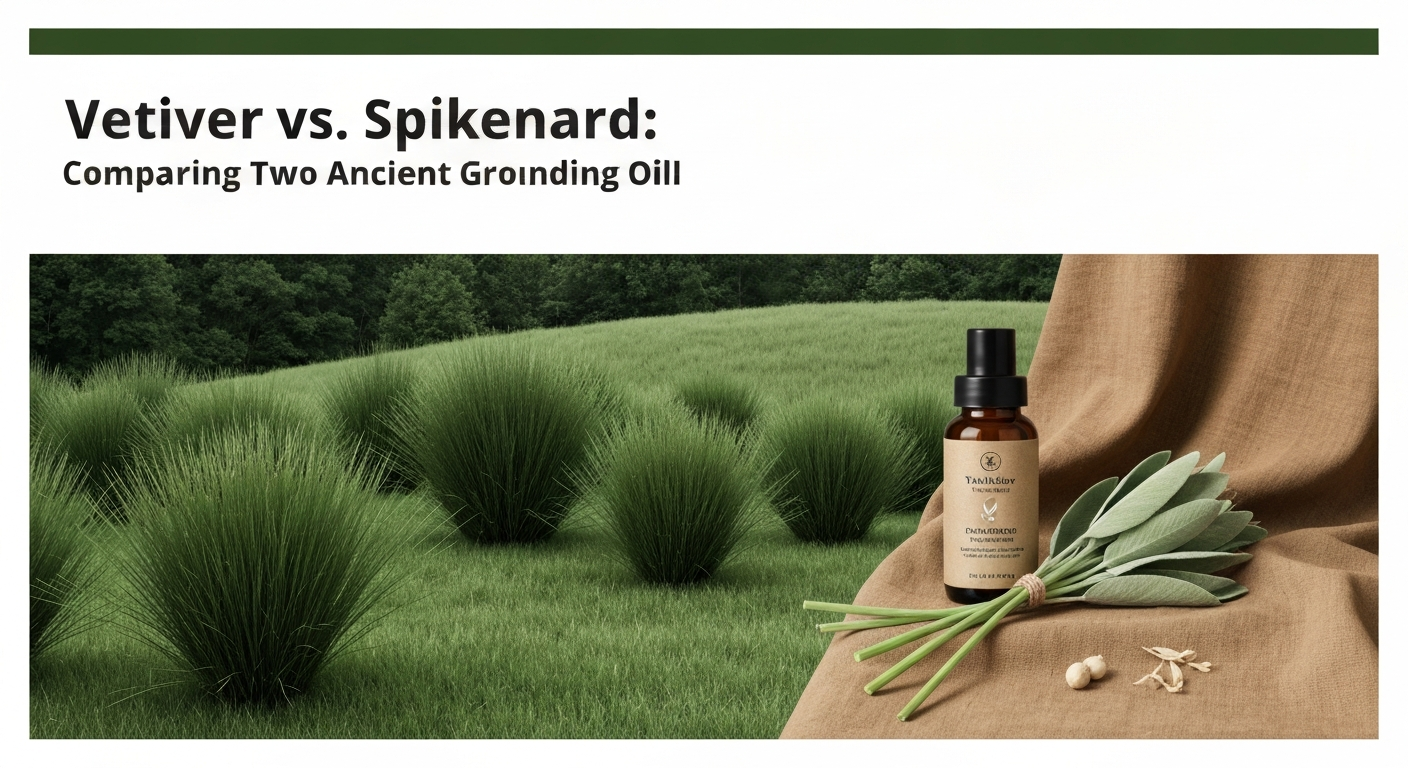
Vetiver vs. Spikenard: Comparing Two Ancient Grounding Oils
In the realm of ancient aromatics, few oils carry the profound earthiness and spiritual heritage of vetiver and spikenard. Both oils have been treasured for millennia, their roots—quite literally—extending deep into the soil and deep into human history. Yet each offers a distinctly different pathway to the same destination: a sense of grounding and inner stillness.
Whether you're new to essential oils or seeking to expand your collection with intention, understanding the nuances between these two sacred oils can guide you toward the one that resonates most deeply with your practice and preferences.
Understanding the Origins
Vetiver: The Grass of Tranquility
Vetiver (Chrysopogon zizanioides) emerges from humble tropical grass, yet its roots tell a story of remarkable depth—literally extending up to six feet into the earth. This ancient oil has been prized across cultures for its deeply earthy, woody aroma that seems to capture the very essence of soil after rain.
The oil's grounding qualities have made it a cornerstone in traditional practices across India, Haiti, and beyond. Its complex scent profile reveals itself slowly, offering different notes as it settles into the skin and air.
Spikenard: The Himalayan Treasure
Spikenard (Nardostachys jatamansi) grows wild in the high altitudes of the Himalayas, Nepal, and parts of China. This rare and precious oil carries biblical significance—it was the costly perfume Mary used to anoint Jesus' feet, speaking to its value and reverence throughout history.
The plant itself is small and unassuming, yet from its roots comes an oil with a complex, almost mystical aroma that bridges earthiness with subtle sweetness.
The Complete Comparison: Vetiver vs. Spikenard
| Attribute | Vetiver | Spikenard |
|---|---|---|
| Plant Family | Poaceae (grass family) | Caprifoliaceae (honeysuckle family) |
| Growing Region | Tropical regions globally | High-altitude Himalayas |
| Extraction Method | Steam distillation of roots | Steam distillation of roots/rhizomes |
| Scent Profile | Deep, earthy, woody, smoky | Rich, woody, sweet, slightly spicy |
| Consistency | Thick, viscous | Medium to thick |
| Color | Dark amber to reddish-brown | Golden amber to pale yellow |
| Sustainability | Generally sustainable | Conservation concerns |
| Price Range | Moderate to high | High to very high |
| Availability | Widely available | Limited, specialized suppliers |
Vetiver: Pros and Considerations
The Strengths of Vetiver
- Accessibility: More widely available and generally more affordable than spikenard
- Versatility: Blends well with many other oils and adapts to various applications
- Sustainability: Fast-growing grass that can be harvested without harming the plant
- Consistency: Reliable quality and scent profile across different sources
- Longevity: Exceptional staying power—a little goes a very long way
- Cultural heritage: Extensively documented traditional uses across multiple cultures
Considerations with Vetiver
- Intensity: The scent can be overwhelming for those sensitive to earthy aromas
- Acquired taste: Some find the initial scent too "muddy" or heavy
- Staining potential: The dark oil may stain light fabrics or surfaces
- Thickness: Viscous consistency can make it challenging to work with
Spikenard: Pros and Considerations
The Strengths of Spikenard
- Rarity and prestige: Limited availability adds to its precious nature
- Complex aroma: Offers more sweetness and complexity than many root oils
- Historical significance: Deep spiritual and religious connections
- Gentler introduction: More approachable for those new to earthy oils
- Balanced profile: Combines grounding qualities with uplifting notes
Considerations with Spikenard
- Cost: Significantly more expensive than vetiver
- Availability: Can be difficult to source from reputable suppliers
- Conservation concerns: Overharvesting has led to sustainability issues
- Quality variations: Limited supply can mean inconsistent quality
- Adulteration risk: High value makes it a target for dilution or substitution
Best Use Cases: When to Choose Which
Choose Vetiver When You Want:
- Deep grounding practices: Vetiver's intense earthiness may support profound centering
- Evening wind-down: Its heavy, sedating aroma traditionally used to promote restfulness
- Humid climate comfort: Historically used in tropical regions for its cooling associations
- Budget-conscious choice: Quality vetiver offers excellent value for regular use
- Blending base: Creates excellent foundation notes in custom blends
- Consistent supply: When you want to develop a regular practice with reliable access
Choose Spikenard When You Want:
- Spiritual practices: Its sacred history may enhance meditation and prayer
- Gentle introduction: More approachable pathway to root oil benefits
- Special occasions: Its precious nature makes it ideal for meaningful moments
- Complex aromatics: When you appreciate nuanced, multi-layered scents
- Historical connection: To feel linked to ancient traditions and biblical times
- Unique experience: For those seeking something truly distinctive
Blending and Application Considerations
Vetiver Blending Notes
Vetiver's robust character makes it an excellent anchor in blends. It pairs beautifully with:
- Citrus oils (creates uplifting contrast)
- Floral oils like ylang ylang or geranium (adds depth)
- Other woods like sandalwood or cedarwood (creates rich, complex bases)
- Frankincense (enhances meditative qualities)
Spikenard Blending Notes
Spikenard's more delicate nature allows it to play well with:
- Rose or neroli (enhances its subtle sweetness)
- Lavender (creates calming, balanced blends)
- Frankincense or myrrh (emphasizes spiritual qualities)
- Light woods like sandalwood (maintains its complexity)
Safety and Dilution Guidelines
Both oils require proper dilution for topical use. General guidelines suggest:
- Facial use: 0.5-1% dilution (3-6 drops per ounce of carrier oil)
- Body use: 1-2% dilution (6-12 drops per ounce of carrier oil)
- Bath use: 3-5 drops mixed with dispersant before adding to bathwater
- Diffusion: 2-4 drops in standard diffuser
Always perform a patch test before first use, and consult with a qualified healthcare provider if you have specific health concerns or are pregnant or nursing.
The Verdict: Which Ancient Oil for You?
The choice between vetiver and spikenard ultimately comes down to personal preference, intended use, and practical considerations.
Choose vetiver if: You want a reliable, accessible grounding oil that offers excellent value and versatility. Its intensity and earthiness make it ideal for those who crave deep, uncompromising connection to the earth element.
Choose spikenard if: You're drawn to rarity, historical significance, and complex aromatics. Its gentler approach to grounding, combined with spiritual heritage, makes it perfect for those seeking a more nuanced, precious oil experience.
Consider both if: Your practice and budget allow. These oils complement each other beautifully—vetiver for daily grounding work and spikenard for special, sacred moments.
Final Reflection
Both vetiver and spikenard offer pathways to the same essential human need: the feeling of being rooted, centered, and connected to something larger than ourselves. Whether you choose the humble grass that grows abundantly or the rare mountain flower that blooms in isolation, you're connecting with thousands of years of human wisdom about the power of plant essences to support our inner landscape.
Trust your intuition, consider your practical needs, and remember that the "right" oil is simply the one that serves your journey toward greater mindfulness and grounding. In the end, both of these ancient allies are here to support the same beautiful intention: helping us find our way back to ourselves.