Summer Vetiver Blends: Keeping a Heavy Oil Light
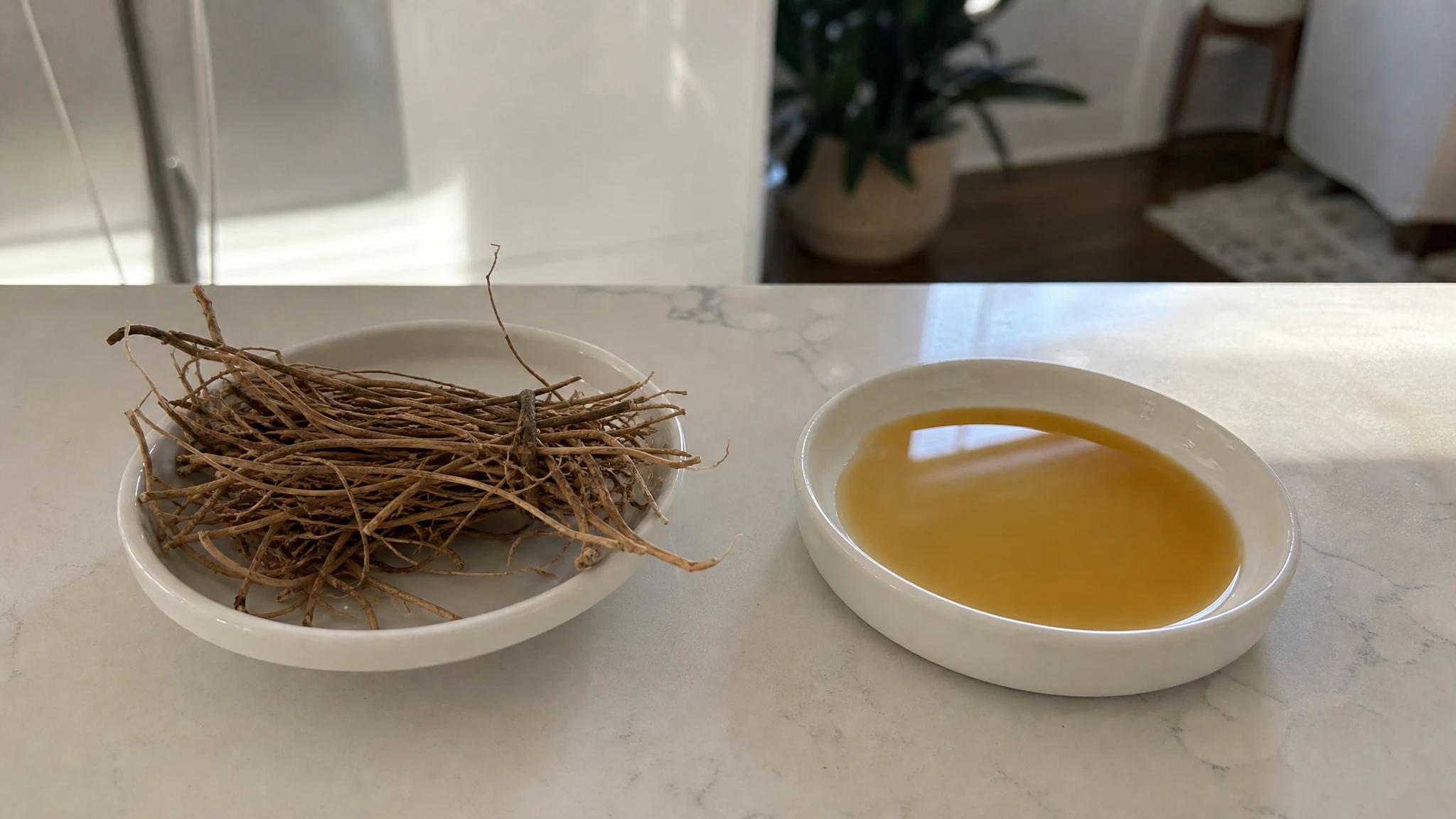
Vetiver has a reputation as a cold-weather oil, all smoke and damp earth, and it is easy to see why. It is thick, dark and very persistent. But perfumers have long used it as the quiet floor under fresh, bright things, and summer is where that role shines. The trick is restraint: in a warm-weather blend, vetiver is the anchor and not the sail.
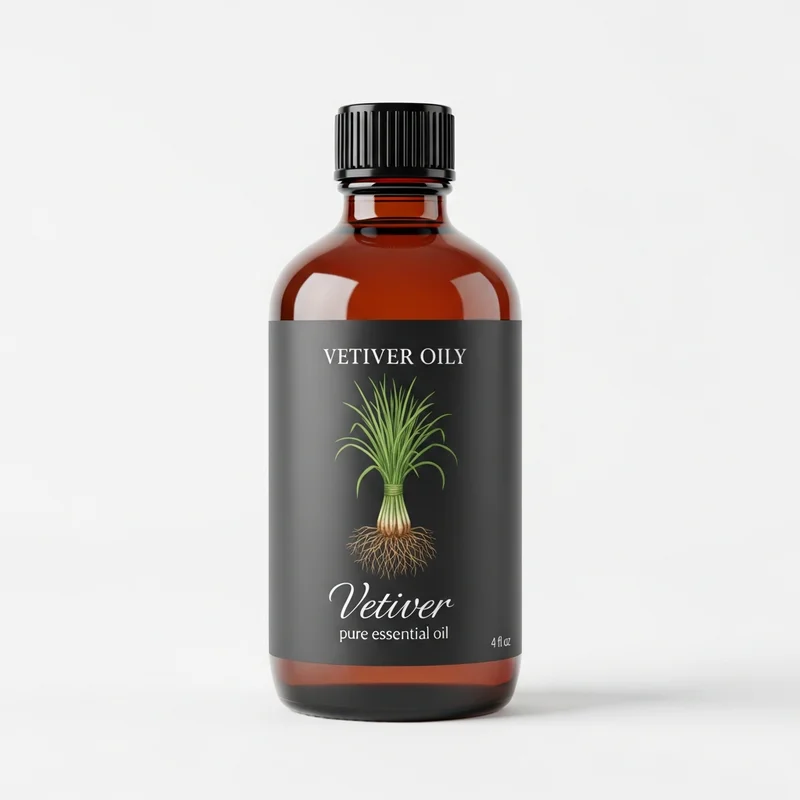
Vetiver Essential Oil
Our own Vetiver Essential Oil, in sizes from 0.5 oz to bulk.
From $20.99
Shop Now →Why a little goes so far
A 2021 study of a Haitian vetiver oil explains part of the oil's strength. The researchers found that its main smelling compound has an odour threshold of 29 picograms per litre of air, more than 150 times lower than khusimone, which had long been the leading suspect. They also describe the oil's grapefruit-like top note as coming from alpha-vetivone, beta-vetivone and nootkatone, with geosmin giving the earthy side (Ouyang et al., The Smelling Principle of Vetiver Oil, Unveiled by Chemical Synthesis). In practice that suggests two things. Vetiver already carries a citrus-like thread, which is why it flatters citrus so easily, and it is audible in tiny amounts, which is why the share has to stay small when you want something airy.
Perfumers know this pairing well. The Osmothèque notes that the grapefruit and vetiver accord became famous in Terre d'Hermès (2006), a fragrance built on vetiver and cedarwood (Vetiver : a palette of woody fragrances, Osmothèque). It is a handy template for what follows.
Two summer formulas, in parts
Think of the finished blend as ten parts. Vetiver takes one. We sell vetiver only, so the other oils come from an essential-oil or perfumery-supply seller. These are proportions worked out from the pairing logic above and standard perfumery practice, offered as starting points to adjust by nose.
- Bright and woody: 1 part vetiver, 5 sweet orange, 3 cedarwood, 1 bergamot FCF. The orange carries the top, cedar and vetiver form a dry floor.
- Green and light: 1 part vetiver, 4 lemongrass, 3 lavender, 2 sweet orange. The herbal oils lift the top while vetiver keeps the green from going thin.
Mix a few millilitres, let it sit a day, and smell it again before making more. Thick oils like vetiver tend to cling to pipettes, so rinse the measuring tool into the bottle. Our blending guide goes deeper into reading a blend as it settles.
The citrus rule worth knowing
Summer blends lean on citrus, and citrus oils come in two kinds. Hana Tisserand of the Tisserand Institute writes that distilled essential oils are not phototoxic, because the constituents responsible are too heavy to carry over in distillation, and that phototoxic citrus oils come from the fruit rind and are expressed. In the same discussion, Robert Tisserand says expressed grapefruit oil generally contains bergapten and is slightly phototoxic. Sweet orange is generally thought not to be phototoxic even when expressed, and bergamot FCF is not phototoxic either (Citruses: a comparison of different oils, Tisserand Institute). So for anything that will touch skin, we would choose sweet orange, bergamot FCF and distilled oils, and ask any supplier of another expressed citrus for its furanocoumarin status in writing. In a room diffuser the question does not arise.
Where summer blends go
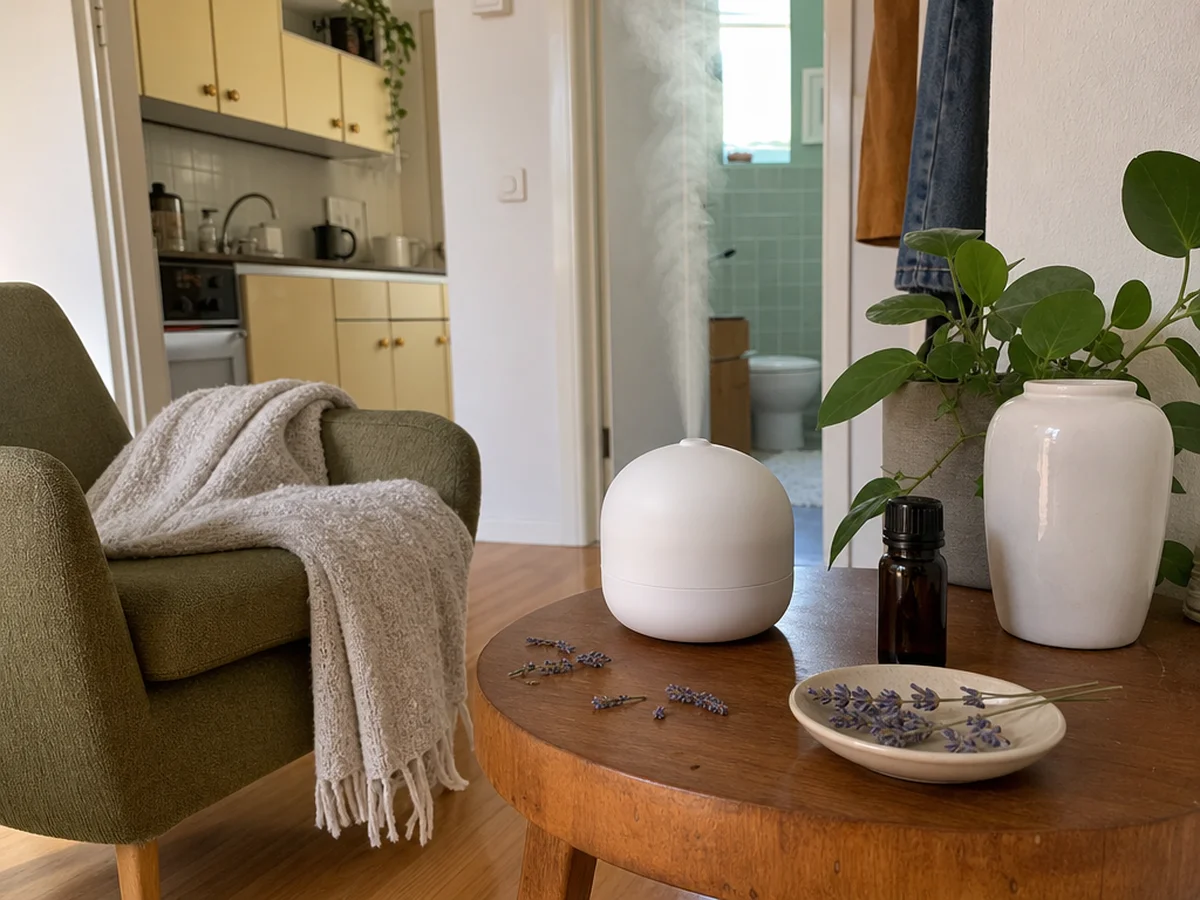
In a diffuser. The Tisserand Institute defines intermittent diffusion as 30 to 60 minutes on and then 30 to 60 minutes off, and says very low levels, where the oil is barely noticeable, are fine for any length of time (Safety guidelines for diffusing essential oils at home, Tisserand Institute). With the windows open in July, you may find you need less than you expect. Our diffuser guide covers thick oils in particular, and if pets share the room, a veterinarian is the person to ask.
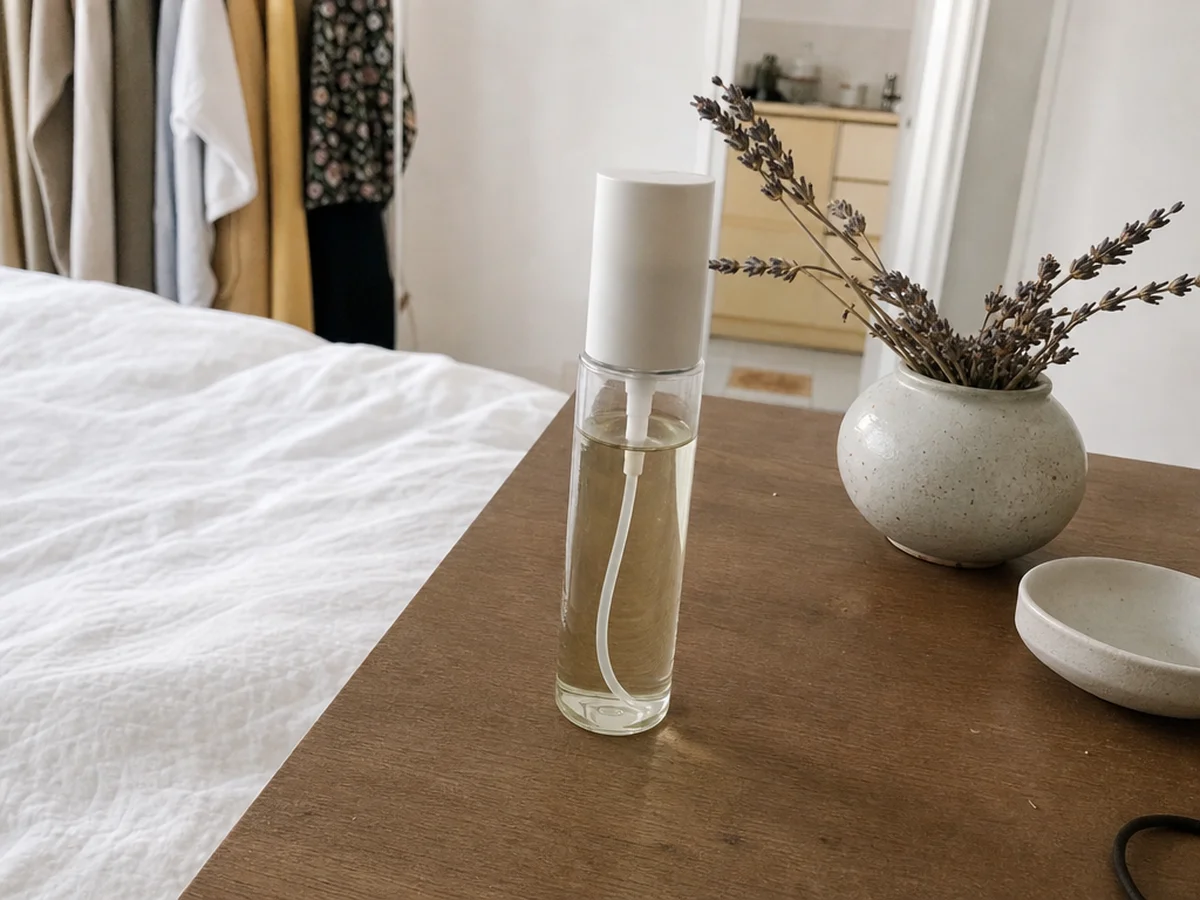
On skin. Our guidance is 0.5% to 2% in a carrier oil with a patch test first, and the same institute lists 1-3% for body oils and 0.5-1.2% for facial products (Dilution for essential oils, Tisserand Institute). We lean towards the lower figure for something you will wear all day. As arithmetic, a 10 ml bottle of carrier oil at 1% holds about 0.1 ml of blend, roughly two drops, so a skin version of these formulas is very gentle indeed. A water-based body mist needs a dispersant and a preservative, and we leave that to a cosmetic chemist and a supply shop.
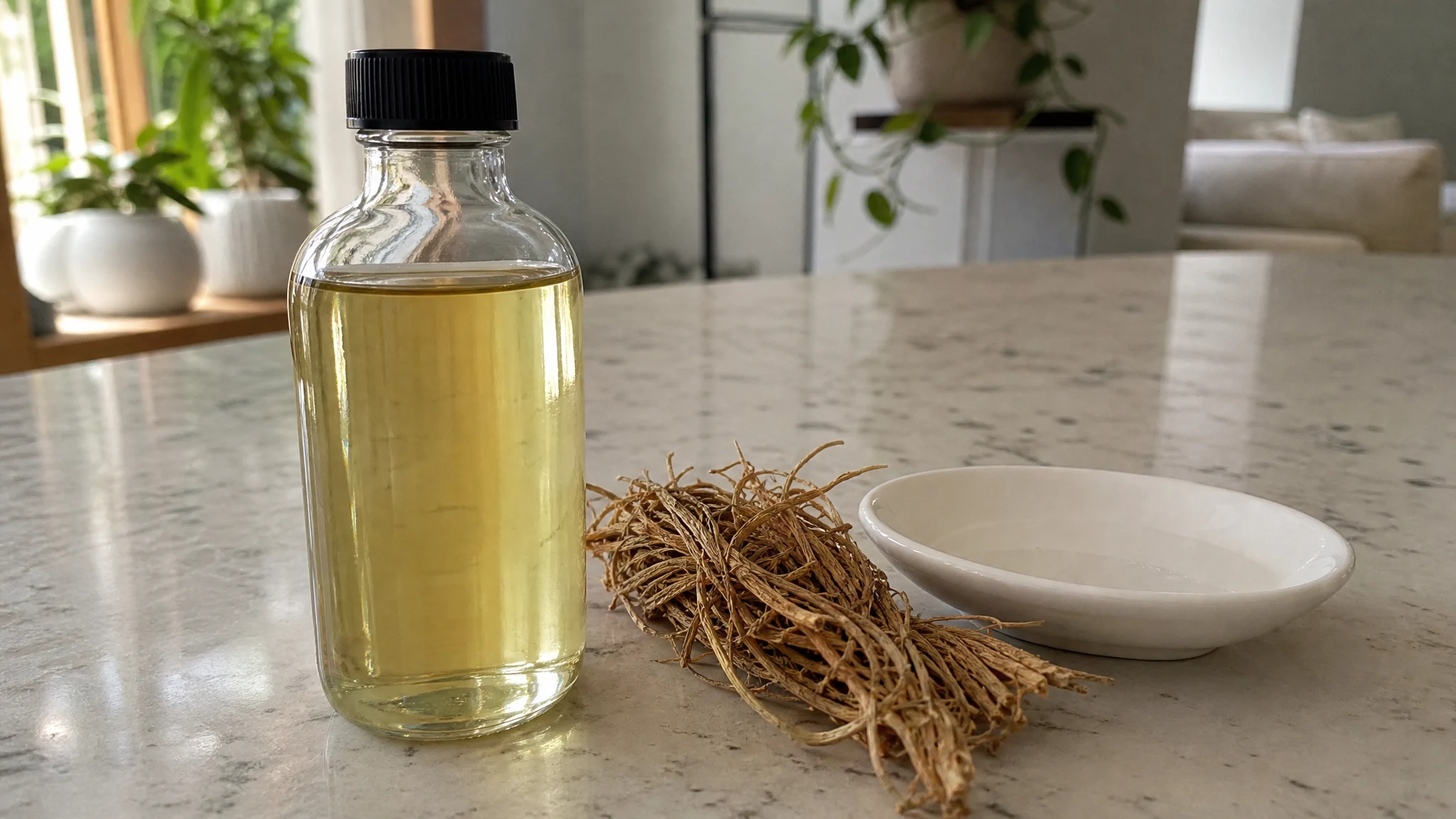
On cloth. A scented scrap in a drawer keeps the oil off skin altogether. Vetiver is deeply coloured, and the Certificate of Analysis we publish describes the batch standard as a brown to red liquid, so try a hidden corner of pale fabric first.
Wear it light, smell it often
Warm weather changes how a scent behaves. Heat makes lighter materials rise quickly, and a blend that felt balanced in a cool room can seem louder on a hot afternoon. That is another reason to keep vetiver at one part in ten and to test on a paper strip outdoors before you decide you have it right. A scrap of cloth in a pocket or a drawer lets you enjoy a hint of the blend without any of the strength.
Keep the bottle cool
Summer is hard on essential oils. The Tisserand Institute names oxygen, light and heat as the causes of oxidation (Oxidation and the Shelf Life of Essential Oils, Tisserand Institute), so a bottle in a hot car or on a sunny sill is the worst case. We recommend a cool, dark place and note that vetiver typically keeps its character for 6 to 8 years that way. Our storage guide has the details.

If you remember one thing, make it this: in warm weather, one part vetiver in ten is a base note that stays out of the way and makes everything above it last.
Vetiver Essential Oil
Vetiver Essential Oil from our own shop, in sizes from 0.5 oz to bulk.
From $20.99
Shop Now →Sources & Further Reading
- The Smelling Principle of Vetiver Oil, Unveiled by Chemical Synthesis (Ouyang et al., Angewandte Chemie, 2021)
- Vetiver : a palette of woody fragrances (Osmothèque, 2015)
- Citruses: a comparison of different oils (Tisserand Institute)
- Safety guidelines for diffusing essential oils at home (Tisserand Institute)
- Dilution for essential oils (Tisserand Institute)
- Oxidation and the Shelf Life of Essential Oils (Tisserand Institute)