Vetiver Oil and Hormones: What the Research Covers
"Hormone balance" is one of those phrases that sounds scientific and means something different to everyone who says it. It might mean stress, a difficult week before your period or the changes of menopause. We sell vetiver oil for its aroma and make no hormonal claims for it, and the research map explains why.
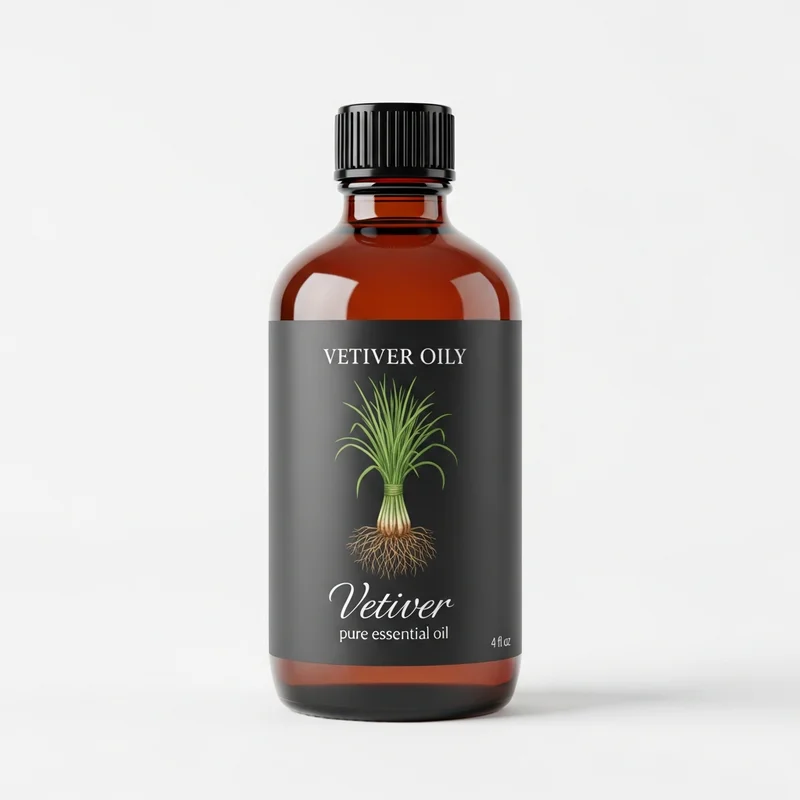
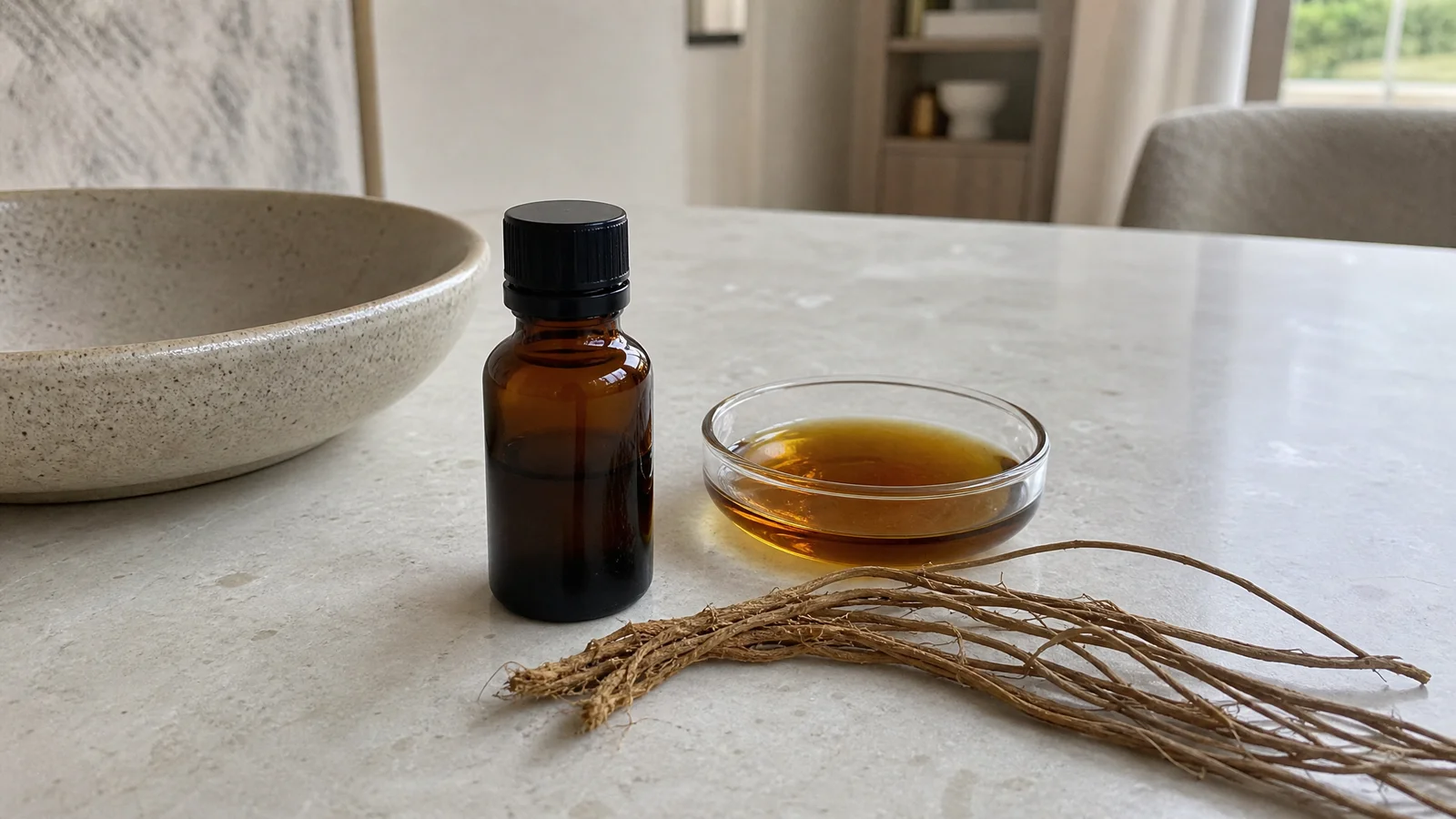
Vetiver Essential Oil
Our own Vetiver Essential Oil, in sizes from 0.5 oz to bulk.
From $20.99
Shop Now →Three different questions
Cortisol is a stress hormone you can measure. The cyclical hormones behind PMS and the drop in estrogen at menopause are different again. A scent might change how relaxed someone feels, and in principle that could show up in cortisol, but we know of no study in which a fragrance shifted estrogen or progesterone. The honest questions are narrower: has anyone measured vetiver oil's effect on cortisol, PMS or menopause symptoms in people? A Europe PMC search on 5 November 2026 for vetiver with menopause or premenstrual terms returned only eight records, mostly plant-material and general essential-oil reviews. No trial in women appeared.
The rat behind the headlines
Vetiver research in animals is mostly behavioral. In the best-known study, rats that inhaled vetiver oil for seven minutes at three strengths were compared with rats given diazepam on an anxiety maze. Only the middle strength behaved like the drug. Rodent results like these do not follow a "more is better" curve, and they leave the human question wide open. A 2025 review of the plant describes the efficacy findings as preclinical.
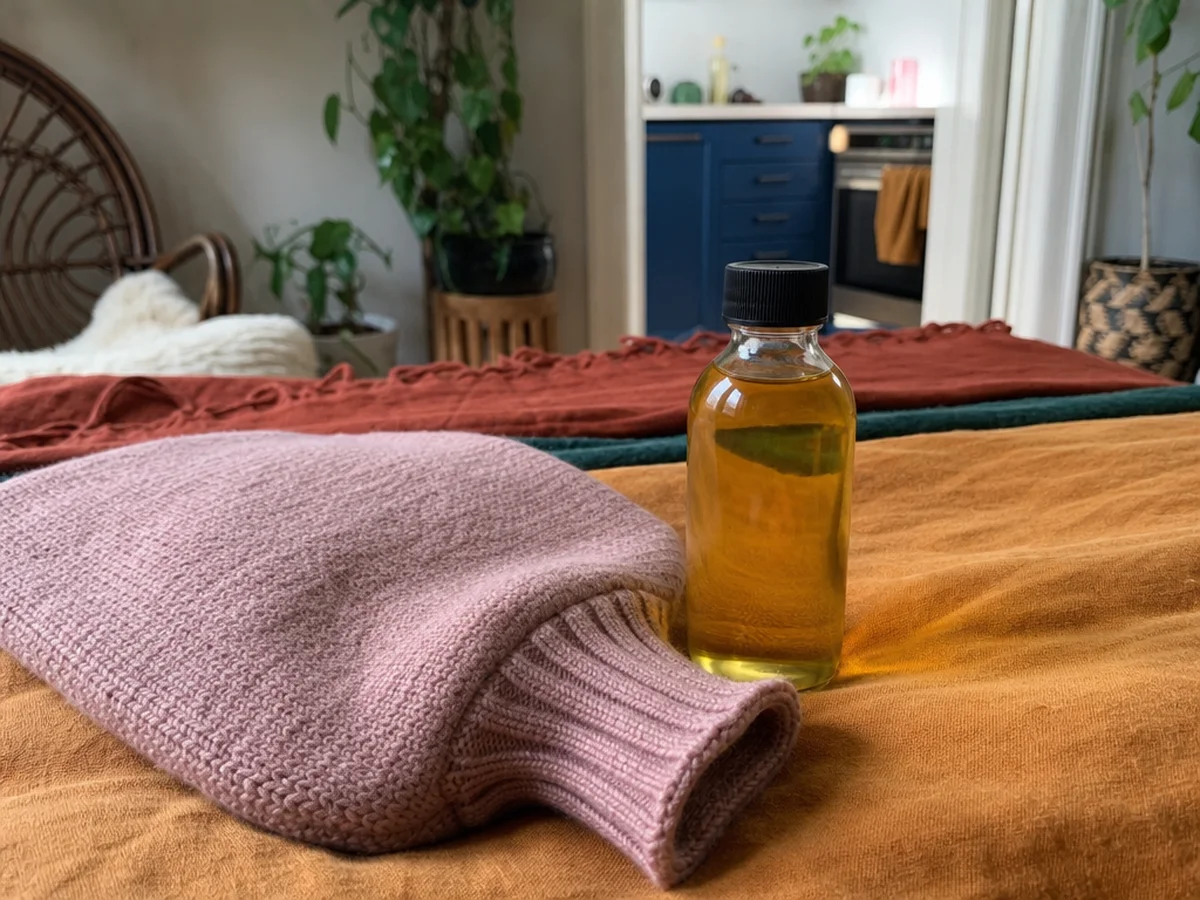
PMS and menopause: promising for other oils
There are real trials of aromatherapy in these areas, just not of vetiver. A pooled analysis of eight randomized trials in 295 women with PMS used bitter orange blossom, rose, geranium, yuzu, lavender and clary sage. Overall PMS scores dropped, but the trials differed widely and few described their methods in detail, and physical symptoms alone did not reach significance. For menopause, a 2025 analysis of 13 randomized trials found aromatherapy lowered symptom scores, with the authors rating the evidence moderate for physical symptoms and low to very low for others. Many of these trials involve massage, so touch and scent are tangled together, and the abstract does not tell us which oils were used.
Our reading: aromatherapy is a pleasant, low-risk extra that some women find helpful, the evidence is thin and mixed, and vetiver is not part of it yet.
What a doctor or nurse can do that a diffuser cannot
The NHS suggests keeping a symptom diary for at least two cycles for PMS and seeing a GP if daily life is affected, and notes there is not much evidence that complementary therapies work. For menopause, it directs people to a doctor, nurse or pharmacist about treatment options, adding that there is very little evidence on how well herbal remedies work or how safe they are. Severe mood changes before a period belong with a doctor.
Why the word "balance" is slippery
Product pages use "balance" because it sounds gentle and sounds scientific, and it can mean almost anything. If you see it on an oil listing, ask what exactly is meant: a feeling, a mood, a measurement? Then ask who measured it and in whom. A word without a measure behind it is just a mood in the copy.
Keeping a diary instead
If you are curious about patterns in your own body, a symptom diary is a more useful tool than any bottle, and a clinician can make good use of it. Note the date, what you feel and anything you did that day. A few cycles of notes give a doctor or nurse something solid to work from. A scent can sit beside that routine as a small pleasure, as long as nobody asks it to do more.
Enjoying vetiver for what it is
Vetiver is a deep, earthy, smoky-sweet aroma, a base note that lingers. Treat it that way: a few drops in a room or a lightly diluted body oil, used because you like the smell. That is a perfectly good reason, and it does not need a promise attached.
A note on sensible use
A word on the reverse worry. A 2007 report in the New England Journal of Medicine linked repeated skin use of lavender and tea tree products to breast tissue growth in three boys, and lab tests showed those oils acted on hormone receptors. That involved different oils, children and daily skin application, and we know of no comparable report for vetiver. It is simply a good reason for us to keep our guidance conservative: aromatic and cosmetic use only, diluted to between 0.5% and 2% in a carrier oil with a patch test first, away from children, never taken internally. If you are pregnant, nursing, taking medication or have a medical condition, check with your health care provider before use, as our disclaimer says.
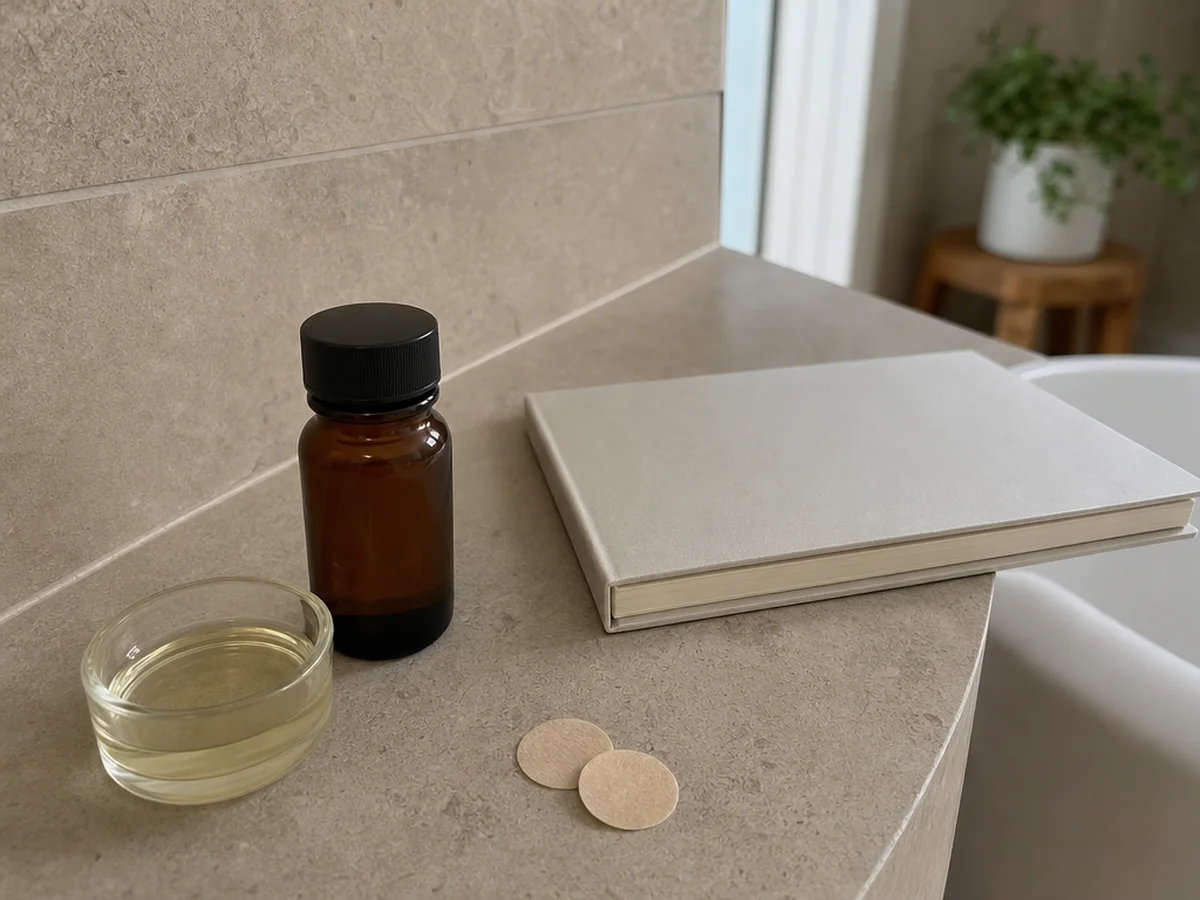
If you are tracking your own patterns
A small notebook beside the bed does a lot of work. Write the date, a line about how you feel, and anything unusual about the day. If you do use a scented oil, note that too, so you can see whether a smell ever sits badly with you. It is a plain, practical habit, and it gives your health professional real information to work with.
If what you want is a warm, woody scent for the evening routine, our scent guide is a good place to start, and our pregnancy post and safety guide cover the careful side. Enjoy it as an aroma, and leave the hormones to your health professional.
Vetiver Essential Oil
Vetiver Essential Oil from our own shop, in sizes from 0.5 oz to bulk.
From $20.99
Shop Now →Sources & Further Reading
- Saiyudthong et al. Anxiety-like behaviour and c-fos expression in rats that inhaled vetiver essential oil. Natural Product Research, 2015
- Gunasekar et al. Pharmacological and Therapeutic Potential of Chrysopogon zizanioides (Vetiver): A Comprehensive Review of Its Medicinal Applications and Future Prospects. Biomolecules, 2025
- Es-Haghee et al. The Effects of Aromatherapy on Premenstrual Syndrome Symptoms: A Systematic Review and Meta-Analysis of Randomized Clinical Trials. Evidence-Based Complementary and Alternative Medicine, 2020
- Karimi et al. Aromatherapy for the Management of Menopause Symptoms: An Updated Systematic Review and Meta-analysis. Journal of Caring Sciences, 2025
- PMS (premenstrual syndrome) - NHS
- Treatment for menopause and perimenopause - NHS
- Henley et al. Prepubertal gynecomastia linked to lavender and tea tree oils. New England Journal of Medicine, 2007