Where Is Vetiver Oil Found Inside the Root?
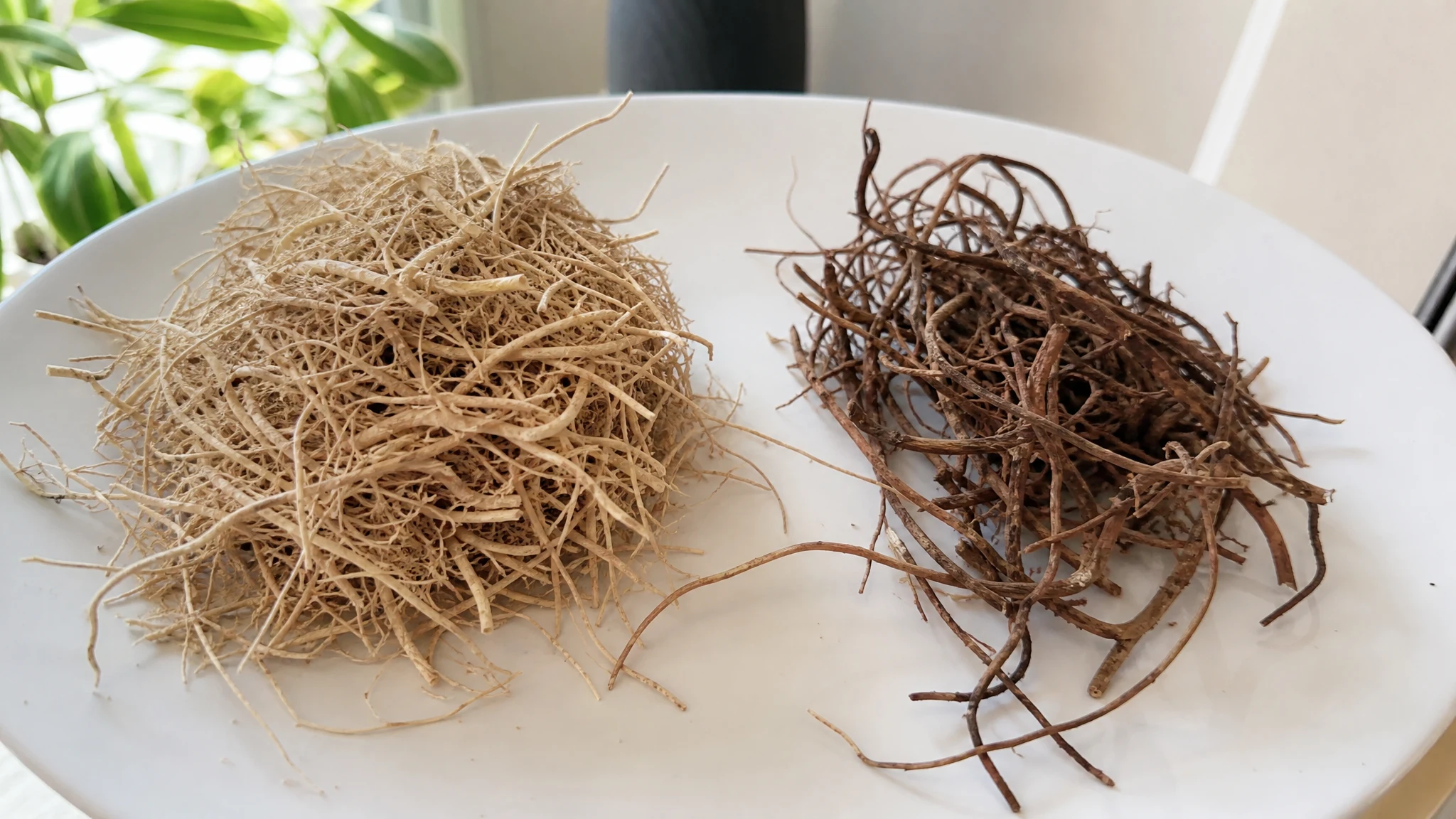
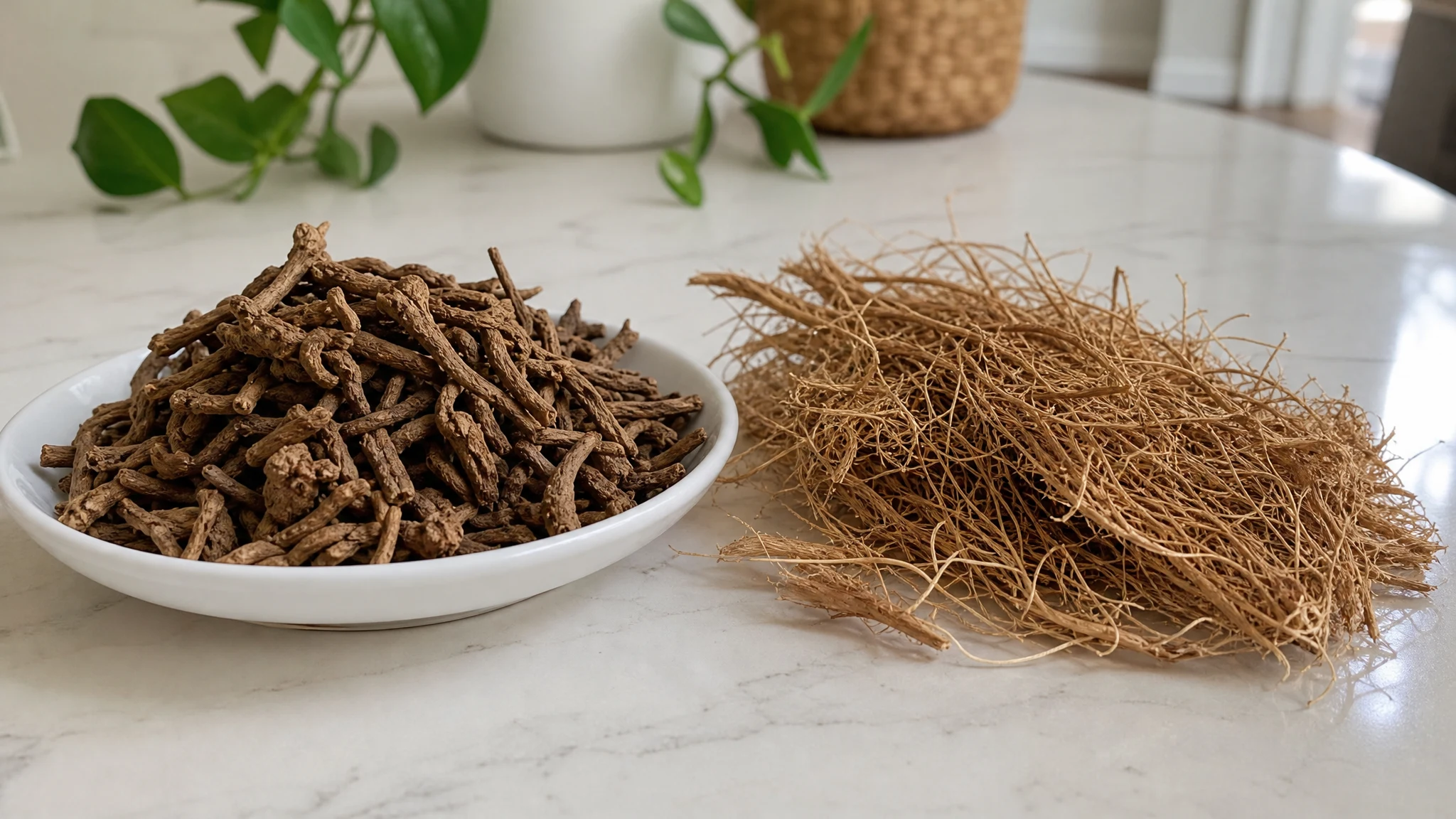
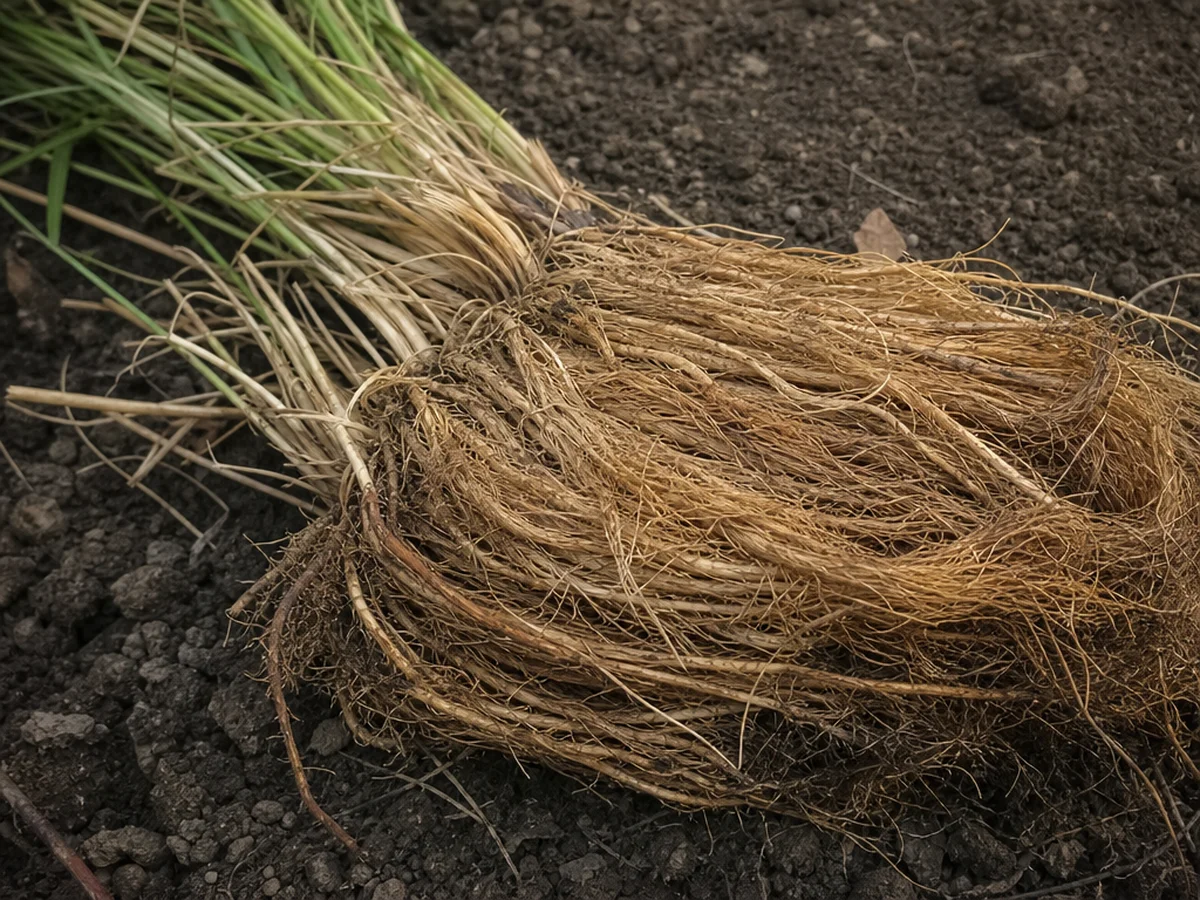
Vetiver is a tall, feathery grass, yet everything we love about the oil comes from what is underground. The oil is not on the surface of the root, and it is not in the leaves or flowers. It sits inside the root, in a specific layer, and understanding that layer explains a lot about why vetiver is slow, patient work.
Vetiver Essential Oil
Our own Vetiver Essential Oil, in sizes from 0.5 oz to bulk.
From $20.99
Shop Now →A layer just outside the core
Italian researchers who studied vetiver roots describe the oil-producing secretory cells as lying "in the first cortical layer outside the endodermis of mature roots," with the oil held in small cavities called lysigenous lacunae, spaces formed when cells break down, in the inner cortex (Pontieri et al., conference poster). That is a poster abstract rather than a full paper, so we hold it lightly, though it matches the broad picture.
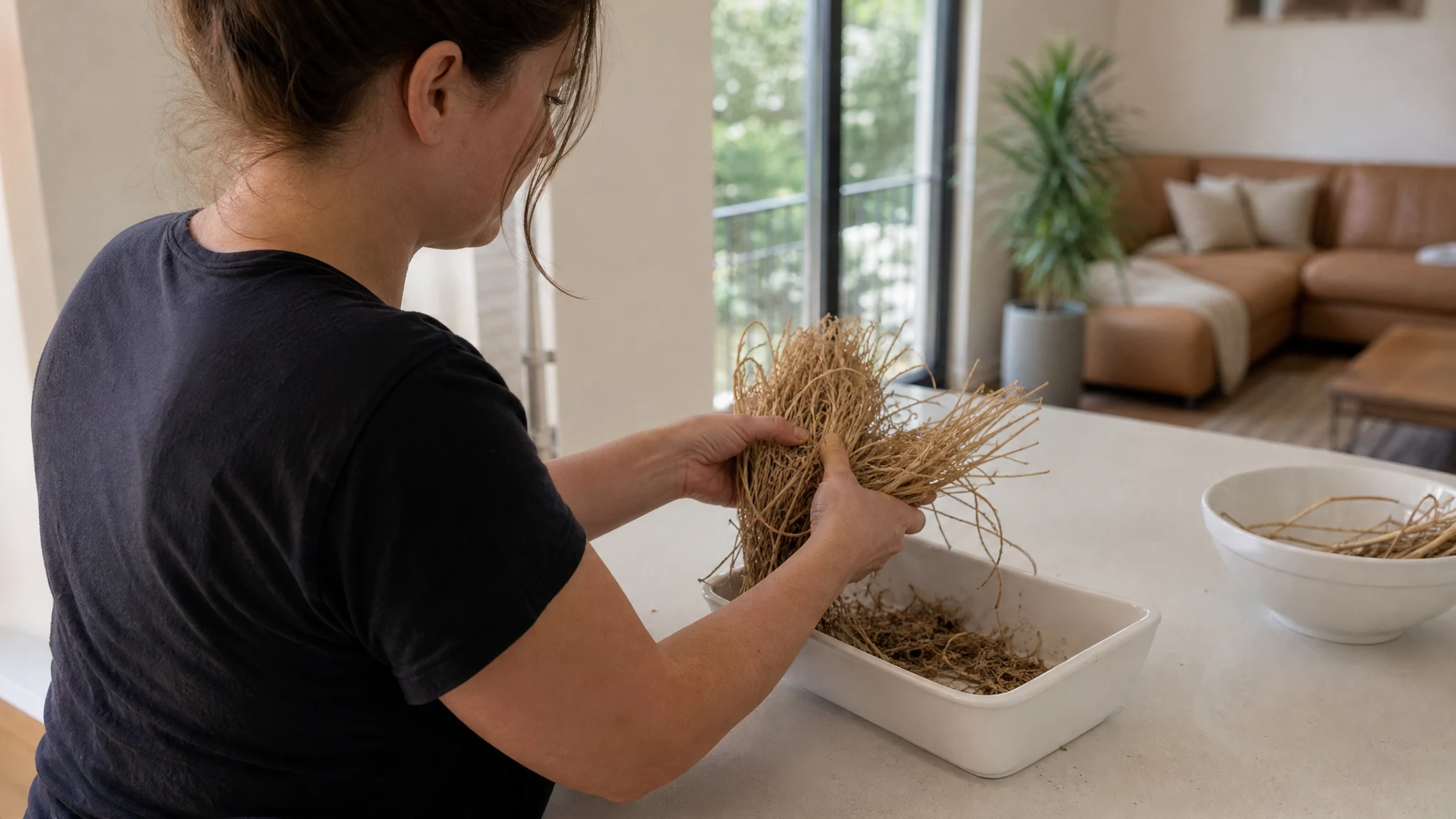
The practical meaning, as reasoning rather than a tested result: if the oil lives inside the tissue instead of coating it, washing a root removes soil, not oil, and the oil only leaves when heat and steam drive it out. It also suggests why vetiver wants a long time in the still, since steam must work its way into dense, fibrous roots.
How little a root holds
A 2021 analysis of a Haitian vetiver oil describes it as an extremely complex matrix, with only 155 components identified and several hundred sesquiterpene derivatives overall. It gives a yield of about 0.2% to 0.3% oil from hydrodistillation of dried roots (Ouyang et al., 2021). Our arithmetic from that range: a kilogram of oil needs roughly 330 to 500 kg of dried root. That is a lot of root for a little oil, and it puts the "tiny amount goes a long way" line in perspective.
Why this part of the plant charms us
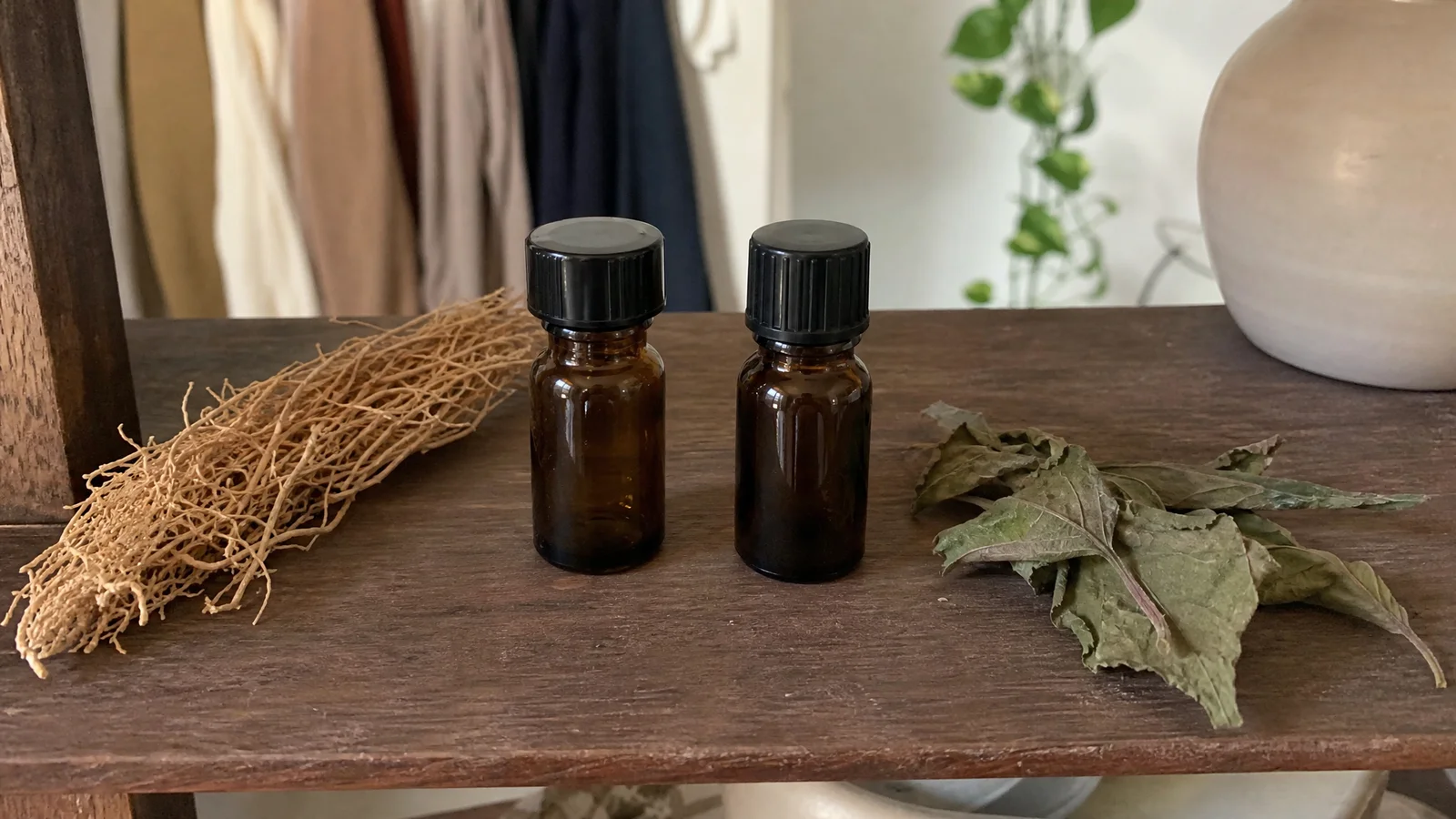
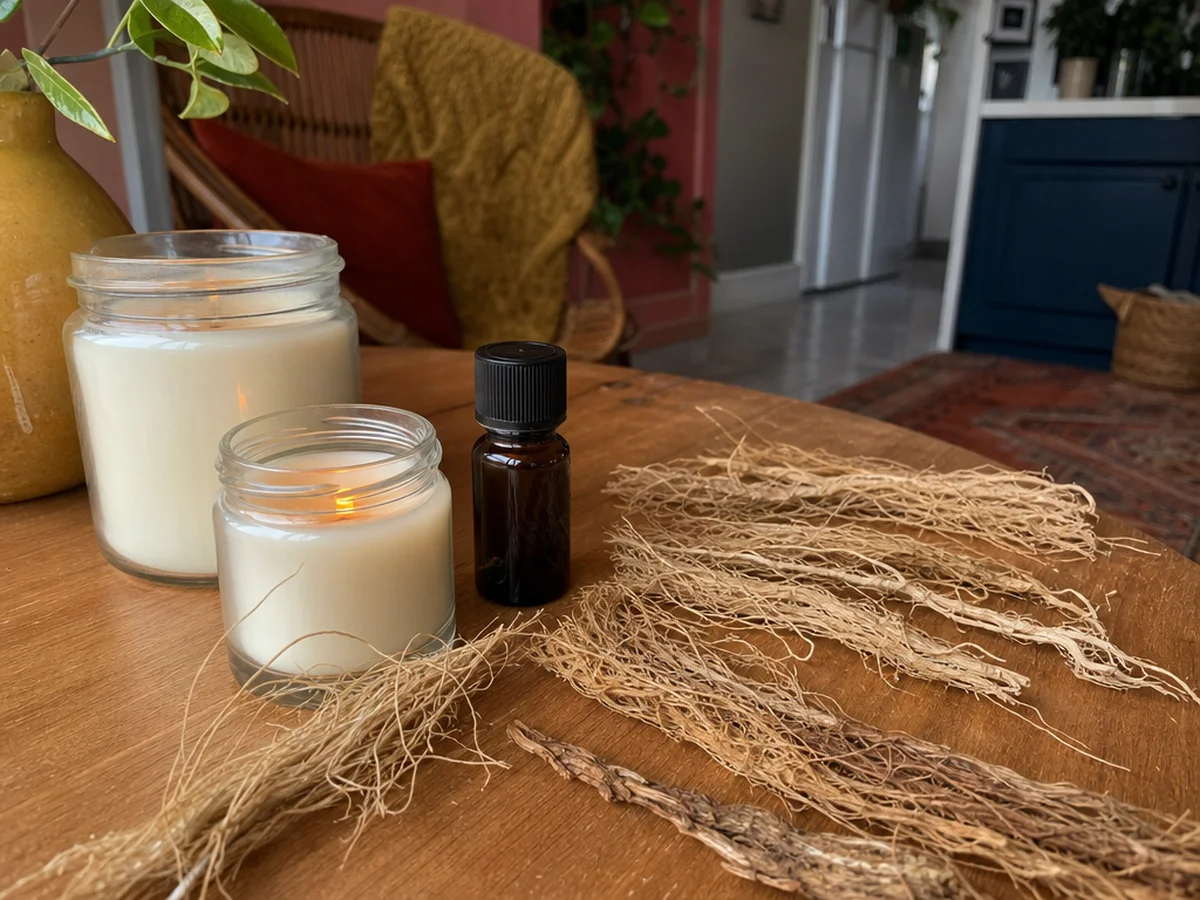
We have a soft spot for an oil that comes from the part of the plant nobody sees. Most aromatic oils are tied to petals or leaves, things you can pick and sniff on a walk. Vetiver asks for a little imagination instead. The scent you meet in the bottle, deep, earthy and smoky-sweet, belongs to a tangle of rootlets that spends its whole life underground. If the first thing that comes to mind when you open the cap is damp ground after rain, that is the root talking.
A simple way to get to know it: put one drop on a blotter strip or a scrap of tissue and smell it right away, then again after ten minutes, then again after an hour. A thick, slow oil keeps unfolding, and the later impressions are often different from the first. It costs nothing, needs only a bit of paper, and teaches you more than any description can. Hold the strip a little away from your face rather than pressing it to your nose.
Does older mean more oil?
One study followed this directly. Researchers planted vetiver in spring in Campania, Italy, sampled roots every two months for a year, and hydrodistilled each sample. Oil yield held at about 0.30 g per 100 g of root for the first six months, roughly doubled to 0.70 at month eight, fell to about 0.6 at month ten and was back to 0.30 at month twelve. The proportions of the two main compounds, khusimone and khusimol, stayed about the same throughout. The authors tie the pattern to plant metabolism, which slows in cold weather (Massardo et al., SIGA congress poster, 2003).
What we take from this: the tidy idea that older, thicker roots always mean more oil does not hold in this planting, where the peak came at eight months and the season mattered. It is also one Mediterranean planting measured to twelve months, so it cannot tell us how a tropical crop behaves or what happens beyond a year. Anyone who quotes a perfect harvest age without a source is saying more than the evidence does.
What happens after the roots are dug
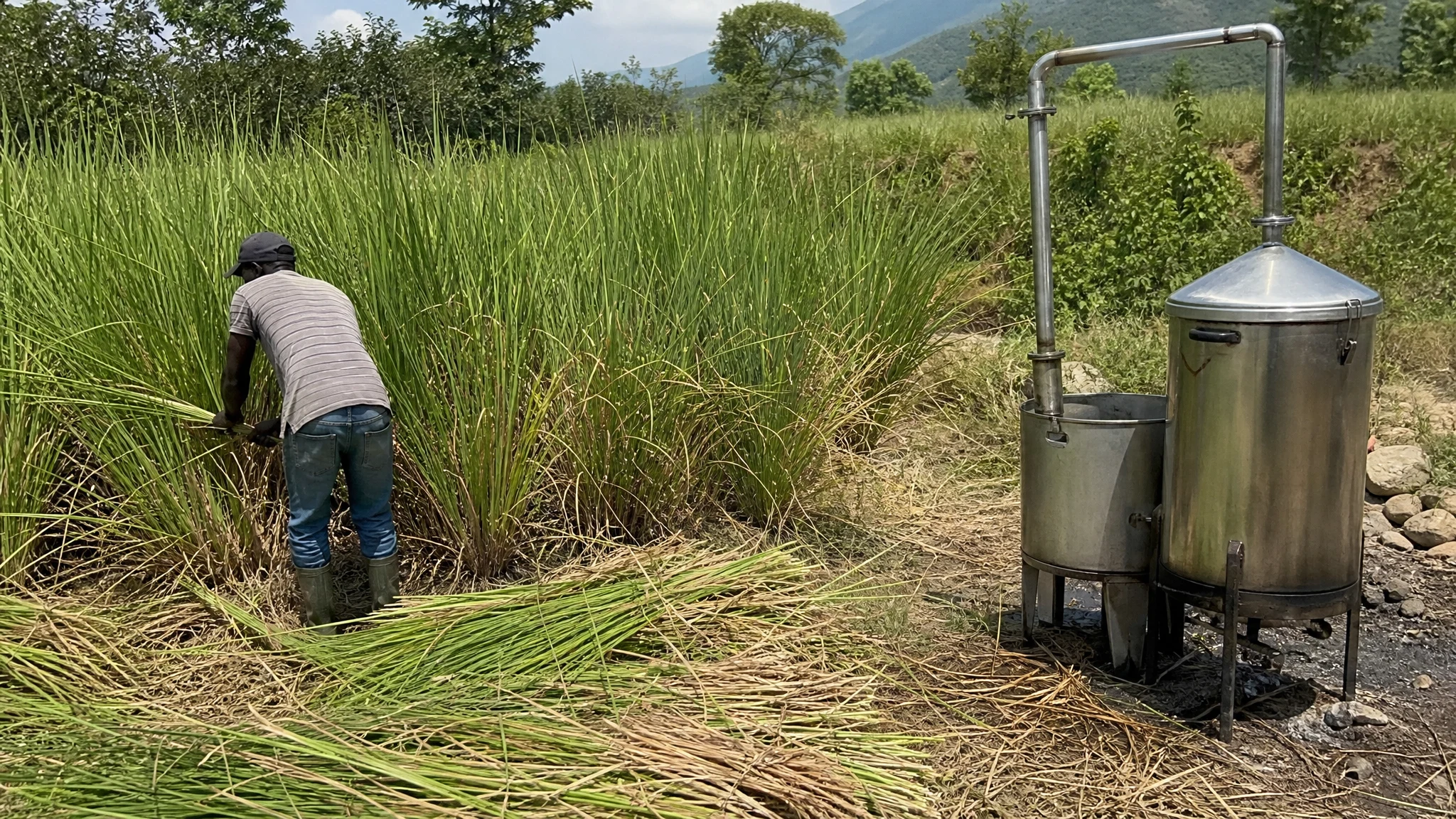
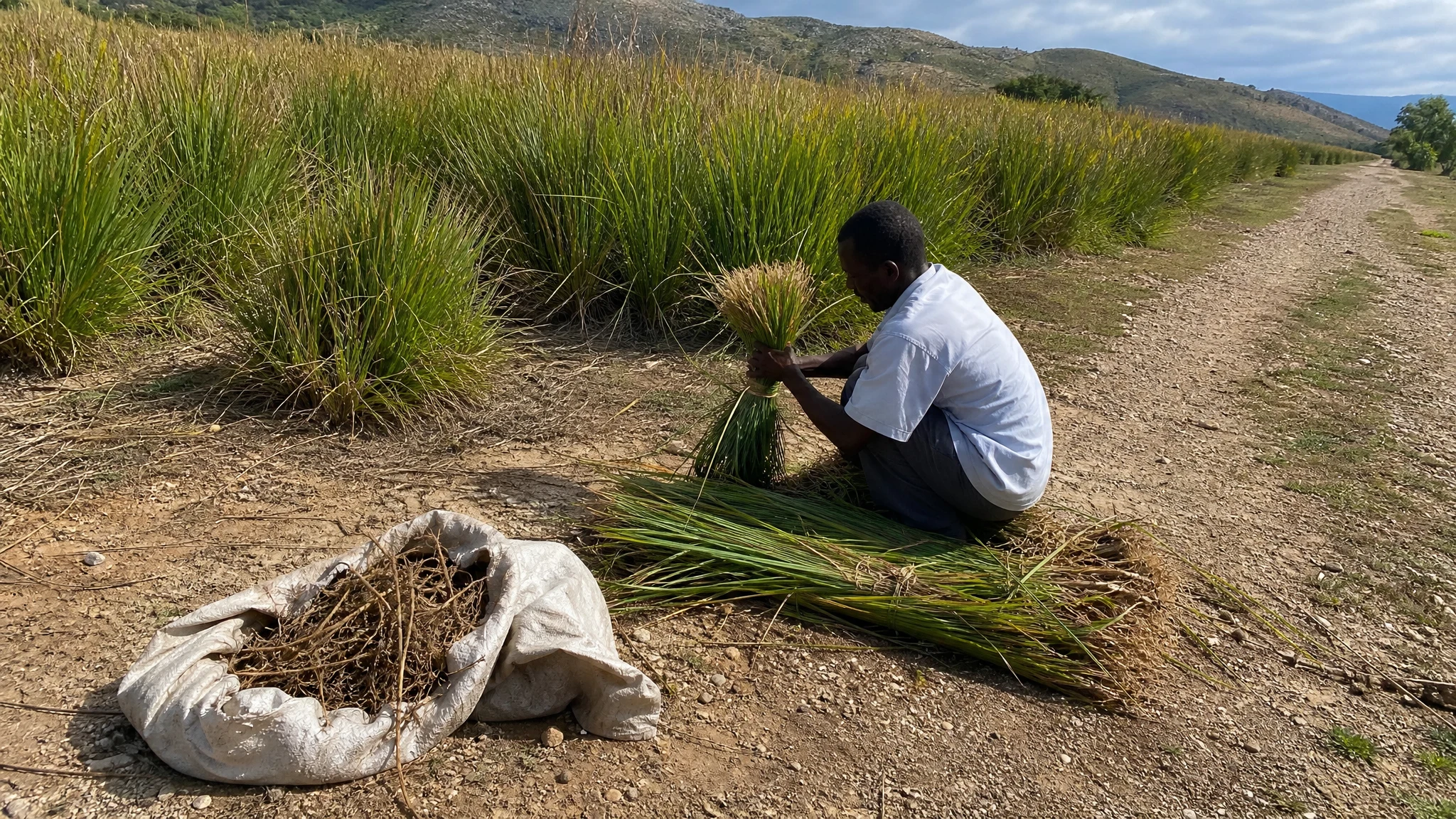
A 2024 study from CSIR-CIMAP in Bengaluru tested how long dug roots can wait. Roots distilled seven days after harvest gave the highest oil yield, and oil recovery fell sharply as storage lengthened. Over storage periods up to 90 days the root colour changed, and tissue layers loosened and separated after about 60 days. The authors advise distilling within 30 days of harvest (Kumara et al., 2024). The abstract does not give the storage conditions, so it is a direction, not a protocol.
Put the two studies together and a picture forms: age, season and waiting time all change how much oil there is to collect, and the gap between digging and distilling is a quiet but real part of the story. We have no data of our own on those steps, and no certificate that covers them, so we leave them as questions worth asking any seller.
What the anatomy cannot tell you about a bottle
None of this lets you judge an oil by looking at it. The Certificate of Analysis we publish for one batch lists the plant part as root, a relative density of 0.993 and a refractive index of 1.525, each against its standard range, and the extraction as steam distilled. It does not include a chromatographic profile, so it cannot say which of those hundreds of compounds are in the bottle. If you need a composition report for a lot, ask us in writing through the contact page before you rely on it.
If this has made you curious, there is more to follow. Our vetivone and khusimol post looks at the main compounds, the growing and harvesting post covers the field side, the soil and climate post asks why one species gives different oils in different places, and the extraction comparison picks up at the still.
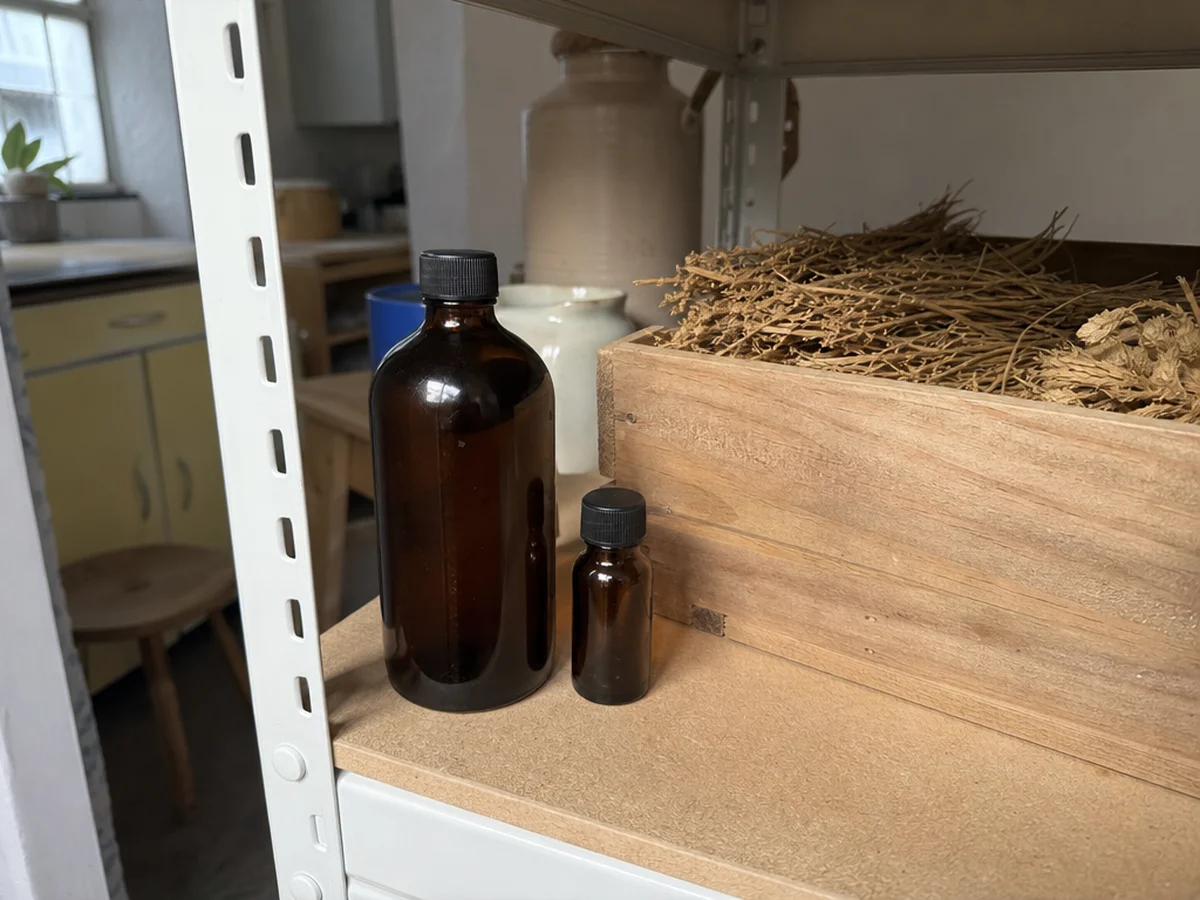
Next time you handle the bottle, notice how slowly it moves when you tip it. That weight is part of the same story: a dense, fibrous root, a long patient process, and an oil that does not hurry for anyone. Warm the bottle in your hands for a minute if you want it to pour more easily.
So the answer to "when is the best time to dig?" is that the sources we found do not settle it, and the root keeps its oil well hidden until the steam arrives.
Vetiver Essential Oil
Vetiver Essential Oil from our own shop, in sizes from 0.5 oz to bulk.
From $20.99
Shop Now →Sources & Further Reading
- Pontieri P et al. Isolation and Characterization of Endophytic Bacteria in Vetiveria zizanioides (L.) Nash Roots (conference poster). iris.unisa.it
- Ouyang J et al., 2021. The Smelling Principle of Vetiver Oil, Unveiled by Chemical Synthesis. Angewandte Chemie International Edition. PMC7986879
- Massardo DR et al., 2003. Analysis of Essential Oil Production in Vetiveria zizanioides (L.) Nash During Early Growth (SIGA congress poster). geneticagraria.it
- Kumara RR, Prakash TA, Yogendra ND, 2024. Discrepancy in essential oil yield and root structure of vetiver across different storage periods. Journal of Spices and Aromatic Crops. updatepublishing.com