Vetiver vs Ylang Ylang: Earthy Root Oil or Floral Bloom?
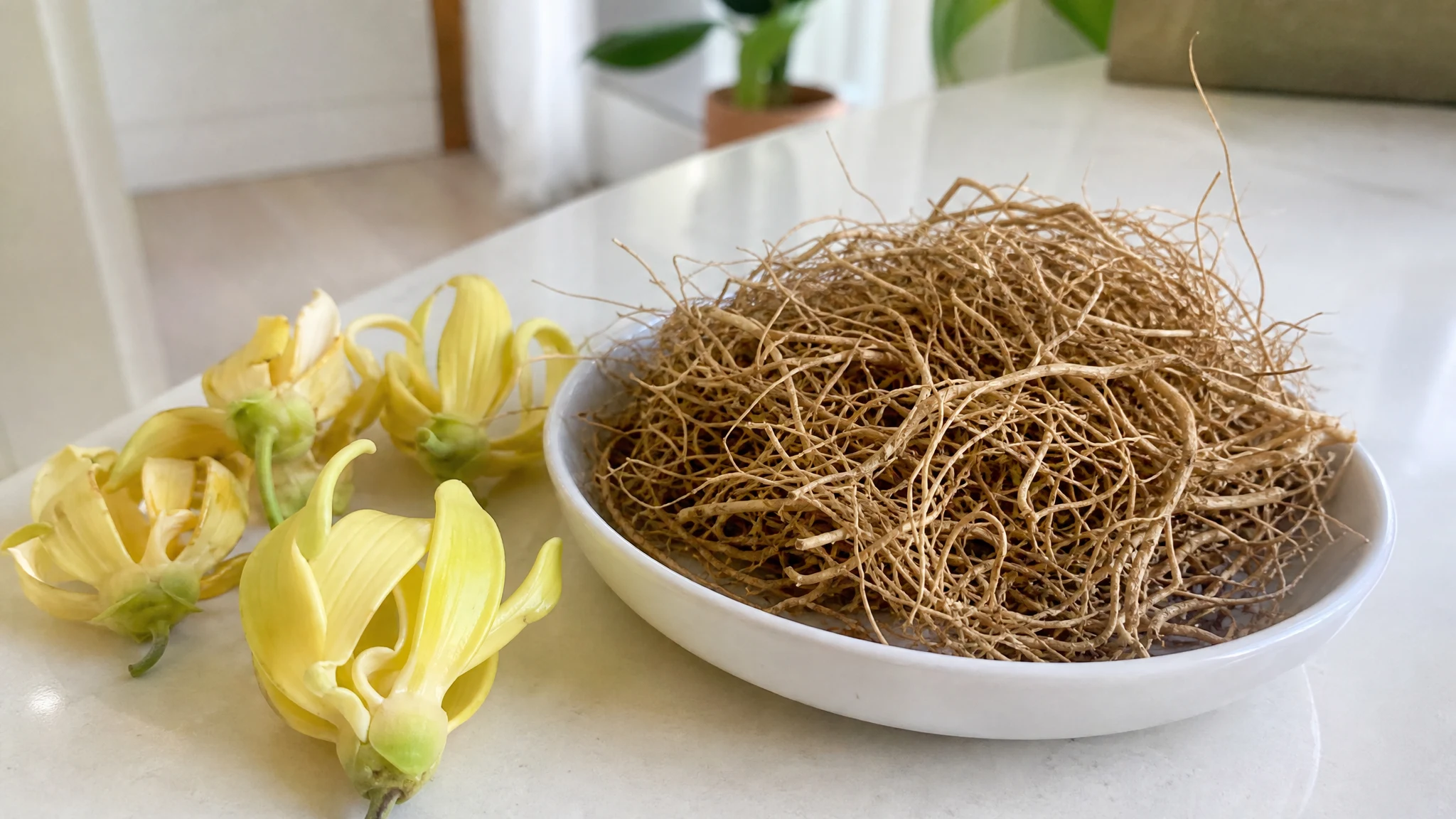
A floral oil and an earthy oil walk into a stressful week. Which one goes in the diffuser? It is a fair question, and a fun one, because ylang ylang and vetiver sit at opposite ends of a scent composition. The research behind them is lopsided in a way that may surprise you.
Vetiver Essential Oil
Our own Vetiver Essential Oil, in sizes from 0.5 oz to bulk.
From $20.99
Shop Now →Ylang ylang: some small human studies
Ylang ylang comes from the flowers of Cananga odorata, and a 2015 review notes it is used mainly in cosmetics and is believed in aromatherapy circles to help with stress. That belief is not a finding, but there are a couple of small human studies worth knowing about. In one, 40 healthy volunteers had ylang ylang oil absorbed through the skin; blood pressure fell, skin temperature rose, and they rated themselves calmer than the control group. In another, 29 healthy men were split into an inhaled ylang ylang group of 15 and a control group of 14, and blood pressure and heart rate readings fell in the aroma group.
These are small, short studies of healthy people, and a lower blood pressure reading in a healthy volunteer is not a treatment outcome. Self-rated calm in a study where participants can smell what they were given is also hard to interpret. Still, they are human data, and that matters when comparing with vetiver.
Vetiver: rats, not people
Vetiver's research is in rats. Animals that inhaled the oil at 2.5% for seven minutes showed an anxiolytic-like profile on a maze test, and in a separate study rats that inhaled it stayed awake longer and had less slow-wave sleep, which the authors read as refreshing. They point in different directions, and neither can be carried over to a person on a sofa. So on the human-evidence question, ylang ylang is ahead, and we are happy to say so about an oil we do not sell.
Opposites on the scent map
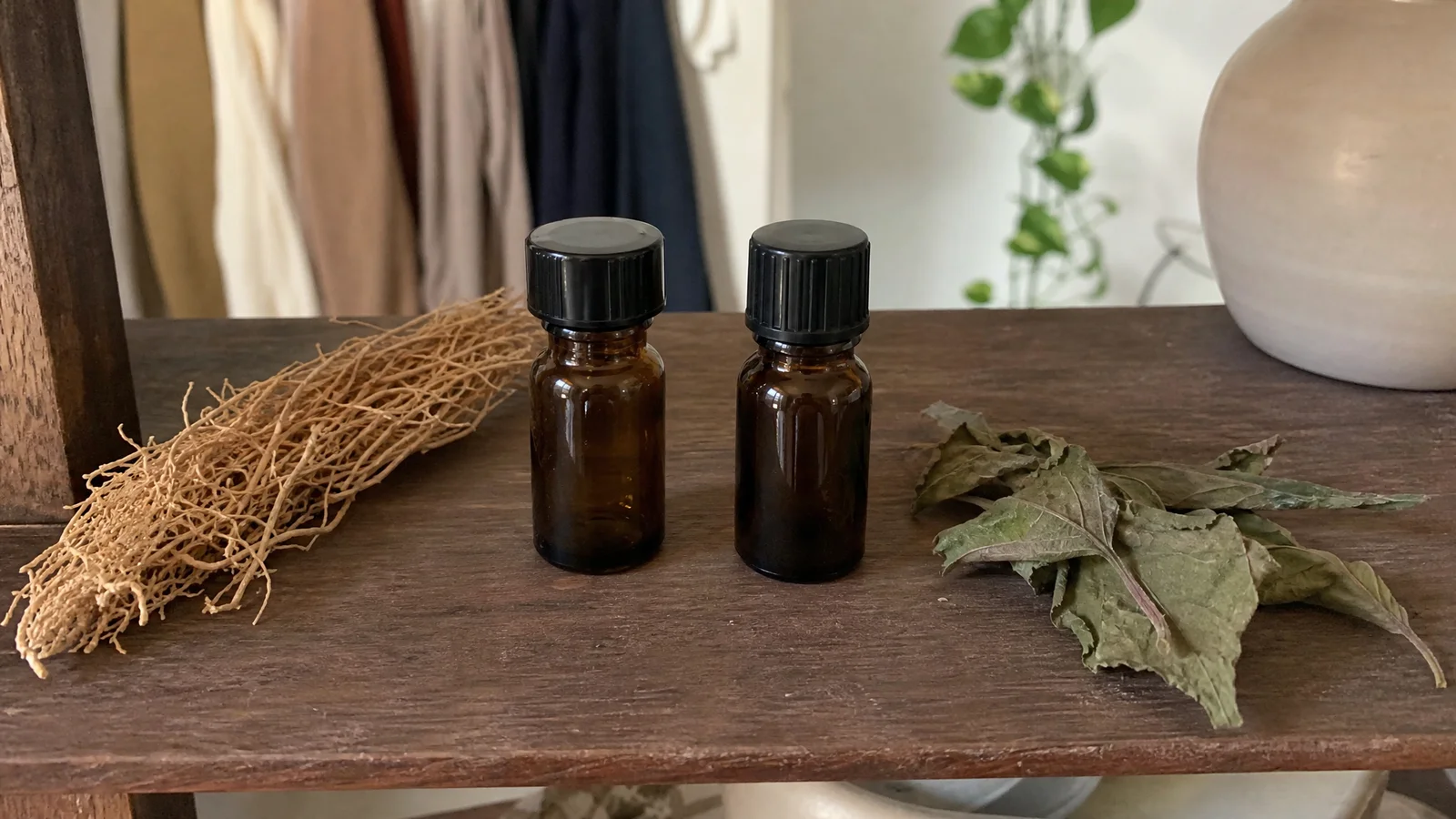
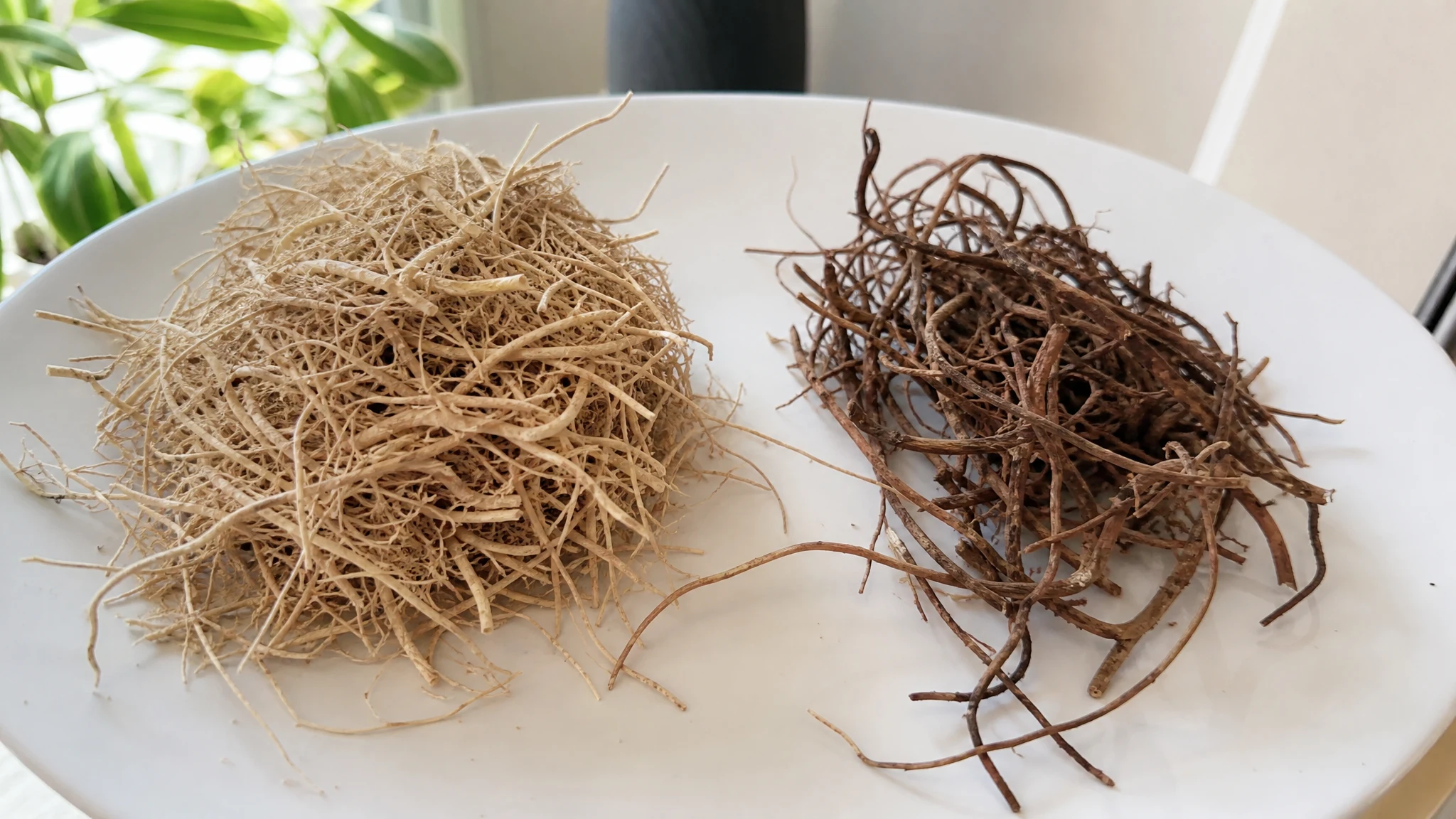
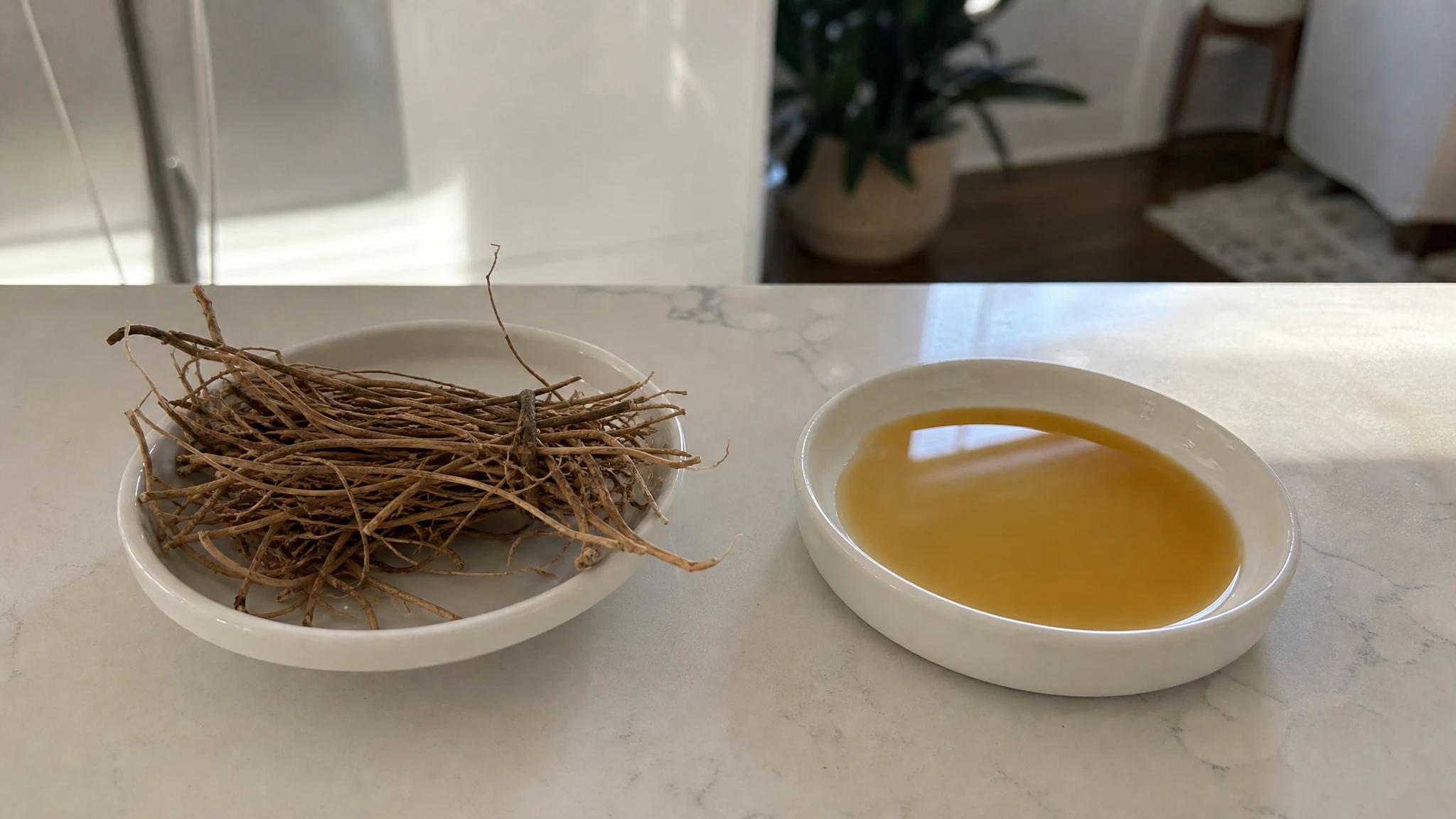
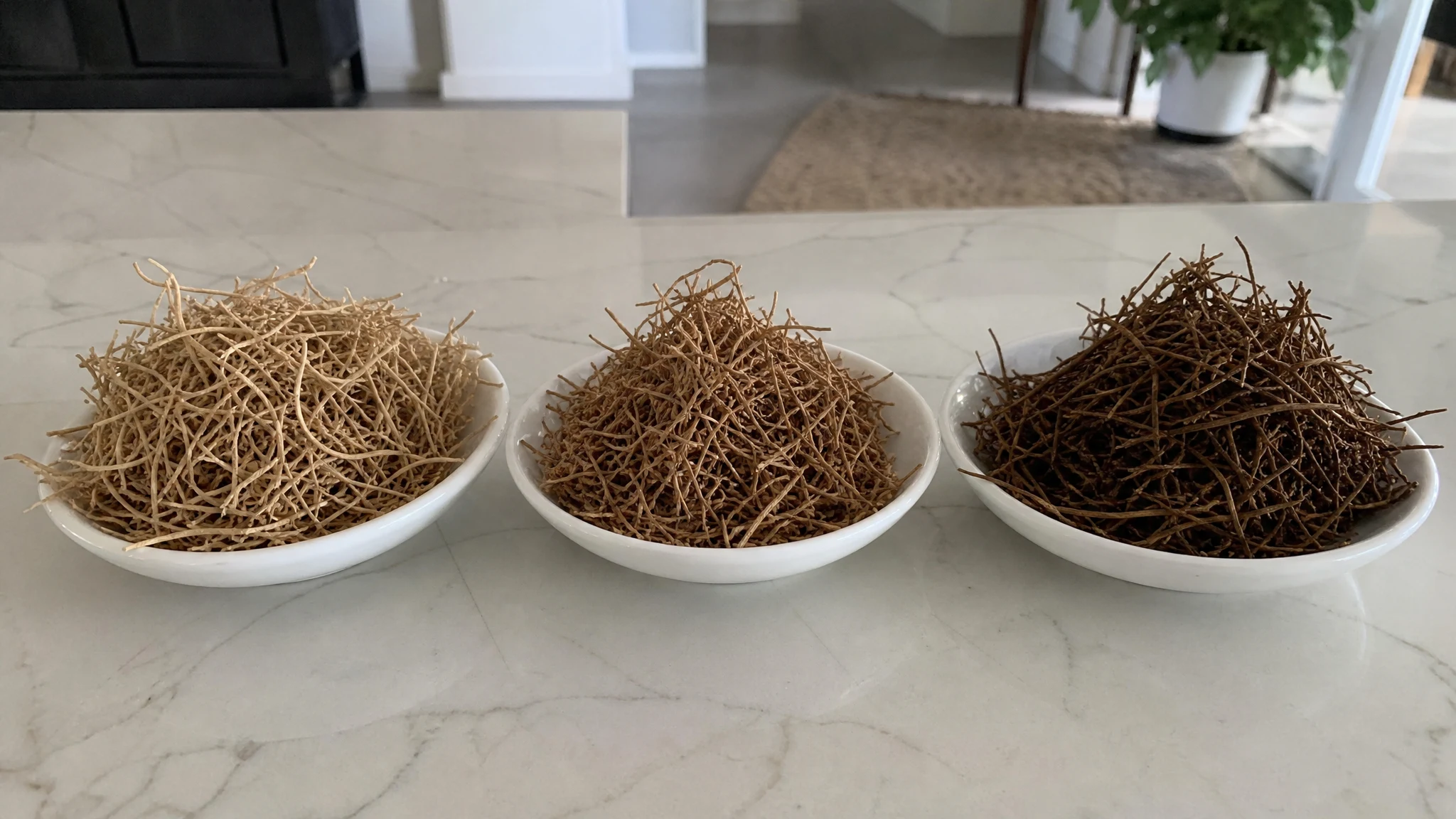
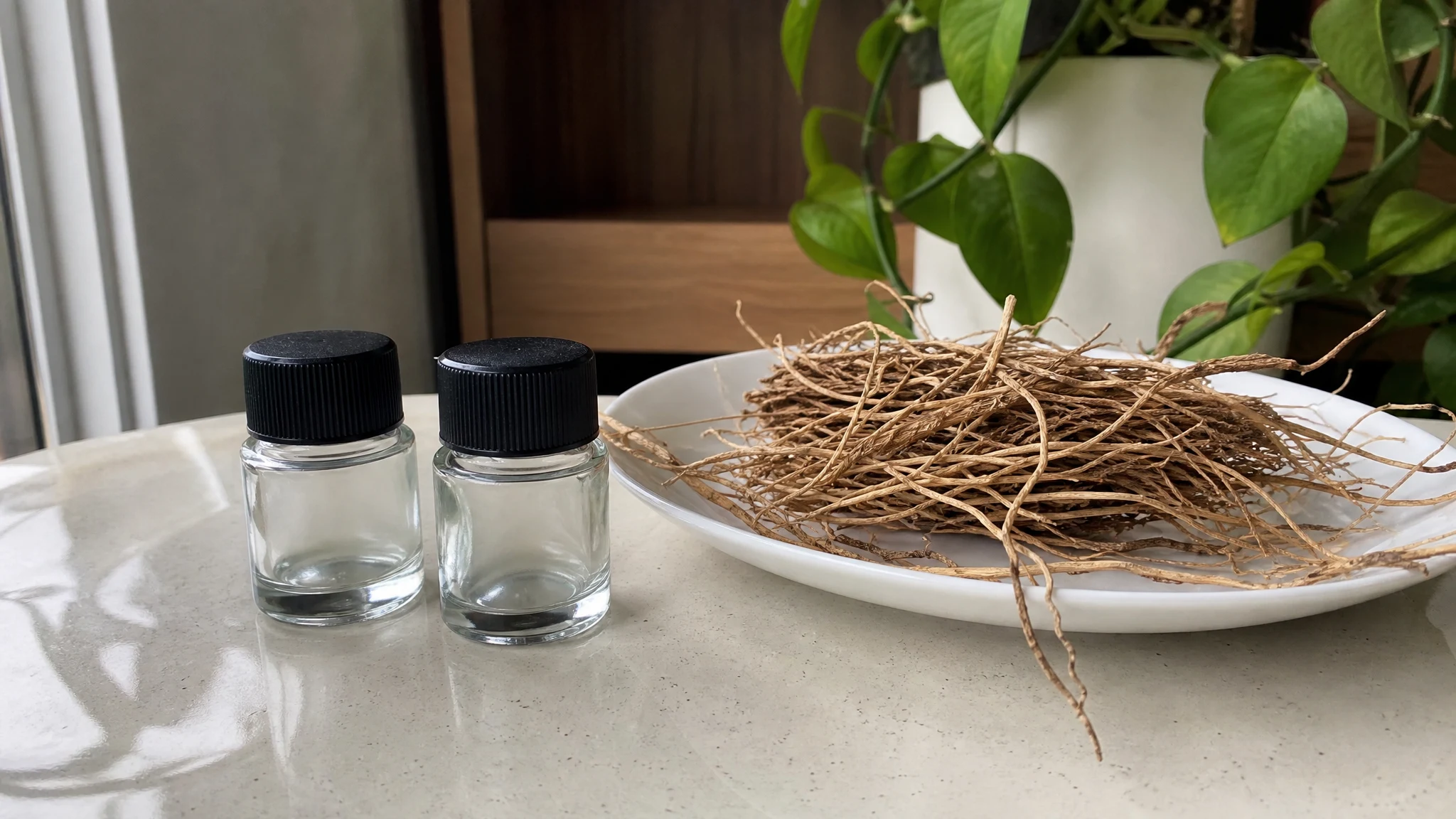
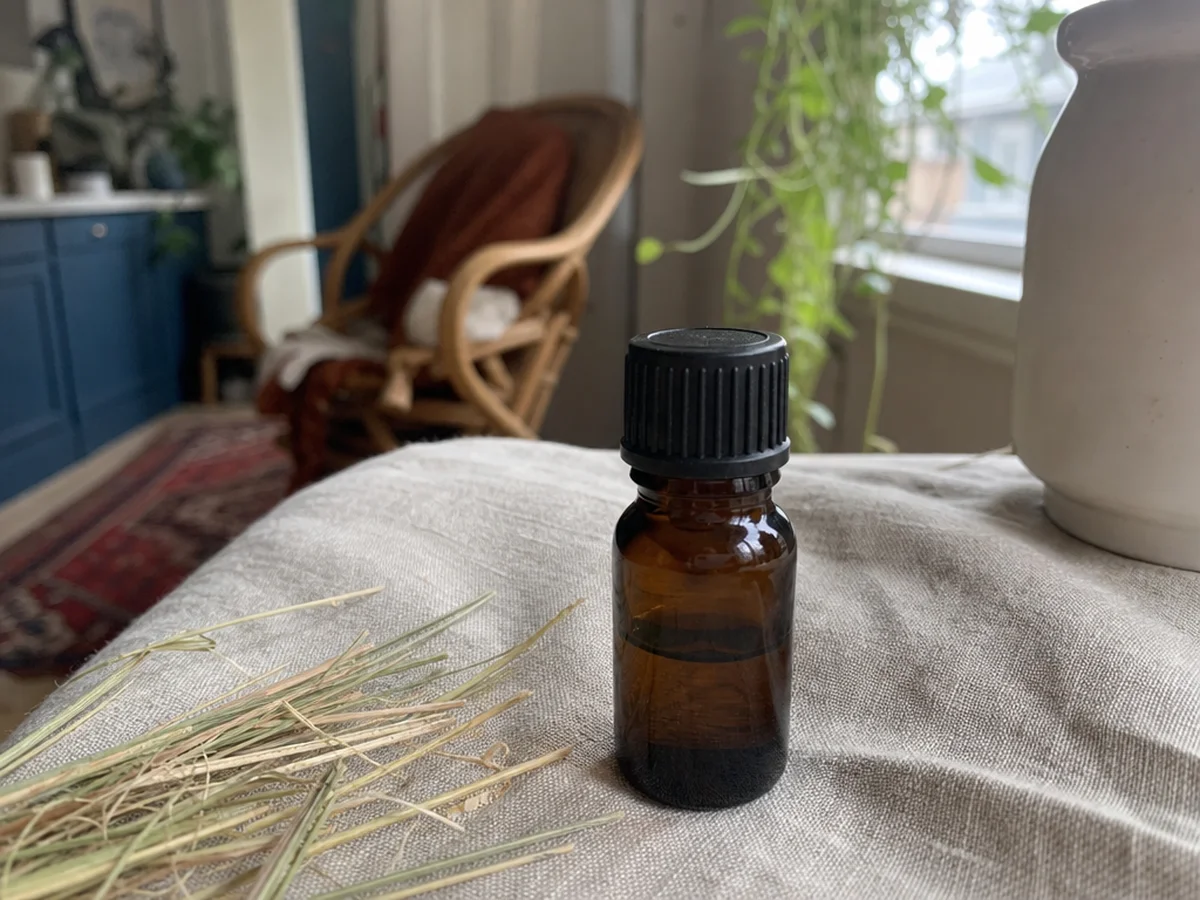
One of the pleasures of comparing these two is how far apart they sit. Ylang ylang is a flower oil, rich and floral. Vetiver is a root oil, deep, earthy and smoky-sweet. On a paper strip they feel like different rooms of the same house. Dip one strip in each, label them, and revisit after a few minutes and after an hour. You may find the floral one bright and quick to announce itself while the earthy one takes its time. Vetiver is thick and slow-pouring, so a single drop is enough.
Where vetiver is easier, and where ylang ylang needs care
Skin is where ylang ylang carries a documented caution. In a German dermatology network that patch tested 10,930 patients with suspected contact dermatitis, ylang ylang oil produced the highest rate of positive reactions among the oils tested, at 3.9%, ahead of lemongrass, jasmine absolute, sandalwood, clove and neroli. These were clinic patients, so the figures overstate what everyday users experience, but they show why a patch test matters.
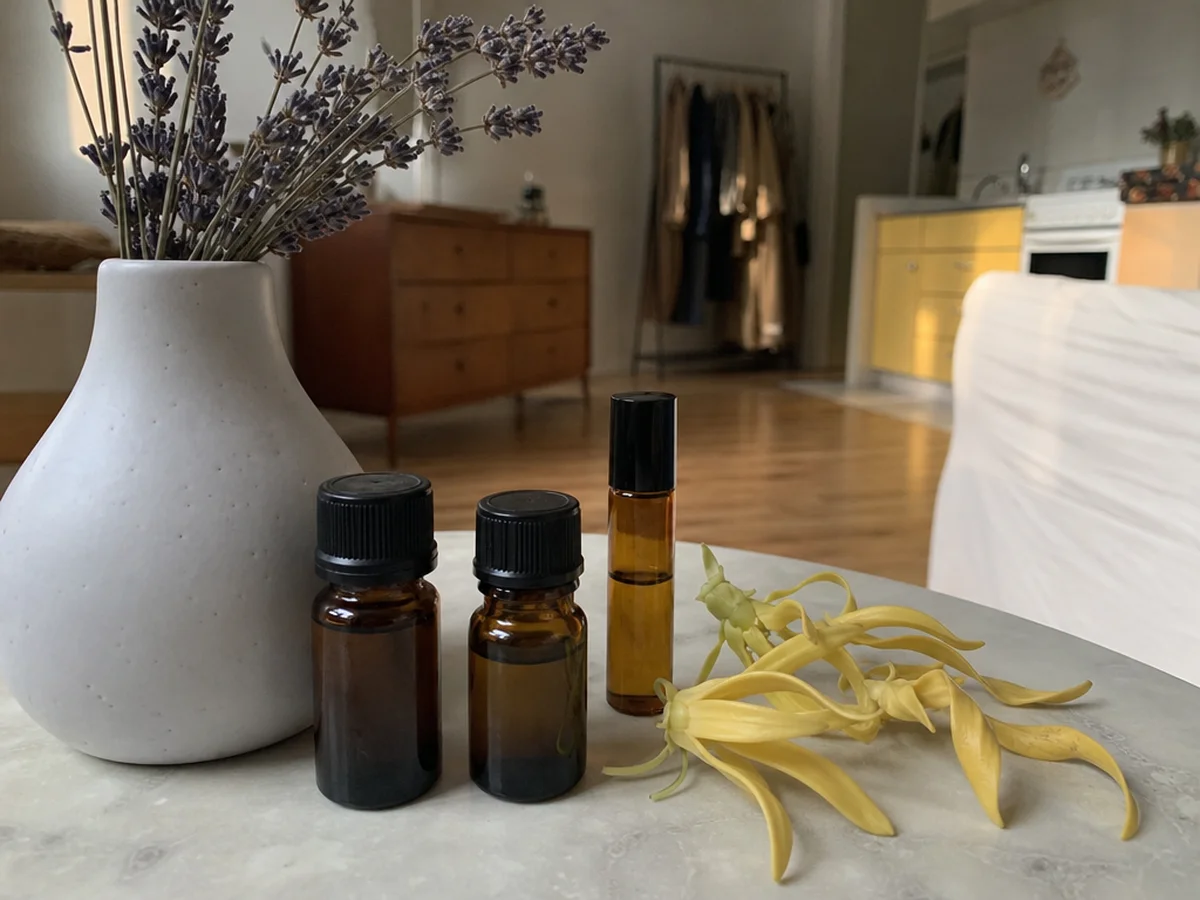
We cannot offer a matching figure for vetiver. Nobody should read the lack of a number as proof that it never causes a reaction. So our approach is the same discipline: our oil is sold neat, we recommend diluting to 0.5% to 2% in a carrier oil, we would start at 0.5%, patch test first, and keep it away from eyes, children and pets. If you have a history of fragrance allergy or dermatitis, ask a dermatologist before trying either oil. Our safety guide has the steps.
A scent to build on
This is where vetiver shines. We describe it as deep, earthy and smoky-sweet, a base note that formulators often use as a natural fixative, and it stays with a blend long after lighter notes have gone. Ylang ylang is a different type of material and we do not sell it, so smell it yourself and ask your supplier for the species and the lot report. Our guides to vetiver in perfumery and layering vetiver show how a base note works in a composition, and our blending guide lists partners.
Trying them together
Because they occupy different parts of a composition, the two can share a blend. Think of vetiver as the foundation and a floral oil as something to lean on top of it. Start with a very small amount of vetiver, since it is strong, and add more only after you have smelled the result. We sell vetiver only, so ylang ylang comes from another supplier, and the same test-small habit applies to it.

Our own recommendation is to keep notes. A few words on a card, such as the proportions and what you thought after an hour, will save you from repeating a blend you did not love and help you rebuild one you did.
How to choose
Treat it as a design decision, not a contest. The two belong to different parts of a composition, so they can share one blend. If you want the oil with the larger human research record, that is ylang ylang. If you want a deep, earthy root oil to anchor a fragrance, that is vetiver. And if stress is persistent or heavy, a physician or psychologist is the right person to talk to; an oil is a pleasant extra, never the plan.
For vetiver lot reports, ask us in writing through the contact page. The Certificate of Analysis we publish for one batch lists density and refractive index.
Vetiver Essential Oil
Vetiver Essential Oil from our own shop, in sizes from 0.5 oz to bulk.
From $20.99
Shop Now →Sources & Further Reading
- Tan LT et al., Traditional Uses, Phytochemistry, and Bioactivities of Cananga odorata (Ylang-Ylang). Evid Based Complement Alternat Med, 2015
- Hongratanaworakit T, Buchbauer G, Relaxing effect of ylang ylang oil on humans after transdermal absorption. Phytother Res, 2006
- Jung DJ et al., Effects of Ylang-Ylang aroma on blood pressure and heart rate in healthy men. J Exerc Rehabil, 2013
- Geier J et al., Contact sensitization to essential oils: IVDK data of the years 2010-2019. Contact Dermatitis, 2022
- Saiyudthong S et al., Anxiety-like behaviour and c-fos expression in rats that inhaled vetiver essential oil. Nat Prod Res, 2015
- Cheaha D et al., Modification of sleep-waking and electroencephalogram induced by vetiver essential oil inhalation. J Intercult Ethnopharmacol, 2016