Easy Vetiver Sugar Scrub: Three Ingredients, One Jar
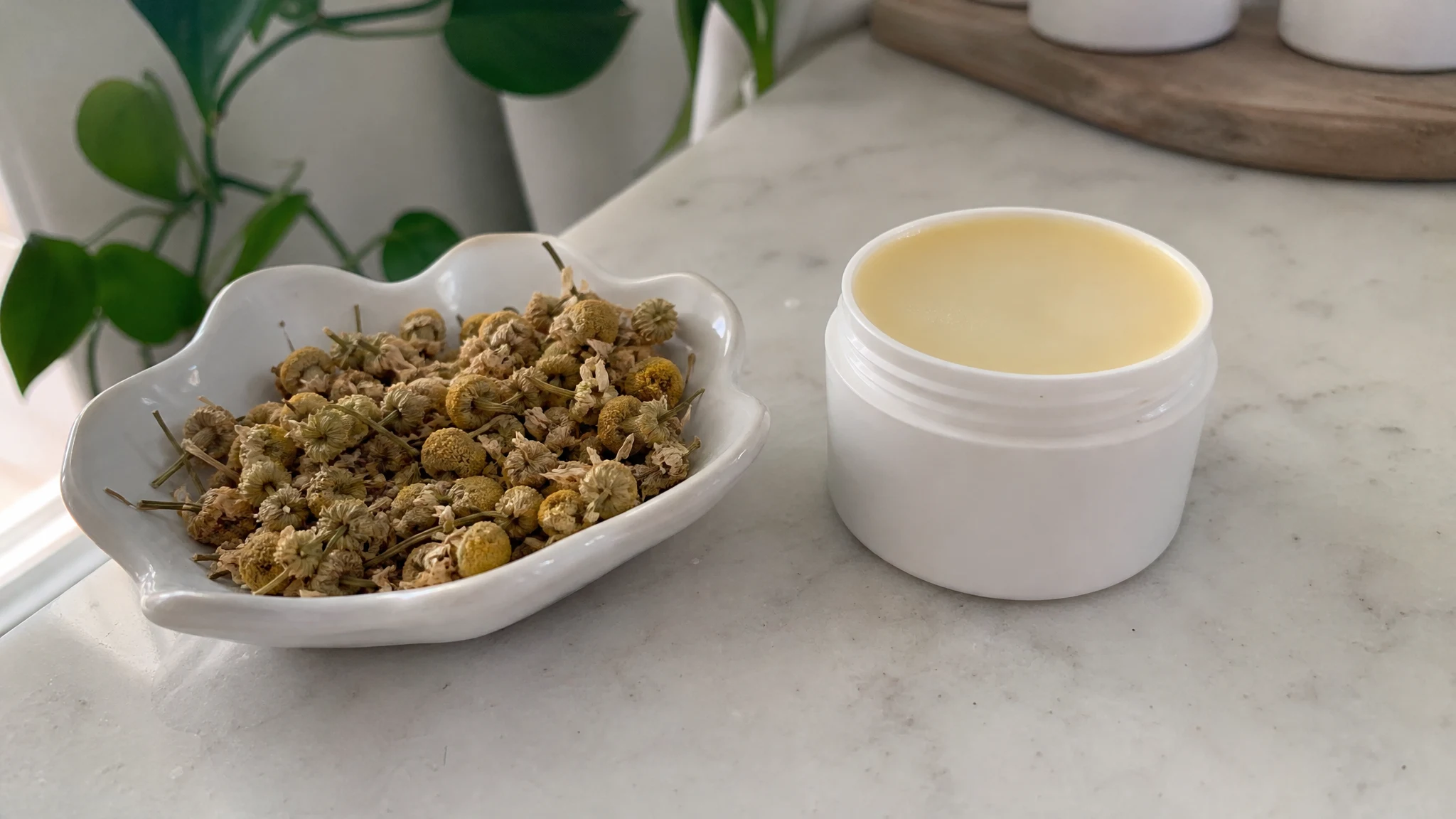
A sugar scrub is about the friendliest thing you can make with vetiver. Sugar crystals, a little oil to carry them, and an earthy, smoky-sweet scent that suits a morning shower. There are only three ingredients, and a few choices decide whether it turns out well.
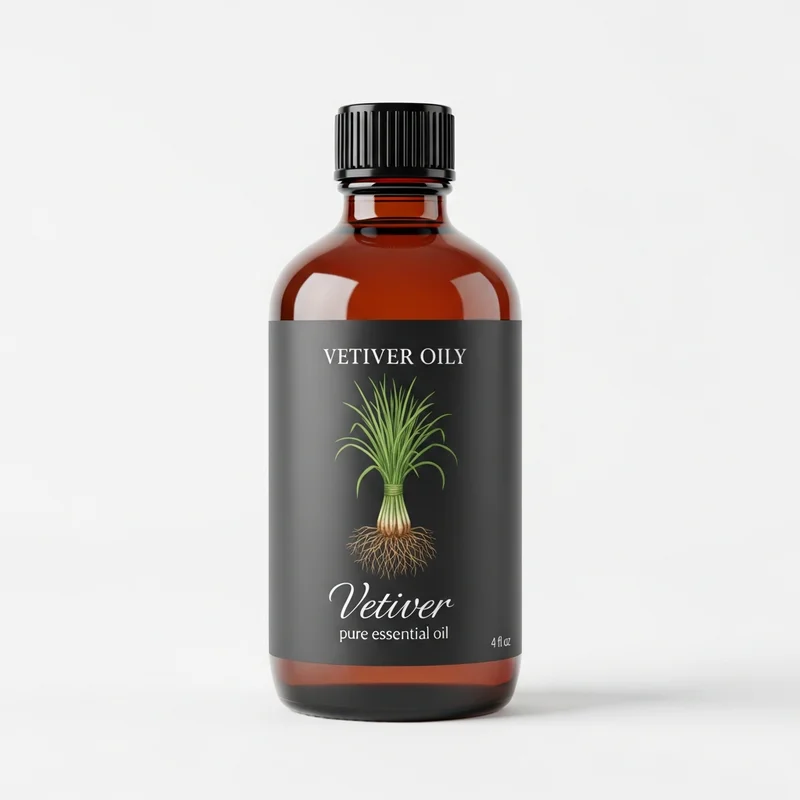
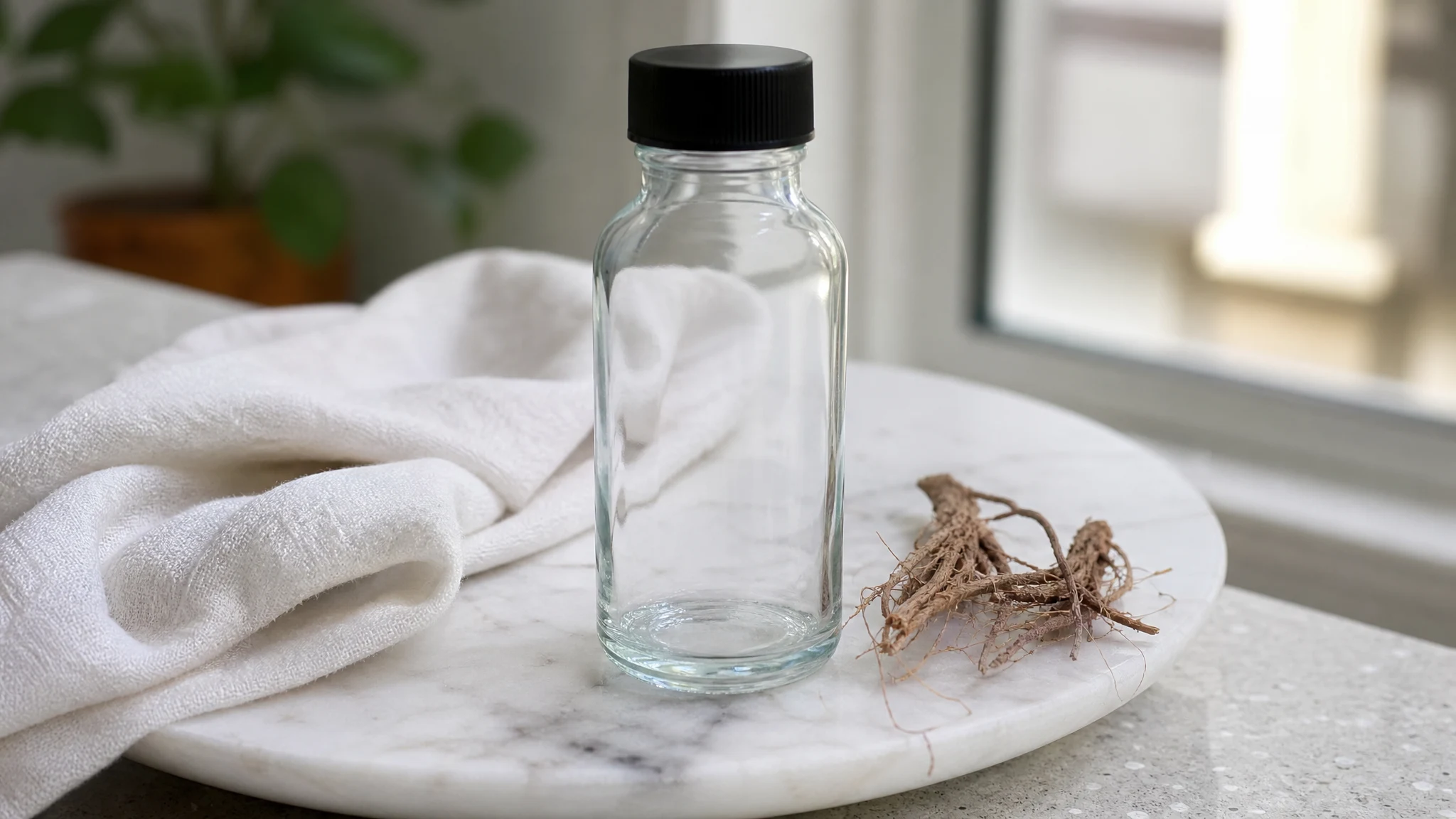
Vetiver Essential Oil
Our own Vetiver Essential Oil, in sizes from 0.5 oz to bulk.
From $20.99
Shop Now →What a scrub is, and what it is not
Sugar rubs the skin surface, the oil carries the sugar and leaves a light film, and vetiver adds fragrance. That is the whole story. We describe it as a pleasant scent experience and a bit of mechanical exfoliation, and we would stay wary of any recipe that promises more. Anyone with a skin condition should ask a dermatologist before rubbing anything gritty on their skin.
How much vetiver
Our guidance for vetiver is 0.5% to 2% in a carrier, with a patch test first. The Tisserand Institute lists 2 to 4% for wash-off products such as body wash and soap, 1 to 3% for body oils, and 0.2 to 1% for reaction-prone or impaired skin. A scrub rinses off, but it also leaves an oil film behind, so we start at the bottom of our range: 0.5% for a first batch. That is plenty, because vetiver is strong and a little goes a very long way. Raise it later if you want, staying inside the range.
Keeping water out of the jar
A scrub with no water in it is a poor home for microbes, but a jar in a shower is a place where water arrives uninvited. The FDA advises against adding water to cosmetic products, notes that warm or damp storage can break down preservatives, and lists dipping fingers into the product as a risk factor. Our recipe has no preservative, so it depends on staying dry:
- Use a small, wide-mouthed jar and a dry spoon, not wet fingers.
- Keep the jar out of the shower itself. Scoop a portion into a small dish before you step in.
- Make a small batch and use it within a few weeks. Discard it if it smells off, changes colour or shows any spots.
A water-based or gel scrub needs a preservative chosen by a cosmetic chemist, which is beyond what a home recipe can safely teach.
The recipe, by weight
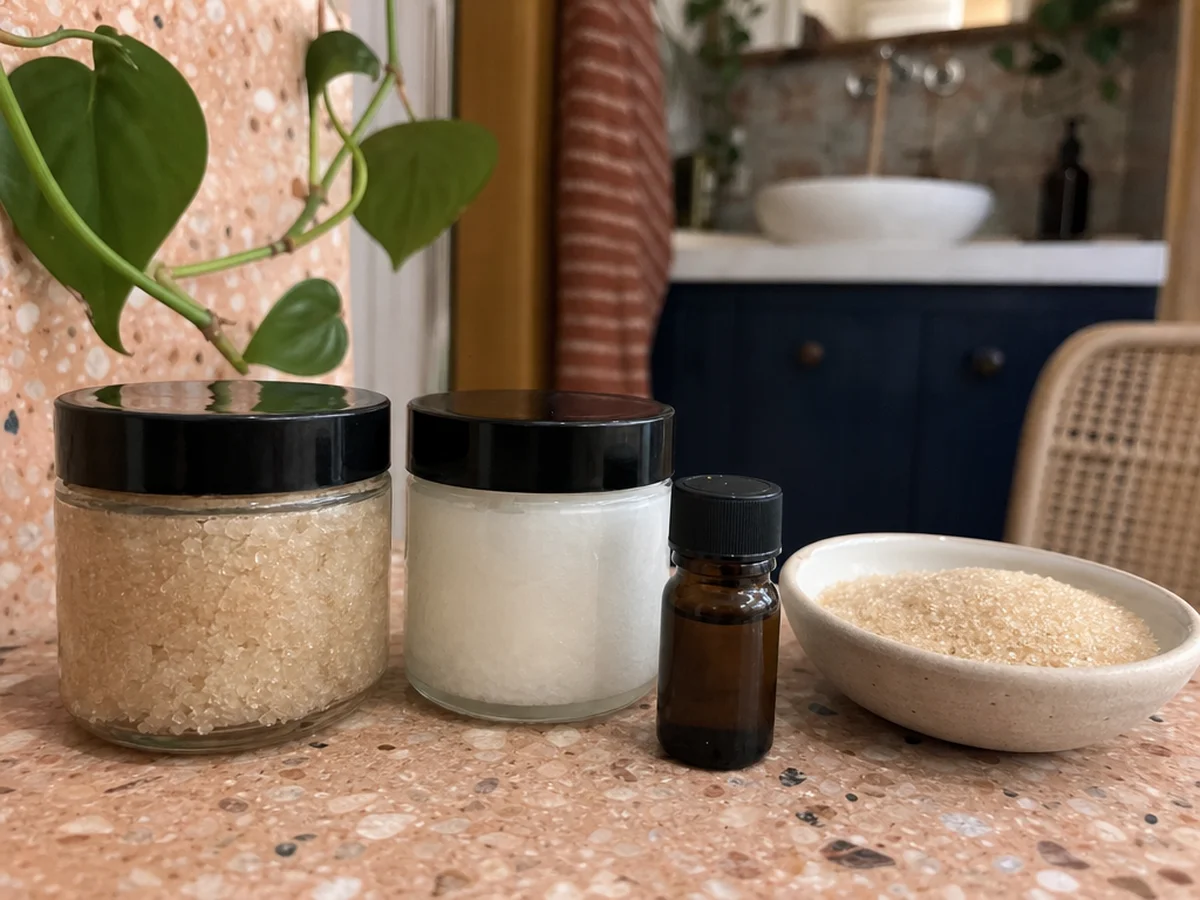
This 300 g batch comes straight from the percentages above.
| Ingredient | Grams | Share |
|---|---|---|
| Granulated sugar, dry | 200.0 g | 66.7% |
| Coconut oil (or another carrier oil), melted and cooled | 98.5 g | 32.8% |
| Vetiver essential oil | 1.5 g | 0.5% |
The batch on our published Certificate of Analysis has a relative density of 0.993, so 1.5 g is close to 1.5 ml. Drops of vetiver are large and slow, so a scale that reads to 0.1 g serves you better than a dropper.
- Wash a jar and spoon and let them dry completely.
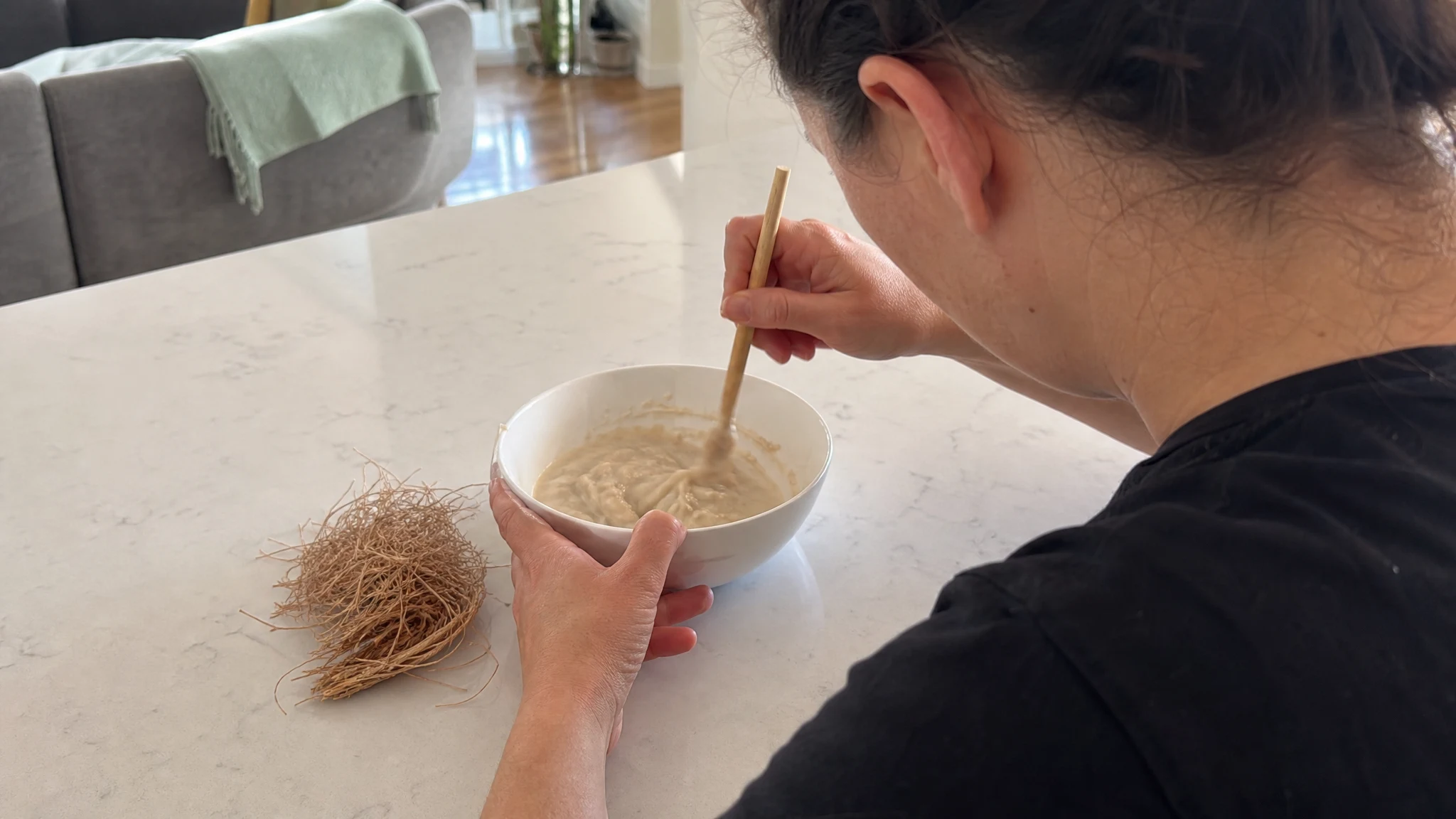
- Weigh the carrier oil into a bowl and stir the vetiver into the oil, not onto the sugar, so the thick oil disperses.
- Fold in the sugar. Adjust by weight if the texture needs it, and note the change for next time.
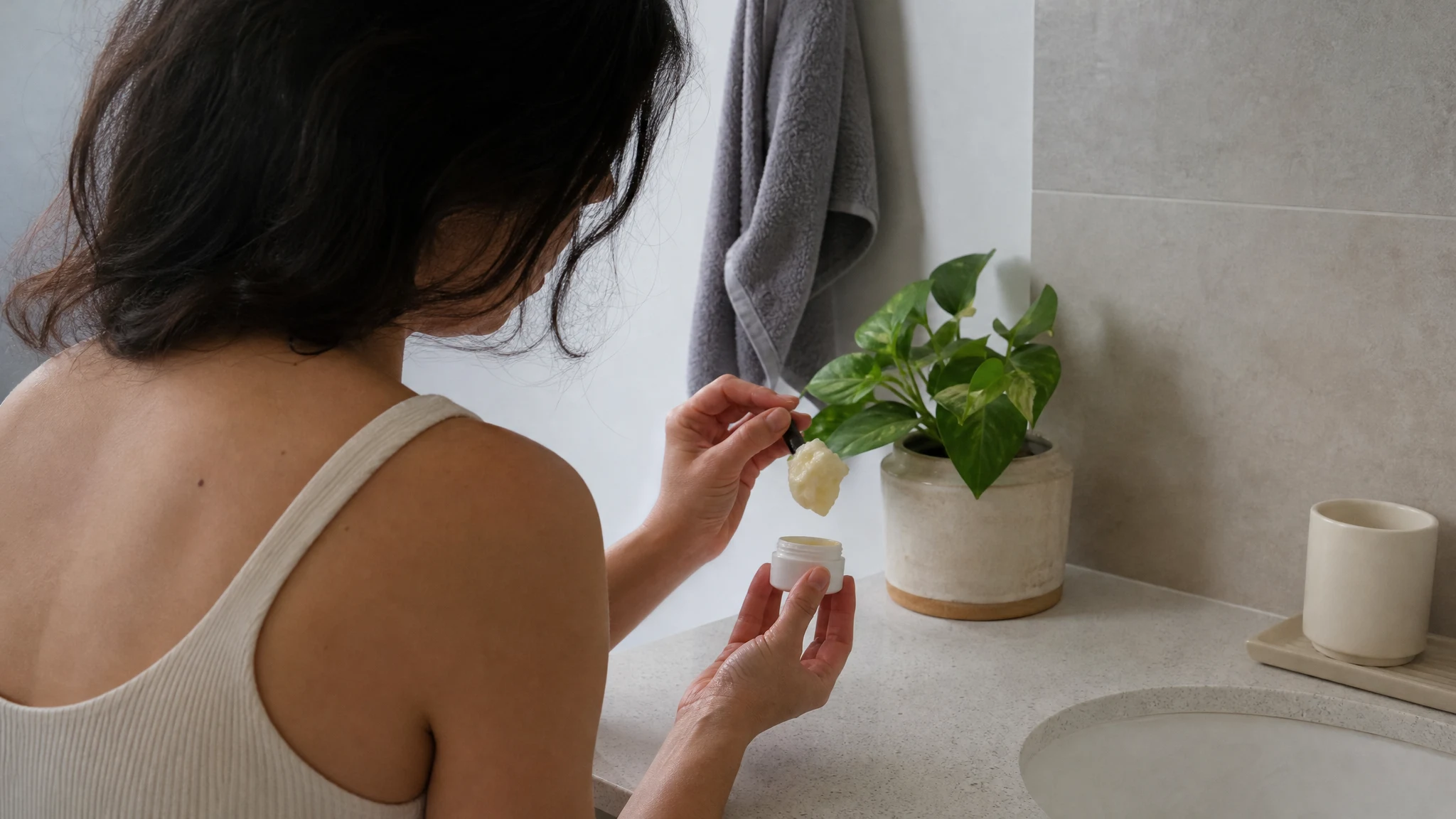
- Pack it into the jar and label the date.
White sugar is the safer choice if the jar will see any humidity, because brown sugar holds on to moisture. That is reasoning, not a rule, so go with what suits your bathroom.
What to expect in the shower
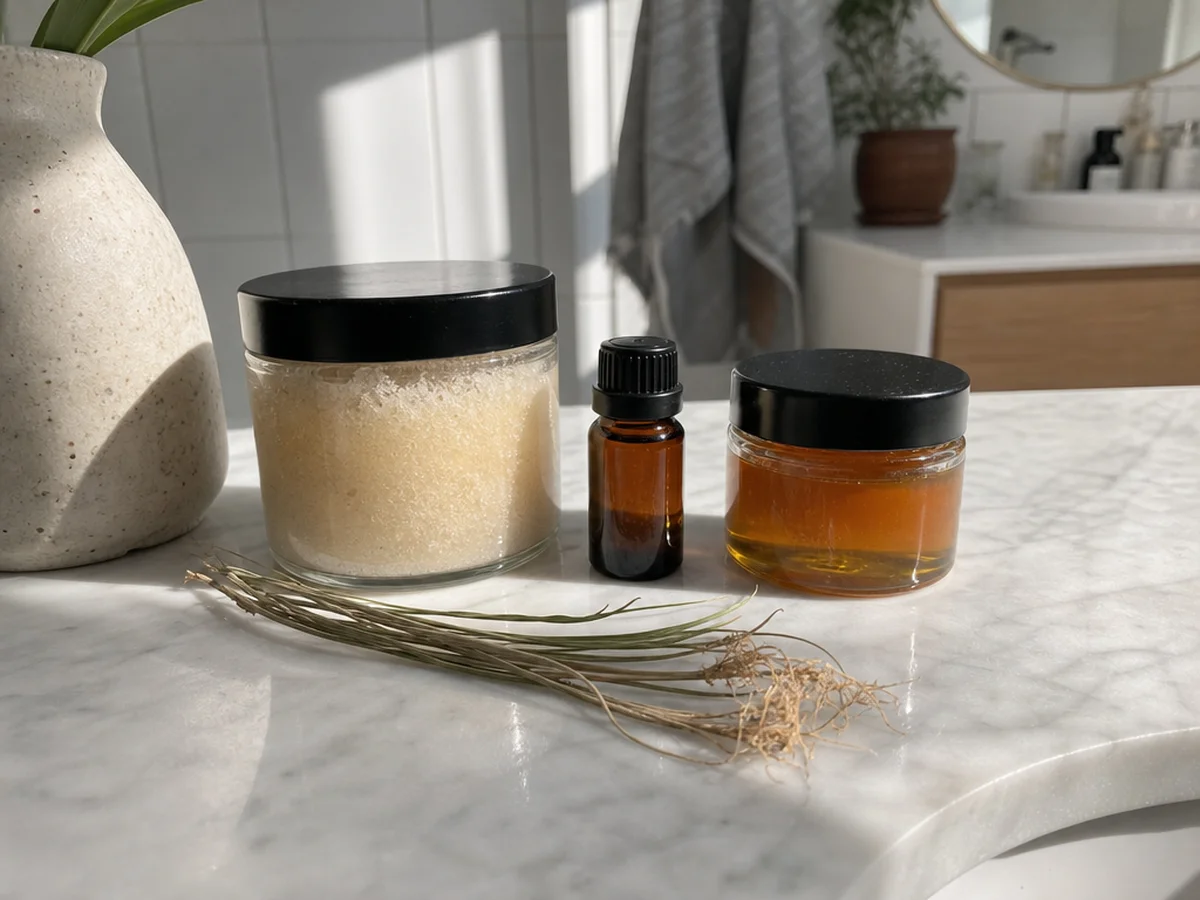
Vetiver is thick, slow-pouring and a deep amber to brown, so stir it into the carrier oil until no streaks remain. The finished scrub may carry a faint warm tint, and that is just the colour of the oil. When you open the jar you will smell the deep, earthy, smoky-sweet scent first. Warm steam tends to carry fragrance further, so if the scent seems louder in the shower than it did at the kitchen table, that is probably why, and it is the reason we suggest starting at 0.5%.
Label the jar with the date and the percentage you used. If you make a second batch, change only one thing at a time, so you can tell what made the difference.
Who it suits, and where it does not belong
Keep the scrub on the body: not on the face, broken skin, or skin that has just been shaved. Patch test on the inner forearm and wait a day. "All natural" does not guarantee a gentle product. A 2017 case report in Pediatric Dermatology, "Cinnamon Sugar Scrub Dermatitis: Natural Is Not Always Best", concluded that children can develop allergic contact dermatitis to fragrances and that products labelled natural can be a source of fragrance exposure. In a large patch-test study of 62,354 people seen in dermatology clinics, 18.6% reacted to at least one fragrance marker or essential oil. Those patients were not typical of the general public, but the lesson is the same: test first.
Oil makes tubs slippery, so rinse the surface and step out carefully, and wipe heavy residue before it goes down the drain. People with eczema, psoriasis or sensitive skin should ask a dermatologist first, parents should ask a paediatrician before using it on a child, and anyone pregnant or nursing should ask their doctor or midwife. Keep it away from the eyes.
The carrier oil makes up most of the jar, so our carrier oil guide is worth a look. For the dilution reasoning behind the numbers, see the safety guide. Other rinse-off projects follow the same logic in the bath bomb post and the soap making post. We sell the vetiver only, so sugar, carrier oil and jars come from your grocery or craft supplier, and if you need lot-specific results, write to us through the contact page.
Make a small jar, keep it dry, and enjoy the smell of a damp woodland in your shower.
Vetiver Essential Oil
Vetiver Essential Oil from our own shop, in sizes from 0.5 oz to bulk.
From $20.99
Shop Now →Sources & Further Reading
- Tisserand Institute: Dilution for essential oils
- FDA: Microbiological Safety and Cosmetics
- Admani S, Hill H, Jacob SE, 2017: Cinnamon Sugar Scrub Dermatitis: "Natural" Is Not Always Best
- Warshaw EM et al., 2017: Positive Patch-Test Reactions to Essential Oils in Consecutive Patients From North America and Central Europe